
Lower ab exercises at home: floor, pull-up bar and ab wheel
Published October 19, 2026
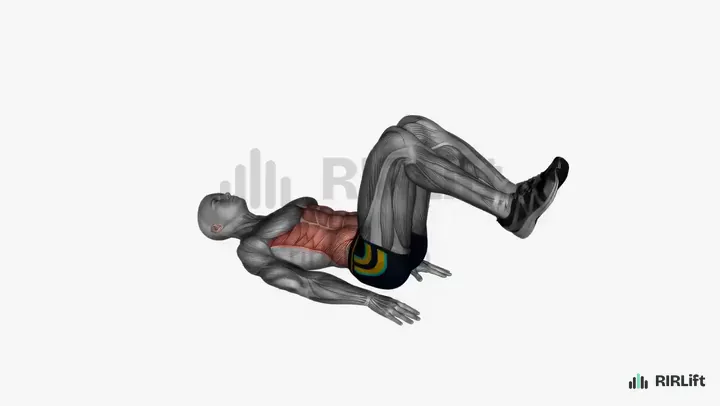
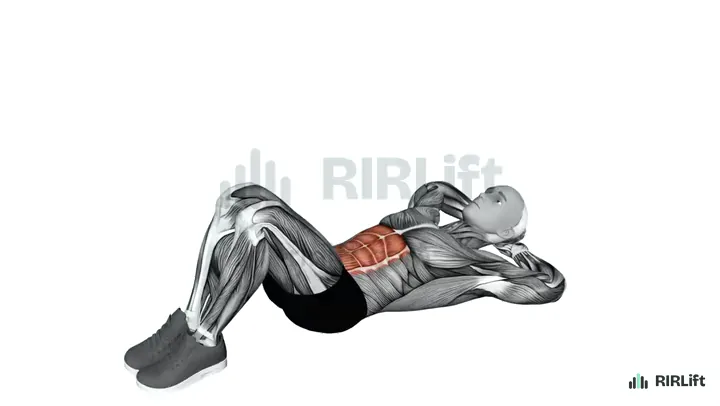
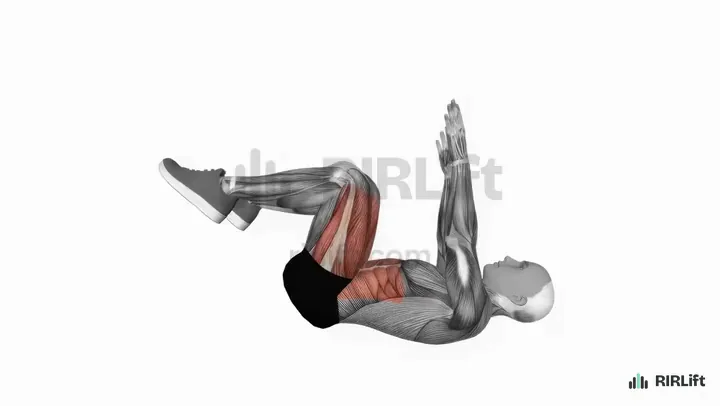
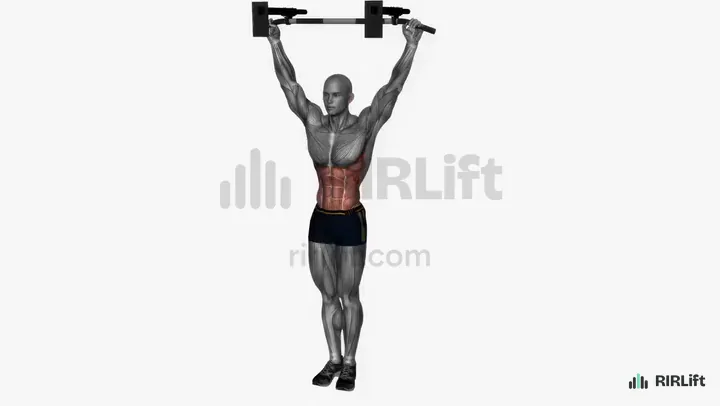
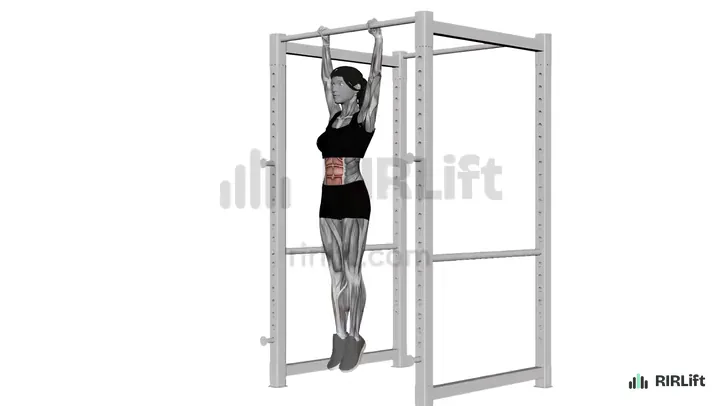
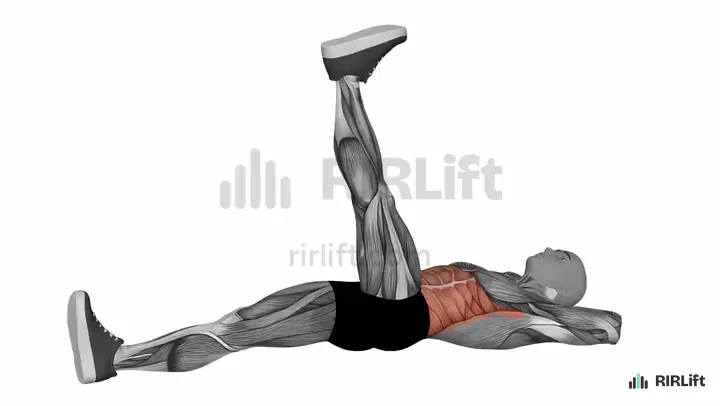
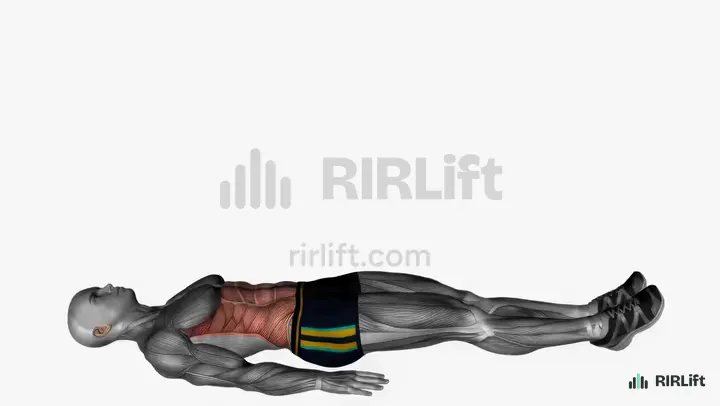
The best lower ab exercises at home are the reverse crunch, the lying knee raise and the dead bug on the floor, the hanging knee raise and hanging leg raise if you have a pull-up bar, and the ab wheel rollout and dragon flag once those get easy. Your lower abs are not a separate muscle, but exercises that curl your pelvis up toward your ribs, rather than your ribs down toward your pelvis, load the bottom of the rectus abdominis hardest. Pick two of those curls plus one brace where your lower back stays pinned down, and you have a complete lower ab session with no machines.
- Reverse Crunch Abs
- Lying Knee Raise Abs
- Dead Bug Abs
- Hanging Knee Raise Abs
- Hanging Leg Raise Abs
- Alternating Leg Raise Abs
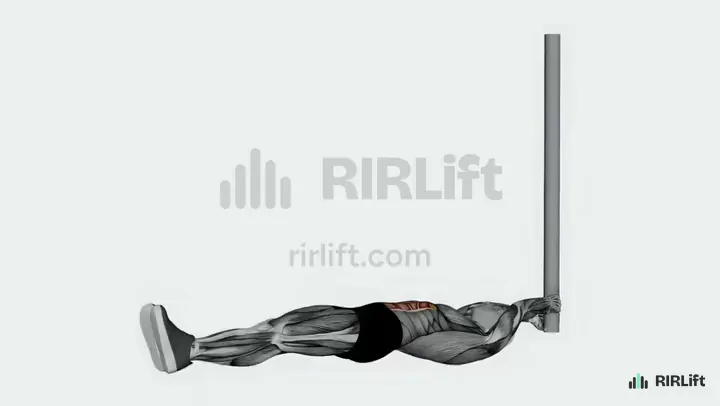
- Jackknife Abs
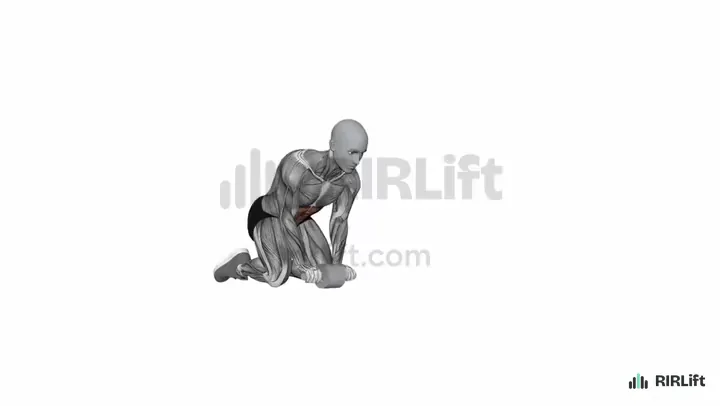
- Ab Wheel Rollout Abs
- Dragon Flag Abs
Put them together: example sessions
Each session below picks from the exercises above for one situation, with the sets, reps, rest and RIR filled in. Open one in the session builder to change a pick, price it from a recent set, and add it to RIRLift.
-
Session 1
No equipment, ten minutes on the floor
You have a mat and no gear, and want a short lower ab session you can repeat on most days.
3× a week · 33 sets a week · ~20 min
-
Session 2
A doorway pull-up bar, twice a week
You have a pull-up bar at home and are ready for more load than the floor gives.
2× a week · 18 sets a week · ~20 min
-
Session 3
Ab wheel and a bench, experienced
You already do 20 clean reverse crunches and want the hardest lower ab work a home setup allows.
2× a week · 24 sets a week · ~30 min
Session 1
No equipment, ten minutes on the floor
- Workouts3× a week
- Working sets33 a week
- Per workout~20 min
- EquipmentBodyweight
You have a mat and no gear, and want a short lower ab session you can repeat on most days.
With nothing to add load, the floor moves are ordered from hardest to easiest so each one is fresh when it matters most: the reverse crunch first, the lying knee raise next, then the scissor raise and dead bug as finishers. Sets stop 1 to 2 reps short of failure, because you will repeat this three times a week, and the dead bug sits last with longer rest so your back is flat on every rep. That is 11 sets in about ten minutes.
| Exercise | Sets × reps | RIR | Rest |
|---|---|---|---|
| Reverse CrunchPause 1 s with hips up. | 3 × 10–20 | 1 | 45 s |
| Lying Knee RaiseHeels hover between reps. | 3 × 10–20 | 1 | 45 s |
| Alternating Leg RaisePer leg. 2 s each way. | 3 × 10–20 | 2 | 45 s |
| Dead BugPer side. Back flat. | 2 × 8–12 | 2 | 1 min |
- How to run it
- Do this session three days a week, with a day between. It works on its own or straight after another workout.
- How to progress
- Add reps until you reach the top of each range at the target reps in reserve. Then slow each rep to three seconds down and pause at the top before adding more reps. When 20 slow reverse crunches feel easy, swap in the jackknife.
Session 2
A doorway pull-up bar, twice a week
- Workouts2× a week
- Working sets18 a week
- Per workout~20 min
- EquipmentPull-Up Bar
You have a pull-up bar at home and are ready for more load than the floor gives.
Hanging raises put the most weight on your lower abs, so each session opens with one of them while your grip is fresh, closes with a floor curl at 0 to 1 reps in reserve to finish the abs off without needing grip, and adds a brace so the abs train holding position too. Session A builds the knee raise; session B moves to the straight-leg raise and the jackknife. Each session is 9 sets, with longer rests for the hanging work so your grip doesn't end the set first.
| Exercise | Sets × reps | RIR | Rest |
|---|---|---|---|
| Hanging Knee RaiseStill hang before each rep. | 3 × 8–15 | 1 | 90 s |
| Reverse Crunch | 3 × 12–20 | 0 | 1 min |
| Long Lever PlankSeconds. Elbows ahead of shoulders. | 3 × 15–30 | 1 | 1 min |
Open Lower Abs A in the session builder
| Exercise | Sets × reps | RIR | Rest |
|---|---|---|---|
| Hanging Leg Raise3 s down. Bend the knees if needed. | 3 × 6–12 | 2 | 2 min |
| Jackknife | 3 × 8–15 | 1 | 1 min |
| Dead BugPer side. | 3 × 8–12 | 2 | 1 min |
Open Lower Abs B in the session builder
- How to run it
- Do Lower Abs A and B once each per week, two to three days apart. Either can go at the end of an upper-body or full-body day.
- How to progress
- On the knee raise, add reps until you hit 15 at 2 reps in reserve, then start the straight-leg raise in session B with bent knees on the last few reps. Hold the plank for a few more seconds each week until you can't keep the flat line.
Session 3
Ab wheel and a bench, experienced
- Workouts2× a week
- Working sets24 a week
- Per workout~30 min
- EquipmentAb Wheel
You already do 20 clean reverse crunches and want the hardest lower ab work a home setup allows.
Floor curls no longer reach failure for you, so this session leads with the two heaviest levers: the dragon flag at 2 reps in reserve with long rest, because form breaks quickly near failure, and the ab wheel at 1 to 2. The jackknife and windshield wipers follow at 1 rep in reserve for volume without new gear, and the wipers bring the obliques in. That is 12 sets, done twice a week.
| Exercise | Sets × reps | RIR | Rest |
|---|---|---|---|
| Dragon FlagLower over 4 s. Stop before the back arches. | 3 × 4–8 | 2 | 2 min |
| Ab Wheel RolloutFrom the knees. Tuck first. | 3 × 6–12 | 1 | 90 s |
| Jackknife | 3 × 10–15 | 1 | 1 min |
| Windshield WipersPer side. Shoulders down. | 3 × 8–12 | 1 | 1 min |
- How to run it
- Run this session twice a week, at least two days apart. Warm up with one easy set of dead bugs if your back feels stiff.
- How to progress
- On the dragon flag, add a second of lowering each week before adding reps, and lower further down the range as you get stronger. On the ab wheel, move a wall back an inch at a time until you roll out to full extension.
Make it fit you
-
Your lower back aches during leg raises
Swap straight-leg moves for the reverse crunch and dead bug for a few weeks. Keep the knees bent, slide your hands under your hips if it helps, and shorten every range until your back stays flat on the floor.
-
You can't feel your lower abs working
Slow down. Exhale hard as your hips curl up and hold the top of every reverse crunch for a full second. If your hip flexors take over, bend your knees more and think about tilting your pelvis, not lifting your legs.
-
Your grip gives out before your abs on the bar
Put the hanging raise first in the session and rest two minutes between sets. If grip still fails, use the reverse crunch as the main lift and keep one short set of hanging knee raises as grip practice.
-
You train abs after a full workout
Pick one curl and one brace, two to three sets each, at 1 rep in reserve. The floor plan cut to the reverse crunch and dead bug takes about five minutes.
-
You want visible lower abs
Training builds the muscle, and how much of it shows depends on body fat. Keep the sessions here for the muscle, and handle the rest with your eating and overall training, not with more ab sets.
-
Count the reps you had left
Note how many more reps you could have done at the end of each set. If you log your sessions in RIRLift, that number drives when to add reps or move to the harder move, so you progress on schedule instead of guessing.
Questions
What works out your lower abs?
Exercises that curl your pelvis up toward your ribs: the reverse crunch, lying and hanging knee raises, and leg raises. Your rectus abdominis is one muscle, but these moves load its lower part harder than crunches do. Add a brace like the dead bug, where your lower abs stop your back from arching.
Can you do lower ab exercises at home with no equipment?
Yes. The reverse crunch, lying knee raise, alternating leg raise, jackknife, windshield wipers, dead bug and long lever plank need only floor space. A doorway pull-up bar or an ab wheel is the most useful thing to add once those feel easy.
Is 20 minutes of abs a day enough?
It is more than you need. Six to twelve hard sets of abs a week, spread over two or three sessions, is enough to build them, and that fits into ten-minute sessions. Doing abs every day mostly adds tiredness, not results.
How do I get rid of my lower belly pooch?
Ab exercises don't burn the fat over the muscle they train. A lower belly goes down when your overall body fat goes down, which comes from eating and overall activity. Training your lower abs still helps: it builds the muscle that shows once the fat is lower.
How do you get a V line?
The V line is where your obliques and lower abs meet your hips, and it shows at a low body fat. Train the lower abs with the moves on this page, add oblique work like windshield wipers, and the rest comes from body fat.
How many sets and reps should I do for lower abs?
Two to four sets per exercise, 8 to 20 reps, stopped 0 to 2 reps short of failure. Holds like the long lever plank go by seconds, stopped when your hips start to drop.
Why do I feel leg raises in my hip flexors?
Lifting the legs is hip flexor work; the abs take over when your pelvis tilts up at the top. Bend your knees, slow down, and finish every rep by rolling your hips toward your ribs. The reverse crunch makes that easier to feel.
Related templates
-
Reverse crunch: how to do it right and what it works
Full technique and programming for the main floor lower ab move on this page.
-
Hanging knee raise: how to do it, what it works, and how to progress it
Step-by-step guide to the pull-up bar exercise that leads the second plan.
-
Dead bug: how to do it, how many to do, and how to make it harder
How to make the brace harder as your lower abs get stronger.
-
Lower ab exercises for women: floor, bar and gym picks
The same muscle group, picked and planned for women's goals.
-
Ab exercises at home, with or without equipment
Upper abs, obliques and lower abs together for a full home ab routine.
-
The best workout for abs, for your situation
Full ab programs, including cable and machine options at the gym.