
Oblique exercises for women: a strong, defined waist without guesswork
Published October 19, 2026
The best oblique exercises for women are the side plank, the cable woodchop, the Pallof press, the side plank hip dip and the kettlebell windmill. Together they train the obliques the three ways they work: holding you upright against a sideways pull, resisting a twist, and turning your torso. Two or three of them, 2 to 3 sets each, twice a week, is enough. Whether your waist looks defined depends mostly on body fat, so oblique work builds the shape that shows when it is low enough.
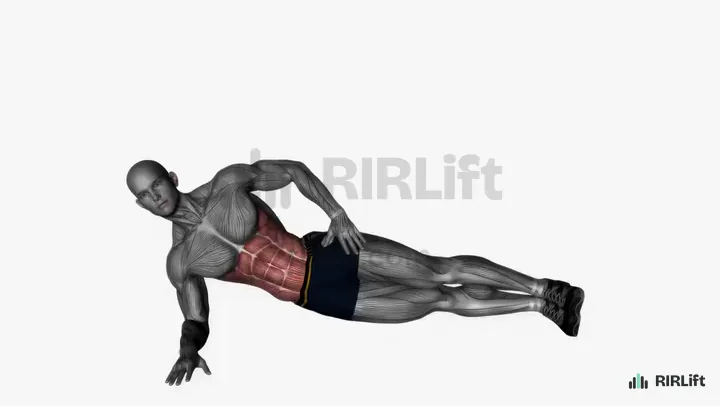
- Side Plank Abs
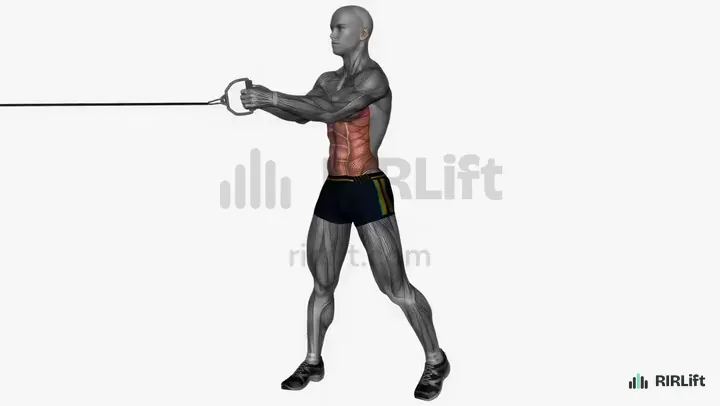
- Cable Woodchop Abs
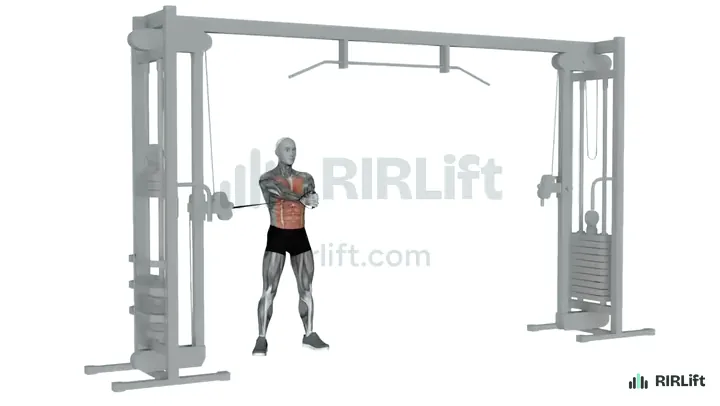
- Pallof Press Abs
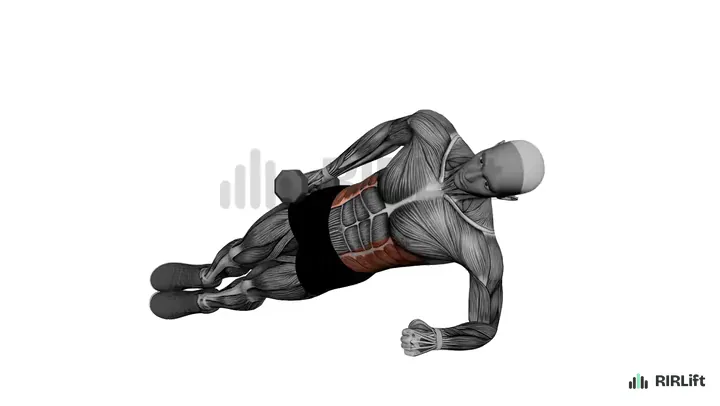
- Dumbbell Side Plank Hip Dip Abs
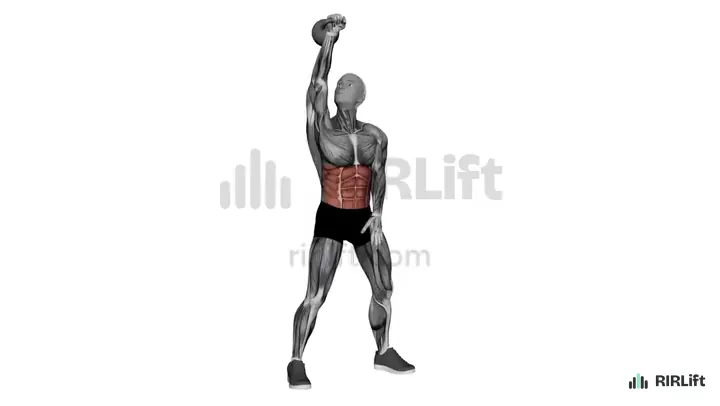
- Kettlebell Windmill Abs, Shoulders
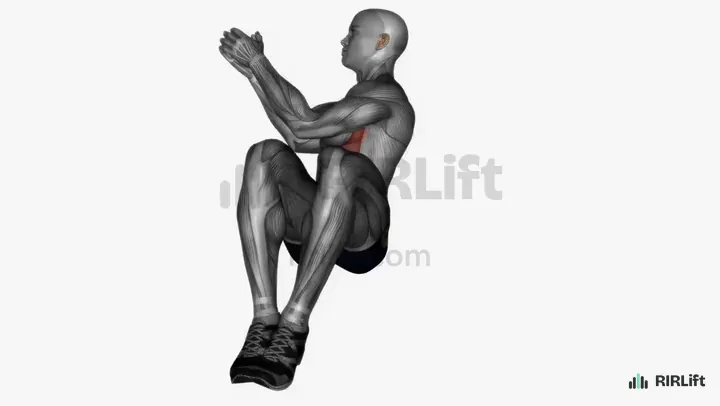
- Russian Twist Abs
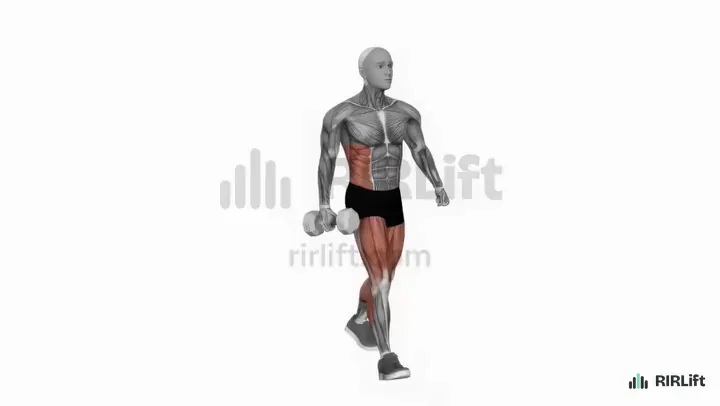
- Dumbbell Suitcase Carry Abs, Quads
Put them together: example sessions
Each session below picks from the exercises above for one situation, with the sets, reps, rest and RIR filled in. Open one in the session builder to change a pick, price it from a recent set, and add it to RIRLift.
-
Session 1
Home, a mat and 15 minutes
You train at home with no equipment, or a single light dumbbell, and want a short waist workout.
2× a week · 14 sets a week · ~15 min
-
Session 2
Gym, after a lower-body day
You lift at a gym, train legs and glutes once or twice a week, and want to add oblique work without a separate day.
2× a week · 16 sets a week · ~20 min
-
Session 3
One kettlebell and one dumbbell, strength first
You train at home or in a small gym with a kettlebell and a heavier dumbbell, and want a strong core that holds up when you lift heavy.
2× a week · 14 sets a week · ~20 min
Session 1
Home, a mat and 15 minutes
- Workouts2× a week
- Working sets14 a week
- Per workout~15 min
- EquipmentDumbbells
You train at home with no equipment, or a single light dumbbell, and want a short waist workout.
Side planks build the base, hip dips turn the hold into countable reps you can take near failure, and Russian twists add rotation, so all three ways the obliques work are covered with only floor space. Because there is no weight to add, every set ends close to failure, at 0 to 1 RIR, and you progress by reps and holding a dumbbell. Six to seven sets per session fits in 15 minutes.
| Exercise | Sets × reps | RIR | Rest |
|---|---|---|---|
| Side PlankSeconds per side. | 2 × 20–45 | 1 | 45 s |
| Dumbbell Side Plank Hip DipPer side. Dumbbell on the hip optional. | 2 × 10–20 | 0 | 45 s |
| Russian TwistPer side. Turn the shoulders. | 3 × 10–20 | 1 | 45 s |
- How to run it
- Do it twice a week after another workout, or on its own on a non-training day.
- How to progress
- Add 5 seconds to each side plank per week up to 60 seconds. Once you reach 20 hip dips per side, rest a light dumbbell on your top hip.
Session 2
Gym, after a lower-body day
- Workouts2× a week
- Working sets16 a week
- Per workout~20 min
- EquipmentAdjustable Cable, Landmine
You lift at a gym, train legs and glutes once or twice a week, and want to add oblique work without a separate day.
Cables make the obliques easy to load and progress in small steps: the woodchop trains the twist, the Pallof press the resistance to it, and the landmine press ties rotation to the hips, which suits finishing a lower-body day. Rotation sets stop at 1 RIR to keep the reps clean; the Pallof press can go to 0. Eight sets, about 15 minutes.
| Exercise | Sets × reps | RIR | Rest |
|---|---|---|---|
| Cable WoodchopPer side. High to low. | 3 × 10–15 | 1 | 1 min |
| Pallof PressPer side. 2 s hold. | 3 × 10–15 | 0 | 45 s |
| Landmine Rotational PressPer side. Hips turn first. | 2 × 8–12 | 1 | 1 min |
- How to run it
- Add it to the end of your lower-body sessions, once or twice a week.
- How to progress
- Add a plate on the cable stack when all sets reach the top of the range. Move the landmine press up by 5 lb when you can rotate fully on every rep.
Session 3
One kettlebell and one dumbbell, strength first
- Workouts2× a week
- Working sets14 a week
- Per workout~20 min
- EquipmentKettlebells, Dumbbells
You train at home or in a small gym with a kettlebell and a heavier dumbbell, and want a strong core that holds up when you lift heavy.
Heavier, slower moves suit this setup: the windmill works the obliques through a long range under a load overhead, the suitcase carry makes them fight a heavy weight on one side, and the weighted side plank holds it all in place. Windmills stay at 2 RIR because form breaks before the muscles give out; carries and side planks end at 1. Seven sets, twice a week.
| Exercise | Sets × reps | RIR | Rest |
|---|---|---|---|
| Kettlebell WindmillPer side. Eyes on the bell. | 3 × 5–8 | 2 | 75 s |
| Dumbbell Suitcase CarrySeconds per side. Stay upright. | 2 × 30–45 | 1 | 1 min |
| Side PlankSeconds per side. | 2 × 20–40 | 1 | 45 s |
- How to run it
- Do it on two non-consecutive days, after your main lifts or as a short standalone session.
- How to progress
- Move up to a heavier kettlebell when 8 windmills per side feel controlled. Add distance to the carry first, then a heavier dumbbell.
Make it fit you
-
You worry about a thicker waist
Obliques grow slowly and sit under the skin as a thin layer, so a few sets twice a week will not widen your waist. If you are concerned, favor side planks and Pallof presses and skip the heavy weighted side bends.
-
You want to lose love handles
No exercise burns fat from one area. Oblique training builds the muscle that shows once your overall body fat drops, which comes from your eating and total activity. Keep these workouts as they are and track your food separately.
-
Lower back feels it on twists
Shorten the Russian twist so only your shoulders turn, or replace it with the Pallof press. Anti-rotation work trains the same muscles while your spine stays still.
-
Side planks hurt your shoulder
Drop to your knees for a shorter lever, or do the Pallof press and suitcase carry instead. Both work the same side of the waist without weight on the shoulder.
-
Older or new to training
Start with the knee-supported side plank and the Pallof press. Both build the strength to keep your balance and turn safely, and you can move to full side planks within a few weeks.
-
Log the RIR, not just the time
After every set, note how many more reps or seconds you could have done. In RIRLift you log that RIR with the set, and it tells you when to go heavier or longer, so a side plank that ends with lots left gets more time next session.
Questions
What are good oblique exercises for women?
Side planks, side plank hip dips, cable woodchops, Pallof presses and kettlebell windmills. Pick one hold, one twisting move and one anti-rotation move per session for full coverage.
Does oblique training give you a blocky waist?
Not at the volume most people do. The obliques are thin, slow-growing muscles. Your waist width depends far more on your frame and body fat than on a few sets of side planks or woodchops.
Can I get a six pack in 2 weeks?
Only if you are already close to one. Visible abs and obliques need a low body fat, and losing fat takes months for most people. Two weeks of training will make the muscles stronger, not visible.
What is the number one exercise for abs?
There is no single best one, but the side plank is the best starting point for the obliques, and the hanging knee raise or cable crunch for the front of the stomach. Combine one of each.
How often should women train obliques?
Two sessions a week of 6 to 8 hard sets is enough. The obliques also work during squats, deadlifts and carries, so you do not need to train them every day.
Will oblique exercises reduce my waist size?
Not directly. Exercise does not remove fat from the area you train. Stronger obliques do make your waist feel tighter and help your posture, and they show more as your body fat comes down.
Can I do oblique exercises at home?
Yes. Side planks, hip dips and Russian twists need only a mat, and a single dumbbell or kettlebell adds carries and windmills. The home mat plan on this page uses no equipment.
Related templates
-
Oblique exercises at home: side abs with bodyweight, one dumbbell or a doorway bar
Side work with no machines, from bodyweight to one dumbbell.
-
Core exercises for women: front, sides, lower back and full body
The rest of the core: front abs, lower back and hips.
-
Dumbbell oblique exercises: bend, chop, plank and carry
Side bends, woodchops and carries with a single dumbbell.
-
Ab exercises for women: upper abs, lower abs and obliques
Crunches and leg raises to pair with oblique work.
-
The best workout for abs, for your situation
Complete ab programs with sets and RIR targets.