
Oblique exercises at home: side abs with bodyweight, one dumbbell or a doorway bar
Published October 19, 2026
The best oblique exercises at home are the Russian twist, the side plank, the dumbbell woodchop, the rotational push-up and the side plank hip dip. None needs a machine: the floor covers the basics, one dumbbell or kettlebell adds load, and a doorway pull-up bar opens up hanging oblique crunches. Do 2 or 3 of them for 2 to 3 sets each, ending 0 to 2 reps short of failure, two or three times a week.
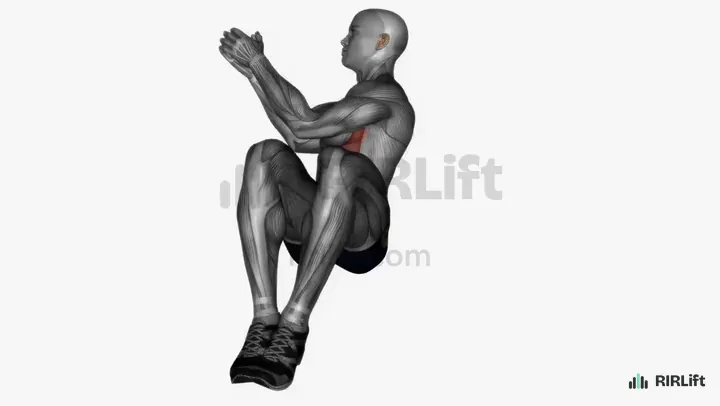
- Russian Twist Abs
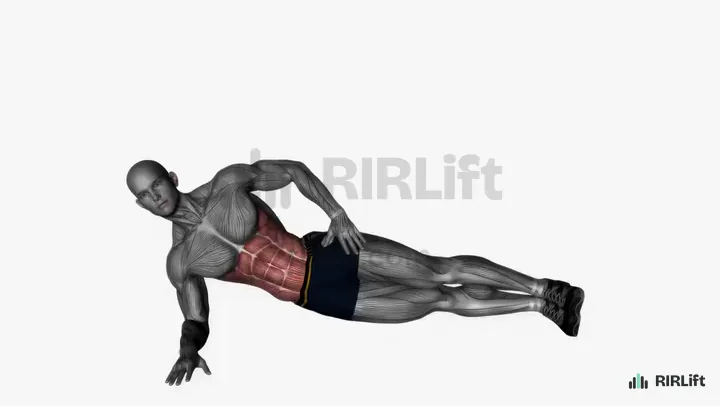
- Side Plank Abs
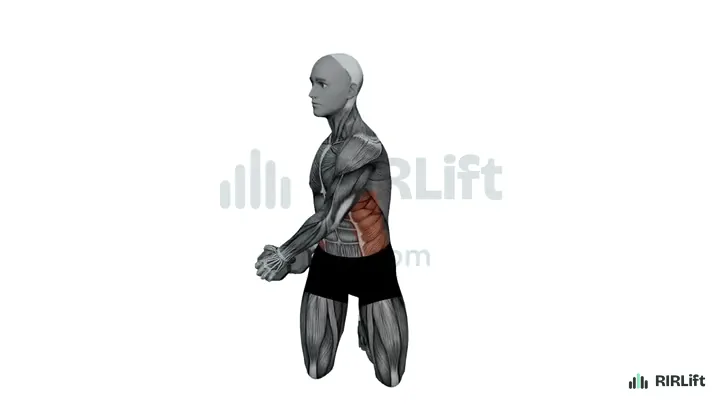
- Dumbbell Woodchop Abs
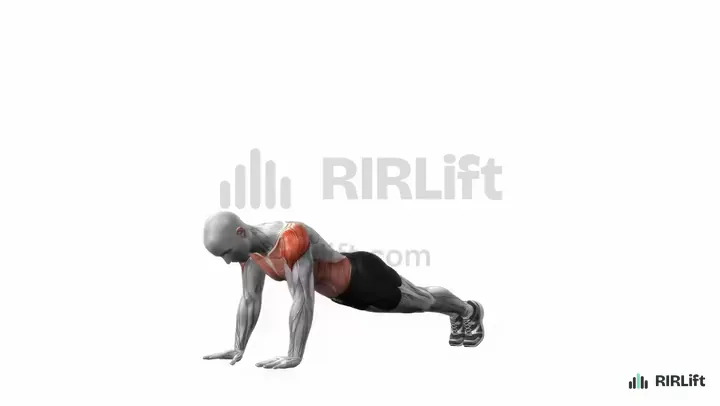
- Rotational Push-Up Chest
- Dumbbell Side Plank Hip Dip Abs
- Hanging Oblique Crunch Abs
- Kettlebell Windmill Abs, Shoulders
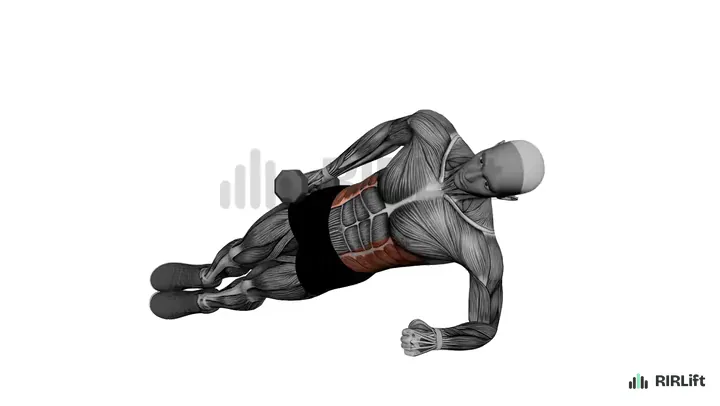
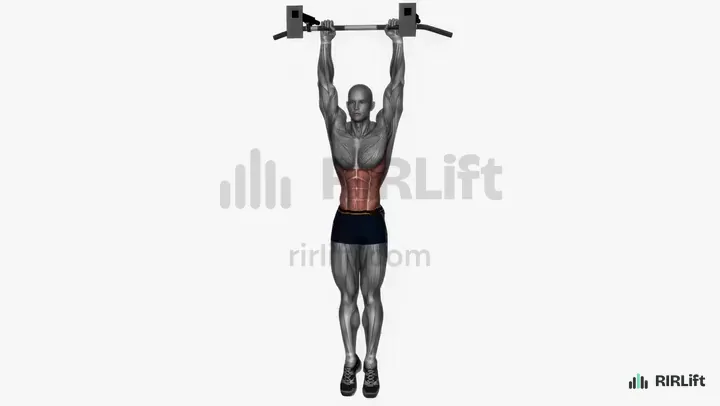
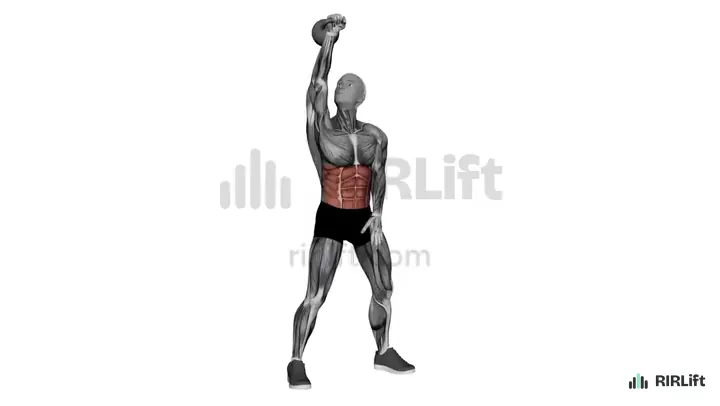
Put them together: example sessions
Each session below picks from the exercises above for one situation, with the sets, reps, rest and RIR filled in. Open one in the session builder to change a pick, price it from a recent set, and add it to RIRLift.
-
Session 1
No equipment, living-room floor
You have a mat and nothing else, and want to train your obliques two or three times a week.
3× a week · 21 sets a week · ~15 min
-
Session 2
One dumbbell at home
You own a single dumbbell or an adjustable one and want to load your obliques properly.
2× a week · 13 sets a week · ~15 min
-
Session 3
Doorway pull-up bar and a kettlebell
You have a home setup with a pull-up bar and a kettlebell, already train regularly, and side planks have become easy.
2× a week · 16 sets a week · ~20 min
Session 1
No equipment, living-room floor
- Workouts3× a week
- Working sets21 a week
- Per workout~15 min
- EquipmentBodyweight
You have a mat and nothing else, and want to train your obliques two or three times a week.
With no load to add, the plan pairs a hold, a twist and the rotational push-up so the obliques work three ways while your chest gets work too. Every set ends at 0 to 1 RIR because reps and time are the only progression. Seven sets, about 12 minutes.
| Exercise | Sets × reps | RIR | Rest |
|---|---|---|---|
| Rotational Push-UpAlternate the turn. | 2 × 6–15 | 1 | 1 min |
| Russian TwistPer side. | 3 × 12–20 | 0 | 45 s |
| Side PlankSeconds per side. | 2 × 20–45 | 1 | 45 s |
- How to run it
- Do it three times a week on non-consecutive days, after a home workout or on its own.
- How to progress
- Add 5 seconds to each side plank a week. When Russian twists reach 20 per side, lift your heels off the floor.
Session 2
One dumbbell at home
- Workouts2× a week
- Working sets13 a week
- Per workout~15 min
- EquipmentDumbbells
You own a single dumbbell or an adjustable one and want to load your obliques properly.
One dumbbell covers all four oblique jobs: the woodchop for rotation, the side bend for bending sideways, the weighted side plank for holding, and the carry for staying upright under load. Two routines split them so each session stays short. Chops and side bends stop at 1 RIR; holds and carries end at 1 as well, judged by how much longer you could have gone. Six to seven sets per session.
| Exercise | Sets × reps | RIR | Rest |
|---|---|---|---|
| Dumbbell WoodchopPer side. Kneeling. | 3 × 10–15 | 1 | 1 min |
| Dumbbell Side PlankSeconds per side. | 2 × 20–40 | 1 | 45 s |
| Dumbbell Suitcase CarrySeconds per side. | 2 × 30–60 | 1 | 1 min |
Open Side A in the session builder
| Exercise | Sets × reps | RIR | Rest |
|---|---|---|---|
| Dumbbell Side BendPer side. No leaning forward. | 3 × 10–15 | 1 | 1 min |
| Dumbbell Side Plank Hip DipPer side. | 3 × 10–15 | 1 | 45 s |
Open Side B in the session builder
- How to run it
- Alternate Side A and Side B, twice a week each or once each if you train full-body three times.
- How to progress
- Add reps to chops and bends up to 15 per side, then go heavier. Add 10 seconds to carries before increasing the weight.
Session 3
Doorway pull-up bar and a kettlebell
- Workouts2× a week
- Working sets16 a week
- Per workout~20 min
- EquipmentPull-Up Bar, Kettlebells, Dumbbells
You have a home setup with a pull-up bar and a kettlebell, already train regularly, and side planks have become easy.
Your bodyweight on the bar and a bell overhead make the hardest home options possible. Hanging oblique crunches go first while your grip is fresh, then windmills at 2 RIR because the reach needs control, and hip dips to finish at 0. Eight sets, twice a week.
| Exercise | Sets × reps | RIR | Rest |
|---|---|---|---|
| Hanging Oblique CrunchAlternate sides. No swing. | 3 × 6–12 | 1 | 75 s |
| Kettlebell WindmillPer side. | 3 × 5–8 | 2 | 75 s |
| Dumbbell Side Plank Hip DipPer side. Dumbbell on the hip. | 2 × 12–20 | 0 | 45 s |
- How to run it
- Run it on two non-consecutive days, after an upper-body or full-body workout.
- How to progress
- Add hanging crunch reps up to 12 per side, then pause one second at the top. Move to a heavier bell when 8 controlled windmills per side are easy.
Make it fit you
-
Only five or ten minutes
Do one round of each exercise in a plan as a circuit with 20 seconds between moves. Two rounds still beats skipping it.
-
Neighbors below, no jumping or dropping
Everything here is quiet except the carry. Do the carry on carpet or swap it for a longer weighted side plank.
-
Wrists hurt in the push-up
Hold dumbbell handles for the rotational push-up so your wrists stay straight, or replace it with an extra set of side planks.
-
Your dumbbell is too light
Slow the side bend and the woodchop to three seconds on the way back, and add a pause at the end of each rep. Side plank hip dips with the dumbbell on your hip make even a light weight count.
-
You want visible side abs
These exercises build the muscle, but it only shows once your body fat is low, and that depends on eating and daily activity. Keep training them while you work on that.
-
Log the RIR, not just the reps
Note how many reps or seconds were left in you after each set. RIRLift records that RIR next to the set and suggests what to do next time, so you know when a home exercise needs a harder version.
Questions
How do you work your oblique muscles?
Three ways: by twisting (Russian twists, woodchops), by bending sideways (side bends), and by resisting a sideways pull (side planks, suitcase carries). A complete home routine uses at least two of those.
What is the best oblique exercise at home?
The side plank if you have no equipment, and the dumbbell woodchop if you have one dumbbell. Both are easy to learn and progress.
Can I get a six pack in 2 weeks?
Not from a standing start. Abs and obliques show when body fat is low, and losing enough fat takes months for most people. Two weeks of oblique work makes you stronger, which is a good start.
What are some good exercises for the stomach area at home?
For the sides, the side plank, Russian twist and dumbbell woodchop. For the front, crunches, reverse crunches and dead bugs. Pair one oblique move with one front-ab move per session.
Is 20 minutes of abs a day enough?
It is more than you need. Six to ten hard sets for the obliques two or three times a week is plenty, and each plan on this page takes about 10 to 15 minutes. Use the rest of the time for full-body strength work.
Can you train obliques every day?
You can do light holds daily, but the obliques grow from hard sets with rest between. Two or three sessions a week, taken close to failure, works better than daily easy work.
Related templates
-
Oblique exercises for women: a strong, defined waist without guesswork
Waist workouts for home, the gym and one kettlebell.
-
Dumbbell oblique exercises: bend, chop, plank and carry
More ways to load the obliques with a single dumbbell.
-
Ab exercises at home, with or without equipment
Front-ab moves to pair with these in a home session.
-
Core exercises at home for the front, sides and back
The whole core, including the lower back and hips.
-
How to use RIR
How to judge reps in reserve on holds and bodyweight sets.