
Core exercises for women: front, sides, lower back and full body
Published October 19, 2026
The best core exercises for women are the dead bug, plank and ab wheel rollout for the front of your trunk, the side plank, Copenhagen plank and suitcase carry for your sides, the superman and 45-degree back extension for your lower back, and the kettlebell swing, Turkish get-up and windmill for moving the whole body as one piece. A balanced core routine picks one from each group, 2 to 3 sets each, two or three times a week, stopping each set with 1 to 2 good reps or seconds left. Your core is the whole ring of muscle around your trunk, not just the six-pack, so train all of it.
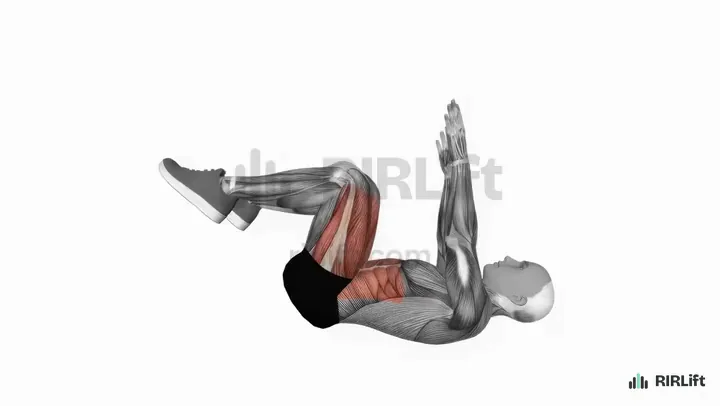
- Dead Bug Abs
- Plank Abs
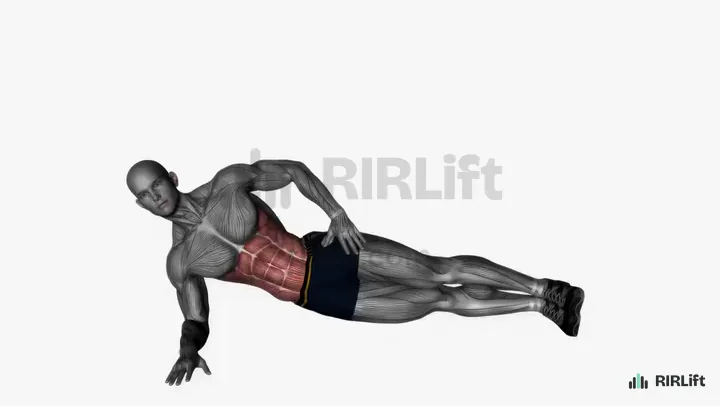
- Side Plank Abs
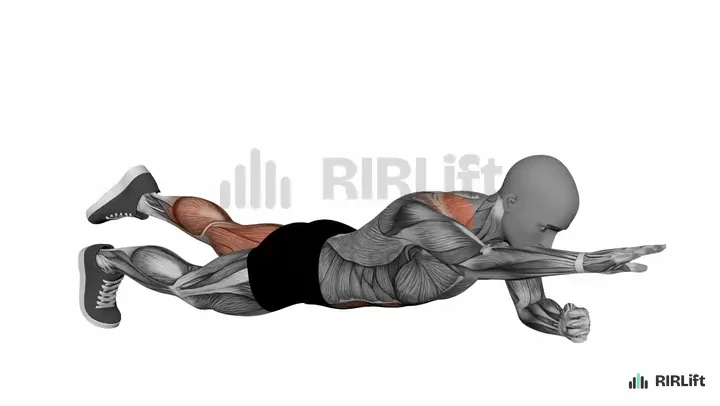
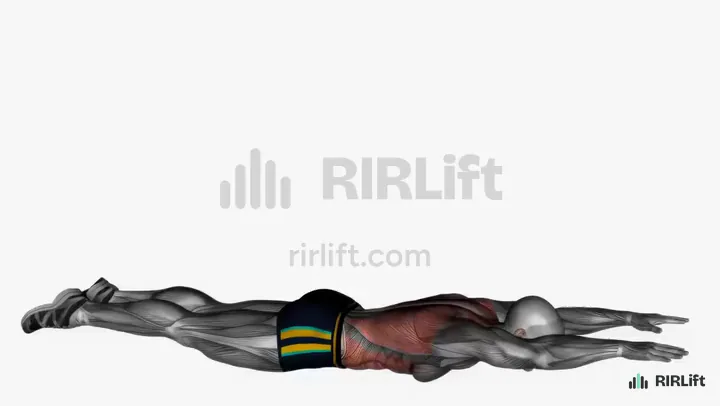
- Superman Lower Back
- Pallof Press Abs
- Dumbbell Suitcase Carry Abs, Quads
- Kettlebell Swing Glutes, Hamstrings
- Ab Wheel Rollout Abs
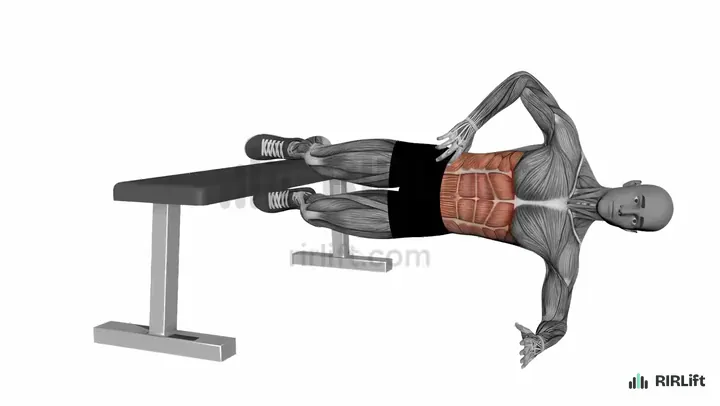
- Copenhagen Plank Adductors, Abs
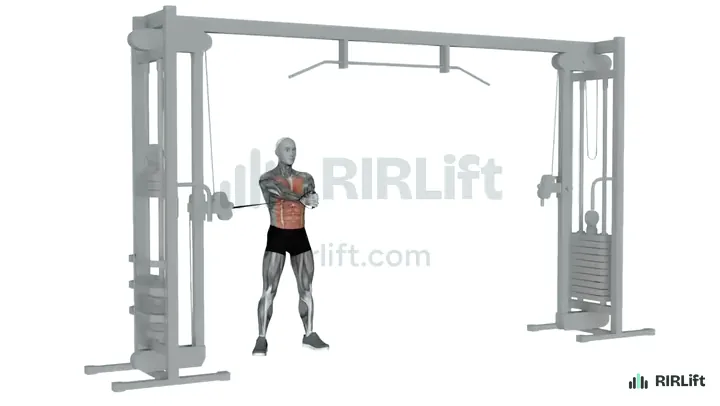
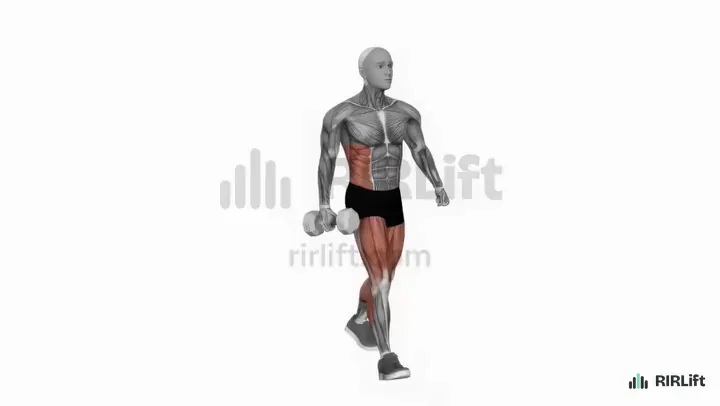
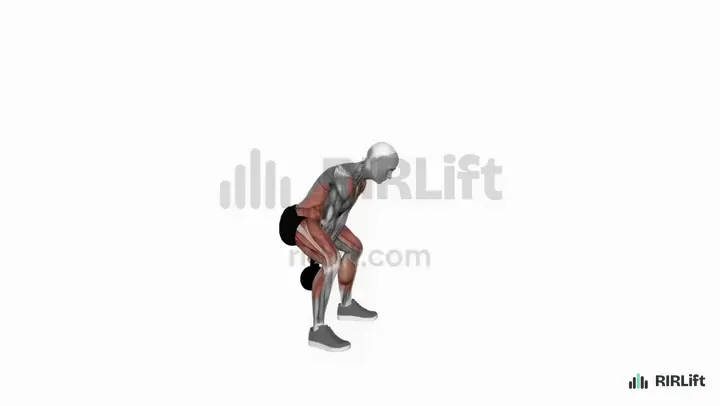
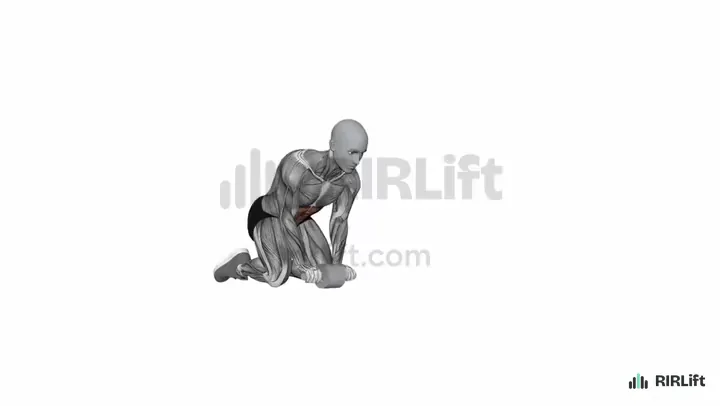
Put them together: example sessions
Each session below picks from the exercises above for one situation, with the sets, reps, rest and RIR filled in. Open one in the session builder to change a pick, price it from a recent set, and add it to RIRLift.
-
Session 1
Home, no equipment, 15 minutes
You train at home with a mat and a sofa or sturdy chair, and want a short core session you can repeat three times a week.
3× a week · 21 sets a week · ~15 min
-
Session 2
Gym, after your lower-body day
You already lift for your glutes and legs at the gym and want a core block you can tack on at the end.
2× a week · 24 sets a week · ~25 min
-
Session 3
One kettlebell at home, 30 minutes
You own one kettlebell and want your core work to also count as strength and fitness training.
2× a week · 18 sets a week · ~20 min
Session 1
Home, no equipment, 15 minutes
- Workouts3× a week
- Working sets21 a week
- Per workout~15 min
- EquipmentBodyweight
You train at home with a mat and a sofa or sturdy chair, and want a short core session you can repeat three times a week.
Each session covers the front, the sides and the lower back with only your bodyweight: the dead bug and plank for the front, the side plank and Copenhagen plank (top leg on the sofa) for the sides, the superman for the back. Holds are counted in seconds and stop with a couple of seconds still in you, because a shaky last few seconds teaches your body to sag. Two or three sets each keeps the whole thing under 15 minutes.
| Exercise | Sets × reps | RIR | Rest |
|---|---|---|---|
| Dead BugPer side. Back flat. | 3 × 6–10 | 2 | 45 s |
| Side PlankSeconds per side. | 2 × 20–40 | 2 | 30 s |
| SupermanTwo-second hold. | 2 × 8–12 | 2 | 45 s |
Open Core A in the session builder
| Exercise | Sets × reps | RIR | Rest |
|---|---|---|---|
| PlankSeconds. | 3 × 20–45 | 2 | 45 s |
| Copenhagen PlankSeconds per side. Knee on the sofa. | 2 × 10–25 | 2 | 45 s |
| SupermanTwo-second hold. | 2 × 8–12 | 1 | 45 s |
Open Core B in the session builder
- How to run it
- Alternate Core A and Core B on three days a week. Rest 30 to 45 seconds between sets; do each side before resting.
- How to progress
- When every hold reaches the top of its range at the target RIR, make the exercise harder rather than longer: lift a foot in the plank, straighten the legs further in the dead bug, move the Copenhagen leg from knee to ankle.
Session 2
Gym, after your lower-body day
- Workouts2× a week
- Working sets24 a week
- Per workout~25 min
- EquipmentAb Wheel, Adjustable Cable, Hyperextension, Dumbbells
You already lift for your glutes and legs at the gym and want a core block you can tack on at the end.
After squats and hip thrusts your legs are tired, so this block uses exercises that load the core without asking much more from them: the Pallof press and suitcase carry for the sides, the rollout for the front, the back extension for the lower back. The rollout and back extension are kept at 2 RIR since you are already fatigued; the carry goes heavy because it barely touches your legs. About 12 sets in 15 to 20 minutes.
| Exercise | Sets × reps | RIR | Rest |
|---|---|---|---|
| Ab Wheel RolloutFrom the knees. | 3 × 6–12 | 2 | 75 s |
| A1 Pallof PressPer side. Two-second pause. | 3 × 8–12 | 1 | 30 s |
| A2 45-Degree Back Extension | 3 × 10–15 | 2 | 1 min |
| Dumbbell Suitcase CarrySteps per side. Heavy. | 3 × 20–30 | 1 | 1 min |
- How to run it
- Add this after one or two lower-body sessions a week. Superset the Pallof press with the back extension.
- How to progress
- Add reps first, then load: a heavier dumbbell for the carry, a plate held to your chest for the back extension, a farther roll for the rollout.
Session 3
One kettlebell at home, 30 minutes
- Workouts2× a week
- Working sets18 a week
- Per workout~20 min
- EquipmentKettlebells
You own one kettlebell and want your core work to also count as strength and fitness training.
The swing loads your hips and glutes while your core braces, the get-up and windmill work your trunk through every position, and the dead bug sets your bracing before you start. Each session uses one bell, so there is nothing to change. The swing sits at 2 RIR because form breaks before your muscles give out, and the get-up is low-rep and slow for the same reason.
| Exercise | Sets × reps | RIR | Rest |
|---|---|---|---|
| Dead BugPer side. Warm-up for bracing. | 2 × 8–10 | 2 | 45 s |
| Kettlebell SwingHips, not arms. | 4 × 12–20 | 2 | 75 s |
| Kettlebell Turkish Get-UpPer side. Slow. | 3 × 2–3 | 2 | 90 s |
Open Bell A in the session builder
| Exercise | Sets × reps | RIR | Rest |
|---|---|---|---|
| Kettlebell SwingHips, not arms. | 4 × 12–20 | 2 | 75 s |
| Kettlebell WindmillPer side. | 3 × 5–8 | 2 | 1 min |
| Side PlankSeconds per side. | 2 × 20–40 | 2 | 45 s |
Open Bell B in the session builder
- How to run it
- Do Bell A and Bell B on two separate days. Do every rep of the get-up and windmill on one side before switching.
- How to progress
- Add swing reps up to 20, then add a set. When the get-up feels smooth for 3 per side, it is time for the next bell up, starting with the windmill at the old weight.
Make it fit you
-
Want a flatter stomach
These exercises make the muscles under your stomach stronger and firmer. How much of them shows depends on body fat, which drops with your overall diet and activity, not from extra core sets. Keep the plan the same and let your eating do the rest.
-
Training glutes already
Swings, hip thrusts and Romanian deadlifts already work your lower back and hips hard. Drop the superman and back extension and spend those sets on the side plank and Pallof press instead.
-
Lower back gets sore
Leave out the rollout and windmill for now, and keep the dead bug, side plank and suitcase carry, where your spine stays still. Bring the rollout back from your knees with a short roll once those feel easy.
-
Holds feel too easy
Make each hold harder instead of longer: lift a foot in the plank, move to the Copenhagen plank from the side plank, or hold a dumbbell on your hip. Thirty seconds of a hard version does more than two minutes of an easy one.
-
Only 10 minutes
Pick one exercise from the front, one from the sides and one for the lower back, two sets each, and do it after your main workout. That is enough when you repeat it two or three times a week.
-
Log the RIR, not just the time
Note how many good reps or seconds you had left on each set. In RIRLift you log the RIR with each set and it tells you when you are ready to move on, so you know exactly when to switch to the harder version.
Questions
What are the best core exercises for women?
The dead bug, plank, side plank, superman, Pallof press, suitcase carry and kettlebell swing cover every part of the core between them: the front, the sides, the lower back and the job of holding your trunk still while your body moves. The same exercises work for men; nothing about the core is different by sex.
How do you do the superman exercise?
Lie face down with your arms stretched past your head. Squeeze your glutes and raise your arms, chest and thighs a few inches, keeping your gaze on the floor. Hold for two seconds and lower slowly. Do 8 to 12 reps.
Do core exercises reduce belly fat?
Not directly. Training a muscle does not burn the fat sitting on top of it. Core exercises make your stomach stronger and firmer; lowering belly fat comes from your overall diet and activity over weeks and months.
How long does it take to strengthen a very weak core?
Most people notice holds getting longer and exercises feeling steadier within two to four weeks of training the core two or three times a week. Real strength gains keep coming for months as you move to harder versions.
What are good core workouts at home?
The home mat plan above: dead bug, plank, side plank, Copenhagen plank with your leg on a sofa, and superman. Two or three sets each, three times a week, takes about 15 minutes and needs no equipment.
How often should women train core?
Two or three times a week, 6 to 10 hard sets each time. If you already squat, deadlift and swing, your core gets work there too, so two short sessions are usually enough.
Related templates
-
Ab exercises for women: upper abs, lower abs and obliques
Crunches, leg raises and cable moves that target the six-pack muscles directly.
-
Core exercises at home for the front, sides and back
More no-equipment and dumbbell core work for training at home.
-
Glute exercises for women: thrusts, hinges and side glute work
Pair this core work with a lower-body plan built around your glutes.
-
Side plank: how to do it, how long to hold, and how to make it harder
Every side plank level, from knees down to a weighted hold.
-
Turkish get-up: the steps, what it trains, and how to learn it
The get-up broken down step by step.