
Overhead press: how to do it, and what to do instead
Published October 17, 2026
The overhead press is pressing a barbell from your upper chest to locked arms above your head while you stand. It trains your front delts and triceps, with the side delts and upper traps helping. What makes it work is a straight bar path: move your head back to let the bar pass your chin, then push your head through so the bar finishes over the middle of your foot.
- WorksShoulders
- AlsoTriceps
- EquipmentBarbells
- Start with3 × 6–10, 2 in reserve, 2:30 min rest
How to do the barbell overhead press
It is the press you can load heaviest standing up and keep adding small plates to for months. Your whole body has to hold still under the bar, so it also teaches you to brace in a way that carries over to every other standing lift.
Steps
- Set the bar in a rack at collarbone height and grip it just outside your shoulders, wrists stacked over your elbows.
- Unrack it onto your upper chest, take one step back and set your feet about hip width apart.
- Squeeze your glutes, brace your abs so your ribs stay down, and take a big breath.
- Press straight up, pulling your chin back so the bar clears your face.
- Once the bar passes your forehead, push your head through until the bar sits over the middle of your foot with your arms locked.
- Lower it along the same line to your upper chest and re-brace before the next rep.
Cues
- Glutes tight, ribs down
- Chin back, bar straight up
- Head through at the top
Common mistakes
- Leaning back to finish reps, which turns the lift into an incline press: lower the weight until your torso stays vertical for the whole set.
- Pressing the bar forward around your face: pull your chin back and keep the bar close enough to brush your nose.
- Stopping short of lockout: finish every rep with the bar over your mid-foot and your arms straight, or the rep doesn't count in your log.
- Elbows flared out to the sides at the start: keep them slightly in front of the bar so your forearms are vertical from the first inch.
Swap for: Seated Barbell Overhead Press, Dumbbell Shoulder Press, Landmine Press
Muscles the barbell overhead press works
The overhead press works your front delts and triceps hardest, with the side delts, upper traps and upper chest helping. The front delt and upper chest do most of the work off your chest, and the triceps and traps take over as you lock out, which is why a weak lockout usually means your triceps need their own sets.
Sets, reps and reps in reserve for the barbell overhead press
| Goal | Sets × reps | RIR | Rest |
|---|---|---|---|
| Build muscle | 3 × 6–10 | 2 | 2:30 min |
| This is the default the session builder below uses for the barbell overhead press. | |||
| Strength | 3–5 × 3–5 | 1–3 | 3 min |
| For when a heavier press is the goal: use small plates, because a 5 lb jump is a big share of what most people press. | |||
| Beginners | 2–3 × 8–10 | 2–3 | 2 min |
| Stay further from failure while the bar path is new, and add a rep before you add weight. | |||
Barbell overhead press variations
-
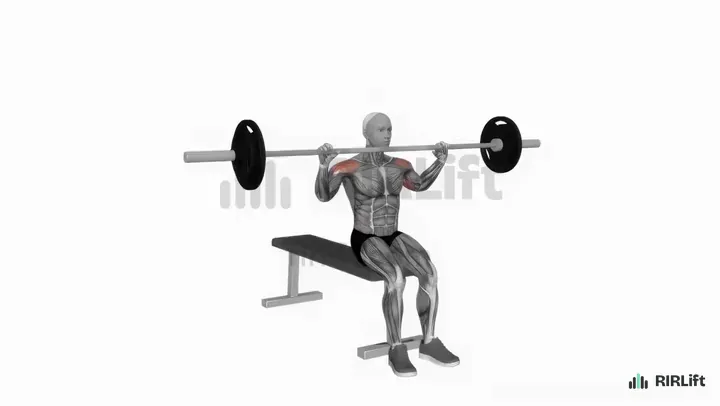
Seated Barbell Overhead Press
Pick it if you lean back on your last reps standing; a bench with a back pad takes your legs and hips out of the press.
Build a session with it -
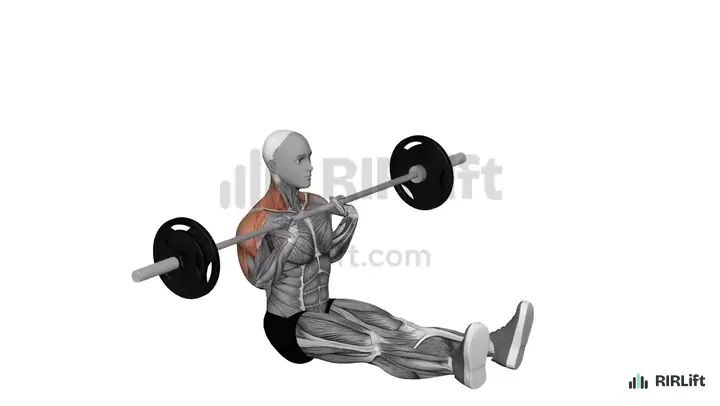
Barbell Z Press
Pick it if you want the strictest press there is: sitting on the floor with your legs straight, any lean back ends the rep.
Build a session with it -
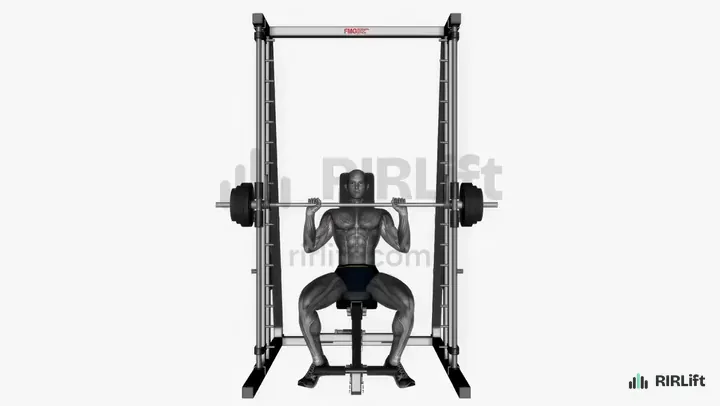
Smith Machine Shoulder Press
Pick it to take balance out of the set so you can push closer to failure without a spotter.
Build a session with it -
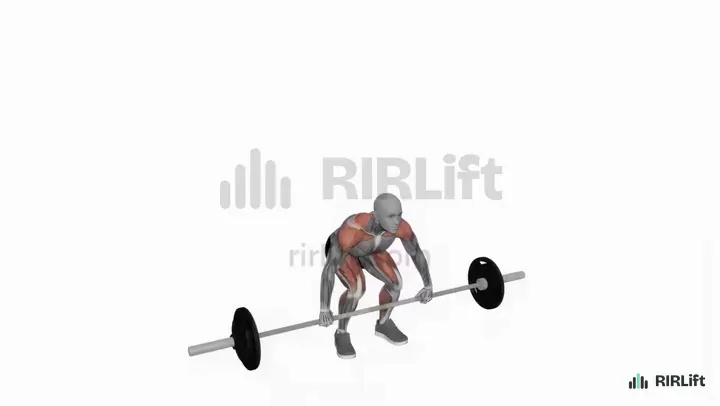
Barbell Clean and Press
Pick it when you have a bar and plates but no rack, since the clean gets the bar to your shoulders.
Build a session with it
Barbell overhead press alternatives
Dumbbells instead of a bar
-
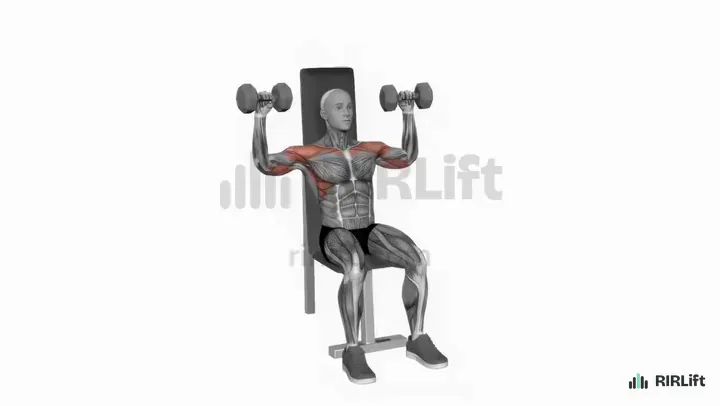
Dumbbell Shoulder Press
The go-to swap: each arm finds its own path, and you can sit down if your lower back tires first standing.
Build a session with it -
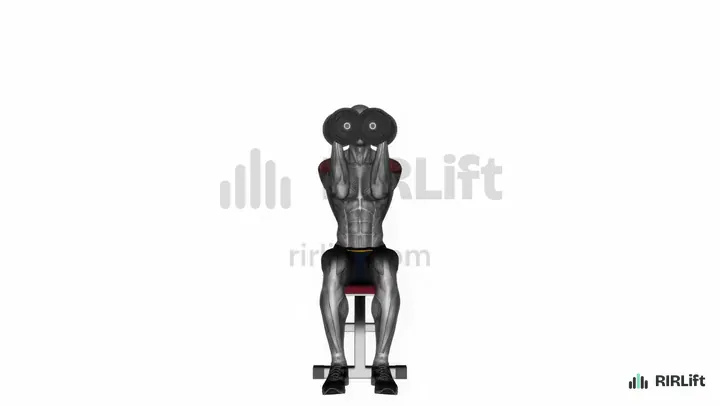
Neutral-Grip Dumbbell Shoulder Press
Palms facing each other and elbows in front of you, if pressing with a straight bar feels awkward on your shoulders or wrists.
Build a session with it -
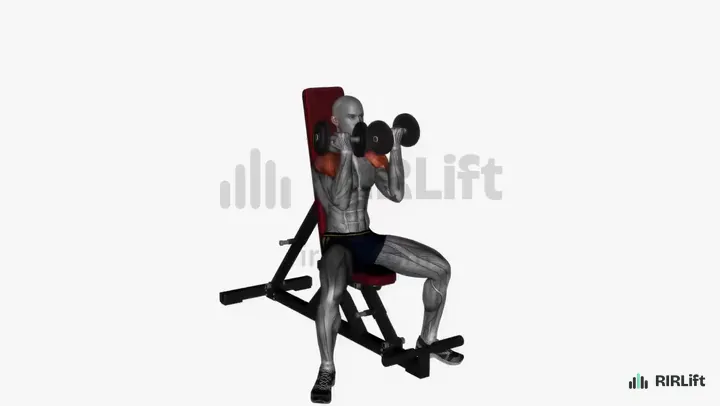
Arnold Press
Turn your palms out as you press for a longer path at the bottom; use lighter dumbbells than your shoulder press.
Build a session with it
Machines and landmine
-
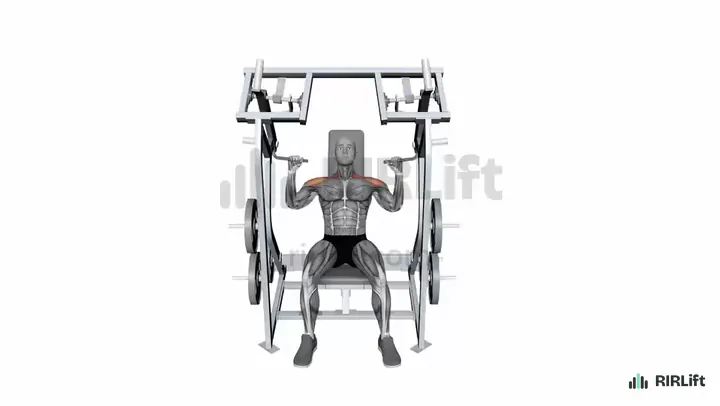
Machine Shoulder Press
A fixed path and a pin to change the weight, so you can take sets close to failure and add drop sets.
Build a session with it -
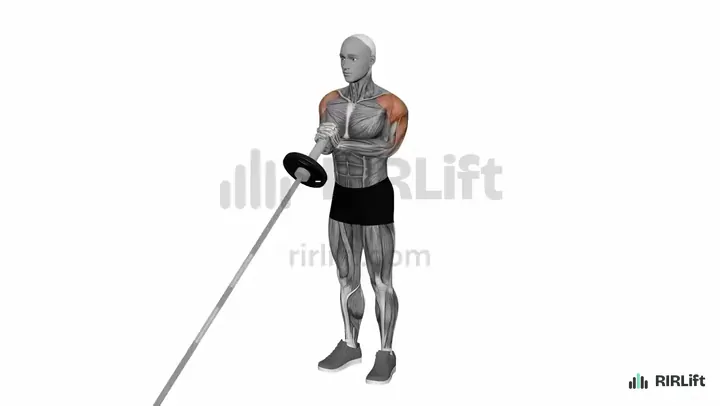
Landmine Press
Press one end of a bar up and forward at an angle, if pressing straight overhead feels awkward.
Build a session with it
No barbell or dumbbells
-
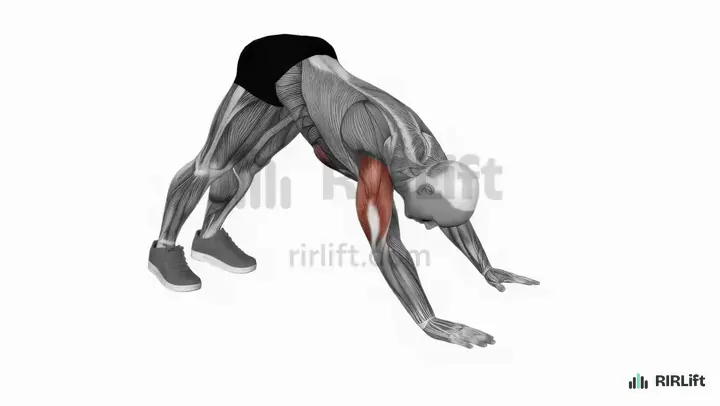
Pike Push-Up
Hips high, head toward the floor; raise your feet on a box to make it harder as you get stronger.
Build a session with it -
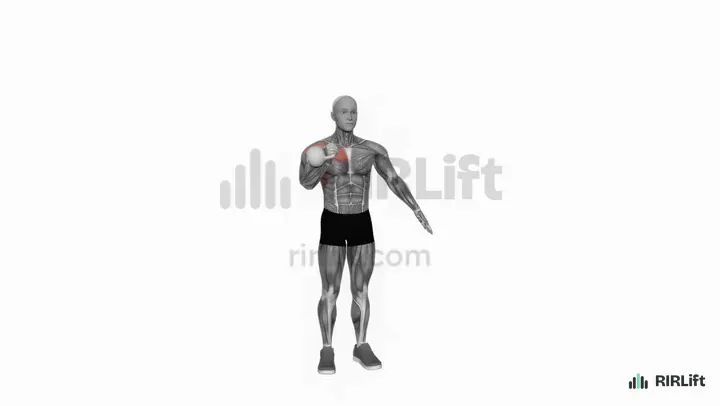
Kettlebell Overhead Press
One arm at a time with a kettlebell resting on the back of your forearm.
Build a session with it -
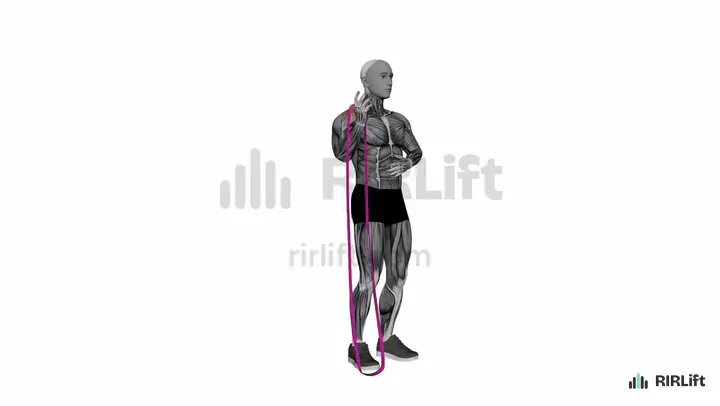
Band Overhead Press
Stand on a band and press; it gets harder as your arm straightens, so it suits home and travel sessions.
Build a session with it
Standing vs seated overhead press
Standing lets you press the bar from the floor up with your whole body braced, and it needs nothing but a rack or a clean. Seated takes your legs and the lean-back option away, so your shoulders and triceps finish every rep on their own.
Press standing if your torso stays vertical through the last rep. If you catch yourself leaning back or your knees dipping to start the bar, sit down, or switch to dumbbells, and judge the lift by how many clean reps you get rather than the weight on the bar.
Overhead press vs bench press
The bench press lets you lift far more weight and trains your chest hardest. The overhead press trains your front delts and triceps hardest and needs you to brace standing up.
Keep both in a week if you have the time: they share the front delts and triceps, so count both toward your shoulder and triceps sets.
Questions
What muscles does the overhead press work?
Mainly your front delts and triceps. Your side delts, upper traps and upper chest help, and your abs and glutes work to keep your torso still under the bar.
What can I do instead of the overhead press?
A dumbbell shoulder press is the closest swap and works seated or standing. A machine shoulder press lets you push closer to failure, a landmine press suits you if pressing straight overhead feels awkward, and pike push-ups work with no equipment.
Should you sit down for an overhead press?
Sit when you want your shoulders and triceps to do all the work and your lower back tires first standing. Stand when you want to press the heaviest bar and train your brace. Both build your shoulders; pick the one where your torso stays still.
Is a 65 lb overhead press good?
For someone in their first months of lifting, pressing 65 lb for clean reps is a normal start, and an empty 45 lb bar is a fine place to begin. What matters more is that the number goes up in your log: add small plates whenever you reach the top of your rep range.
Is the overhead press the same as the military press?
Yes. Military press, shoulder press, strict press and OHP all name the same lift: pressing a bar from your upper chest to overhead without using your legs. The push press is the version where you dip and drive with your legs.
How do I get a stronger overhead press?
Press twice a week, add weight in the smallest jumps you can, and give your triceps their own sets so the lockout keeps up. Stop most sets with 1–3 reps left in reserve so you can keep adding weight week after week.
How many sets of overhead press per week?
Count them with your other shoulder pressing toward 10–20 hard sets per muscle per week. Splitting those sets over two or more sessions works at least as well as one big shoulder day.
Related templates
-
The best workout for shoulders, for your situation
Puts the overhead press next to the raises and rear-delt work that round out your shoulders.
-
Lateral raises: how to do them, and what to do instead
The side-delt work presses leave behind, for the shoulder width the overhead press alone won't give you.
-
Tricep pushdown: how to do it, which attachment to use, and what to do instead
Extra triceps sets for when your press stalls at lockout.
-
Barbell exercises: the 18 lifts worth learning, and how to put them together
More barbell lifts to build a full session around the press.
-
How to use RIR
How to judge 2 reps in reserve on a press where the last rep slows down sharply.