
Bodyweight pec exercises: push-ups, harder variations and dips
Published October 19, 2026
The best bodyweight pec exercises are the push-up and its variations: the incline and kneeling push-up if you are building up, the wide and decline push-up to change the angle, the deficit and archer push-up when 20 reps get easy, and the forward-leaning chest dip if you have bars. You can build a bigger chest without equipment by making each set harder as you get stronger, not by doing more reps, and taking 9 or so hard sets per session close to failure twice a week.
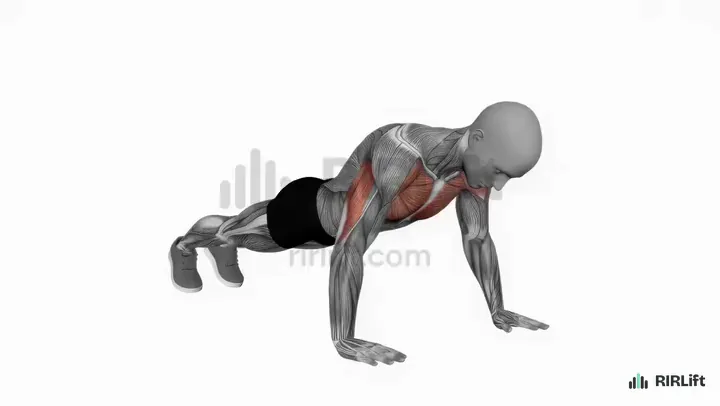
- Push-Up Chest
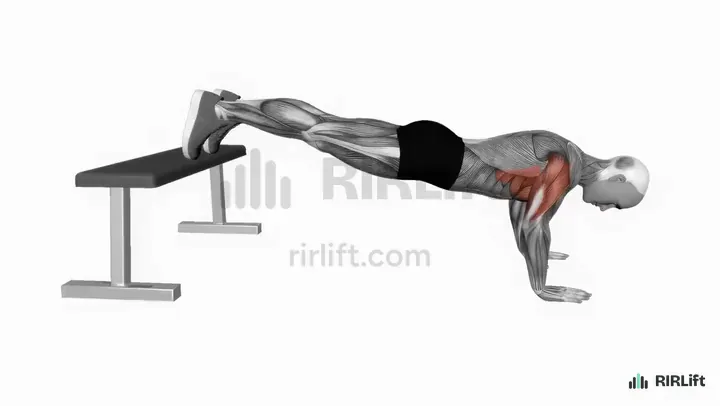
- Decline Push-Up Chest
- Wide Push-Up Chest
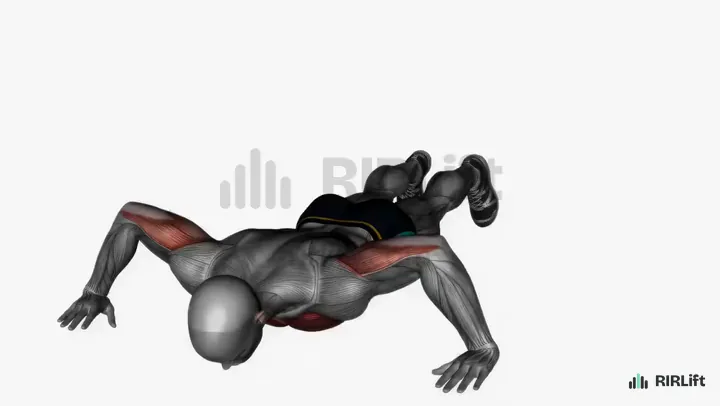
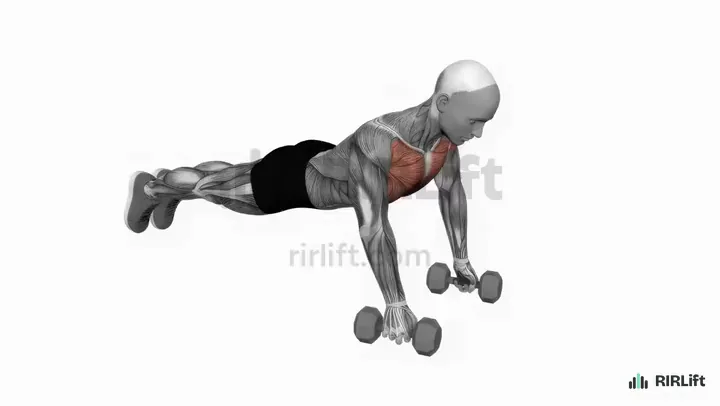
- Deep Push-Up Chest
- Archer Push-Up Chest
- Chest Dip Chest, Triceps
- Incline Push-Up Chest
- Close-Grip Push-Up Triceps, Chest
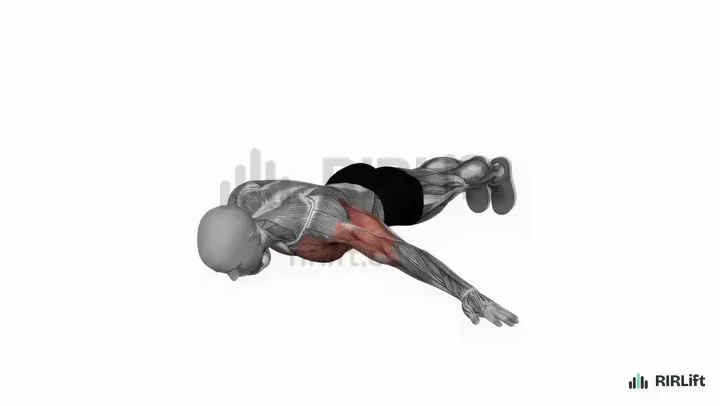
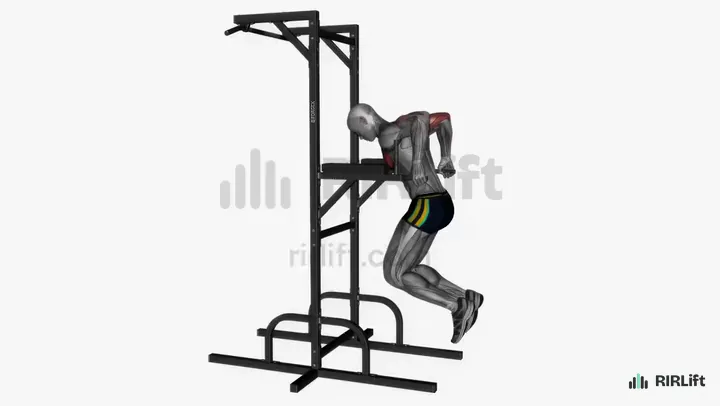
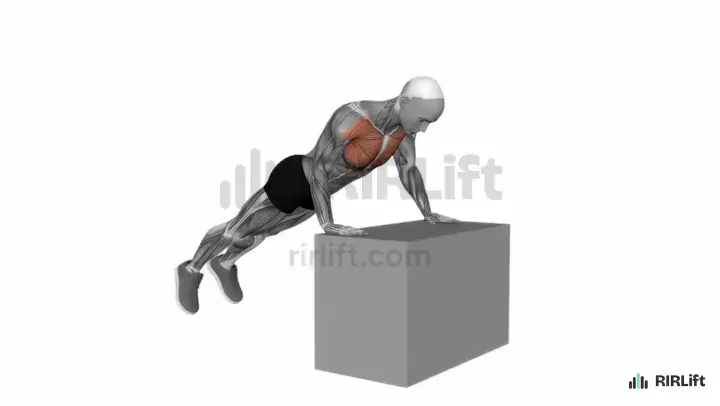
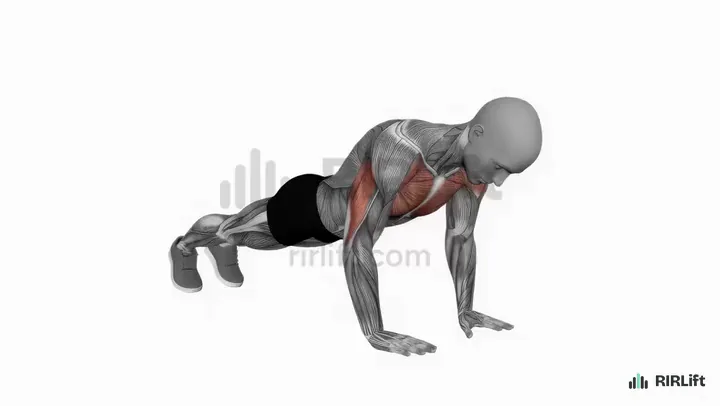
Put them together: example sessions
Each session below picks from the exercises above for one situation, with the sets, reps, rest and RIR filled in. Open one in the session builder to change a pick, price it from a recent set, and add it to RIRLift.
-
Session 1
You can do fewer than 10 push-ups
You have no equipment and cannot yet do 10 floor push-ups in a row with good form.
3× a week · 18 sets a week · ~15 min
-
Session 2
Floor only, 15 or more push-ups
You can do 15 or more push-ups, you have no bars or weights, and you want the chest to keep growing.
2× a week · 18 sets a week · ~20 min
-
Session 3
You have dip bars or a park
You train with bodyweight but have parallel bars nearby, at a park, on a dip station, or on a pull-up tower.
2× a week · 18 sets a week · ~25 min
Session 1
You can do fewer than 10 push-ups
- Workouts3× a week
- Working sets18 a week
- Per workout~15 min
- EquipmentBodyweight
You have no equipment and cannot yet do 10 floor push-ups in a row with good form.
Practice builds push-up strength quickly, so this plan runs three short sessions a week instead of two long ones. Every session starts with the hardest version you can do for at least 5 reps and finishes with an easier one for more reps. Sets end 2 reps short of failure so each rep keeps a straight body, which matters more than reaching failure at this stage. Each session is 6 working sets and takes about 15 minutes.
| Exercise | Sets × reps | RIR | Rest |
|---|---|---|---|
| Incline Push-UpLowest surface you can do 5 clean reps on. | 3 × 5–12 | 2 | 90 s |
| Kneeling Push-UpHips forward. | 3 × 8–15 | 2 | 1 min |
Open Session A in the session builder
| Exercise | Sets × reps | RIR | Rest |
|---|---|---|---|
| Push-UpAs many clean reps as you can, stopping 2 short. | 3 × 1–8 | 2 | 2 min |
| Incline Push-UpOne step higher than Session A. | 3 × 8–15 | 2 | 1 min |
Open Session B in the session builder
| Exercise | Sets × reps | RIR | Rest |
|---|---|---|---|
| Kneeling Push-UpFull depth. | 3 × 10–20 | 2 | 1 min |
| Incline Push-UpThree seconds down. | 3 × 6–12 | 1 | 90 s |
Open Session C in the session builder
- How to run it
- Do the three sessions on non-consecutive days, such as Monday, Wednesday and Friday. For the incline push-up, use the lowest surface where you can get 5 clean reps.
- How to progress
- When you get 3 sets of 12 on the incline push-up, use a lower surface. When the floor push-up reaches 3 sets of 8, swap Session C's kneeling push-ups for a third round of floor push-ups.
Session 2
Floor only, 15 or more push-ups
- Workouts2× a week
- Working sets18 a week
- Per workout~20 min
- EquipmentBodyweight
You can do 15 or more push-ups, you have no bars or weights, and you want the chest to keep growing.
Once regular push-ups are easy, more reps of them build little, so this plan makes each session harder with range, angle and leverage instead. Session A leads with the decline push-up and the deficit push-up for the most load and stretch; Session B uses the archer push-up to put most of your weight on one arm, then the wide and close-grip versions to cover both ends of the chest. Sets go to 1 rep in reserve because the variations are hard enough to keep reps in the 6 to 20 range. Each session is 9 working sets.
| Exercise | Sets × reps | RIR | Rest |
|---|---|---|---|
| Decline Push-UpFeet on a chair seat. | 3 × 8–15 | 1 | 90 s |
| Deep Push-UpTwo seconds down into the stretch. | 3 × 8–15 | 1 | 90 s |
| Wide Push-UpHands wide, full depth. | 3 × 10–20 | 1 | 1 min |
Open Session A in the session builder
| Exercise | Sets × reps | RIR | Rest |
|---|---|---|---|
| Archer Push-UpReps per side. Assisting arm straight. | 3 × 5–10 | 1 | 2 min |
| Push-UpThree seconds down, pause at the bottom. | 3 × 10–25 | 1 | 1 min |
| Close-Grip Push-UpElbows hug your ribs. | 3 × 8–15 | 1 | 1 min |
Open Session B in the session builder
- How to run it
- Do Session A and B twice a week in total, with at least a day between them. A chair seat works for the decline push-up and two dumbbells or stacked books for the deficit.
- How to progress
- When you reach the top of a rep range on every set at 1 rep in reserve, make the exercise harder: raise the feet higher on the decline, add more depth to the deficit, or move from the archer toward the one-arm push-up.
Session 3
You have dip bars or a park
- Workouts2× a week
- Working sets18 a week
- Per workout~25 min
- EquipmentDip Bar
You train with bodyweight but have parallel bars nearby, at a park, on a dip station, or on a pull-up tower.
Dips load the chest with close to your full bodyweight, so they lead both sessions as the main strength move at 1 to 2 reps in reserve. Session A adds explosive push-ups early for power and a decline push-up for the upper chest the dip misses; Session B pairs the archer push-up with a deficit push-up for the stretch. That gives 9 working sets per session.
| Exercise | Sets × reps | RIR | Rest |
|---|---|---|---|
| Explosive Push-UpStop when your hands stop leaving the floor. | 3 × 3–6 | 2 | 90 s |
| Chest Dip1 warm-up set firstLean forward. Two seconds down. | 3 × 6–12 | 2 | 2:30 min |
| Decline Push-UpFeet on a bench or step. | 3 × 8–15 | 1 | 90 s |
Open Session A in the session builder
| Exercise | Sets × reps | RIR | Rest |
|---|---|---|---|
| Chest Dip1 warm-up set firstLean forward. Stop at a strong stretch. | 3 × 8–15 | 1 | 2 min |
| Archer Push-UpReps per side. | 3 × 5–10 | 1 | 90 s |
| Deep Push-UpSink the chest between your hands. | 3 × 8–15 | 1 | 90 s |
Open Session B in the session builder
- How to run it
- Do both sessions each week, two or three days apart. Warm up with a set of easy push-ups before the first set of dips.
- How to progress
- Add reps to the dips until you can do 3 sets of 15 at 1 rep in reserve, then slow the lowering to three seconds. On the push-ups, move to a harder variation once you hit the top of the rep range.
Make it fit you
-
Wrists hurt on the floor
Grip two hex dumbbells or push-up handles so your wrists stay straight. That is the deficit push-up set-up, and you can use the same grip for every other push-up here.
-
No chair or bench for decline push-ups
Put your feet on a stair, a couch cushion or the edge of a bed. Any stable surface between knee and hip height works.
-
Pushing every day
If you want to do push-ups daily, keep most days easy at 3 to 4 reps in reserve and only push close to failure two or three times a week. Daily sets to failure leave you too tired to make progress.
-
Push-ups stalled at the same number
Stop counting reps and slow the tempo: three seconds down and a one-second pause at the bottom. When that is easy for 12 reps, move to the next harder variation.
-
Shoulders sore after dips
Stop each rep higher, where you feel a stretch but no pinch, and keep your shoulders pulled down away from your ears. Use the deficit push-up instead for a week if the soreness lasts.
-
Log reps in reserve with every variation
Write down which variation you did and how many reps you had left. If you log in RIRLift, the RIR you enter for each set shows when an exercise has become too easy to keep growing from.
Questions
Can you build your chest with bodyweight only?
Yes, as long as the sets stay hard. Muscle grows from sets taken close to failure in roughly 5 to 30 reps, and push-up variations and dips keep you in that range for a long time. Once regular push-ups pass 25 reps, switch to decline, deficit, archer or one-arm push-ups to bring the reps back down.
Which bodyweight exercise is best for the chest?
The dip, if you have bars: leaning forward puts close to your whole bodyweight on the chest. Without bars, the deficit push-up and decline push-up are the hardest common choices that still allow 8 to 15 reps.
Will 100 push-ups a day build my chest?
Only for a while. When 100 easy push-ups is no longer a challenge, each set ends far from failure and does little for growth. You get more from 6 to 9 hard sets twice a week, using harder variations so each set ends close to failure.
Do push-ups build chest?
Yes. Push-ups train the pecs, front delts and triceps in the same way a bench press does. They build chest muscle as long as each set ends within a few reps of failure, which is why the harder variations matter once regular push-ups get easy.
Is 3 exercises enough for a chest day?
Yes. Three exercises of 3 sets each, taken close to failure, is a full chest session. The number of hard sets per week matters more than the number of exercises; aim for about 10 to 20.
How do I work my pecs without a bench?
Use the floor. Push-ups replace the bench press, decline push-ups replace the incline press, wide push-ups give a deep stretch, and a deficit push-up on two dumbbells or blocks adds range. Dips on parallel bars add load if you have access to them.
How do skinny guys build pecs with bodyweight?
Train push-up variations hard twice a week, move to a harder version every time you reach 20 reps, and eat enough to gain weight slowly. Bodyweight training adds muscle well, but without enough food the muscle has nothing to grow from.
Related templates
-
Push-ups: how to do them, what they work, and how to make them harder
The full technique guide for the standard push-up.
-
Decline push-up: how to do it, what it works, and how to scale it
How to set up and progress the feet-raised push-up.
-
Chest exercises at home, with or without equipment
Adds dumbbells and bands to these bodyweight moves.
-
Bodyweight tricep exercises: push-ups and dips that train the back of the arm
The arm work that finishes a no-equipment push day.
-
How to use reps in reserve (RIR)
How to judge reps in reserve on push-ups and dips.