
Incline push-up: how to do it and how to progress to a full push-up
Published October 19, 2026
An incline push-up is a push-up with your hands on something raised, like a bench, box or kitchen counter, and your feet on the floor. The higher your hands, the less of your bodyweight you press, so it is the easiest way to build up to floor push-ups. Keep your body rigid as a plank and lower your chest to the edge on every rep.
- WorksChest
- AlsoTriceps, Shoulders
- EquipmentBodyweight
- Start with3 × 8–15, 2 in reserve, 1 min rest
How to do the incline push-up
Raising your hands takes part of your weight off, so you can do full-range push-ups with good form long before you can do them on the floor. You can make it harder in small steps just by using a lower surface, and it doubles as high-rep chest work for stronger lifters.
Steps
- Face a sturdy bench, box or counter and set your hands on its edge, a little wider than your shoulders.
- Walk your feet back until your body forms one rigid line from your head down to your heels, then squeeze your glutes and brace your stomach.
- Bend your elbows and lower your chest to the edge, keeping your elbows angled back at about 45 degrees from your body.
- Stop when your chest is just above the surface, then press the surface away until your arms are straight.
- Keep your hips in line with your shoulders on the way up, and start the next rep without resting at the top.
Cues
- Body moves as one plank
- Chest to the edge
- Elbows back, not out
Common mistakes
- Letting the hips sag or pike: squeeze your glutes and keep your ribs down so your whole body rises at once.
- Stopping halfway down: lower until your chest nearly touches; if you cannot, use a higher surface instead of a shorter range.
- Using a surface that slides: push against a bench against a wall, a fixed counter or stairs, never a chair that can tip.
Swap for: Kneeling Push-Up, Push-Up, Machine Chest Press
Muscles the incline push-up works
The incline push-up works the chest, especially the lower and middle fibers because your arms press down and away from your body, with the front delts and triceps helping. Your abs, glutes and the muscles around your shoulder blades hold your body in one straight line.
Sets, reps and reps in reserve for the incline push-up
| Goal | Sets × reps | RIR | Rest |
|---|---|---|---|
| Build up to floor push-ups | 3 × 8–12 | 2 | 60–90 s |
| Once you hit 12 clean reps for all sets, use a surface a few inches lower. | |||
| Build muscle | 3–4 × 10–20 | 1–2 | 60–90 s |
| Pick a height where you fail between 10 and 20 reps; lower it when you pass 20. | |||
| Extra chest volume | 2–3 × 15–25 | 1 | 60 s |
| Add after presses as a finisher when floor push-ups are already easy. | |||
Incline push-up variations
-
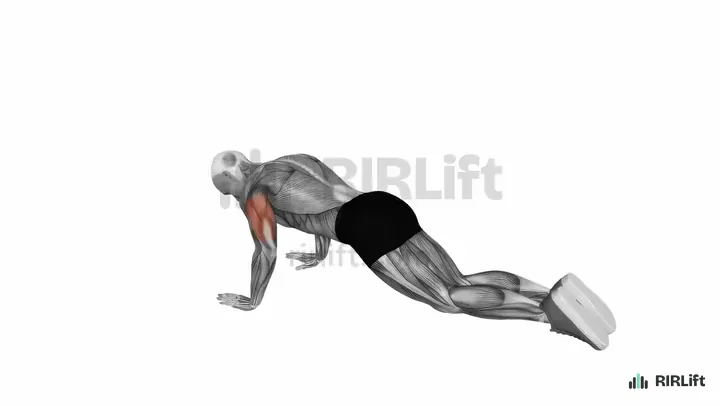
Kneeling Push-Up
Lower your knees to the floor when you want to practice the floor position with less weight.
Build a session with it -
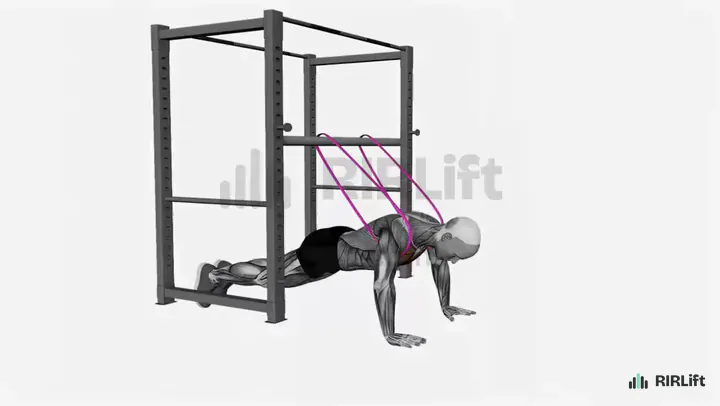
Band-Assisted Push-Up
Loop a band under your chest from a rack when you want floor range with help at the bottom.
Build a session with it -
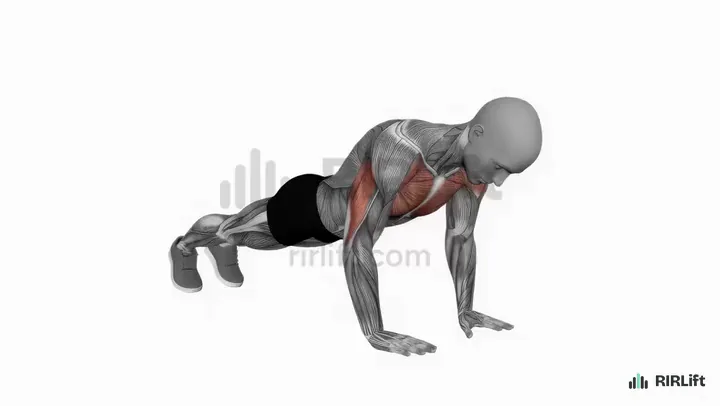
Close-Grip Push-Up
Place your hands closer together when you want more triceps.
Build a session with it -
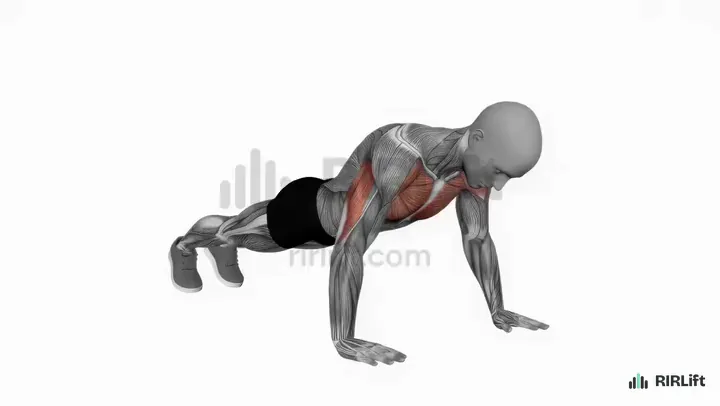
Push-Up
Move your hands to the floor once you can do 12 or more incline reps from a low step.
Build a session with it
Incline push-up alternatives
Harder bodyweight
-
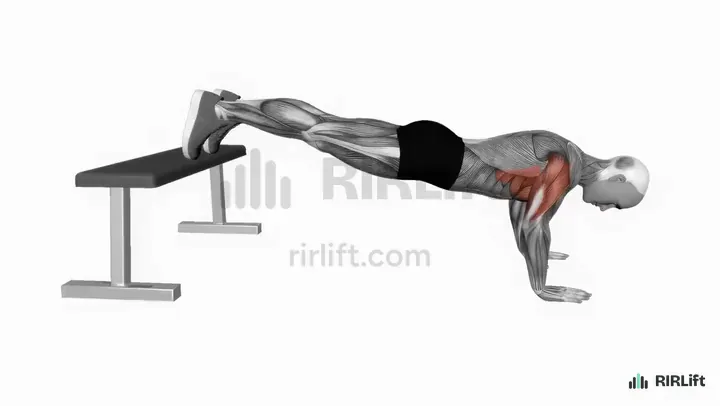
Decline Push-Up
Put your feet on a bench when floor push-ups are easy and you want more upper chest and shoulders.
Build a session with it -
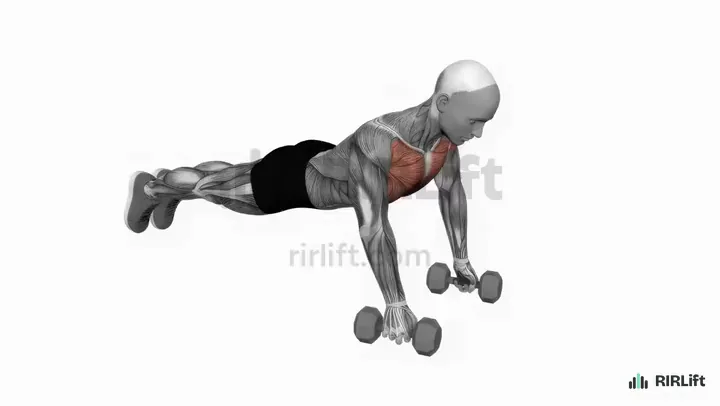
Deep Push-Up
Use handles or blocks so your chest drops below your hands for a longer stretch.
Build a session with it
Loaded presses
-
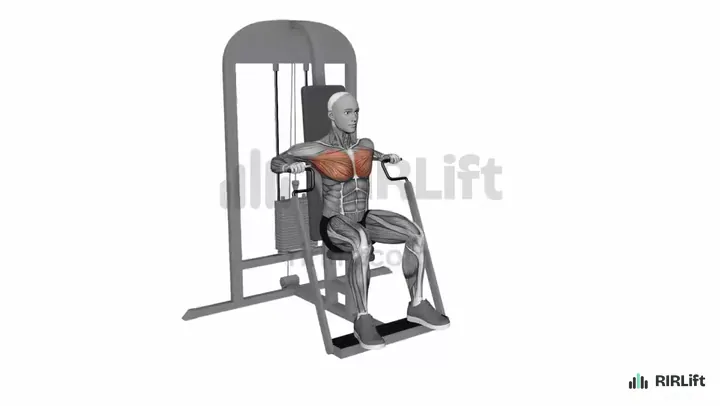
Machine Chest Press
Use a chest press machine at the gym when you want to load the same pattern and set the weight exactly.
Build a session with it -
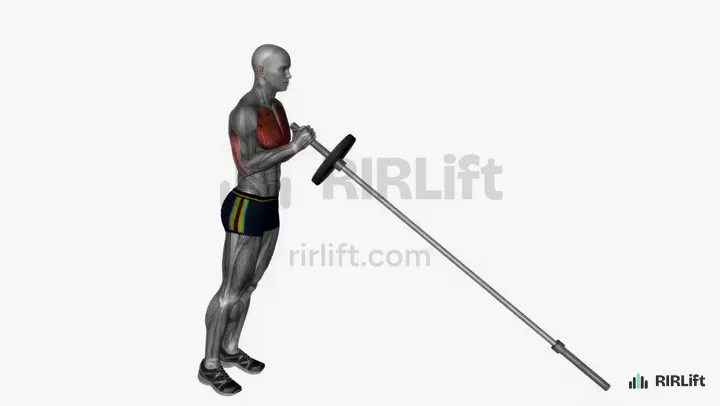
Landmine Chest Press
Press a landmine bar at an angle when you want a joint-friendly press with weight.
Build a session with it
Incline push-up vs regular push-up
The movement is the same; the difference is how much of your weight you press. With your hands raised, more of your weight sits on your feet, so each rep is lighter. The lower the surface, the closer it gets to a floor push-up.
The incline also tilts the press so your arms push down and away rather than straight forward, which puts a bit more work on the lower chest. Use the incline to get your rep count up and your form solid, then use the floor or decline versions when the incline becomes too easy.
How to progress to a full push-up
Pick a height where you can do 3 sets of 8 good reps. Each time all sets reach 12, move to something a few inches lower: wall, kitchen counter, table, back of a sofa, bench, then a low step. When you can do 12 from a step about a foot high, you are usually ready for a few floor push-ups. Mix them in: floor reps first, then finish the set on the incline.
Questions
Is the incline push-up effective?
Yes. Done close to failure with a full range, it builds the chest, shoulders and triceps, and it is the most practical step from no push-ups to floor push-ups.
How many incline push-ups equal one push-up?
There is no fixed number, because it depends on how high your hands are. The higher the surface, the smaller the share of your weight you press, so lower it over time rather than counting extra reps.
What muscles do incline push-ups work?
The chest, front delts and triceps, with a bit more lower chest than a floor push-up, plus the abs and glutes holding the plank.
Is 30 push-ups in a minute good?
For most people training regularly, 30 floor push-ups in a row is a solid result. If you are building toward it, use incline push-ups and count reps in reserve rather than racing the clock.
What can I do instead of incline push-ups?
Kneeling push-ups, a band-assisted push-up or a machine chest press train the same muscles at a level you can manage.
Are incline push-ups easier on the wrists?
They put less weight through your hands, which many people find easier. Holding the edge of a bench or step with your wrists straight also helps.
Related templates
-
Push-ups: how to do them, what they work, and how to make them harder
The floor push-up you are working toward.
-
Decline push-up: how to do it, what it works, and how to scale it
The harder version with your feet raised.
-
Chest exercises at home, with or without equipment
More chest moves with little or no equipment.
-
Bodyweight exercises: the 18 that build muscle, by muscle group
A full list of no-equipment exercises.
-
How to use RIR
How to count reps in reserve on push-ups.