Reverse hyper alternatives: train the same glutes and lower back without the machine
Published October 23, 2026
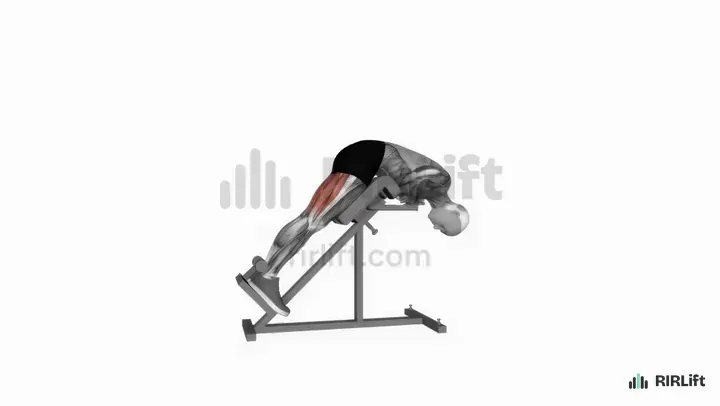
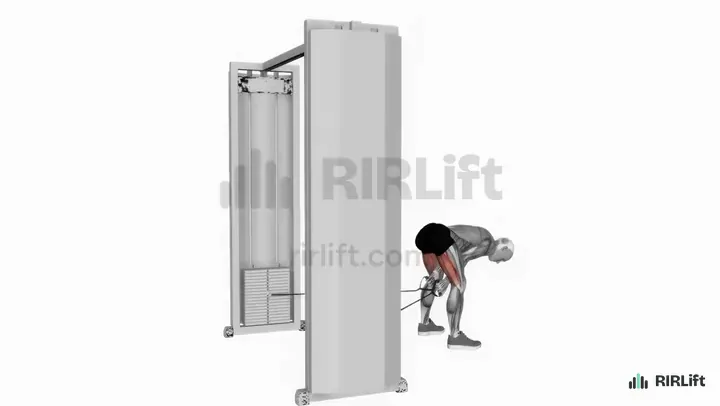
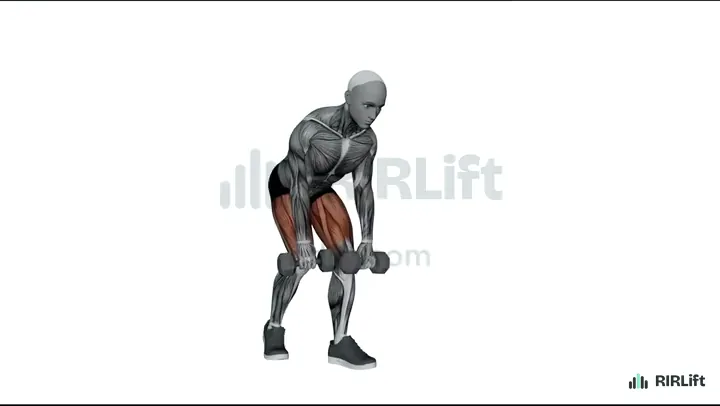
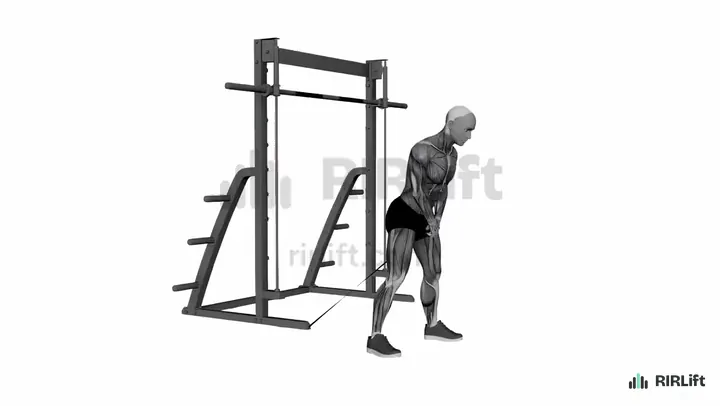
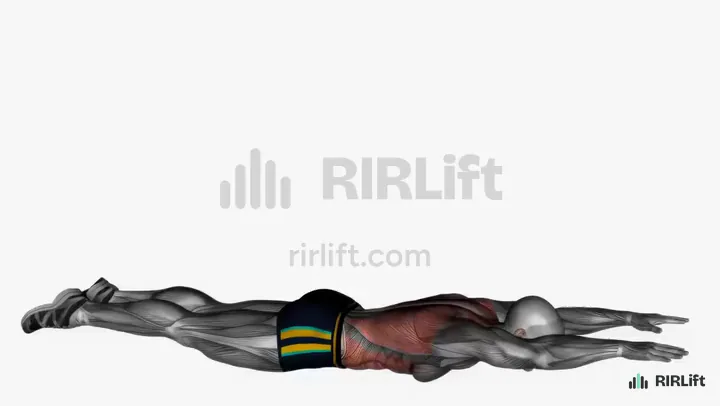
The best reverse hyper alternative is the 45-degree back extension: it trains the same glutes, hamstrings and lower back through hip extension, and almost every gym has the bench. If you want the reverse hyper's light load on your spine, the cable pull-through is the pick; with a barbell, good mornings and Romanian deadlifts load the same muscles heavier. At home, a B-stance RDL with dumbbells, a band pull-through or supermen on the floor cover it.
What a band reverse hyperextension alternative has to replace
Reverse hyper on a flat bench
Band Reverse Hyperextension
Glutes, Hamstrings
Lying face down with your hips at the end of a flat bench, you lift your straight legs behind you, the same motion as the machine. A loop band just over the knees and a ball pinched by your feet keep your glutes working the whole rep.
How to do it
Lie face down along a flat bench with your hips right at the end, legs straight out behind you, and grip the bench on both sides.
Put a loop band around your legs just above the knees and pinch an exercise ball with your feet.
Brace your stomach, then squeeze your glutes to raise both straight legs, ball and all, until they line up with your torso.
Lower your legs slowly until your feet are back near the floor, and start the next rep without bouncing.
Cues
Chest stays on the bench
Knees press out into the band
Stop at a straight line
Common mistakes
Swinging your legs up past level: that bends your lower back instead of training it. Stop when your body is straight.
Dropping your legs fast: lower them over two seconds so the work stays on your glutes and hamstrings.
The reverse hyper trains your glutes, hamstrings and lower back by swinging your legs up behind you while your torso stays on a pad. Your hips extend against the load with nothing pressing down through your spine, and the hardest point is the top, when your legs reach a straight line with your body. A replacement should load that same hip extension, ideally without heavy weight on your back.
Example sessions without the band reverse hyperextension
You train in a gym that has a back extension bench and cables but no reverse hyper.
The Romanian deadlift leads as the heavy hinge, the 45-degree back extension takes the reverse hyper's place for higher reps, the cable-assisted glute ham raise works your hamstrings, and kettlebell swings finish with fast hip work. 12 working sets.
Once or twice a week as your hinge day, or the last three exercises after squats on a leg day.
How to progress
When every set of a lift reaches the top of its range at the RIR shown, add the smallest weight jump next session. On the glute ham raise, use less cable help instead of adding weight.
You train at home with a pair of dumbbells and a long resistance band.
The B-stance RDL makes light dumbbells hard by loading one leg, the band pull-through takes the reverse hyper's place with the load pulling from behind, and supermen finish your lower back and glutes. 11 working sets.
Twice a week on non-consecutive days. Hold the top of every superman for two seconds.
How to progress
Add reps to the top of each range, then move up a dumbbell or a thicker band. At your heaviest dumbbell, slow the lowering on the RDL to three seconds.
Your lower back is tired from heavy squats or deadlifts, and you want glute and back work that doesn't add to it.
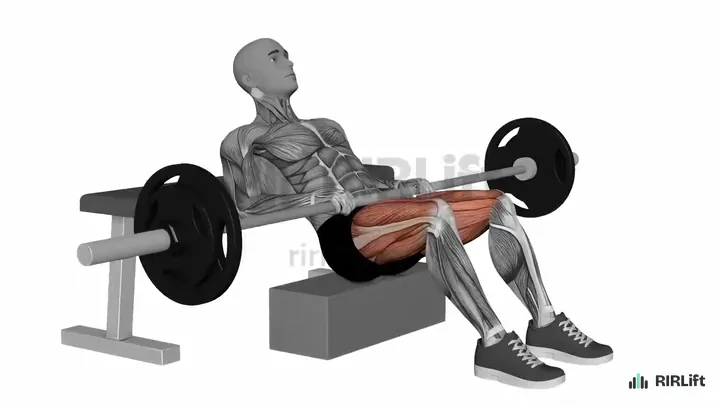
The hip thrust loads the glutes with your back on a bench, the cable pull-through keeps a hinge with the load behind you, and the ball back extension moves your lower back through a gentle range well short of failure. 10 working sets.
Squeeze your glutes before every rep on back extensions and round your upper back slightly, which shifts the work from your lower back to your hips. Add the hip thrust.
Lower back is sore
Stick with the cable or band pull-through and the hip thrust, and stop every rep at a straight line. Leave good mornings out until it settles.
Bodyweight back extensions are easy
Hold a plate to your chest, then behind your head, and slow the lowering to three seconds before you go heavier.
You have a flat bench at home
Do the band reverse hyperextension: hips at the end of the bench, a loop band above your knees, legs lifting behind you. It is the closest copy of the machine.
Short on time
Pair the Romanian deadlift with back extensions as a superset, alternating sets with 90 seconds between them, and skip the finisher.
Questions
What can I do instead of a reverse hyper?
The 45-degree back extension is the closest in most gyms. For less load on your spine, use the cable or band pull-through; at home, do B-stance RDLs or supermen.
How do you do a reverse hyper without a machine?
Lie face down on a flat bench or sturdy table with your hips at the edge, hold on, and lift your straight legs until they line up with your body. Add a band above your knees or ankle weights for load.
Are reverse hyperextensions good for glutes?
Yes. Lifting your legs behind you is hip extension, which is your glutes' main job, with your hamstrings and lower back helping. Squeeze your glutes to start each rep.
How do you do back hyperextensions without a machine?
Drape your hips over an exercise ball with your feet against a wall and lift your chest to a straight line, or lie on the floor and do supermen.
Is the hyperextension bad for your lower back?
Not when you stop at a straight line and move under control. Arching hard past straight, or swinging, is what loads your lower back badly.