
Seated machine row: how to set it up and use it
Published October 19, 2026
A seated machine row is a row on a selectorized or plate-loaded machine where you sit with your chest against a pad and pull handles toward your body. Set the seat so the handles line up with the bottom of your chest, keep your chest on the pad, pull your elbows back past your torso, and let the handles go forward until your shoulder blades spread.
- WorksUpper Back, Lats
- AlsoBiceps
- EquipmentSeated Row Machine
- Start with3 × 8–12, 2 in reserve, 2 min rest
How to do the machine row
The chest pad holds your torso in place, so your lower back stays out of it and you can push your back muscles close to failure without form breaking down. Changing the handle and elbow angle shifts the work between the lats and the upper back.
Steps
- Set the seat so the handles sit level with the lower part of your chest, and set the chest pad so you can just reach the handles with straight arms.
- Sit tall, chest resting on the pad, feet flat, then pick the grip: neutral handles for the lats, wide overhand handles for the upper back.
- Start the rep by pulling your shoulders back, then drive your elbows back until they pass your sides.
- Pinch your shoulder blades for a moment without leaning off the pad.
- Let the handles travel forward under control until your arms are straight and your shoulder blades spread apart.
Cues
- Chest stays on the pad
- Elbows drive back
- Reach long at the front
Common mistakes
- Peeling the chest off the pad to finish the rep: the pad is what keeps it a back exercise; lower the weight until you can finish with your chest down.
- Cutting the stretch short: let the handles go fully forward so your shoulder blades move, or the upper back loses half its range.
- Shrugging toward your ears: keep your shoulders down and think of pulling with your elbows, not your hands.
Swap for: Seated Cable Row, Incline Dumbbell Row, Seal Row
Muscles the machine row works
The seated machine row works your lats and the muscles between your shoulder blades: the rhomboids and middle traps. The rear delts and biceps help pull. A close, neutral grip with elbows near your sides puts more on the lats; a wide grip with elbows flared puts more on the upper back and rear delts.
Sets, reps and reps in reserve for the machine row
| Goal | Sets × reps | RIR | Rest |
|---|---|---|---|
| Build muscle | 3–4 × 8–12 | 1–2 | 90–120 s |
| Control the return and take the last set to one rep in reserve. | |||
| Back thickness | 3 × 10–15 | 0–1 | 90 s |
| Use the wide grip with elbows out and pause one second at the squeeze. | |||
| Beginner | 2–3 × 10–12 | 2–3 | 90 s |
| Learn the setup and the full range with a weight you could lift for a few more reps. | |||
Machine row variations
-
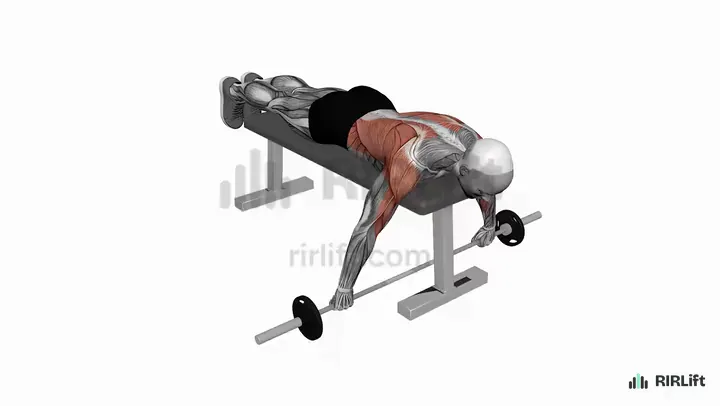
Seal Row
Rest your chest on a high bench and row a barbell from the floor when you want a chest-supported row with free-weight loading.
Build a session with it -
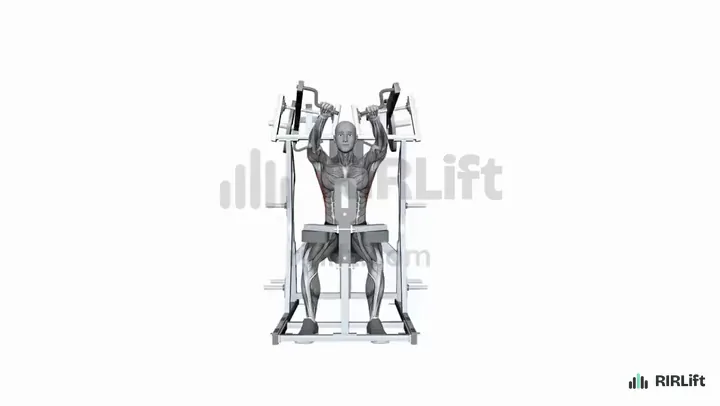
Single-Arm High Row
Pull one handle down and back from a high start when you want more lats and to train each side alone.
Build a session with it -
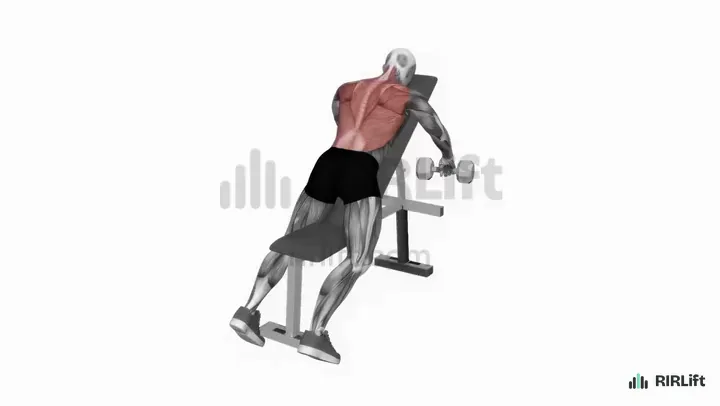
Incline Dumbbell Row
Lie face down on an incline bench with dumbbells when the machine is taken; your chest is supported the same way.
Build a session with it
Machine row alternatives
Cable rows
-
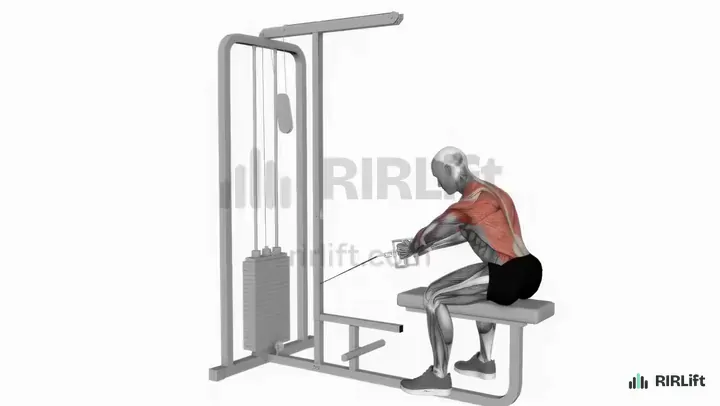
Seated Cable Row
Use the cable row when you want to control your torso yourself and get a longer stretch at the front.
Build a session with it -
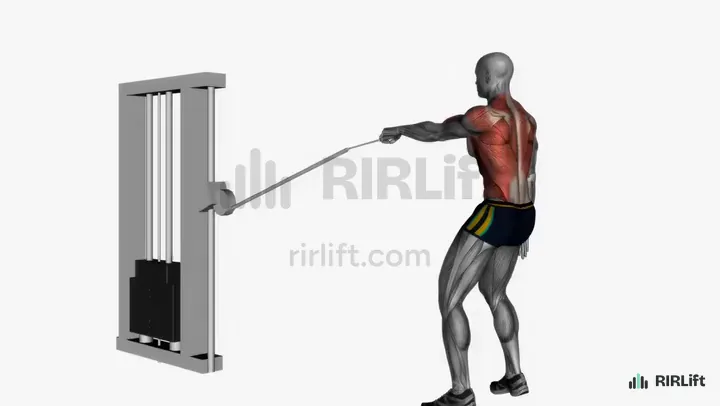
Single-Arm Cable Row
Row one handle at a time on the cable when one side of your back lags.
Build a session with it
Free-weight rows
-
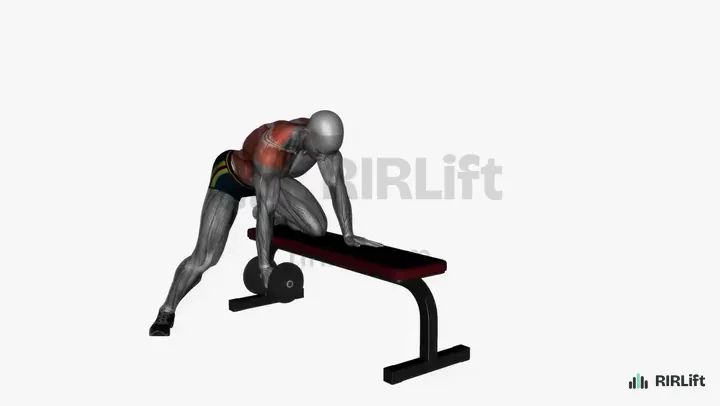
One-Arm Dumbbell Row
Brace on a bench with one hand and row a dumbbell when you want a heavy row without a machine.
Build a session with it -
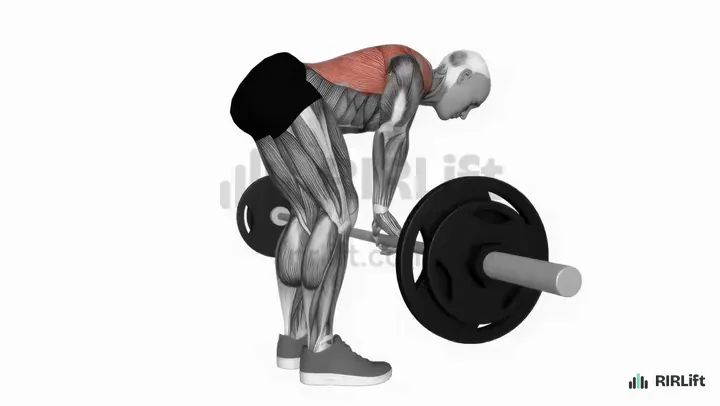
Barbell Row
Row a barbell from a hinge when you want to train your back and your hinge position together.
Build a session with it
Vertical pulls
-
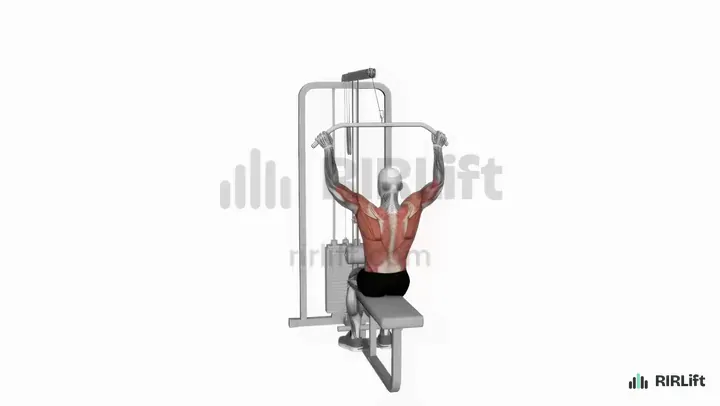
Lat Pulldown
Pull from overhead to train the lats in a different direction from rowing.
Build a session with it
Seated machine row vs seated cable row
On the machine row your chest rests on a pad and the handles move on a fixed path, so the only job is pulling. On the cable row you sit upright without support and must hold your own torso still, and the cable lets your hands move freely.
The machine is better for pushing your back near failure with clean reps and for anyone whose lower back tires first. The cable row gives a longer stretch at the front and more freedom in the handle path. Both are good; pick the one you can progress and log week to week.
Which handles and grip to use
Neutral handles, palms facing each other, with elbows close to your sides bias the lats. Wide overhand handles with elbows out toward shoulder height bias the rhomboids, middle traps and rear delts. If the machine has both, use one per session or one per block and keep the same setting and seat height in your log so weights stay comparable.
Questions
Which muscles does the seated row work?
The lats, rhomboids and middle traps, with help from the rear delts and biceps. Grip and elbow angle shift the emphasis between them.
Is the seated machine row good for beginners?
Yes. The chest pad and fixed path make it easy to learn, and you can change the weight with a pin.
How do I set up the seated row machine?
Set the seat so the handles line up with your lower chest, and the chest pad so your arms are straight when you hold the handles.
Is the machine row better than the cable row?
Neither is better overall. The machine is more stable and easier to push hard; the cable row offers more range and freedom. Use the one you can progress.
Should I lean back on the seated row?
Not on a chest-supported machine. Keep your chest on the pad; leaning back takes the work off your back.
How many sets of seated rows should I do?
Three to four hard sets of 8 to 15 reps in a back session, with one or two reps in reserve, is enough for most people.
Related templates
-
Seated cable row: form, grip and the best alternatives
The cable version, and how its form differs.
-
Chest-supported row: how to do it on an incline bench with dumbbells
How chest-supported rows compare and when to pick one.
-
The best workout for back: width, thickness and traps
A complete back day that includes a machine row.
-
How to use RIR
How to judge the reps you leave in reserve on every set.