
Chest-supported row: how to do it on an incline bench with dumbbells
Published October 19, 2026
A chest-supported row is a row where your chest rests on a pad, so your legs and lower back do not hold you up and your back muscles do all the pulling. The simplest version needs an incline bench and two dumbbells: set the bench to about 30–45 degrees, lie face down with your chest on the pad, let the dumbbells hang, then drive your elbows back until the weights reach your ribs and lower them slowly. Many gyms also have a chest-supported row machine that works the same way.
- WorksUpper Back, Lats
- AlsoBiceps
- EquipmentDumbbells, Incline Bench
- Start with3 × 8–12, 2 in reserve, 2 min rest
How to do the incline dumbbell row
With your chest on the bench you cannot swing the weight with your hips or round your lower back to cheat, so every rep is a clean pull. That makes it easy to train the upper back close to failure without the lower-back fatigue of a bent-over row. It needs only a bench and a pair of dumbbells, and each arm moves on its own path with a long stretch at the bottom.
Steps
- Set an adjustable bench to about 30–45 degrees and put a pair of dumbbells on the floor at its front end.
- Lie face down with your chest high on the pad, plant your feet or toes on the floor behind you, and pick up the dumbbells.
- Let your arms hang straight down with palms facing each other or facing back, and let your shoulder blades spread apart.
- Drive your elbows back past your torso until the dumbbells reach your lower ribs, pinching your shoulder blades without lifting your chest off the bench.
- Lower the weights slowly until your arms are straight and your shoulder blades are stretched apart, then pull again.
Cues
- Chest stays on the pad
- Lead with the elbows
- Reach long at the bottom
Common mistakes
- Lifting your chest off the bench to finish the rep: that brings back the momentum the bench is there to remove; use lighter dumbbells so you can finish with your chest down.
- Shrugging the dumbbells up toward your ears: keep the shoulders down and pull your elbows back toward your hips.
- Cutting the stretch short: let your shoulder blades slide apart at the bottom of every rep so the upper back works through its full range.
Swap for: Machine Row, Seal Row, Seated Cable Row
Muscles the incline dumbbell row works
The chest-supported dumbbell row trains your upper back: the middle traps and rhomboids that pull your shoulder blades together, the lats, and the rear delts. Your biceps and forearms help bend the arm. Grip changes the mix: a neutral grip with elbows close to your sides puts more on the lats, while a wide grip with elbows flared shifts the work to the upper back and rear delts.
Sets, reps and reps in reserve for the incline dumbbell row
| Goal | Sets × reps | RIR | Rest |
|---|---|---|---|
| Build muscle | 3–4 × 8–12 | 1–2 | 2 min |
| Pause for a beat with the dumbbells at your ribs before lowering. | |||
| Upper back and posture work | 3 × 12–15 | 1–2 | 90 s |
| Use the wide grip, flare the elbows and finish with the shoulder blades pinched. | |||
| Back day after deadlifts | 2–3 × 10–15 | 1 | 90 s |
| The bench spares your lower back, so you can still take the upper back near failure. | |||
Incline dumbbell row variations
-
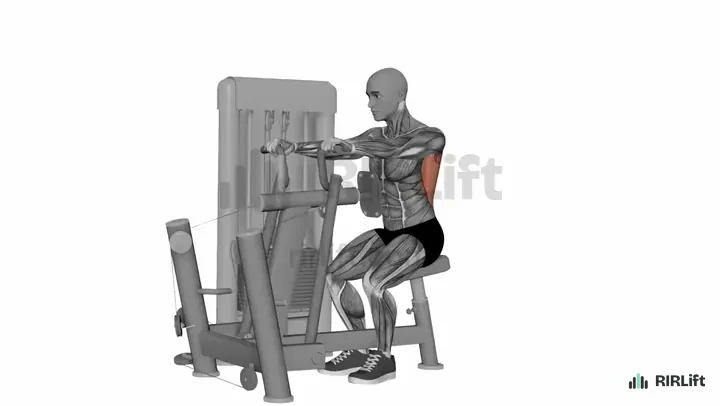
Machine Row
Use a seated row machine with a chest pad when your gym has one and you want to load heavier with a fixed path.
Build a session with it -
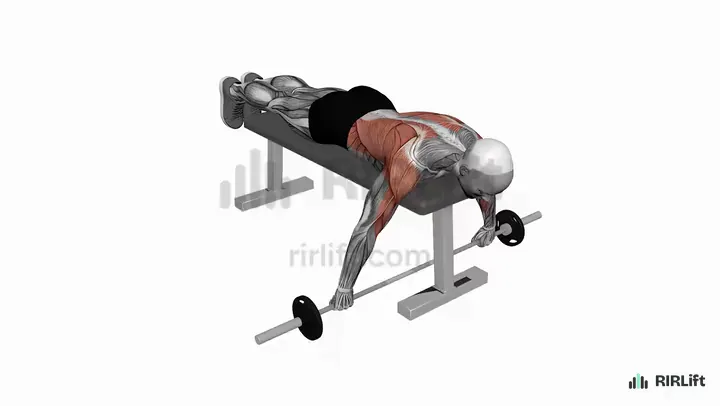
Seal Row
Row a barbell lying flat on a raised bench when you want the strictest version and heavier loads.
Build a session with it -
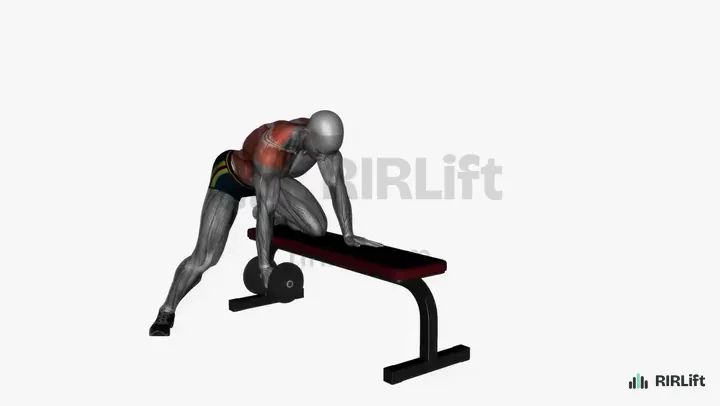
One-Arm Dumbbell Row
Brace one hand and knee on a flat bench and row one dumbbell when you want a longer stretch on each side.
Build a session with it
Incline dumbbell row alternatives
Heavier free-weight rows
-
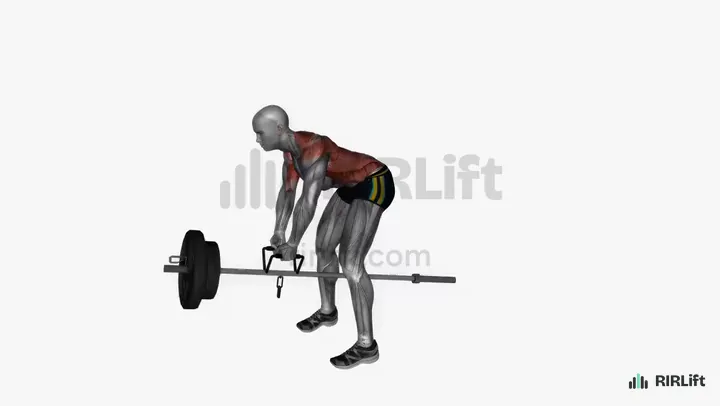
T-Bar Row
Row a landmine bar between your legs when you want to load heavy and can handle the bent-over position.
Build a session with it -
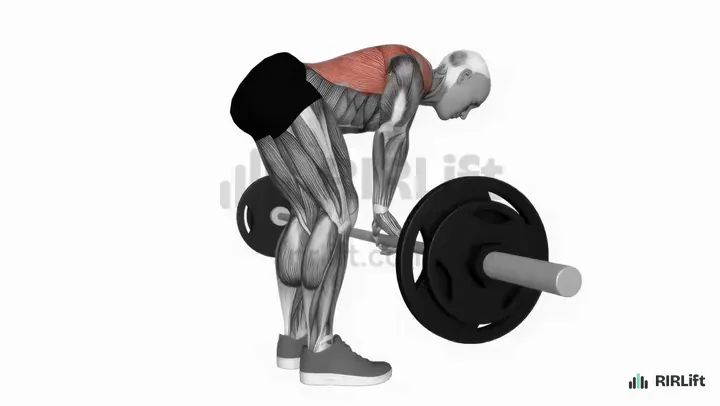
Barbell Row
Row a barbell bent over when you want a heavier pull and can spare the lower-back work.
Build a session with it
Cable rows
-
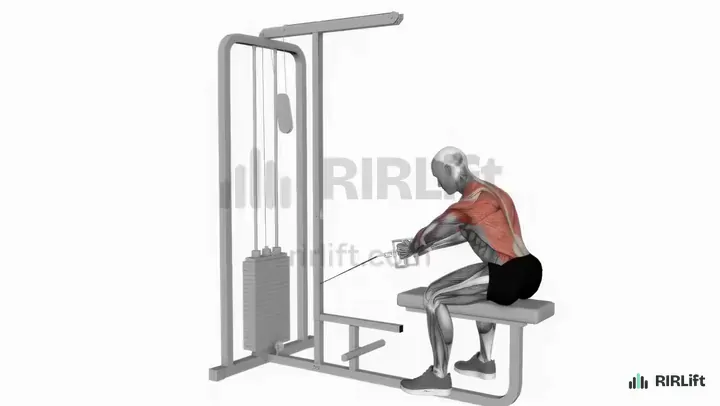
Seated Cable Row
Sit at the low cable with a V-handle when you want constant tension and a big forward stretch.
Build a session with it
Vertical pulls for lats
-
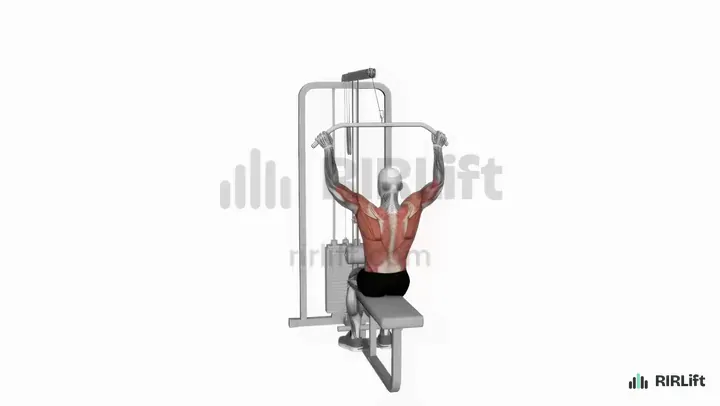
Lat Pulldown
Pair the row with a pulldown when your goal is a wider back, not just a thicker one.
Build a session with it
Machine or dumbbells for the chest-supported row?
The incline dumbbell row needs only a bench and a pair of dumbbells, lets each arm move freely, and gives a long stretch at the bottom, so it works at home and in any gym. Your heaviest dumbbells and your grip eventually cap the load.
A chest-supported row machine is easier to push very hard: the path is fixed, changing the weight takes a second, and you can go heavy without balancing anything. If your gym has one, rotate it in when the dumbbells get light; T-bar machines with a chest pad do the same job.
What angle should a chest-supported dumbbell row be?
Set the bench to about 30–45 degrees. Around 30 degrees your torso is closer to horizontal, which lines the pull up with the upper back and lets you row toward the ribs with a long range. At 45 degrees you sit more upright, which suits taller lifters whose dumbbells would hit the floor at a lower angle. If your feet slide, brace them against the bench base or stand on a plate.
Does the chest-supported row build lats?
Yes, if you set it up for them: a neutral or underhand grip, elbows tucked close to your sides, and a pull toward your hips. With a wide overhand grip and elbows flared toward 90 degrees, the same row shifts most of the work to the upper back and rear delts. Many lifters use both grips across the week.
Questions
Should I use dumbbells or a machine for the chest-supported row?
Use the machine if your gym has one, since it is easier to load and push close to failure. Use dumbbells on an incline bench when there is no machine or you train at home.
How do you perform a chest-supported row correctly?
Keep your chest on the bench the whole set, start with straight arms and spread shoulder blades, pull your elbows back until the dumbbells reach your ribs, and lower slowly to a full stretch.
Is 30 or 45 degrees better for chest-supported rows?
Both work. Around 30 degrees gives a more horizontal pull for the upper back; 45 degrees is more comfortable for tall lifters. Pick the one that lets you row through a full range.
Is a 70 lb dumbbell row good?
Rowing 70 lb dumbbells for clean reps with your chest on the pad is a solid working weight for many lifters. Progress matters more than the number: add reps or weight at the same reps in reserve.
What muscles does the chest-supported row work?
The middle traps, rhomboids, lats and rear delts, with the biceps and forearms helping. Your lower back does almost nothing, because the bench holds you up.
Can you do a chest-supported row without a machine?
Yes. That is what the incline dumbbell row is: lie face down on an incline bench and row a pair of dumbbells. A barbell rowed from a raised flat bench (a seal row) works too.
Related templates
-
Seated machine row: how to set it up and use it
The machine version with a chest pad, for heavier loads.
-
Bent over row: how to do it, what it works, and what to do instead
The free-weight row when you want to load heavier.
-
Dumbbell row: how to do the one-arm row and get your back to do the work
The one-arm bench row for training each side alone.
-
The best workout for back: width, thickness and traps
A full back session with rows and pulldowns.