
Glute exercises at home, with or without equipment
Published October 19, 2026
The best glute exercises at home are the single-leg glute bridge, the reverse lunge, the skater squat and a side glute move such as the lateral band walk or standing side leg raise. With no equipment, train one leg at a time so your whole bodyweight loads each glute. If you buy one thing, get a loop band or a kettlebell: a band makes hip thrusts and pull-throughs harder near lockout, and a kettlebell gives you swings and loaded thrusts. Two or three sessions a week, each set ending a rep or two short of failure, is enough to grow your glutes at home.
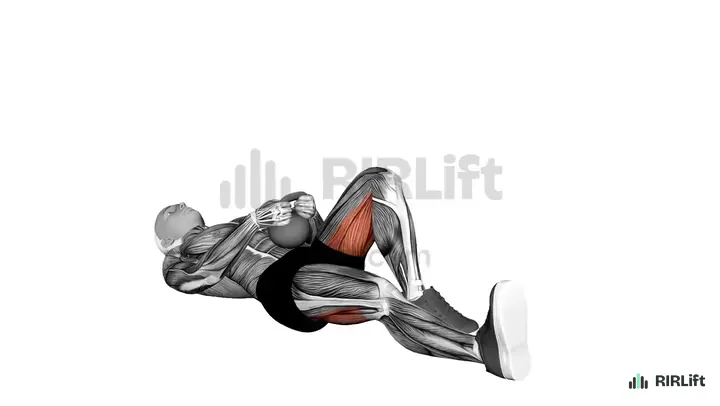
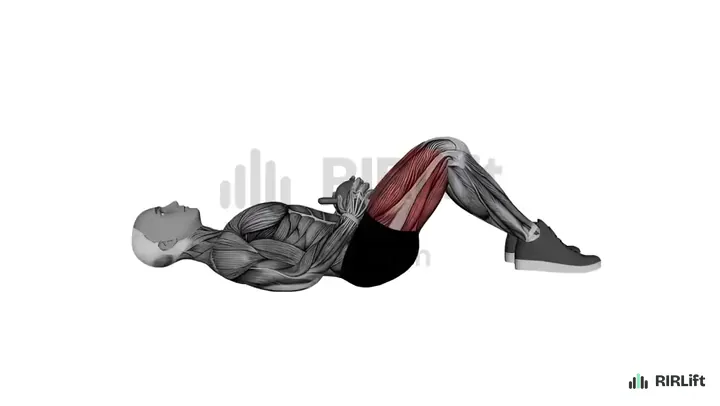
- Single-Leg Glute Bridge Glutes
- Reverse Lunge Quads, Glutes
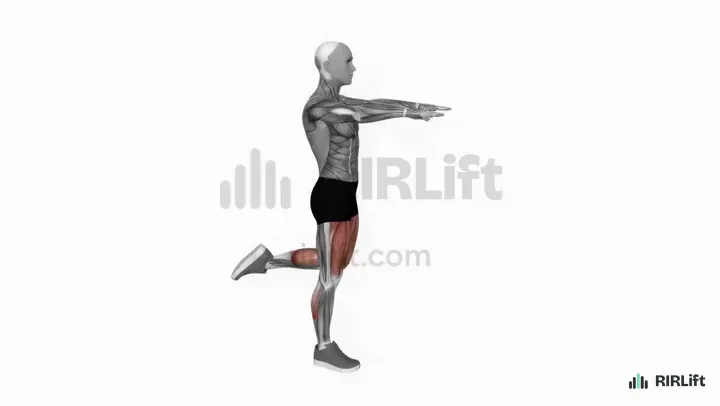
- Skater Squat Quads, Glutes
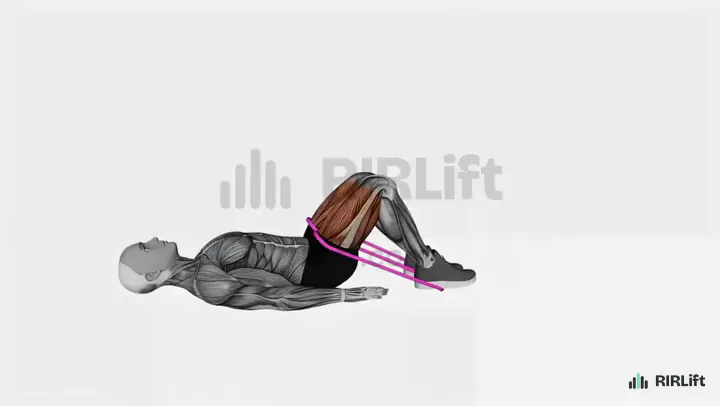
- Band Hip Thrust Glutes
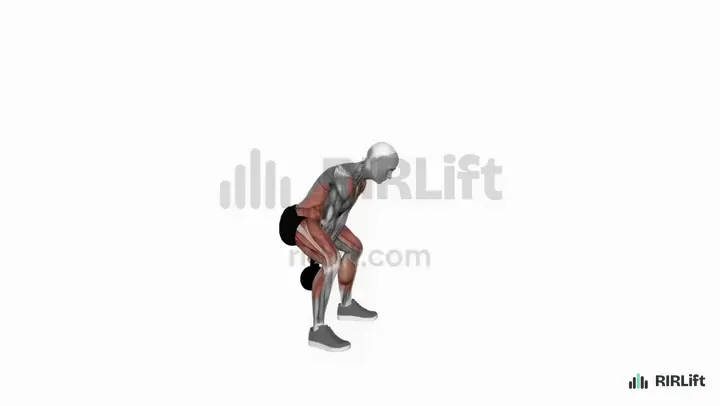
- Kettlebell Swing Glutes, Hamstrings
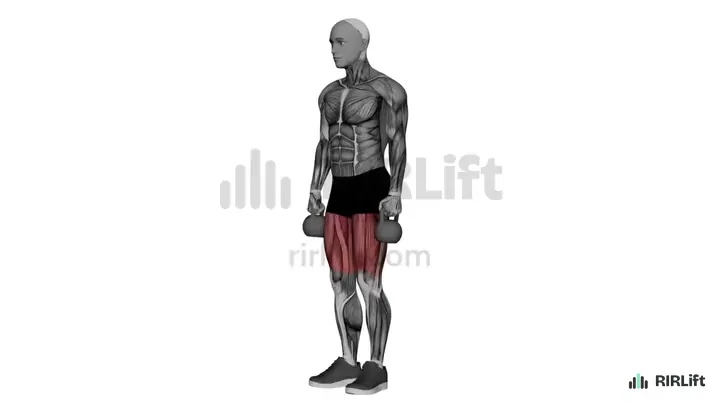
- Kettlebell Hip Thrust Glutes
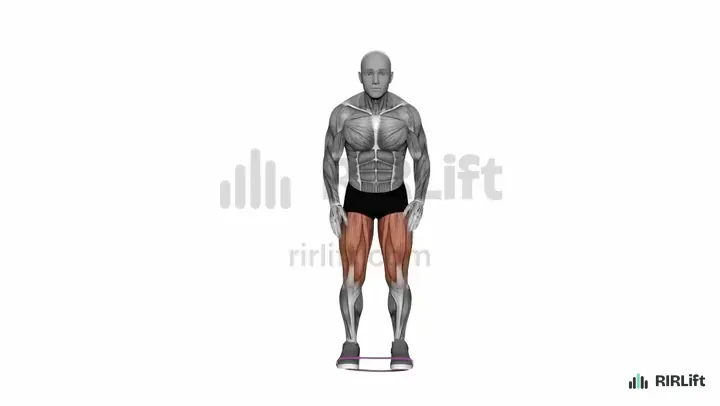
- Lateral Band Walk Abductors
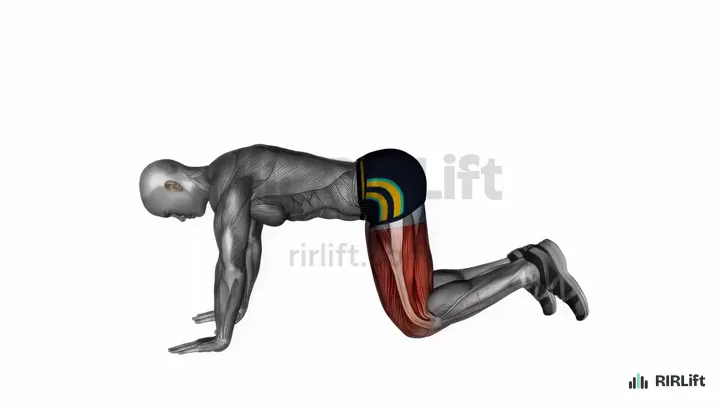
- Donkey Kick Glutes
Put them together: example sessions
Each session below picks from the exercises above for one situation, with the sets, reps, rest and RIR filled in. Open one in the session builder to change a pick, price it from a recent set, and add it to RIRLift.
-
Session 1
No equipment at all
You train at home with nothing but your bodyweight, a wall and a pillow, and you want your glutes to grow, not just burn.
2× a week · 24 sets a week · ~30 min
-
Session 2
Loop bands and a door anchor
You have a set of loop and mini bands, a door anchor, and a couch, but no weights.
2× a week · 23 sets a week · ~20 min
-
Session 3
One kettlebell and 20 minutes
You own one kettlebell, between 12 and 24 kg, and you have about 20 minutes, two or three times a week.
3× a week · 33 sets a week · ~20 min
Session 1
No equipment at all
- Workouts2× a week
- Working sets24 a week
- Per workout~30 min
- EquipmentDumbbells
You train at home with nothing but your bodyweight, a wall and a pillow, and you want your glutes to grow, not just burn.
Without weights, the only way to make a set hard is to put your whole body on one leg, so every main exercise here is single-leg: the bridge, the skater squat and the reverse lunge. They run to 12 to 20 reps at 1 rep in reserve, close enough to failure that a light load still grows muscle. Donkey kicks and side leg raises finish each day at 0 to 1 reps in reserve because they are easy to stop safely. Each session is 12 working sets.
| Exercise | Sets × reps | RIR | Rest |
|---|---|---|---|
| Single-Leg Glute BridgePer leg. 2 s hold at the top. | 3 × 12–20 | 1 | 1 min |
| Skater SquatPer leg. Knee to a pillow. | 3 × 6–12 | 1 | 90 s |
| Donkey KickPer leg. Back flat. | 3 × 15–25 | 0 | 45 s |
| Standing Side Leg RaisePer leg. Toes forward. | 3 × 15–25 | 0 | 45 s |
Open Home Glutes A in the session builder
| Exercise | Sets × reps | RIR | Rest |
|---|---|---|---|
| Reverse LungePer leg. Long step back. | 3 × 12–20 | 1 | 90 s |
| Single-Leg Glute BridgePer leg. 3 s down. | 3 × 12–20 | 1 | 1 min |
| Skater SquatPer leg. | 3 × 6–12 | 1 | 90 s |
| Standing Side Leg RaisePer leg. Pause at the top. | 3 × 15–25 | 0 | 45 s |
Open Home Glutes B in the session builder
- How to run it
- Do Home Glutes A and B once each per week with two days between, three times a week if you alternate A, B, A. Use a pillow under the back knee on skater squats.
- How to progress
- When you reach the top of a rep range at the target reps in reserve, slow each rep to three seconds down and add a two-second pause when the bridge is fully up or the bottom of the lunge. That keeps the sets hard for months before you need any equipment.
Session 2
Loop bands and a door anchor
- Workouts2× a week
- Working sets23 a week
- Per workout~20 min
- EquipmentResistance Bands, Dumbbells
You have a set of loop and mini bands, a door anchor, and a couch, but no weights.
Bands are heaviest at the end of the movement, so they suit the thrust and the pull-through, where the glutes work hardest at lockout. The reverse lunge stays on bodyweight to keep a deep stretch in the program, and the walk and seated abduction train the side glutes the two thrust-style moves miss. Thrust and pull-through sets run 15 to 25 reps at 1 rep in reserve, because band tension jumps in big steps and reps are the easier way to progress. Sessions are 12 and 11 working sets.
| Exercise | Sets × reps | RIR | Rest |
|---|---|---|---|
| Band Hip ThrustOff a couch edge. Band on the hip crease. | 3 × 15–25 | 1 | 1 min |
| Reverse LungePer leg. Bodyweight, slow lowering. | 3 × 10–15 | 1 | 90 s |
| Lateral Band WalkSteps each way. Stay low. | 3 × 12–20 | 1 | 45 s |
| Band Seated Hip AbductionLean forward slightly. | 3 × 15–25 | 0 | 45 s |
Open Band Glutes A in the session builder
| Exercise | Sets × reps | RIR | Rest |
|---|---|---|---|
| Band Pull-ThroughHips back, then through. 1 s squeeze. | 3 × 15–25 | 1 | 1 min |
| Single-Leg Glute BridgePer leg. | 3 × 12–20 | 1 | 1 min |
| Band Hip ThrustLast set: 3 s hold on the final rep. | 3 × 15–25 | 0 | 1 min |
| Lateral Band WalkBand around the ankles. | 2 × 12–20 | 1 | 45 s |
Open Band Glutes B in the session builder
- How to run it
- Run Band Glutes A and B once each per week, two to three days apart. Anchor the band low in a door hinge for the pull-through and close the door toward you.
- How to progress
- Add reps until you hit the top of the range, then move to the next band thickness and drop back to the bottom of the range. Double up two bands on the thrust if your thickest one runs out.
Session 3
One kettlebell and 20 minutes
- Workouts3× a week
- Working sets33 a week
- Per workout~20 min
- EquipmentKettlebells, Flat Bench
You own one kettlebell, between 12 and 24 kg, and you have about 20 minutes, two or three times a week.
One bell covers the two places bodyweight falls short: the swing gives you a loaded hinge and the thrust a loaded top position. To fit 20 minutes, the step-up and the thrust are paired as a superset so you rest only after both, and the side-glute work goes last on its own. Swings stop at 2 reps in reserve because they lose form before the glutes fail; the thrust and step-up go to 1. Each session is 11 working sets.
| Exercise | Sets × reps | RIR | Rest |
|---|---|---|---|
| Kettlebell Swing1 warm-up set firstHips snap. Bell to chest height. | 3 × 15–20 | 2 | 1 min |
| A1 Kettlebell Hip ThrustOff a couch or bench. | 3 × 10–20 | 1 | 30 s |
| A2 Kettlebell Step-UpPer leg. Bell at your chest. | 3 × 8–12 | 1 | 90 s |
| Standing Side Leg RaisePer leg. | 2 × 15–25 | 0 | 45 s |
- How to run it
- Do this one session two or three times a week on non-consecutive days. Alternate the starting leg on the step-ups each session.
- How to progress
- Add reps on the thrust and step-up until both hit the top of their ranges at 1 rep in reserve, then switch the thrust to one leg with the bell on that hip. Move up to a heavier bell when 20 swings feel easy at 2 in reserve.
Make it fit you
-
Neighbors downstairs
Skip the swings and do kettlebell hip thrusts or band pull-throughs in their place. Lower every lunge and skater squat over three seconds so nothing lands hard.
-
Only 10 minutes
Do two rounds of single-leg bridges, reverse lunges and side leg raises back to back, then rest a minute. Two short sessions like this a week beat one you keep putting off.
-
Skater squats are too hard
Put a stack of cushions under your back knee so the range is shorter, and lower it one cushion at a time over the weeks. Reverse lunges can fill the slot until you get there.
-
You do not feel your glutes on bridges
Move your heels a little further from your hips, lift your toes, and hold every rep at the top for two seconds. A mini band above the knees, pushed out as you lift, also helps.
-
Adding a second weight
If you can buy one more thing after a band, make it a kettlebell or an adjustable dumbbell. Use it on hip thrusts and swings first, since those are the moves bodyweight cannot load.
-
Track reps in reserve
Bodyweight sets drift easy without you noticing. Log how many reps you had left after each set; RIRLift records RIR with every set, so you can see when a move needs a pause or a slower tempo to stay hard.
Questions
What home exercises work the glutes?
Single-leg glute bridges, hip thrusts off a couch, reverse lunges, skater squats and step-ups work the glutes hardest. Donkey kicks, side leg raises and band walks add direct work for the side glutes. A kettlebell adds swings and loaded thrusts.
Can you grow your glutes at home without weights?
Yes, if your sets are hard enough. Single-leg bridges, skater squats and reverse lunges load each glute with your full bodyweight, and taking them within one or two reps of failure grows muscle. When they get easy, slow them down and add pauses, then add a band or kettlebell.
Will 20 squats a day make my bum bigger?
Not much. Twenty bodyweight squats are too easy to push your glutes close to failure, and squats lean on the thighs. Three hard sets each of a one-leg bridge and a reverse lunge, two or three times a week, will do more.
What are the signs of weak glutes?
Common signs are knees that cave inward when you squat or land, a hip that drops when you stand on one leg, and feeling squats and lunges only in your thighs. The single-leg bridge and the side glute moves on this page train exactly those positions.
How often should I do glute exercises at home?
Two or three times a week, with a day off between sessions. Glutes recover in about 48 hours from a hard session, and daily training at home usually means easy sets that do not add up to much.
How many reps should I do for glutes at home?
With bodyweight or bands, 12 to 25 reps per set is normal, as long as the last reps are hard and you stop one or two short of failure. Light loads build muscle when the set ends close to failure, so count reps in reserve rather than reps.
Related templates
-
Dumbbell glute exercises: thrusts, hinges and single-leg moves
The next step when you add a pair of dumbbells at home.
-
Glute exercises for women: thrusts, hinges and side glute work
Gym and home picks aimed at shape and strength.
-
Single-leg glute bridge: how to do it, what it works, and how to make it harder
Full setup and progressions for the main no-equipment move.
-
Leg exercises at home: squats, lunges, hinges, glutes and calves without a gym
Quads, hamstrings and calves to go with your glute days.
-
The best workout for home, with little or no equipment
A full-body home routine to pair with these glute sessions.