
Smith machine squat: how to set up, where to put your feet, and how to program it
Published October 19, 2026
A Smith machine squat is a back squat with the bar fixed in vertical rails. Set the bar at upper-chest height, step under it so it rests across your upper back, plant your feet shoulder-width and slightly in front of the bar, twist the bar off its hooks, and squat until your thighs reach parallel or lower before driving up. The rails balance the bar for you and the hooks catch it anywhere, so you can train hard without a spotter.
- WorksQuads, Glutes
- AlsoAdductors
- EquipmentSmith Machine
- Start with3 × 8–12, 2 in reserve, 3 min rest
How to do the Smith squat
You don't have to balance the bar, so all of your effort goes into your legs, and you can rack the bar at any point if a rep fails. Moving your feet forward or back lets you choose more quads or more glutes, which a free squat doesn't allow.
Steps
- Set the safety stops just below your lowest squat depth and the bar at about upper-chest height.
- Step under the bar and rest it across your upper back, not your neck, with your hands just outside your shoulders.
- Set your feet at shoulder width, slightly in front of the bar, with your toes turned out a little.
- Stand up to lift the bar, twist it to unhook it, take a big breath and brace.
- Sit down between your heels, knees and hips bending together, until your thighs reach parallel or lower, then push the floor away to stand.
- After your last rep, twist the bar back onto the nearest hook before stepping out.
Cues
- Feet a half step forward
- Push the floor away
- Hooks on before you step out
Common mistakes
- Feet directly under the bar: with a fixed vertical path this pushes your knees far forward and tips you onto your toes; step your feet slightly forward until your weight sits over your mid-foot.
- Cutting depth because the machine feels heavy: lower the weight and squat to at least parallel; the safeties are there so you can.
- Skipping the safety stops: set them every time, just below your bottom position, so a missed rep lands on the stops instead of on you.
Swap for: Barbell Back Squat, Hack Squat, Leg Press
Muscles the Smith squat works
Smith machine squats work your quads and glutes, with your adductors and hamstrings helping. Placing your feet farther forward and sitting back shifts more work to the glutes and hamstrings; keeping your feet closer to under the bar puts more on the quads. Because the rails balance the bar, your core and smaller stabilizers work less than in a free squat.
Sets, reps and reps in reserve for the Smith squat
| Goal | Sets × reps | RIR | Rest |
|---|---|---|---|
| Build muscle | 3–4 × 8–12 | 1–2 | 2 min |
| Pick a foot position and keep it the same so your logged weights compare. | |||
| Build strength | 4 × 5–8 | 2 | 2–3 min |
| The rails let you push heavy safely; keep depth consistent. | |||
| Beginner | 3 × 10–12 | 2–3 | 2 min |
| Start with the bar alone and learn the foot position and unracking. | |||
Smith squat variations
-
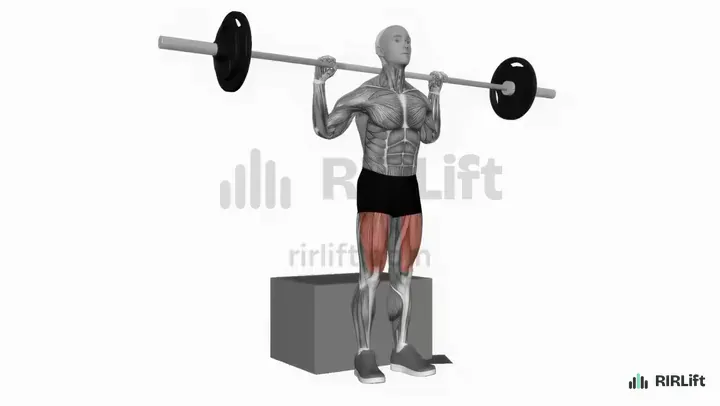
Box Squat
Squat to a box under the Smith bar when you want the same depth on every rep.
Build a session with it -
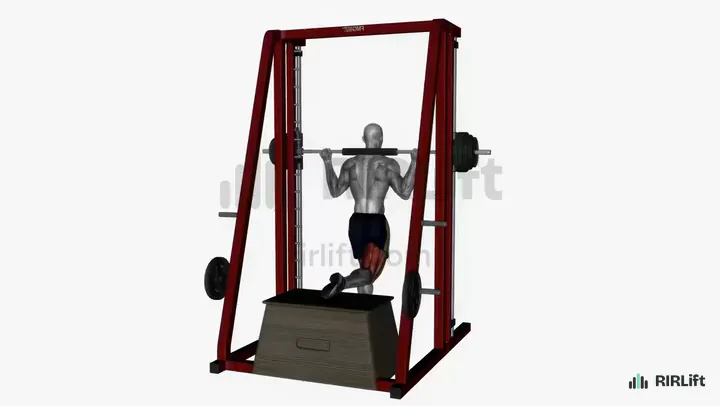
Smith Machine Bulgarian Split Squat
Put your back foot on a bench inside the Smith machine when you want to load one leg at a time with the bar balanced for you.
Build a session with it -
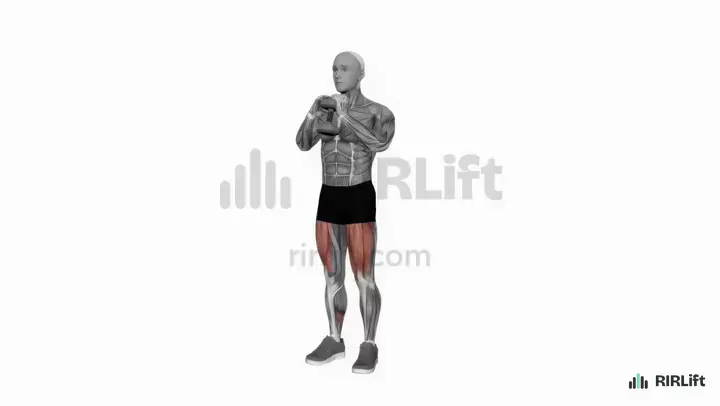
Goblet Squat
Hold a dumbbell at your chest when the Smith machine is taken or you are learning the squat.
Build a session with it
Smith squat alternatives
Free-weight squats
-
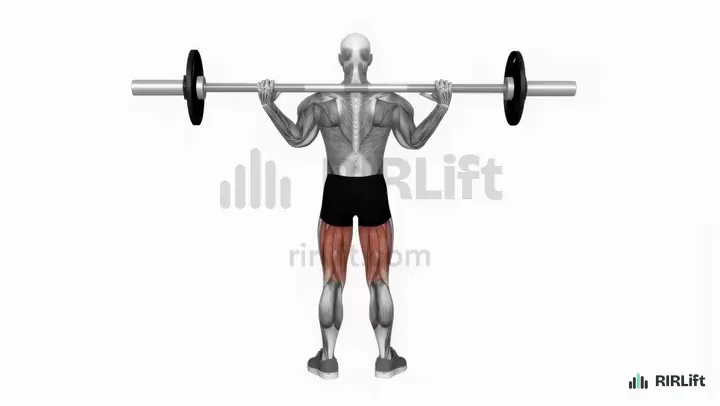
Barbell Back Squat
Squat with a free barbell when you want your stabilizers working and the heaviest total loads.
Build a session with it -
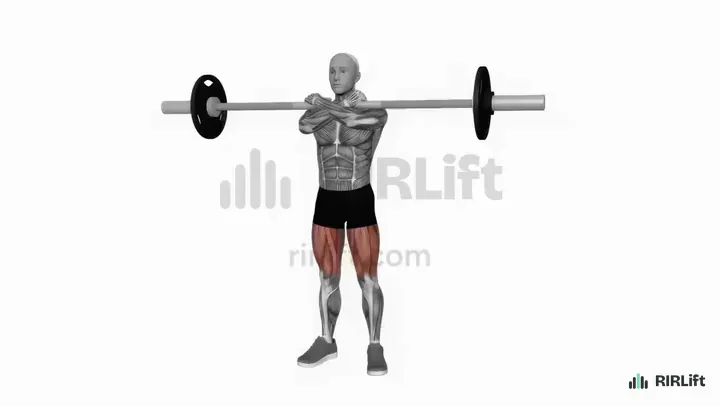
Front Squat
Hold the bar on the front of your shoulders when you want more quads with an upright torso.
Build a session with it
Machine squats
-
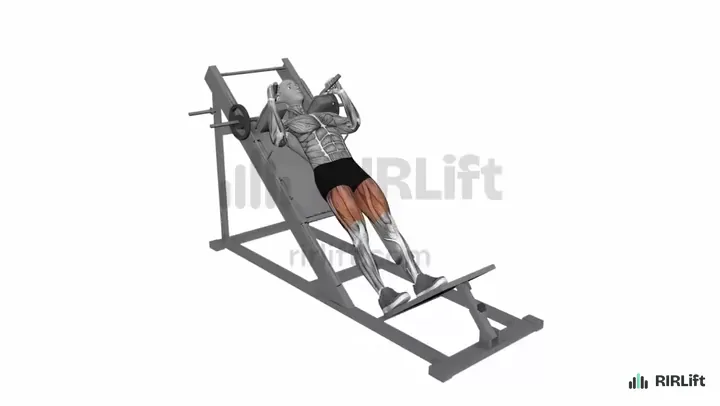
-
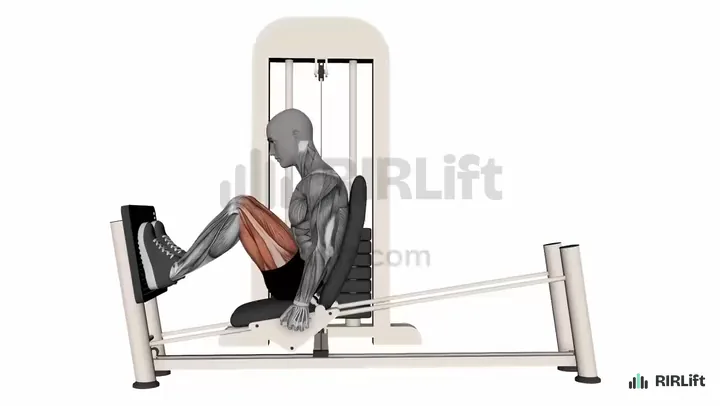
Leg Press
Use the leg press when you want to train your legs hard with no bar on your back.
Build a session with it
Smith machine squat vs barbell squat
In a barbell squat you balance the bar and choose its path, which works more stabilizing muscles and carries over better to lifting outside the gym. In a Smith machine the rails do that work, so you can focus on your legs, pick your foot position freely, and fail a rep safely without a spotter.
Both build the quads and glutes. Use the Smith squat as your main squat if you train alone or want a steady quad builder, or as a second leg exercise after free squats. Don't compare weights between the two; they are different lifts.
How much does the Smith machine bar weigh?
It depends on the machine. Many bars are counterbalanced and weigh far less than an Olympic bar, while others are not balanced at all. Check the label on the frame, and when you log your sets, log the plates plus that number consistently so your progress compares from week to week.
Questions
Should you do squats on a Smith machine?
Yes, if it suits your goal. It is a good way to build the quads and glutes, especially training alone. Pair it with free-weight work if you also want to build balance and stability under a bar.
Where should your feet be on a Smith machine squat?
Shoulder-width and slightly in front of the bar, so your weight sits over your mid-foot at the bottom. Farther forward shifts work to the glutes; closer shifts it to the quads.
What muscles do Smith machine squats work?
The quads and glutes, with the adductors and hamstrings helping.
Is the Smith machine squat good for glutes?
It can be. Step your feet farther forward, sit back and squat deep to put more work on the glutes.
How much weight am I actually lifting on a Smith machine?
The plates plus the bar's effective weight, which varies by machine. Check the frame label and log it the same way every time.
Is the Smith machine squat easier than a regular squat?
It feels easier to balance, so most people lift more on it. That does not make it a worse exercise, just a different one.
Related templates
-
Squat: how to do the barbell back squat, what it works and what to swap in
The free barbell squat.
-
Hack squat: how to do it, what it works and what to swap in
A machine squat with your back supported.
-
Smith machine exercises for legs, glutes and pressing, with sessions you can run on one machine
More lifts to do in the same machine.
-
Box squat: how to do it, how high the box should be, and when to use it
Squat to a set depth, with a barbell or in the Smith.
-
The best workout for legs, built for your situation
A full leg session built around a squat.