
Squat: how to do the barbell back squat, what it works and what to swap in
Published October 17, 2026
The squat, as most gyms do it, is the barbell back squat: a bar across your upper back, hips lowered between your heels, then standing back up. It trains your quads, glutes and adductors, and it lets you load your legs with more weight than almost any free-weight lift. What makes it work is depth with a braced trunk: sit down until your thighs pass parallel on every rep and stop each set 1 to 3 reps short of failure.
- WorksQuads, Glutes, Adductors
- AlsoLower Back
- EquipmentBarbells
- Start with3 × 6–10, 2 in reserve, 3 min rest
How to do the barbell back squat
The bar sits on your back, so your legs can handle far more weight than your arms could hold, and you can add a little every week for a long time. It is the lift most leg programs are built around.
Steps
- Set the bar in the rack at about armpit height, step under it and rest it on the meaty part of your upper back, hands just outside your shoulders.
- Squeeze your shoulder blades together, stand up to lift the bar off the hooks and take two or three short steps back.
- Set your feet about shoulder width, toes turned slightly out, then breathe deep into your belly and tighten your trunk as if bracing for a punch.
- Bend at the hips and knees at the same time and sit straight down between your heels, knees moving forward and out in line with your toes.
- Go down until the crease of your hip passes below the top of your knee, keeping your whole foot on the floor.
- Drive up through your midfoot, keep your chest and hips rising at the same speed, and breathe out only once you are standing tall.
Cues
- Big breath and brace before every rep
- Knees out over your toes
- Chest and hips rise together
Common mistakes
- Squats getting shallower as the bar gets heavier: film from the side, count only reps where your hip crease sinks below your knee, and strip weight until they all do.
- Hips shooting up first out of the bottom: the bar ends up over your toes and the set turns into a good morning, so drop the load and push your upper back into the bar as you stand.
- Knees caving in on the way up: spread the floor apart with your feet and keep your knees pointed where your toes point.
- Heels coming up at the bottom: set your feet a bit wider, angle your toes out more, or squat in heeled shoes.
Swap for: Front Squat, Hack Squat, Goblet Squat
Muscles the barbell back squat works
The squat works your quads, glutes and adductors, with your hamstrings, lower back and trunk holding your torso in place. Your glutes and adductors work hardest at the bottom, where your hips and knees are most bent, so take every rep to full depth.
Sets, reps and reps in reserve for the barbell back squat
| Goal | Sets × reps | RIR | Rest |
|---|---|---|---|
| Build muscle | 3 × 6–10 | 2 | 3 min |
| The session builder below starts the barbell back squat at these numbers. | |||
| Strength | 3–5 × 3–5 | 1–2 | 3–5 min |
| Add a small amount of weight each week while every rep still reaches full depth. | |||
| Higher-rep leg day | 2–3 × 10–15 | 1–2 | 3 min |
| Use a lighter bar after your heavy sets or on a second leg day, and keep every rep at full depth. | |||
| Beginners | 3 × 5–8 | 2–3 | 3 min |
| Start with a weight you could lift for many more reps and add 2.5 kg each session until the last rep slows down. | |||
Barbell back squat variations
-
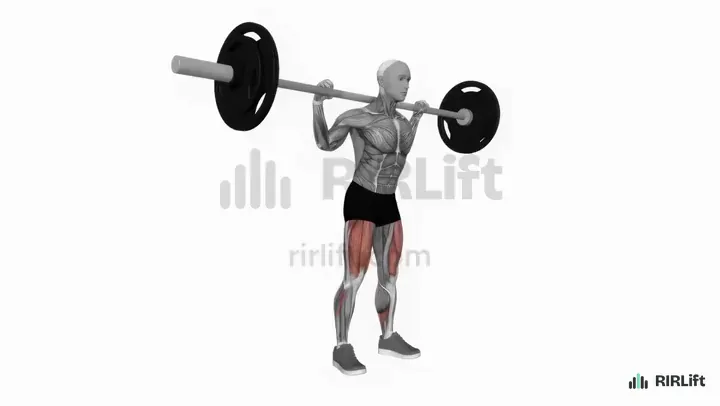
Barbell Low-Bar Squat
Pick it for maximum weight: the bar sits lower on your back, you lean forward more and your hips and glutes take a bigger share.
Build a session with it -
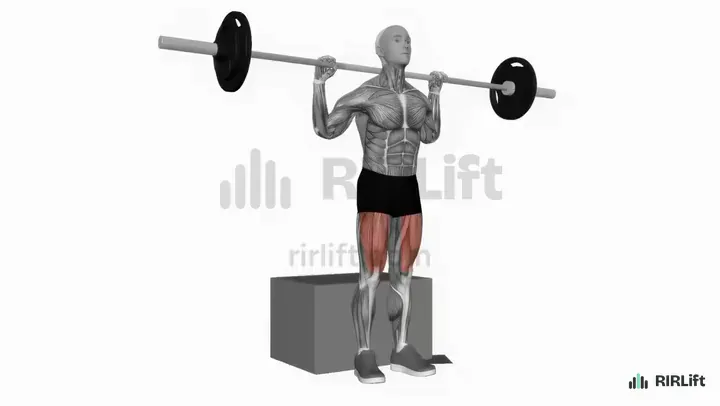
Box Squat
Pick it to learn consistent depth: sitting back to the same box every rep shows you exactly where the bottom is.
Build a session with it -
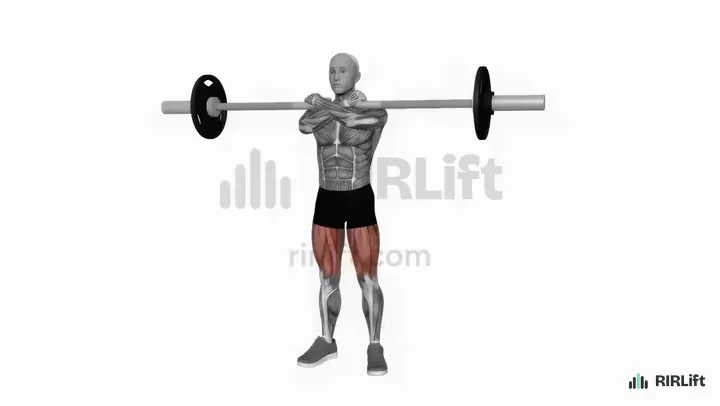
Front Squat
Pick it when you want more quad work and a more upright torso, holding the bar across the front of your shoulders.
Build a session with it -
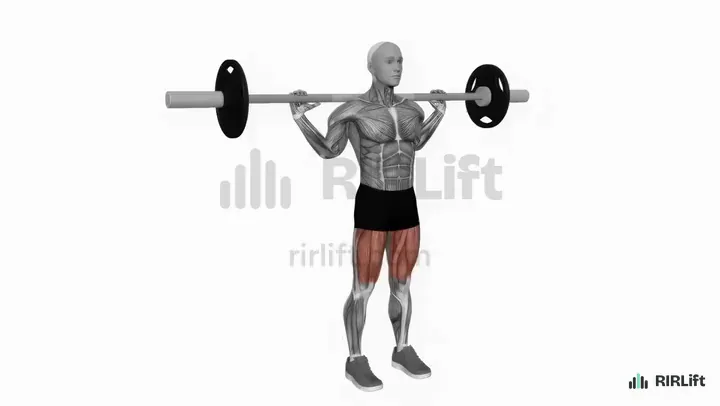
Barbell Narrow-Stance Squat
Pick it to put more of the load on your quads, with feet a little closer than your normal stance.
Build a session with it -
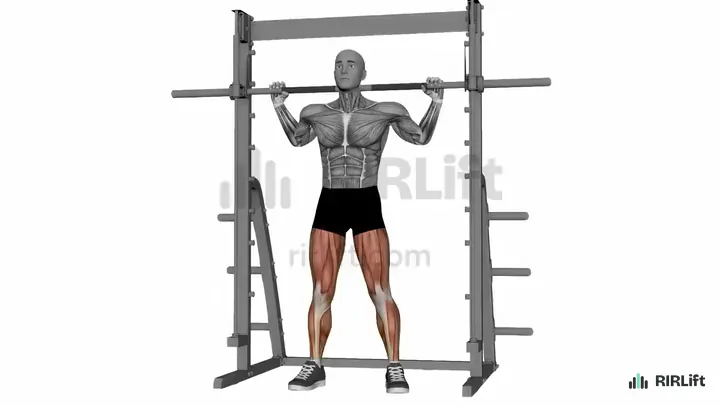
Smith Squat
Pick it when you train without a spotter or want your quads, not balance, to end the set.
Build a session with it
Barbell back squat alternatives
Machines
-
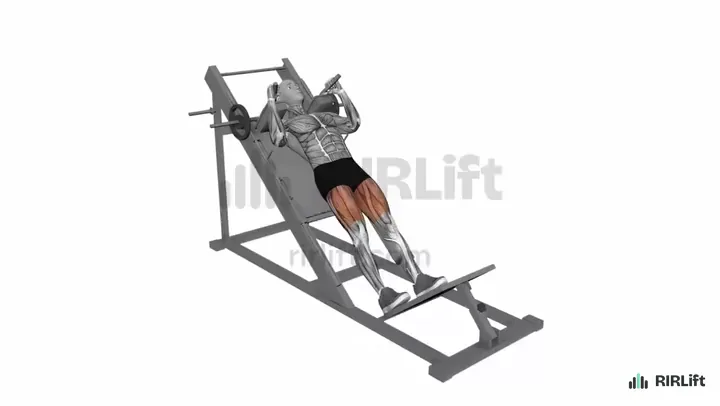
Hack Squat
The closest match for your quads: your back rests on a pad, so you can push the set close to failure.
Build a session with it -
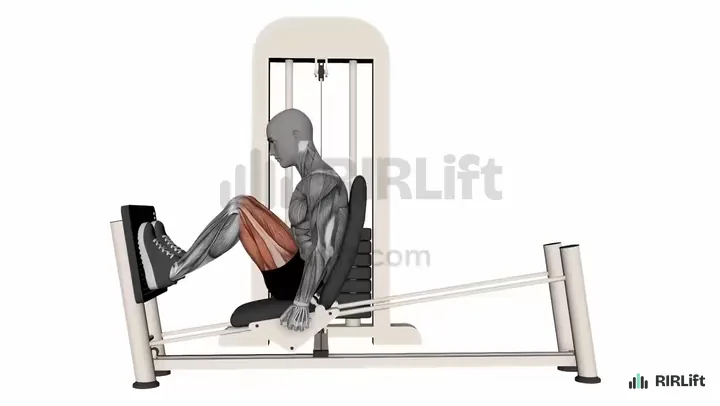
Leg Press
Choose it when your lower back or bracing gives out before your legs, since you sit supported and load your legs alone.
Build a session with it -
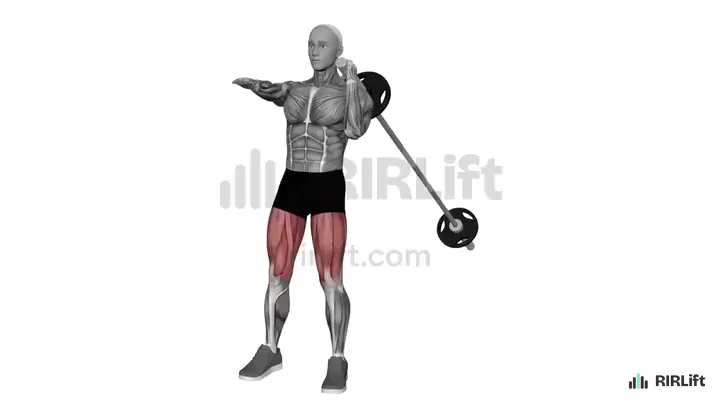
Landmine Hack Squat
Use it when the rack is taken: a bar in a landmine corner lets you lean back into a deep squat.
Build a session with it
Dumbbells
-
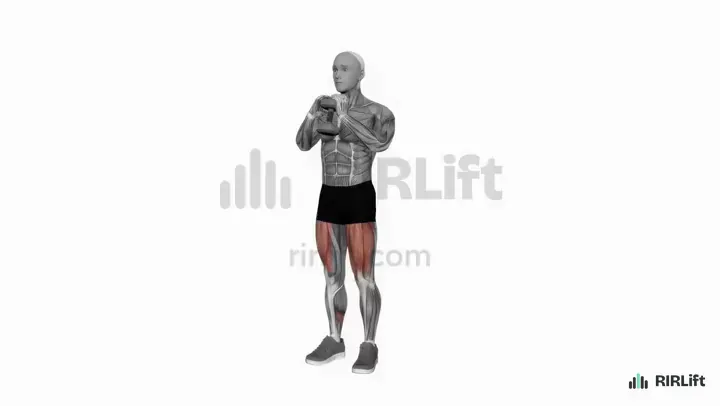
Goblet Squat
One dumbbell at your chest gives you a deep, upright squat with no rack.
Build a session with it -
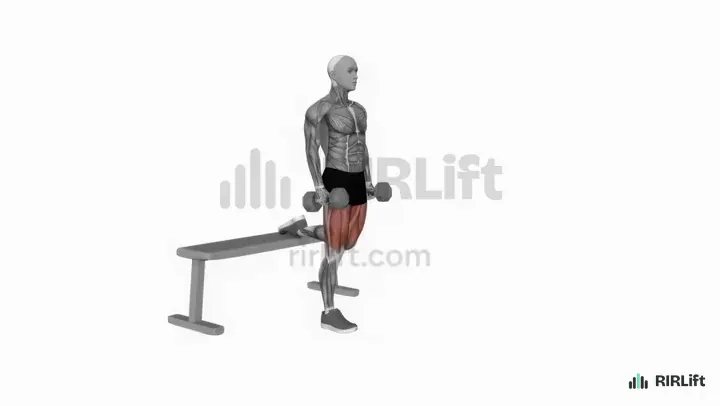
Bulgarian Split Squat
With light dumbbells, train one leg at a time so a small weight still takes you close to failure.
Build a session with it -
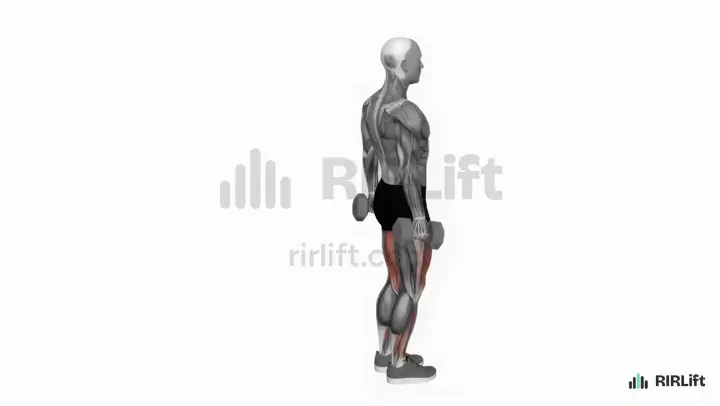
Dumbbell Reverse Lunge
A one-leg option where you step back into each rep and reset your balance between them.
Build a session with it
Glutes over quads
-
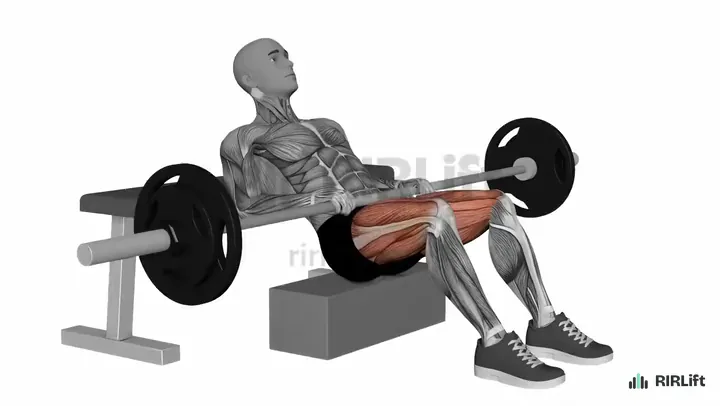
Hip Thrust
Choose it when your goal is bigger glutes and the squat leaves your legs tired before your glutes.
Build a session with it -
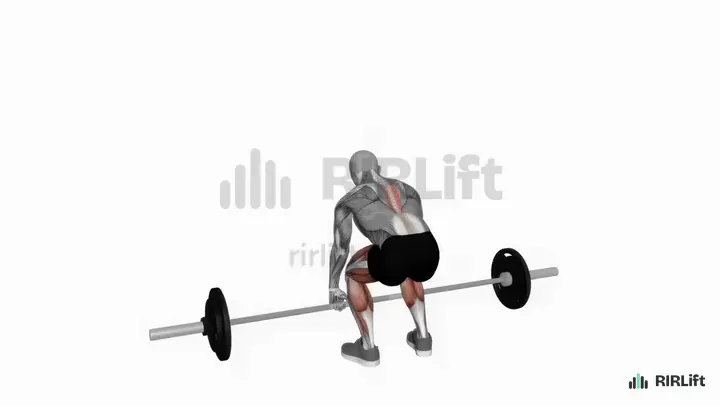
Romanian Deadlift
Pair it with any squat swap to train your hamstrings and glutes, which squatting alone leaves undertrained.
Build a session with it
No weights
-
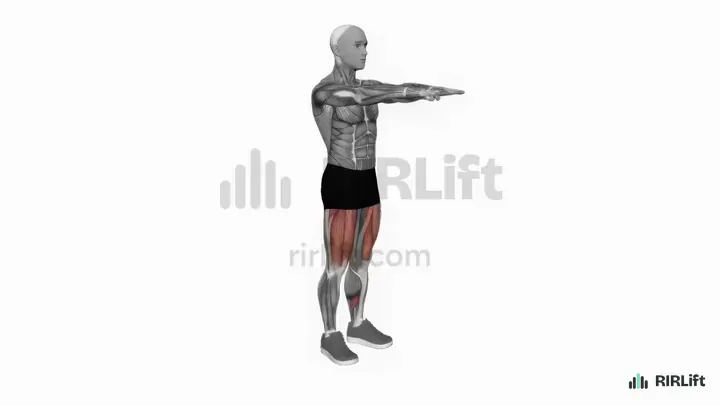
Bodyweight Squat
Use it to practise the pattern, then add reps or a slow lowering until the set gets hard.
Build a session with it -
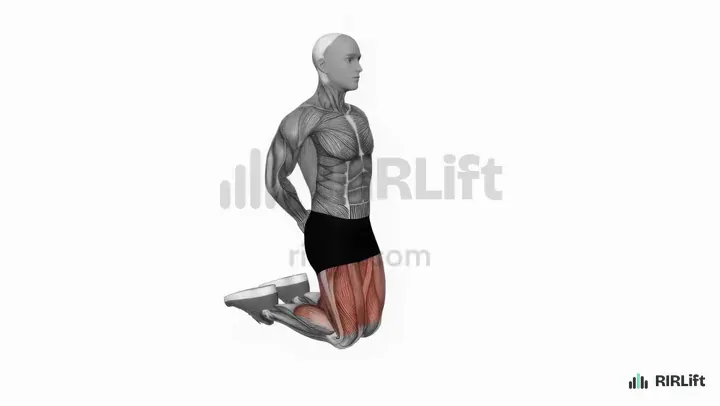
Sissy Squat
On a kneeling pad, lean back from the knees to push your quads to failure with bodyweight alone.
Build a session with it
High-bar vs low-bar squat
High bar puts the bar on top of your traps. You stay more upright and your knees go further forward, so your quads do more. Low bar puts it a few centimetres lower, across the back of your shoulders, so you lean forward more, your hips do more and most lifters can move more weight.
Pick high bar if your goal is bigger quads or you want a squat that carries over to the front squat. Pick low bar if you want the heaviest possible squat. Either builds your legs, so choose one and keep it long enough for your numbers to climb.
How deep should you squat?
Squat until the crease of your hip passes below the top of your knee. Your glutes and adductors are stretched most in that bottom range, so deep reps with a lighter bar build your legs at least as well as half reps with a heavy one.
If your heels lift or your lower back rounds before you get there, widen your stance and turn your toes out a little more, or try a goblet squat to practise the bottom position.
Best squat alternative
For quads, the hack squat is the closest swap, and the leg press is the easiest to find in a commercial gym. With only dumbbells, use a goblet squat when your dumbbells are heavy and a Bulgarian split squat when they are light. For glutes, the hip thrust loads them more directly than a squat does.
Whichever you pick, use it for the same number of hard sets you would give the squat and go just as close to failure.
Questions
What muscles do squats work?
Mostly your quads, glutes and adductors. Your hamstrings, lower back and trunk work to keep your torso in position, and your calves help keep you balanced over your feet.
Are squats good for building muscle?
Yes. A squat loads your quads and glutes heavily through a long range, and sets ended 1 to 3 reps before failure build leg muscle well. Count it toward 10 to 20 hard sets per muscle per week across your leg exercises.
Can I do 100 squats a day?
You can, but 100 bodyweight squats stop building muscle once they get easy. Adding weight and doing fewer, harder sets two or three times a week does more for your legs than the same easy reps every day.
How many squats should I do?
Start with three sets of 6 to 10, each ending about two reps before failure. Training legs twice a week works at least as well as once, and add weight when every set reaches 10.
Should I squat with a barbell or dumbbells?
The barbell lets you load much more weight and keep progressing for years. Dumbbells work well until you cannot hold a heavy enough weight, then switch to a split squat or a barbell.
What can I do instead of squats?
The hack squat and leg press are the closest machine swaps. With dumbbells, use goblet squats or Bulgarian split squats. For glutes, hip thrusts and Romanian deadlifts cover what squats do not.
How much should I squat?
There is no single number to hit. Pick a weight you can lift for your target reps with full depth, finish each set one to three reps short of failure, and add weight or reps every week or two.
Related templates
-
Hack squat: how to do it, what it works and what to swap in
The machine squat that loads your quads closest to the back squat.
-
Goblet squat: how to do it, what it works and what to swap in
The squat to learn depth with one dumbbell before you load a bar.
-
Leg press alternatives: what to do when the machine is taken or missing
More machine and free-weight swaps for your quads.
-
The best workout for legs, built for your situation
A full leg day built around a main squat.
-
How to use RIR
Judging reps in reserve when a heavy squat set slows down.