
Step ups: form, box height and alternatives
Published October 17, 2026
A step up is a one-leg lift where you climb onto a box or bench and lower yourself back down, so the leg on the box does the work. It trains your quads and glutes with nothing more than a bench and a pair of dumbbells. What makes it work is keeping the back leg out of it: if you bounce off the floor, the working leg skips the hardest part of every rep.
- WorksQuads, Glutes
- AlsoAdductors, Abductors
- EquipmentDumbbells, Flat Bench
- Start with3 × 8–12, 2 in reserve, 2 min rest
How to do the step-up
Only the leg on the box can lift you, so each side gets its own hard set and a weaker leg cannot hide behind the stronger one. It needs a bench and dumbbells, and the box height lets you choose how deep the working leg starts.
Steps
- Stand facing a sturdy bench or box at about knee height, a dumbbell hanging at each side.
- Plant your working foot flat in the middle of the box, close enough that your heel is fully on it.
- Lean your chest slightly over that knee, then push down through the whole foot and stand tall on top.
- Let the trailing foot come up beside the working one without pushing off the floor to get there.
- Lower the trailing foot back to the floor slowly, keeping the working leg bent and in charge the whole way.
- Do every rep on one leg before switching, and start with your weaker side.
Cues
- Back foot is a passenger
- Whole foot on the box
- Lower in two to three seconds
Common mistakes
- Bouncing off the back foot: lift the toes of the trailing foot before each rep so it cannot help, and lighten the dumbbells until you can.
- Box too high: if your hips shift sideways or you have to lurch to get up, drop to a lower box until you can rise straight.
- Dropping down: if the trailing foot lands with a thud, you skipped the lowering; slow it down and count it.
- Grip ends the set: hold one dumbbell goblet style or use straps so the leg, not the hands, decides when you stop.
Swap for: Bulgarian Split Squat, Dumbbell Reverse Lunge, Single-Leg Leg Press
Muscles the step-up works
The leg on the box does the work: quads straighten the knee and glutes extend the hip, with the adductors helping out of the bottom and the outer hip keeping the knee in line. Both are loaded hardest at the start of the climb, when the knee and hip are most bent, so a taller box and a slight forward lean shift more of the work to the glutes while a lower box and an upright torso keep it on the quads.
Sets, reps and reps in reserve for the step-up
| Goal | Sets × reps | RIR | Rest |
|---|---|---|---|
| Build muscle | 3 × 8–12 per leg | 2 | 2 min |
| This matches the session builder; add a rep each week and add load once you reach 12 on both legs. | |||
| Strength | 3–4 × 5–8 per leg | 1–2 | 2:30 min |
| Use a barbell or straps once the dumbbells you need outgrow your grip. | |||
| Beginners | 2–3 × 8–12 per leg | 3 | 90 s |
| Start on a low box with bodyweight until you can rise without pushing off the floor. | |||
Step-up variations
-
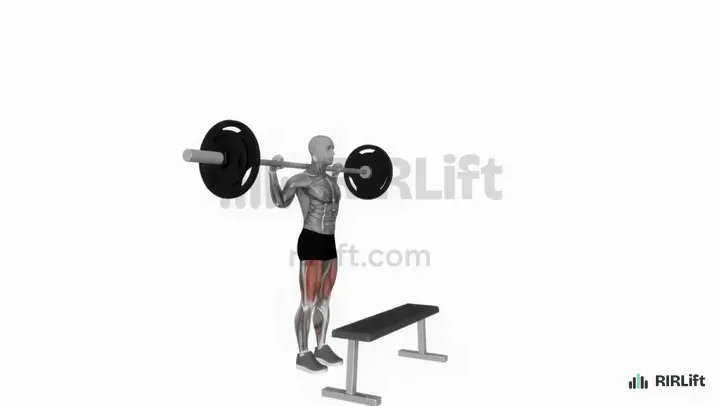
Barbell Step-Up
Pick this when the dumbbells you need are heavier than your grip can hold.
Build a session with it -
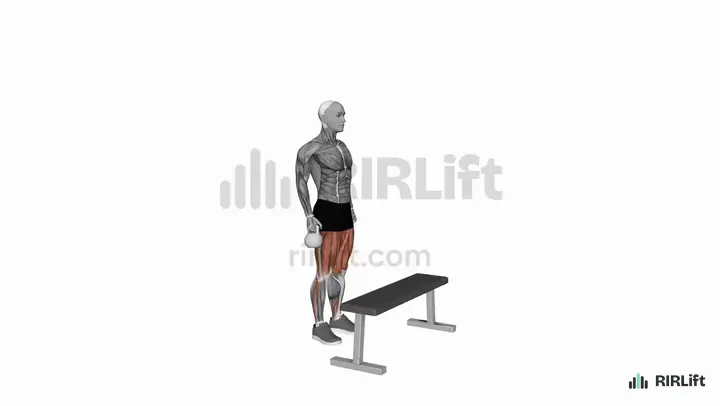
Kettlebell Step-Up
Pick this when kettlebells are what you have; held at your sides they load the leg the same way.
Build a session with it
Step-up alternatives
Split stance
-
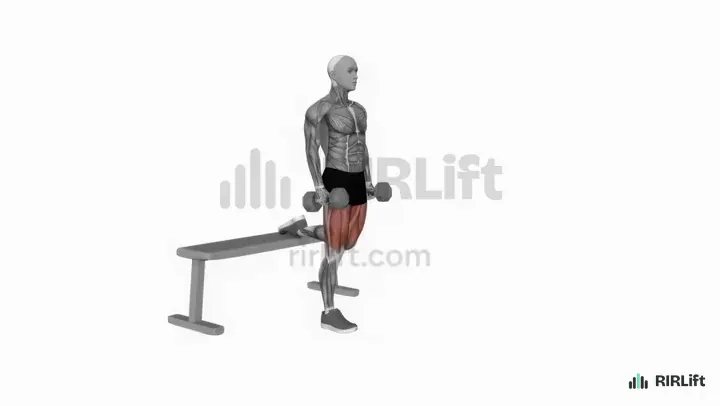
Bulgarian Split Squat
The closest match: one leg does the work through a deeper range, and the bench holds your back foot instead of your front.
Build a session with it -
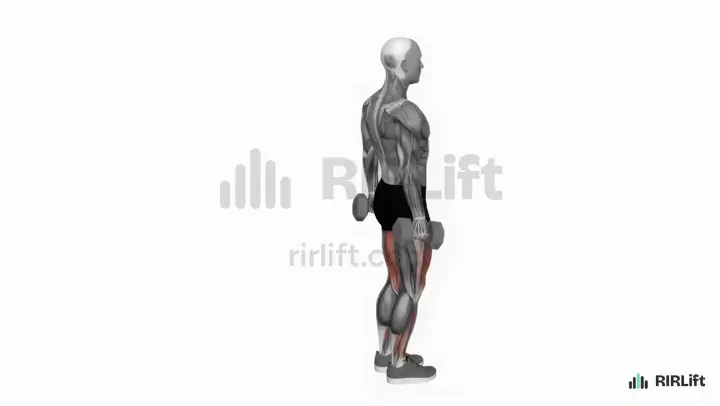
Dumbbell Reverse Lunge
Each rep starts from both feet on the floor, so balance resets every time while the front leg still drives.
Build a session with it -
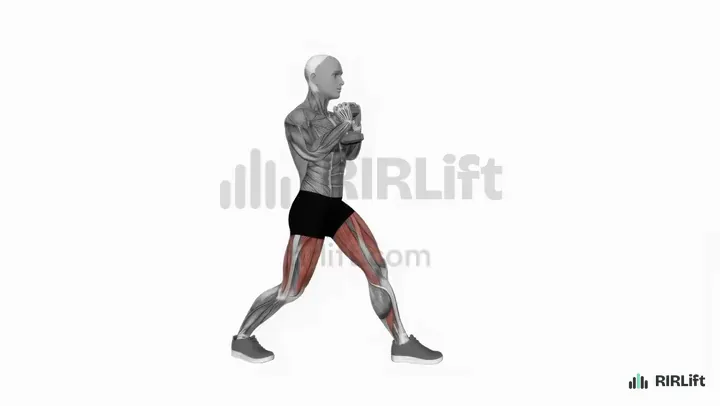
Dumbbell Goblet Split Squat
Pick this with only one dumbbell; the upright torso keeps the work on your quads.
Build a session with it
Machines
-
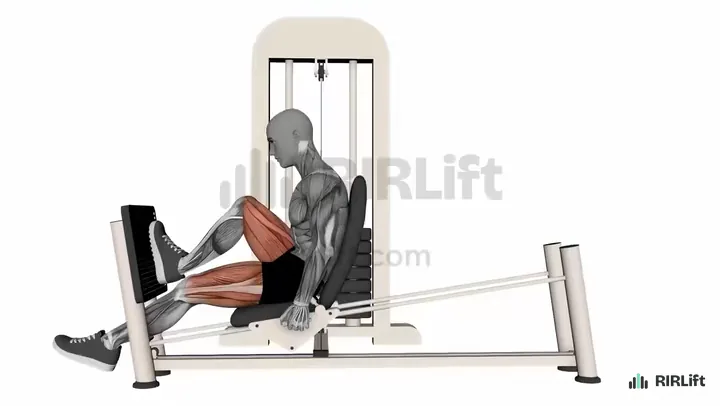
Single-Leg Leg Press
One leg at a time with no balance to manage, so you can take each side closer to failure.
Build a session with it -
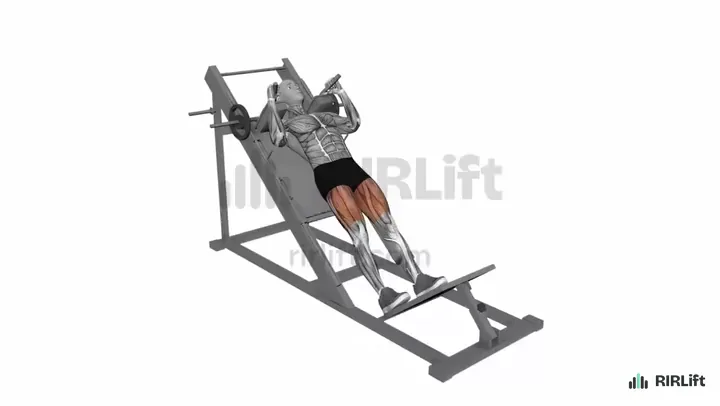
Hack Squat
Both legs with your back supported, when you want heavy quad work without a one-leg setup.
Build a session with it
More glutes
-
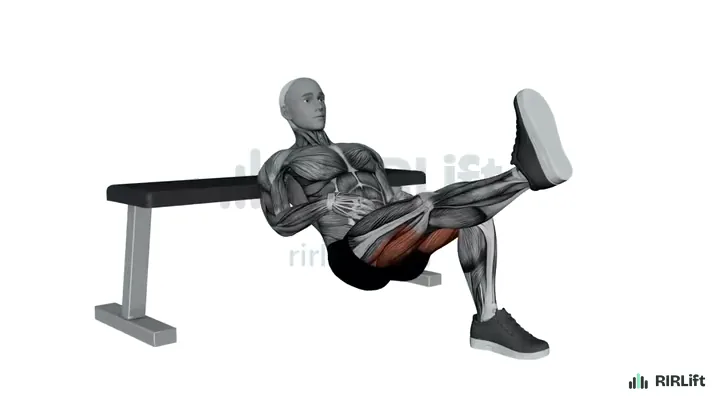
Single-Leg Hip Thrust
Loads the glute hardest at the top, where the step up loads it at the bottom.
Build a session with it -
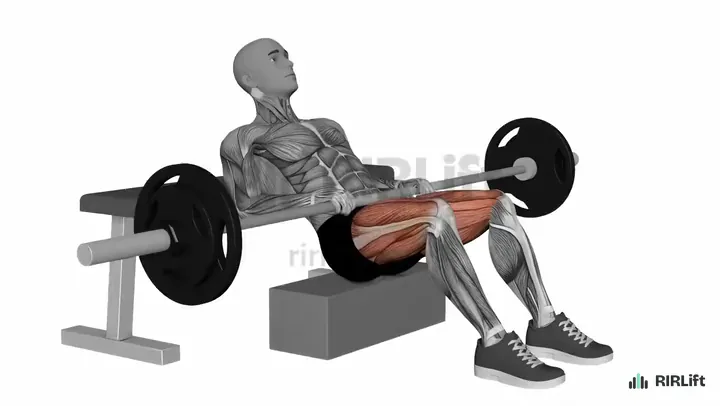
Hip Thrust
Both legs under a barbell, when you want the heaviest glute work with no balance demand.
Build a session with it
One-leg squats
-
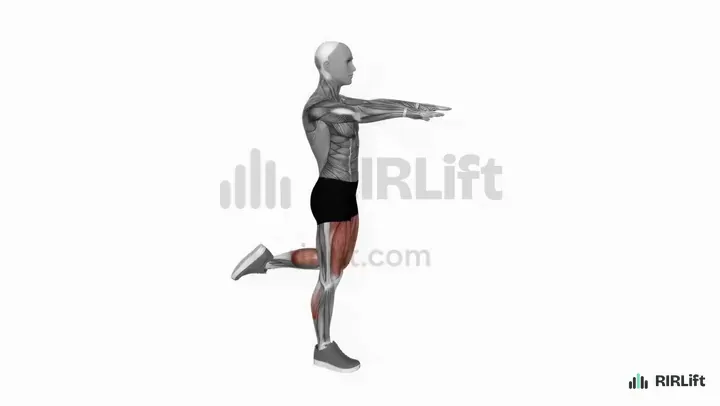
Skater Squat
A one-leg squat with the back knee lowering toward the floor, holding a light weight out in front to balance.
Build a session with it -
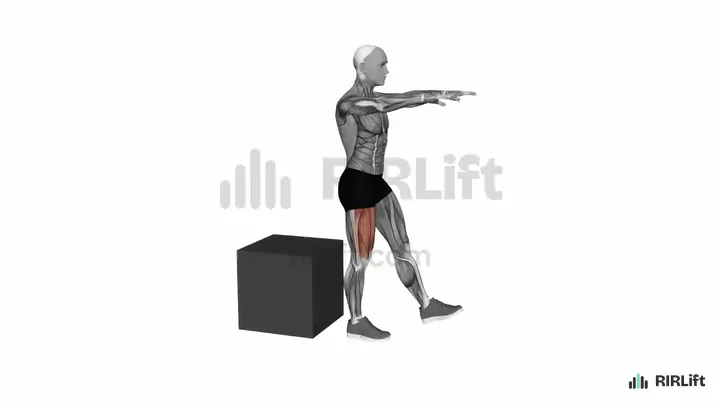
Pistol Squat
Pick this once step ups feel easy: sit back to a box on one leg and stand up, using a lower box as you get stronger.
Build a session with it
What box height to use
Start with a box that puts your working thigh roughly parallel to the floor when your foot is on it, which is about knee height for most people. That is where the step up gives you the most range you can still control.
Go lower, around mid-shin, to keep the work on your quads and to learn the movement. Go higher than knee height only if you can still rise without your hips shifting sideways or the trailing foot pushing off, and lean your chest further forward to load the glutes.
Step ups for glutes or quads
For more glutes, use a taller box, put your working foot a little further from you, and lean your chest over the knee as you climb. For more quads, use a lower box, stay upright, and let your knee travel forward over your toes.
Either way the lowering is where most people lose the set, so keep the descent slow whichever you choose.
Questions
What muscles do step ups work?
Step ups work the quads and glutes of the leg on the box, with the adductors and outer hip helping to drive you up and keep the knee in line. A taller box and a forward lean move more of the work to the glutes; a lower box and an upright torso keep it on the quads.
How many step ups should I do?
For muscle, do 3 sets of 8–12 per leg, stopping with about 2 reps left, and rest 2 min between sets. Count those sets toward the 10–20 hard sets per week your quads and glutes need.
What should I do step ups on?
Use a flat bench, a plyo box or a sturdy step that does not slide or wobble, at about knee height. Your whole foot should fit on top, so a narrow stair is fine only for low, bodyweight reps.
Are step ups good for glutes?
Yes, when the box is tall enough that your hip starts deeply bent and you lean your chest forward as you climb. Keep the trailing foot from pushing off, or the glute of the working leg does less of the lifting.
Can you do step ups without equipment?
Yes. Use a sturdy chair, a low wall or the bottom stairs, and add a backpack once bodyweight reps stop being hard by the end of the set. With no box at all, swap to skater squats or reverse lunges.
What is a good alternative to step ups?
The Bulgarian split squat is the closest swap: one leg does the work and you can load it heavier. Reverse lunges suit you if balance on the box ends your set, and the single-leg leg press removes balance entirely.
Should I alternate legs on step ups?
Finish all reps on one leg before switching. Alternating lets the working leg rest between reps and makes it easy to lose count, so each side ends up further from a hard set.
Related templates
-
Bulgarian split squat: form, foot position and alternatives
The closest swap for step ups, with the same one-leg drive and a heavier ceiling.
-
Hip thrust: how to do it, what it works, and what to swap it for
Pair it with step ups to load your glutes at both ends of their range.
-
Leg exercises with dumbbells: quads, hamstrings, glutes and calves
More ways to train your legs with the same pair of dumbbells.
-
The best workout for your glutes and butt
A full glute session that shows where step ups fit.
-
How to use RIR
How to judge the 2 reps in reserve your step up sets should stop at.