Toning exercises for women: a full-body list with plans

The best toning exercises for women are the dumbbell front squat, Romanian deadlift, hip thrust and lateral lunge for legs and glutes, the incline dumbbell press, bent-over row and Arnold press for the upper body, the lateral raise, hammer curl and triceps kickback for shoulders and arms, and the plank and Russian twist for your core. Toning is building muscle and keeping body fat low enough to see it, so lift 2 to 4 days a week, do 8 to 15 reps per set, stop 1 to 2 reps short of failure, and add weight as it gets easier.

  1. Dumbbell Front Squat Quads, Glutes
  2. Dumbbell Romanian Deadlift Hamstrings, Glutes
  3. Dumbbell Hip Thrust Glutes
  4. Incline Dumbbell Press Chest
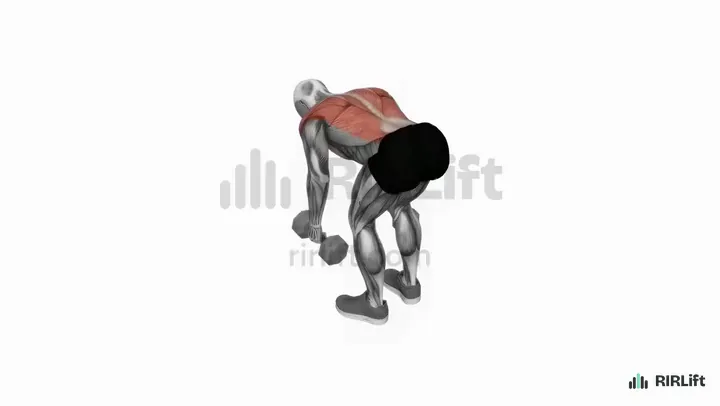
  5. Dumbbell Bent-Over Row Upper Back, Lats
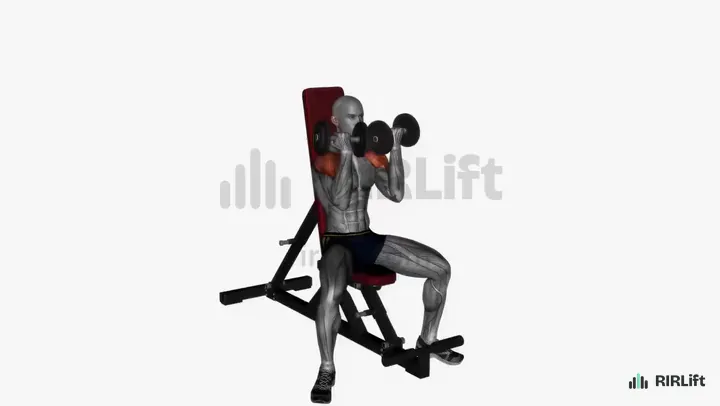
  6. Arnold Press Shoulders
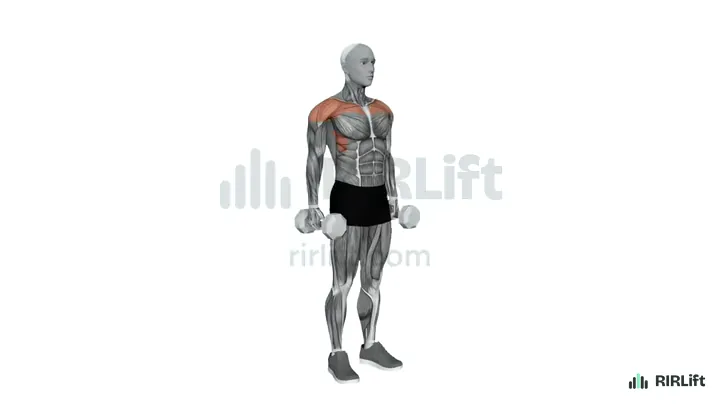
  7. Dumbbell Lateral Raise Shoulders
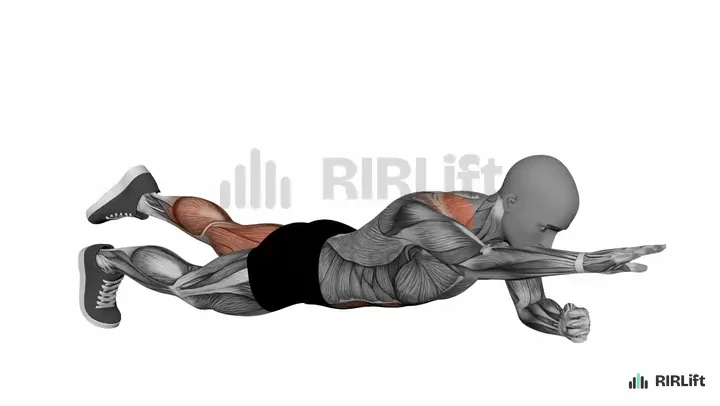
  8. Plank Abs

Legs and glutes

Four moves cover the lower body from every side: the front squat for the front of the thighs, the Romanian deadlift for the back, the hip thrust for the glutes and the lateral lunge for the inner thigh and hips.

Quads and glutes, front-loaded squat

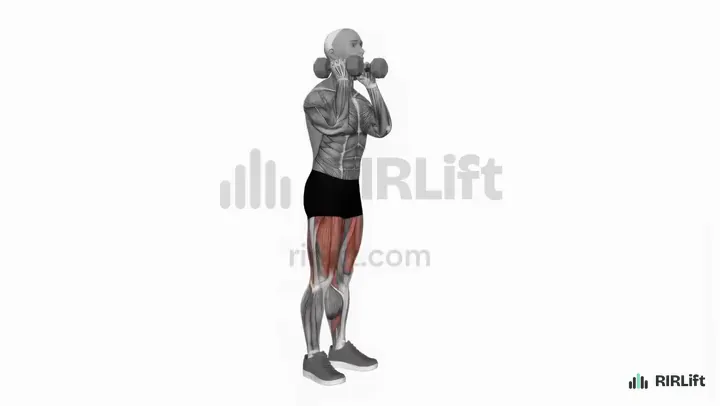
Dumbbell Front Squat

Quads, Glutes

Holding two dumbbells on your shoulders keeps you upright and lets you load the squat more than one goblet dumbbell allows. It shapes the front of the thighs and glutes.

How to do it

  1. Clean or lift both dumbbells onto the front of your shoulders, one end of each resting there, elbows pointing forward.
  2. Stand with your feet a bit wider than your hips and toes turned out slightly.
  3. Sit down between your heels until your hip crease drops to knee height or lower.
  4. Drive the floor away and stand up without letting your elbows drop.

Cues

  • Elbows high, chest proud
  • Knees track over the toes
  • Whole foot on the floor

Common mistakes

  • Letting the elbows sink so the dumbbells pull your chest forward and turn the squat into a lean.
  • Stopping short of parallel because the dumbbells feel awkward. Go lighter until you can reach depth.

Swap for: Goblet Squat, Dumbbell Squat, Heels-Elevated Goblet Squat

Hamstrings and glutes, hinge

Dumbbell Romanian Deadlift

Hamstrings, Glutes

The RDL firms the back of the thighs and the area under the glutes, where most leg routines fall short. It is the second lower-body lift in every plan.

How to do it

  1. Stand hip-width apart with a dumbbell in each hand resting against the front of your thighs, palms facing you.
  2. Push your hips straight back and let your torso fold forward, knees softly bent, the dumbbells brushing your legs.
  3. Lower until the dumbbells pass your knees and you feel a strong stretch in your hamstrings, with your back still flat.
  4. Drive your hips forward to stand back up, squeezing your glutes at the top, and repeat.

Cues

  • Hips back, not down
  • Dumbbells slide down your legs
  • Flat back, chin tucked

Common mistakes

  • Bending the knees into a squat so the dumbbells go lower: the depth comes from the hips, and most people stop just past the knees.
  • Rounding the lower back at the bottom: end the rep where your back stays flat, and lighten the load if that is high.

Swap for: Single-Leg RDL, Dumbbell Good Morning, Kettlebell Deadlift

Glutes, dumbbell hip thrust

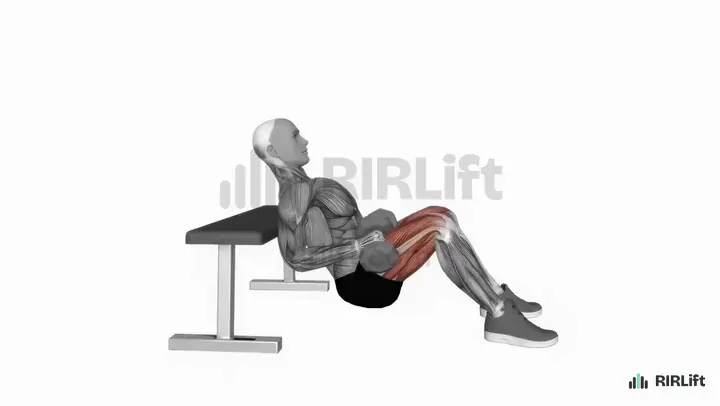
Dumbbell Hip Thrust

Glutes

With your back on a bench and a dumbbell on your hips, the thrust loads the glutes directly. It is the most direct glute exercise you can do with home equipment.

How to do it

  1. Sit down with the edge of a bench just under your shoulder blades and roll a dumbbell into the crease of your hips, a folded towel underneath it.
  2. Plant your feet flat about hip-width apart, close enough that your shins will be vertical when your hips are up, and hold the dumbbell at both ends.
  3. Tuck your chin slightly and press through your whole foot to lift your hips until your torso and thighs form a flat line.
  4. Pause for a second at the top with your glutes squeezed hard and your ribs pulled down, not flared.
  5. Lower your hips until they are a few inches above the floor and start the next rep from there.

Cues

  • Chin tucked, eyes forward
  • Shins vertical at the top
  • Ribs down, glutes squeezed

Common mistakes

  • Arching your lower back to get the last inch: stop when your hips are level with your knees and your ribs stay down; the glutes finish the rep, not your spine.
  • Feet too far away or too close: if you feel it mostly in your hamstrings, walk your feet in; if it lands on your quads, walk them out until your shins are vertical at the top.
  • Letting the dumbbell roll toward your stomach: hold both ends and put a folded towel under it so it stays in the hip crease for the whole set.

Swap for: Hip Thrust, Dumbbell Glute Bridge, Single-Leg Hip Thrust

Inner thighs, quads and glutes, side lunge

Dumbbell Lateral Lunge

Quads, Glutes, Adductors

Moving sideways reaches the inner thigh and the side of the hips, which forward-and-back exercises skip. It rounds out the lower body.

How to do it

  1. Stand with your feet together and a dumbbell hanging at each side.
  2. Take a wide step to the right and sit your hips back over the right foot, left leg straight.
  3. Lower until the right thigh is near level with the floor, dumbbells on either side of the bent knee.
  4. Push hard off the right foot to step back to the start, then step out to the left.

Cues

  • Step wide, sit back
  • Trailing leg stays long
  • Both feet point forward

Common mistakes

  • Stepping too short, which turns the lunge into a squat with no stretch on the trailing leg.
  • Letting the bent knee drift inward past your big toe: keep it in line with the foot.

Swap for: Kettlebell Lateral Lunge, Cossack Squat, Goblet Squat

Chest, back and shoulders

An incline press, a row and an overhead press train the whole upper body with one set of dumbbells. Together they shape the upper chest, the back you see in a tank top, and the shoulders.

Upper chest and shoulders, incline press

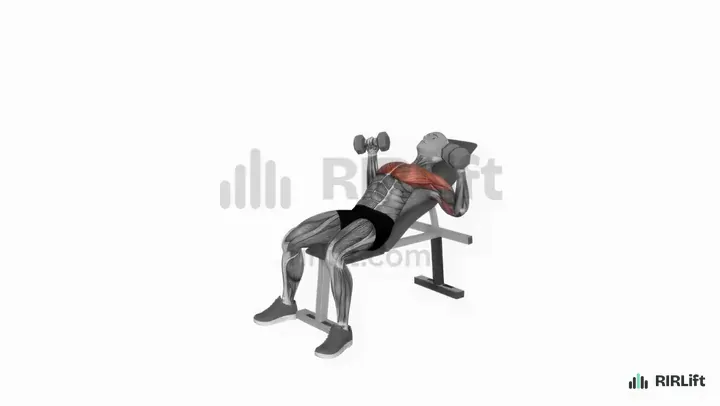
Incline Dumbbell Press

Chest

The incline angle shifts the press to the upper chest and front shoulders, which lifts and firms the area below the collarbone.

How to do it

  1. Set the backrest to about 30 to 45 degrees and sit with the dumbbells on your thighs.
  2. Lean back and bring the weights to the outside of your shoulders as your back meets the pad.
  3. Squeeze your shoulder blades back and keep your hips on the seat.
  4. Press up and slightly in until your arms are straight over your upper chest.
  5. Lower under control until your elbows are just below the bench line.

Cues

  • Low incline, not a shoulder press
  • Wrists stacked over elbows
  • Touch the stretch, then press

Common mistakes

  • Setting the bench steeper than about 45 degrees: the front delts take over. Drop it a notch if you mostly feel your shoulders.
  • Lifting your hips off the seat to finish a rep: that turns it back into a flat press.

Swap for: Single-Arm Incline Dumbbell Press, Incline Dumbbell Squeeze Press, Incline Barbell Bench Press

Upper back and lats, two-arm row

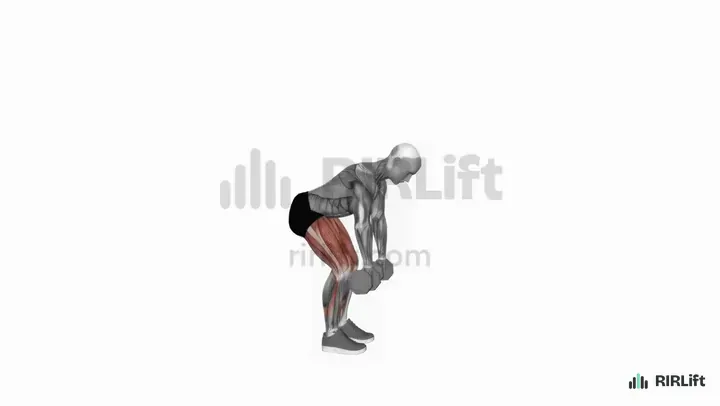
Dumbbell Bent-Over Row

Upper Back, Lats

Rowing both dumbbells from a hinge builds the upper back and lats and trains the hinge at the same time. It is the main pull in every plan.

How to do it

  1. Take one dumbbell per hand, feet about hip-width apart, and hinge forward from the hips with soft knees until your torso is nearly level with the floor.
  2. Let the dumbbells hang straight down under your shoulders, palms turned in.
  3. Pull both dumbbells up to your lower ribs, keeping the elbows close, and hold the top for a beat.
  4. Lower to straight arms without letting your torso rise and repeat.

Cues

  • Torso angle stays locked
  • Pull to the ribs
  • Squeeze, then lower

Common mistakes

  • Letting the hinge rise until you are rowing upright: keep a mirror or phone camera to the side and stop the set when your chest climbs.
  • Yanking the dumbbells with your hips: the legs stay still and the elbows do the work.

Swap for: One-Arm Dumbbell Row, Kettlebell Gorilla Row, Band Bent-Over Row

Shoulders, rotating overhead press

Arnold Press

Shoulders

Turning your palms as you press works the front and side of the shoulders over a longer path than a straight press. Use it as the overhead press on upper days.

How to do it

  1. Sit on a bench or chair with your back supported, two dumbbells held at chin height, palms facing you and elbows in front.
  2. Press the dumbbells up while turning your palms to face forward, so they finish forward at the top.
  3. Straighten your arms overhead without letting the dumbbells clang together.
  4. Lower slowly, turning your palms back toward you as the dumbbells return to chin height.

Cues

  • Turn and press in one motion
  • Ribs down, back against the pad
  • Slow on the way down

Common mistakes

  • Arching your lower back to get the weights up: brace your stomach and pick lighter dumbbells.
  • Turning the palms only at the very top: start rotating as soon as the press begins.

Swap for: Dumbbell Shoulder Press, Neutral-Grip Dumbbell Shoulder Press, Band Overhead Press

Arms and shoulder caps

These three isolation moves finish the details: the lateral raise rounds the side of the shoulder, the hammer curl fills out the front of the arm, and the kickback firms the back of it. Add them at the end of upper-body days.

Side delts, lateral raise

Dumbbell Lateral Raise

Shoulders

Lateral raises build the round cap of the shoulder that shows in sleeveless tops. Light dumbbells and high reps are enough.

How to do it

  1. Pick light dumbbells you can raise for 12 clean reps, and stand with your feet hip width apart, the weights hanging by your thighs.
  2. Lean your chest forward a few degrees, pull your shoulders down away from your ears and soften your elbows.
  3. Sweep the weights out and slightly forward, leading with your elbows, until your upper arms are level with your shoulders.
  4. Hold that top position for a beat, then take two to three seconds to lower until the dumbbells are a hand's width from your thighs.
  5. Start the next rep from there without resting at the bottom or bouncing out of it.

Cues

  • Elbows lead, hands follow
  • Shoulders down, neck long
  • Push the weights out, not up

Common mistakes

  • Shrugging the weight up: if your shoulders rise toward your ears, drop to lighter dumbbells and stop each rep where your upper arm is level.
  • Swinging the torso to start each rep: brace, stand still and keep the first inch of the lift as slow as the rest.
  • Bending the elbows more and more as the set goes on: set the bend on rep one and keep it, or the lever shortens and the set gets easier without you noticing.

Swap for: Cable Lateral Raise, Band Lateral Raise, Machine Lateral Raise

Biceps and forearms, neutral-grip curl

Hammer Curl

Biceps, Forearms

The hammer grip trains the biceps and the muscle beside them, which gives the upper arm more shape from the side.

How to do it

  1. Hold the dumbbells at your sides with your palms facing your thighs.
  2. Bend one elbow to bring that dumbbell up, thumb leading.
  3. Keep the dumbbell vertical the whole way, then lower it slowly to the start.
  4. Curl the other arm, and keep alternating until the set is done.

Cues

  • Thumbs lead
  • Dumbbells vertical
  • Elbows by your sides

Common mistakes

  • Swinging heavier weight with your back: keep your torso still.
  • Curling across your body: keep each dumbbell in line with its shoulder.

Swap for: Band Hammer Curl, Alternating Hammer Curl

Triceps, kickback

Triceps Kickback

Triceps

The kickback squeezes the triceps with the arm straight, firming the back of the arm with a light dumbbell. It is a good last exercise on upper days.

How to do it

  1. Brace one hand on a chair or bench and hinge forward with a flat back.
  2. Lift the dumbbell arm so your upper arm sits against your side, elbow bent.
  3. Push the dumbbell back until your arm is straight, and hold it for a second.
  4. Bend back to the start; finish the set, then change arms.

Cues

  • Upper arm stays level
  • Hold the lockout
  • Light weight

Common mistakes

  • Swinging the weight up: lighten it so you can pause at the top.
  • Upper arm sinking toward the floor: lift it back to your side.

Swap for: Cable Triceps Kickback, Seated Dumbbell Overhead Triceps Extension

Core

A plank for holding your midsection tight and a Russian twist for rotation are enough core work alongside these lifts, since squats, deadlifts and rows already make your trunk work hard.

Abs, front hold

Plank

Abs

A plank trains your abs to stay tight while you breathe, the same bracing you use under every other lift on this page.

How to do it

  1. Set your forearms under your shoulders and your feet behind you, body in a straight line.
  2. Squeeze your glutes and pull your ribs down toward your hips.
  3. Hold, breathing normally, without letting your hips sag or rise.
  4. For the harder version, reach one arm forward and lift the opposite foot, hold, then switch sides.

Cues

  • Ribs down
  • Glutes tight
  • Straight line

Common mistakes

  • Hips sagging toward the floor: that hangs on your lower back.
  • Holding for minutes at an easy level: make it harder instead.

Swap for: Long Lever Plank, Plank Shoulder Tap

Obliques, seated twist

Russian Twist

Abs

Twisting under control works the sides of the waist. Holding one dumbbell makes it a loaded exercise you can progress.

How to do it

  1. Sit with knees bent and heels on the floor, then lean back until your trunk is at an angle.
  2. Clasp your hands together at chest height.
  3. Turn your shoulders to one side, come back through the middle and turn to the other.

Cues

  • Turn the ribs
  • Chest tall
  • Slow

Common mistakes

  • Swinging only the arms while the chest faces forward.
  • Rounding your back to get lower.

Swap for: Dumbbell Woodchop, Windshield Wipers

Put them together: example sessions

Each session below picks from the exercises above for one situation, with the sets, reps, rest and RIR filled in.

Session 1

At home with dumbbells, two days

  • Workouts2× a week
  • Working sets28 a week
  • Per workout~30 min
  • EquipmentDumbbells

You train at home with a few pairs of dumbbells and want to tone your whole body in two sessions a week.

Each full-body day has 14 sets: lower-body work, a row, an arm move and core, with the overhead press on day A. Across the week each area gets 6 to 9 sets, which is a solid start that leaves room for walking or classes.

Full Body A
ExerciseSets × repsRIRRest
Dumbbell Front Squat1 warm-up set first 3 × 10–15 2 90 s
Dumbbell Bent-Over Row 3 × 10–12 2 90 s
Arnold Press 3 × 8–12 2 90 s
Triceps Kickback 3 × 12–15 1 1 min
PlankSeconds per hold. 2 × 20–45 2 45 s
Full Body B
ExerciseSets × repsRIRRest
Dumbbell Romanian Deadlift1 warm-up set first 3 × 10–12 2 90 s
Dumbbell Lateral LungePer side. 3 × 8–12 2 90 s
Dumbbell Bent-Over Row 3 × 10–12 2 90 s
Hammer Curl 3 × 10–15 1 1 min
Russian TwistPer side. 2 × 10–15 2 45 s
How to run it
Leave at least two days between the two full-body days, for instance Monday and Thursday.
How to progress
Work each lift up to the top of its range at the reps in reserve shown before choosing the next dumbbell size. On lateral raises and kickbacks, stay longer with reps first; the jumps between dumbbells are big for small muscles.

Session 2

30 minutes, three times a week

  • Workouts3× a week
  • Working sets42 a week
  • Per workout~20 min
  • EquipmentDumbbells, Incline Bench

You have a gym or a home setup with a bench and dumbbells, and you can spare 30 minutes three times a week.

Supersets pair a lower-body and an upper-body lift so one rests while the other works, fitting 14 sets into 30 minutes. Over a three-session week that is about 18 sets for legs and glutes, 9 for the back, 4 to 5 each for chest and shoulders, and 6 for core.

Session A
ExerciseSets × repsRIRRest
A1 Dumbbell Front Squat1 warm-up set first 3 × 8–12 2 1 min
A2 Dumbbell Bent-Over Row 3 × 8–12 2 1 min
B1 Dumbbell Romanian Deadlift 3 × 8–12 2 1 min
B2 Incline Dumbbell Press 3 × 8–12 2 1 min
PlankSeconds per hold. 2 × 30–45 2 45 s
Session B
ExerciseSets × repsRIRRest
A1 Dumbbell Hip Thrust1 warm-up set first 3 × 10–15 1 1 min
A2 Arnold Press 3 × 8–12 2 1 min
B1 Dumbbell Lateral LungePer side. 3 × 8–12 2 1 min
B2 Dumbbell Bent-Over Row 3 × 8–12 2 1 min
Russian TwistPer side. 2 × 10–15 2 45 s
How to run it
Alternate the two sessions over three days a week, so week one is A, B, A and week two is B, A, B. Do the two exercises in each pair back to back, then take the rest.
How to progress
When a lift reaches the top of its range at the planned reps in reserve, put more weight on it next session. Keep the rest between paired exercises short; the time saving is the point of this plan.

Session 3

Four days, lower and upper body

  • Workouts4× a week
  • Working sets53 a week
  • Per workout~30 min
  • EquipmentDumbbells, Incline Bench

You have trained for a while, you can lift four times a week, and you want more work on the details: glutes, shoulders and arms.

Lower days carry 11 to 12 sets and upper days 15, which works out to about 18 sets a week for legs and glutes, 9 for shoulders, 6 for the back and 6 each for biceps and triceps, with the arms trained directly twice. That is more shoulder and arm work than the two- and three-day plans give, which is what an experienced lifter needs to keep changing shape.

Lower A
ExerciseSets × repsRIRRest
Dumbbell Front Squat2 warm-up sets first 3 × 8–12 2 2 min
Dumbbell Romanian Deadlift 3 × 8–12 2 2 min
Dumbbell Lateral LungePer side. 3 × 8–12 1 90 s
PlankSeconds per hold. 3 × 30–45 2 45 s
Upper A
ExerciseSets × repsRIRRest
Incline Dumbbell Press1 warm-up set first 3 × 8–12 2 2 min
Dumbbell Bent-Over Row 3 × 8–12 2 90 s
Dumbbell Lateral Raise 3 × 12–20 1 1 min
Hammer Curl 3 × 10–15 1 1 min
Triceps Kickback 3 × 12–15 1 1 min
Lower B
ExerciseSets × repsRIRRest
Dumbbell Hip Thrust1 warm-up set first 4 × 8–12 1 2 min
Dumbbell Romanian Deadlift 3 × 10–12 2 2 min
Dumbbell Front Squat 2 × 10–15 1 90 s
Russian TwistPer side. 2 × 10–15 2 45 s
Upper B
ExerciseSets × repsRIRRest
Arnold Press1 warm-up set first 3 × 8–12 2 2 min
Dumbbell Bent-Over Row 3 × 8–12 2 90 s
Dumbbell Lateral Raise 3 × 12–20 1 1 min
Triceps Kickback 3 × 12–15 1 1 min
Hammer Curl 3 × 10–15 1 1 min
How to run it
Run Lower A, Upper A, rest, Lower B, Upper B, then two rest days.
How to progress
Double progression on every lift: once each set fills the range at the target reps in reserve, compound lifts get more weight and isolation lifts get more reps first.

Make it fit you

Questions

What is the best exercise for toning?

There is no single one, but if you can only pick a few, a squat, a Romanian deadlift, a row and an overhead press cover most of the body. Add a hip thrust and a lateral raise for glute and shoulder shape.

Can a flabby body be toned?

Yes. Building muscle under the skin makes the body firmer, and losing some fat makes the muscle visible. Both happen with lifting 2 to 4 times a week and eating a little less if you have fat to lose.

How long does it take for a woman to get toned?

You will feel firmer and stronger in the first month. Clear changes in the mirror tend to take 8 to 12 weeks of steady training, and longer when there is more fat to lose.

How can I tone up quickly?

Train three or four days a week, take sets close to failure, add weight or reps every week or two, eat enough protein, and walk daily. There is no shortcut beyond doing the basics consistently.

Should I use light weights and high reps to tone?

Light weights only tone when the set ends close to failure, which can mean 20 or more reps. Moderate weights for 8 to 15 reps get you there faster and in less time.