
Tricep exercises at home: from push-ups and dips to one dumbbell
Published October 19, 2026
The best tricep exercises at home are the close-grip push-up, the chair or bench dip, the pike push-up and, if you own one dumbbell or kettlebell, the overhead triceps extension. Push-ups and dips load all three heads near lockout; the overhead extension is the one that stretches the long head, the largest part of the triceps. Do 2 or 3 of them per session, 3 sets each, stopping 0 to 2 reps short of failure, twice a week.
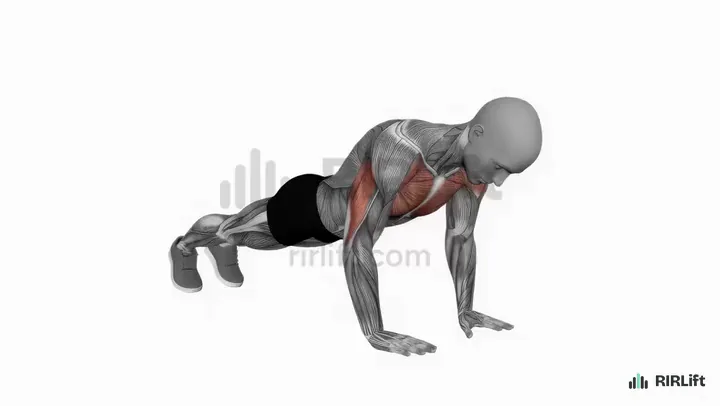
- Close-Grip Push-Up Triceps, Chest
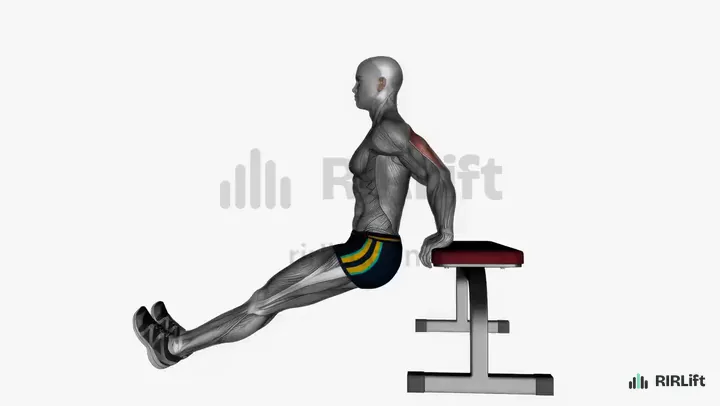
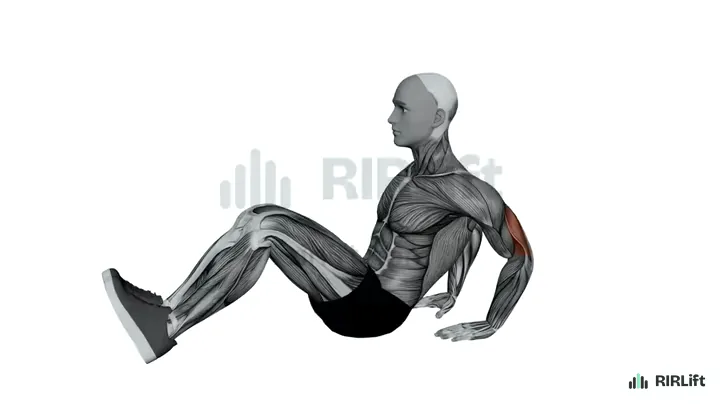
- Bench Dip Triceps
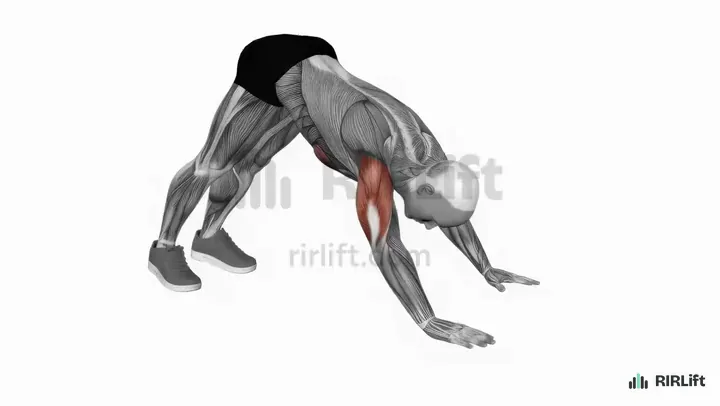
- Pike Push-Up Shoulders
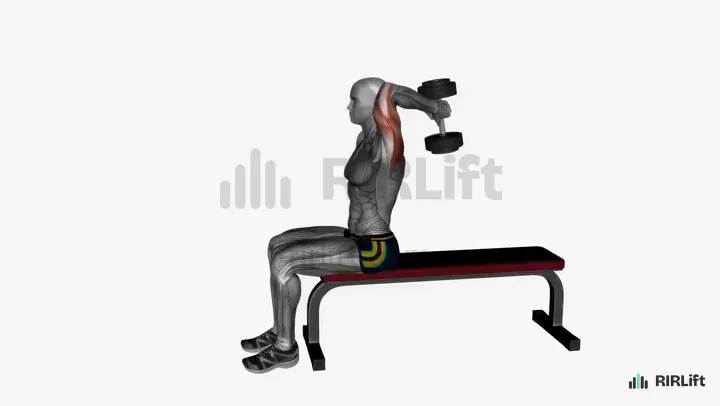
- Seated Dumbbell Overhead Triceps Extension Triceps
- Floor Triceps Dip Triceps
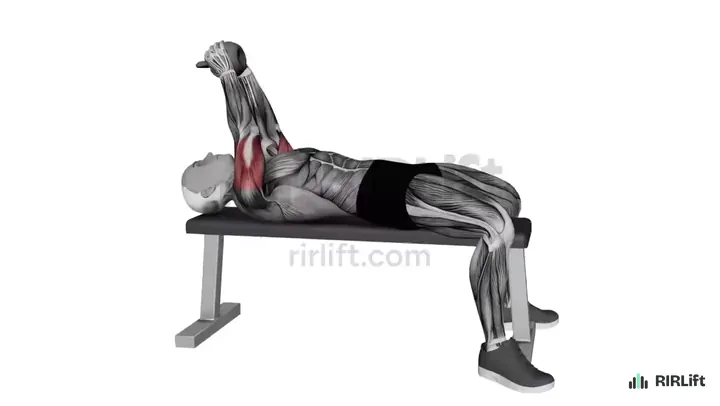
- Kettlebell Skullcrusher Triceps
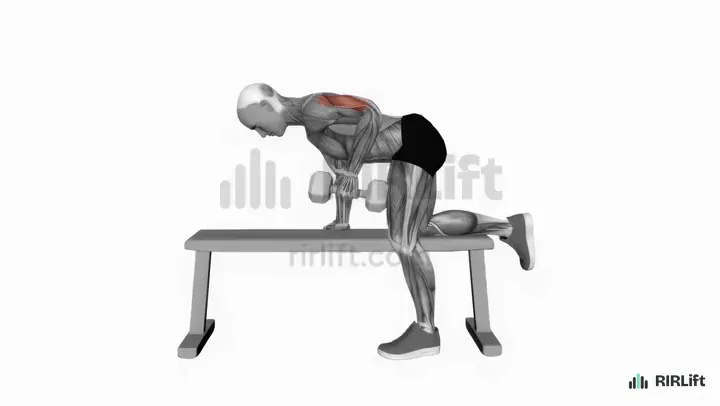
- Triceps Kickback Triceps
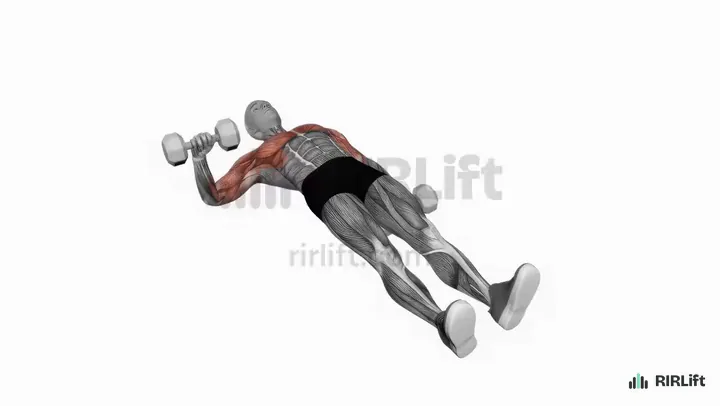
- Single-Arm Dumbbell Floor Press Chest
Put them together: example sessions
Each session below picks from the exercises above for one situation, with the sets, reps, rest and RIR filled in. Open one in the session builder to change a pick, price it from a recent set, and add it to RIRLift.
-
Session 1
Nothing but the floor and a chair
You train in your living room or a hotel room and own no weights.
2× a week · 17 sets a week · ~15 min
-
Session 2
One dumbbell or kettlebell
You have a single dumbbell or kettlebell, a chair and some floor space, and about 25 minutes.
2× a week · 17 sets a week · ~20 min
-
Session 3
A pair of dumbbells, triceps after upper-body work
You already do push-ups or presses at home for chest and shoulders and want a short triceps block to finish those days.
2× a week · 12 sets a week · ~15 min
Session 1
Nothing but the floor and a chair
- Workouts2× a week
- Working sets17 a week
- Per workout~15 min
- EquipmentFlat Bench
You train in your living room or a hotel room and own no weights.
Without weights, load comes from leverage, so each session has one push-up you can do for 8 to 15 reps, the pike push-up for overhead work, and a dip for the end. The push-ups stop 1 to 2 reps short of failure because form breaks quickly when they are the hardest lift you have; dips go to 0 to 1 since they are the last exercise and a missed rep is safe. Nine sets a session, twice a week, is enough for triceps that are not also doing heavy bench pressing.
| Exercise | Sets × reps | RIR | Rest |
|---|---|---|---|
| Close-Grip Push-UpElbows to ribs. Knees down if form breaks. | 3 × 6–15 | 2 | 90 s |
| Pike Push-UpHips high. | 3 × 6–12 | 2 | 90 s |
| Bench DipChair against a wall. | 3 × 8–20 | 1 | 1 min |
Open Bodyweight A in the session builder
| Exercise | Sets × reps | RIR | Rest |
|---|---|---|---|
| Incline Push-UpNarrow hands on a counter. | 3 × 10–20 | 1 | 75 s |
| Kneeling Push-UpElbows in. | 2 × 10–20 | 1 | 1 min |
| Floor Triceps DipHips hover. | 3 × 12–25 | 0 | 1 min |
Open Bodyweight B in the session builder
- How to run it
- Alternate Bodyweight A and Bodyweight B with at least a day between them. If close-grip push-ups are too hard for 8 reps, use the incline push-up in their place until they are not.
- How to progress
- Add reps until you reach the top of every range at the target RIR. Then make the movement harder: lower your hands for incline push-ups, straighten your legs on dips, raise your feet on pike push-ups.
Session 2
One dumbbell or kettlebell
- Workouts2× a week
- Working sets17 a week
- Per workout~20 min
- EquipmentDumbbells, Kettlebells
You have a single dumbbell or kettlebell, a chair and some floor space, and about 25 minutes.
One weight covers what push-ups miss: the overhead extension stretches the long head, the single-arm floor press adds heavy load one side at a time, and the kickback trains the fully shortened end. Close-grip push-ups stay in as the first exercise because they are still the heaviest movement you have. Presses and push-ups stop at 1 to 2 RIR; the extensions go to 0 to 1, since one weight that never changes needs hard sets to be enough. About 10 sets a session.
| Exercise | Sets × reps | RIR | Rest |
|---|---|---|---|
| Single-Arm Dumbbell Floor Press1 warm-up set firstPer arm. Pause on the floor. | 3 × 8–15 | 1 | 90 s |
| Seated Dumbbell Overhead Triceps ExtensionDeep stretch. | 3 × 10–15 | 1 | 75 s |
| Triceps KickbackPer arm. 1 s squeeze. | 3 × 12–20 | 0 | 1 min |
Open Session A in the session builder
| Exercise | Sets × reps | RIR | Rest |
|---|---|---|---|
| Close-Grip Push-UpElbows to ribs. | 3 × 6–15 | 1 | 90 s |
| Kettlebell SkullcrusherOn the floor. Bell to forehead. | 3 × 10–15 | 1 | 75 s |
| Seated Dumbbell Overhead Triceps Extension3 s down. | 2 × 12–20 | 0 | 1 min |
Open Session B in the session builder
- How to run it
- Do Session A and Session B on different days. If your weight is a kettlebell, use the kettlebell overhead extension and kettlebell skullcrusher where the plan lists the dumbbell overhead extension.
- How to progress
- When every set hits the top of its range at the target RIR, slow the lowering to three seconds. When that tops out too, do the single-arm moves with a pause at the hardest point, or get the next weight up.
Session 3
A pair of dumbbells, triceps after upper-body work
- Workouts2× a week
- Working sets12 a week
- Per workout~15 min
- EquipmentDumbbells
You already do push-ups or presses at home for chest and shoulders and want a short triceps block to finish those days.
Chest and shoulder pressing already trains the triceps, so this plan adds a heavier pressing lift and one extension rather than a full session. The two-dumbbell floor press loads the triceps more than push-ups can, and the overhead extension covers the long head that presses barely stretch. The floor press stops at 1 RIR so the elbows stay fresh; the extension goes to 0. With pressing counted at half, it gives about 10 triceps sets per session.
| Exercise | Sets × reps | RIR | Rest |
|---|---|---|---|
| Dumbbell Floor Press1 warm-up set firstPalms in. Pause on the floor. | 3 × 8–12 | 1 | 2 min |
| Seated Dumbbell Overhead Triceps ExtensionBoth hands on one dumbbell. | 3 × 10–15 | 0 | 75 s |
- How to run it
- Add it to the end of two upper-body days a week. Run the two blocks back to back as a superset if time is tight, resting after the pair.
- How to progress
- Add weight to the floor press once all sets reach 12 reps at 1 RIR. Add reps to the extension first and weight second.
Make it fit you
-
Wrists hurt on push-ups
Hold a pair of dumbbells or push-up handles on the floor so your wrists stay straight, or move to an incline push-up on a counter, which bends the wrist less.
-
Shoulders ache on chair dips
Stop each rep higher, with your upper arms short of level, or switch to floor dips, where the floor limits how deep you can go.
-
Push-ups are easy for 25 reps
Take three seconds on the way down and pause an inch above the floor. If that is still easy, raise your feet on a chair or add a floor press with a dumbbell.
-
Training triceps every day
Daily triceps work rarely beats two or three hard sessions. If you want to do something every day, keep it to one or two easy sets of push-ups at 3 to 4 RIR on the off days and save the hard sets for the plan.
-
Want a bigger long head
Keep an overhead extension in every session and do it with a full stretch behind your head. Push-ups and dips train the long head less because your arms stay by your sides.
-
Log the RIR, not just the reps
With bodyweight, the number on the bar never changes, so the reps you had left is what tells you a set got easier. RIRLift logs reps and RIR for every set, so when a push-up that used to stop at 1 RIR ends with 3 left, it is time for a harder version.
Questions
What exercises build triceps at home?
Close-grip push-ups, chair or bench dips and pike push-ups build the triceps with no equipment. With one dumbbell or kettlebell, add an overhead extension and a floor press. Choose versions you can do for 6 to 20 reps and take them close to failure.
Can you build triceps without weights?
Yes, as long as the exercises stay hard. A close-grip push-up you can do for 10 reps is as useful as a weighted press for 10. When you pass 20 to 25 reps, switch to a harder version rather than doing more reps.
Can I train triceps every day?
You can, but you do not need to. Two or three sessions a week with sets close to failure builds the triceps well, and the days in between let the elbows recover. Light push-ups on other days are fine if they stay well short of failure.
What is the best exercise for the long head of the triceps?
An overhead extension, because raising your arm above your head stretches the long head before every rep. At home, use one dumbbell held in both hands, or a kettlebell by the horns.
How do I build my triceps and biceps at home?
Pair a triceps exercise with a biceps exercise and alternate them: close-grip push-ups with chin-ups or doorway curls, overhead extensions with dumbbell curls. Do 3 sets of each twice a week. The arm exercises at home page has full plans for both.
Do push-ups work the triceps?
Yes. All push-ups use the triceps to straighten your elbows, and bringing your hands in closer shifts more of the work from the chest to the triceps.
Related templates
-
Arm exercises at home: biceps, triceps and grip with whatever you have
Combine these with chin-ups and curls for full home arm sessions.
-
Bodyweight tricep exercises: push-ups and dips that train the back of the arm
More push-up and dip progressions for when you have no weights at all.
-
Dumbbell tricep exercises: extensions, kickbacks and close-grip presses
Skullcrushers and bench presses for when you add a bench and more dumbbells.
-
The best workout for triceps, for every setup
Triceps programs that add cables and barbells to the home exercises.
-
Push-ups: how to do them, what they work, and how to make them harder
Push-up form, variations and how to program them.