Warm up for basketball: a 12-minute routine from ankles to jumps

A good warm up for basketball takes about 12 minutes: 3 minutes of jump rope or skipping, 3 minutes of ankle circles, leg swings, walkouts and cossack squats, 2 minutes of lateral band walks and glute bridges, then 4 minutes of quick feet, skater hops and a few box jumps that build to full effort. Do it in that order, right before you shoot around, so the first real cut and jump of the game is not the first fast one of the day.

  1. Jump Rope Calves, Quads
  2. Ankle Circles Calves
  3. Leg Swings Hamstrings, Glutes
  4. Cossack Squat Quads, Adductors
  5. Lateral Band Walk Abductors
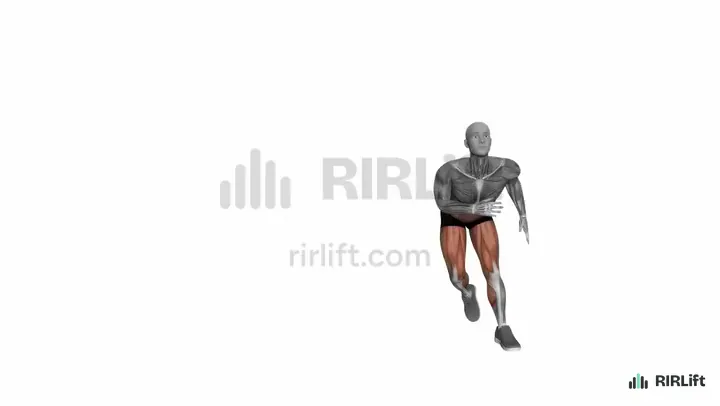
  6. Fast Feet Calves, Quads
  7. Skater Hop Glutes, Quads, Abductors
  8. Box Jump Quads, Glutes, Hamstrings
Raise: 3 minutes of rope or skipping

Basketball is played on the balls of your feet, so the first block uses the same bounce: jump rope if you brought one, skipping in place if you did not. Keep it easy for two minutes and slightly quicker for the last one. You want to be breathing a little harder and warm in the calves, not tired.

Raise, calves and rhythm

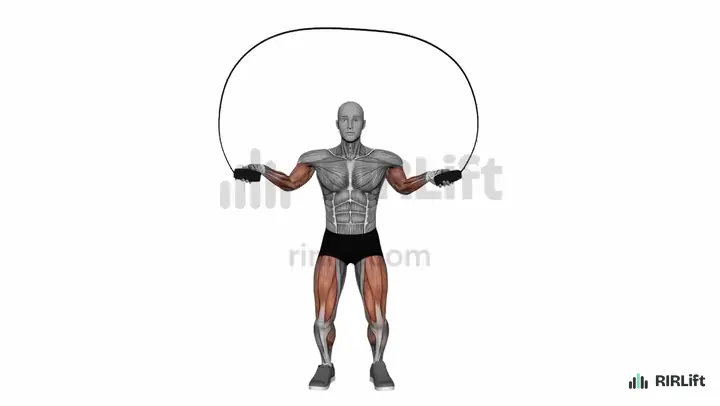
Jump Rope

Calves, Quads

The rope keeps you on the front of the foot at a steady rhythm, which is how you move on defense. Two to three easy minutes get the calves and Achilles warm before any hard landing.

How to do it

  1. Hold the handles at hip height with your elbows near your ribs and the rope resting behind your heels.
  2. Turn the rope with small circles from your wrists, not big arm swings.
  3. Hop just high enough for the rope to pass, landing softly on the balls of your feet.
  4. Keep the rhythm easy for the first minute, then pick the pace up slightly.

Cues

  • Wrists turn, arms stay quiet
  • An inch off the ground
  • Quiet landings

Common mistakes

  • Jumping high and landing flat-footed: keep each hop low and stay on the front of your feet.
  • Swinging the rope from the shoulders: tuck the elbows and let the wrists do it.

Swap for: Jumping Jack, Skipping in Place, High Knees

Build a session with Jump Rope

Raise, no-equipment option

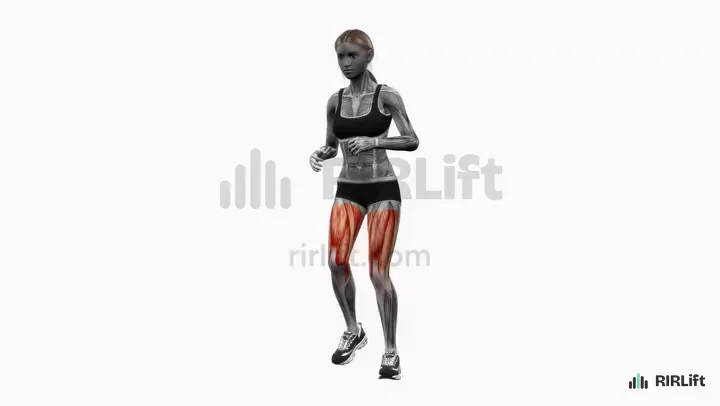
Skipping in Place

Calves, Quads, Hamstrings

When there is no rope in your bag, skipping in place does the same job: bouncy contacts, arm swing and a heart rate that rises gradually.

How to do it

  1. Stand tall with your fists beside your hips as if holding rope handles.
  2. Circle your hands and bounce lightly from one foot to the other, as if skipping over a turning rope.
  3. Keep the bounces low and springy for the whole interval.

Cues

  • Bounce off the balls of your feet
  • Hands circle, elbows close
  • Relaxed shoulders

Common mistakes

  • Stomping on the heels: stay on the front of your feet.
  • Hopping high: a small bounce clears an imaginary rope.

Swap for: High Knees, Jump Rope, Butt Kicks

Mobility: ankles, hips and hamstrings

Cuts, closeouts and landings load the ankles and the hips sideways more than anything else on the court. Ten ankle circles each way per foot, ten leg swings per leg, five walkouts and six cossack squats per side take about three minutes and move each of those joints through the range the game will ask for.

Ankle mobility

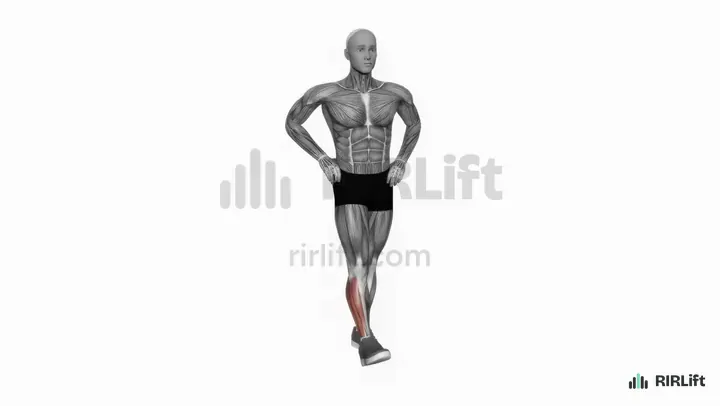
Ankle Circles

Calves

Most basketball shoes lock the ankle in, so it pays to take it through its full circle before you lace up tight. It takes under a minute and you can do it sitting on the bench.

How to do it

  1. Stand on one leg holding a support, or sit, and lift the other foot slightly.
  2. Draw slow, full circles with your toes, moving only at the ankle.
  3. Do all the circles one way, then reverse direction.
  4. Switch feet and repeat.

Cues

  • Big, slow circles
  • Move only the ankle
  • Both directions

Common mistakes

  • Rushing tiny circles: make every circle as large as the joint allows.
  • Turning the knee instead of the ankle: keep the shin still.

Swap for: Leg Swings, Single-Leg Calf Raise, Skipping in Place

Hip and hamstring mobility

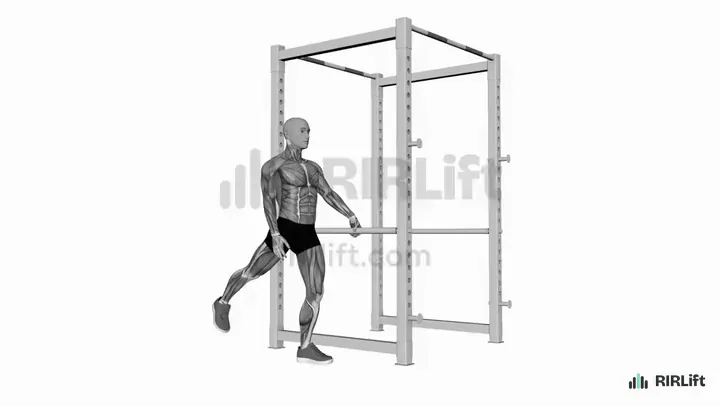
Leg Swings

Hamstrings, Glutes

Front-to-back swings loosen the hamstrings and hip flexors you need for a long first step and a full jump, without parking in a static stretch.

How to do it

  1. Stand side-on to a wall, fence or post and rest one hand on it.
  2. Swing the outside leg forward and back like a pendulum, starting small.
  3. Let each swing go a little higher as your hip loosens.
  4. Do all the swings on one leg, then turn around and do the other.

Cues

  • Pendulum from the hip
  • Start small, grow the arc
  • Stand tall

Common mistakes

  • Rounding the lower back to kick higher: keep your torso upright and let the hip do the work.
  • Flinging the leg as hard as possible on the first swing: build the height over the set.

Swap for: Standing Cable Hip Flexion, Walkout, Cossack Squat

Hamstrings, shoulders and trunk

Walkout

Abs, Shoulders, Chest

One walkout loosens the back of the legs on the way down and gets the shoulders and trunk working in the plank, which is useful before contact in the post.

How to do it

  1. Stand tall, then hinge and reach your hands to the floor, bending your knees as much as you need.
  2. Walk the hands forward one at a time until you reach a push-up position.
  3. Hold the plank for a breath with your hips level.
  4. Walk the hands back toward your feet and stand up. That is one rep.

Cues

  • Hands walk, feet stay
  • Level hips in the plank
  • Bend the knees if you need to

Common mistakes

  • Letting the hips sag at the front: squeeze your glutes in the plank.
  • Locking the knees and straining to touch the floor: bend them; this is a warm-up.

Swap for: Bear Crawl, Plank to Push-Up, Leg Swings

Build a session with Walkout

Side-to-side hip range

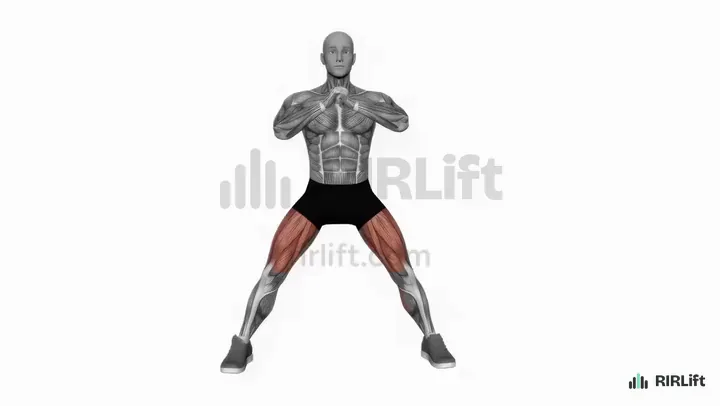
Cossack Squat

Quads, Adductors

The cossack squat moves the hips through the same wide, low position as a defensive stance and a hard lateral cut. Go only as deep as you can with the working heel flat.

How to do it

  1. Stand with your feet about twice shoulder width apart, toes turned out slightly.
  2. Shift your weight to one side and sit down into that hip while the other leg stays straight.
  3. Let the toes of the straight leg point up as you sink as low as you comfortably can.
  4. Push back through the bent leg to the middle and go to the other side.

Cues

  • Sit into the hip
  • Heel of the bent leg stays down
  • Chest up

Common mistakes

  • Lifting the heel of the working foot: only go as low as you can with the foot flat.
  • Collapsing the knee inward: keep it over your toes.

Swap for: Dumbbell Lateral Lunge, Barbell Lateral Lunge, Kettlebell Lateral Lunge

Activation: glutes and the side of the hip

A defensive slide is a sideways push from the outside of the hip. Two passes of lateral band walks across the lane and ten glute bridges wake those muscles up before you ask them to stop you on a closeout. Long static stretches can wait until after the game.

Glute activation for slides

Lateral Band Walk

Abductors

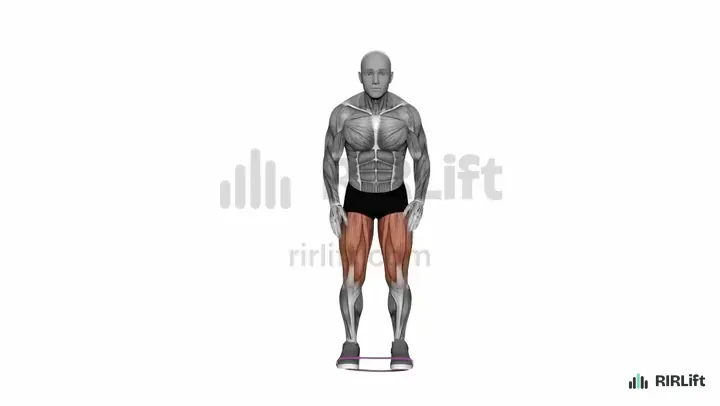
A mini band around the knees makes the outside of the hip work on every step, the same muscles that push you through a slide. Stay low the whole pass.

How to do it

  1. Put a mini band around your legs above the knees or at the ankles.
  2. Sit into a quarter squat with your feet about hip width apart.
  3. Step sideways with the lead foot, then follow with the trailing foot without letting the band go slack.
  4. Take all the steps one way, then come back the other way.

Cues

  • Stay low
  • Band stays tight
  • Toes forward

Common mistakes

  • Standing up as you step: hold the quarter squat.
  • Letting the feet click together: keep tension on the band.

Swap for: Band Standing Hip Abduction, Clamshell, Fire Hydrant

Glute activation for jumping

Dumbbell Glute Bridge

Glutes

Bridges switch on the glutes before you jump, so your first rebound uses the hips and not just the quads. Do them bodyweight on the floor or with a light dumbbell on your hips.

How to do it

  1. Lie on your back with knees bent, feet flat and hip width apart, and a light dumbbell resting across your hips if you use one.
  2. Press through your heels and lift your hips until your body is straight from knees to shoulders.
  3. Squeeze your glutes hard at the top for a second.
  4. Lower slowly until your hips almost touch the floor and repeat.

Cues

  • Drive through the heels
  • Squeeze at the top
  • Ribs down

Common mistakes

  • Arching the lower back to get the hips higher: stop when your body is straight.
  • Pushing through the toes: keep the weight in the heels.

Swap for: Glute Bridge, Single-Leg Glute Bridge, Kettlebell Glute Bridge

Court primers: feet, hops and jumps

The last four minutes climb toward game speed: quick feet, then side-to-side skater hops, then single-leg hops, then a few box jumps or max vertical jumps. Rest a few breaths between sets so each jump is fast. Finish with a couple of full-speed sprints down the court and you are ready to shoot.

Primer, foot speed

Fast Feet

Calves, Quads

Five to ten seconds of quick feet raise the tempo right before the first live drill. Short bursts with rest keep them fast.

How to do it

  1. Stand in an athletic stance with feet about hip width apart and knees bent.
  2. Rapidly pitter-patter your feet on the balls of your feet, barely leaving the ground.
  3. Keep your chest over your knees and your hands ready in front of you.
  4. Go as fast as you can for the set time.

Cues

  • Low and quick
  • Barely off the floor
  • Athletic stance

Common mistakes

  • Standing up tall as you speed up: stay in your stance.
  • Lifting the feet high: tiny, fast steps.

Swap for: Agility Ladder Drill, High Knees, Skater Hop

Build a session with Fast Feet

Primer, lateral push and landing

Skater Hop

Glutes, Quads, Abductors

Skater hops rehearse pushing off one leg sideways and sticking the landing on the other, which is what a closeout or a crossover asks of you.

How to do it

  1. Stand on one leg with a slight bend in the knee.
  2. Leap sideways to land on the opposite foot, letting the trailing leg sweep behind you.
  3. Stick the landing for a moment, then push back to the other side.
  4. Start with short hops and go wider as you warm up.

Cues

  • Stick each landing
  • Push off sideways
  • Knee over the toes

Common mistakes

  • Landing with a stiff leg: absorb through the hip and knee.
  • Going for distance right away: widen the hop over the set.

Swap for: Lateral Box Jump, Single-Leg Jump, Fast Feet

Primer, one-leg takeoff

Single-Leg Jump

Quads, Glutes, Calves

Layups and many rebounds leave from one foot. A few single-leg hops on each side get that takeoff ready.

How to do it

  1. Balance on one foot with a slight bend in the knee.
  2. Dip and hop straight up, using your arms.
  3. Land on the same foot, absorbing the landing quietly.
  4. Do all reps on one side, then switch.

Cues

  • Hop and stick
  • Quiet landing
  • Knee tracks the toes

Common mistakes

  • Collapsing at the knee on landing: shorten the hop.
  • Hopping continuously without control: land, settle, hop again.

Swap for: Skater Hop, Single-Leg Box Jump, Box Jump

Primer, full jump

Box Jump

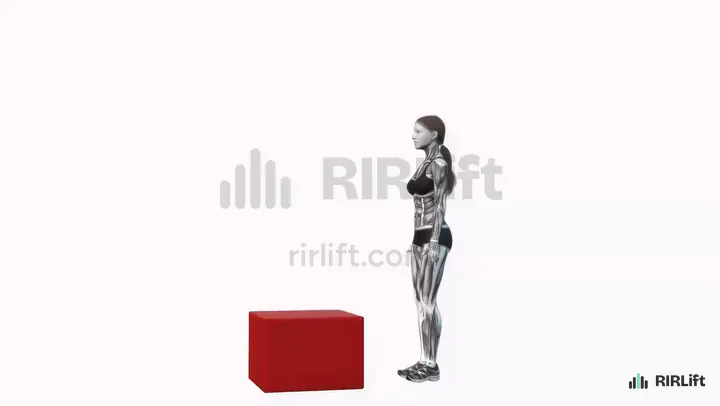
Quads, Glutes, Hamstrings
Three to five box jumps at the end bring you to full effort on the move you will repeat most in the game. Step down each time so the landings stay light.

How to do it

  1. Stand a short step from a box or bench of modest height.
  2. Swing your arms back, dip into a quarter squat, and jump up onto the box.
  3. Land softly with both feet flat and your knees bent.
  4. Stand up, step down, and reset before the next jump.

Cues

  • Swing, dip, jump
  • Land quiet
  • Step down, don't jump down

Common mistakes

  • Choosing a box so high you land in a deep squat: pick one you land on in a quarter squat.
  • Jumping down off the box between reps: step down each time.

Swap for: Lateral Box Jump, Single-Leg Box Jump, Med Ball Jump

Build a session with Box Jump

In the weight room: ramp up the first lift

Lift days after practice open with the trap bar deadlift, climbing through light ramp-up sets of the lift itself to the working weight. The trap bar keeps the bar path simple and loads the hips and legs that drive your jump. RIRLift logs those lighter sets as warm-up sets, separate from your working sets.

Lower-body strength for jumping

Trap Bar Deadlift

Quads, Glutes

Lift days after practice open with the trap bar deadlift, climbing through light ramp-up sets of the lift itself to the working weight.

How to do it

  1. Step inside the trap bar with the handles beside your feet.
  2. Push your hips back, bend your knees, and grip the handles.
  3. Flatten your back, take the slack out, and stand up by pushing the floor away.
  4. Lower under control. Each warm-up set adds weight toward your working sets.

Cues

  • Push the floor away
  • Flat back
  • Slack out before you pull

Common mistakes

  • Yanking the bar off the floor: pull the slack out first.
  • Rounding the back as the weight climbs: hold the ramp until the setup is solid.

Swap for: Barbell Deadlift, Romanian Deadlift, Kettlebell Deadlift

Put them together: example sessions

Each session below picks from the exercises above for one situation, with the sets, reps, rest and RIR filled in. Open one in the session builder to change a pick, price it from a recent set, and add it to RIRLift.

Session 1

Game day, 30 minutes before tip-off

Open in the session builder
  • Workouts3× a week
  • Working sets48 a week
  • Per workout~20 min
  • EquipmentJump Rope, Resistance Bands, Dumbbells, Plyo Box

You have a team warm-up later but want your body ready before you join the layup line.

This is the full 12-minute order on the page, kept light: every block sits at 3 to 5 reps in reserve, so you finish warm and springy rather than tired. The jumps come last and climb to full effort for a few reps only, which is enough to feel quick without spending the legs you need for four quarters.

Game-Day Warm-Up
ExerciseSets × repsRIRRest
Jump RopeSeconds. Easy, then a little quicker. 3 × 60 4 0 s
Ankle CirclesPer direction, each foot. 1 × 10 5 0 s
Leg SwingsPer leg. 1 × 10 5 0 s
Walkout 1 × 5 4 0 s
Cossack SquatPer side. 1 × 6 4 15 s
Lateral Band WalkSteps each way. 2 × 10 3 15 s
Dumbbell Glute BridgeBodyweight is fine. 1 × 10–12 4 15 s
Fast FeetSeconds. Full speed. 2 × 10 3 20 s
Skater HopPer side. Stick each landing. 2 × 6 3 20 s
Box JumpStep down every rep. 2 × 3 3 30 s
How to run it
Start it about 30 minutes before tip-off, then go straight into shooting. Do the whole thing in one go; rest only between the jump sets.
How to progress
Keep the warm-up the same all season. If you feel slow in the first quarter, add one more set of skater hops and box jumps rather than more cardio.

Session 2

Practice day with a lift after

Open in the session builder
  • Workouts2× a week
  • Working sets17 a week
  • Per workout~15 min
  • EquipmentResistance Bands, Dumbbells, Trap Bar, Plyo Box

You lift after team practice two or three days a week and want the warm-up to cover both.

Before practice you only need the court warm-up. After practice your body is already warm, so the lift opens straight with ramp-up sets of the trap bar deadlift: light sets that climb to your working weight and get logged as warm-up sets. The working sets stop at 2 to 3 reps in reserve so the lift builds strength without leaving your legs flat for tomorrow's practice.

Pre-Practice Warm-Up
ExerciseSets × repsRIRRest
Skipping in PlaceSeconds. 2 × 60 4 0 s
Ankle CirclesPer direction, each foot. 1 × 10 5 0 s
Leg SwingsPer leg. 1 × 10 5 0 s
Cossack SquatPer side. 1 × 6 4 15 s
Fast FeetSeconds. 2 × 8 3 20 s
Single-Leg JumpPer leg. 2 × 4 3 20 s

Open Pre-Practice Warm-Up in the session builder

Post-Practice Lift
ExerciseSets × repsRIRRest
Lateral Band WalkSteps each way. 1 × 10 4 15 s
Dumbbell Glute Bridge 1 × 12 4 15 s
Trap Bar Deadlift3 warm-up sets firstWorking sets after the ramp-up. 3 × 5 2 2:30 min
Box JumpStep down every rep. 3 × 3 3 1 min

Open Post-Practice Lift in the session builder

How to run it
Run the warm-up routine before practice. In the weight room, do the band walks and bridges again, then the deadlift with its warm-up sets.
How to progress
When every working set hits 5 reps at 2 or more in reserve, add 5 to 10 pounds the next session.

Session 3

Pickup game, 5 minutes in the gym

Open in the session builder
  • Workouts3× a week
  • Working sets18 a week
  • Per workout~10 min
  • EquipmentBodyweight

You show up for open gym or a rec league with no time for a full routine.

Five minutes covers the essentials in the order that matters most: get warm, open the ankles and hips, then ramp up the feet and one jump. Each block is short and light; the point is that your first sprint of the night is your second fast effort, not your first.

5-Minute Warm-Up
ExerciseSets × repsRIRRest
Skipping in PlaceSeconds. 1 × 60 4 0 s
Ankle CirclesPer direction, each foot. 1 × 8 5 0 s
Leg SwingsPer leg. 1 × 8 5 0 s
Fast FeetSeconds. 1 × 10 3 15 s
Skater HopPer side. 1 × 6 3 15 s
Single-Leg JumpPer leg. 1 × 4 3 0 s
How to run it
Do it on the sideline while teams are picked. One round, no rest except between the hops.
How to progress
If you play two or three nights a week, add the walkouts and band walks on the nights you have the extra minutes.

Make it fit you

Questions

How do you properly warm up for a basketball game?

Get warm with a few minutes of rope or skipping, move the ankles and hips with circles, swings and cossack squats, activate the glutes with band walks and bridges, then build up to game speed with quick feet, hops and a few jumps. Finish with shooting. The whole thing fits in about 12 minutes.

How long should a basketball warm-up be?

About 10 to 15 minutes before you start shooting. Five minutes of the essentials is far better than nothing for pickup, and a full team warm-up before a game can run longer once shooting drills are added.

What are 5 warm-up exercises for basketball?

Jump rope, leg swings, cossack squats, lateral band walks and skater hops. Together they warm you up, open the hips and ankles, wake up the side of the hip and rehearse a lateral push and landing.

Should you stretch before basketball?

Move rather than hold. Dynamic moves like leg swings and walkouts get you ready to jump and cut; long static holds belong after the game, when you want to cool down.

Is shooting around a good enough warm-up?

Not on its own. Shooting raises your heart rate a little, but it does not take the hips and ankles through their range or bring your jumping up to full speed. Do the 12 minutes first, then shoot.

Should the warm-up differ for practice and game day?

The order stays the same. On game day keep it light and end with a few full jumps; before practice you can trim the primers, since the first drills do that job.