Track warm up: a team routine for practice and meet day

A standard track warm-up is 2 easy laps (about 800 meters), 4 minutes of dynamic mobility (leg swings, walkouts, cossack squats, ankle circles), 3 minutes of hip and core activation (side leg raises, dead bugs, side planks), then 6 to 8 minutes of drills over 20 meters (skips, high knees, butt kicks, ladder footwork, skater hops) and, for jumpers and sprinters, a few box jumps before the event work. Plan on 20 to 25 minutes, finishing 10 to 15 minutes before your race or main session.

  1. Running Quads, Hamstrings, Calves
  2. Leg Swings Hamstrings, Glutes
  3. Walkout Abs, Shoulders, Chest
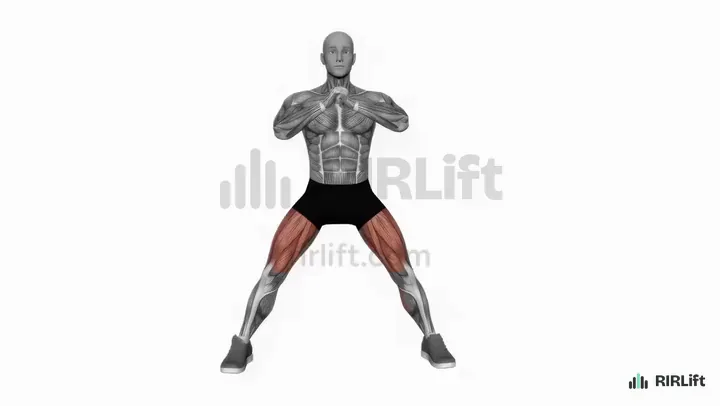
  4. Cossack Squat Quads, Adductors
  5. Standing Side Leg Raise Abductors
  6. Dead Bug Abs
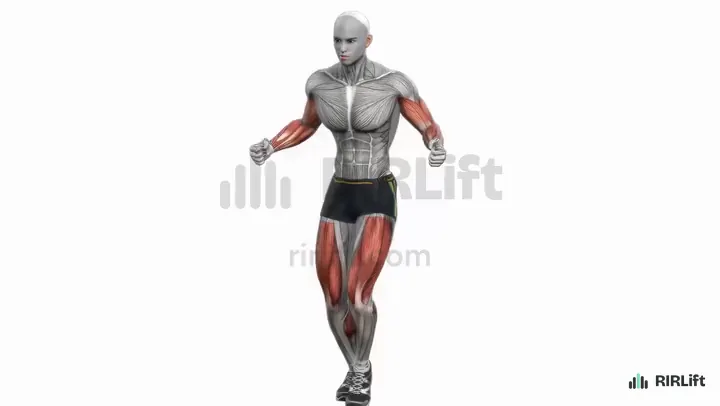
  7. Skipping in Place Calves, Quads, Hamstrings
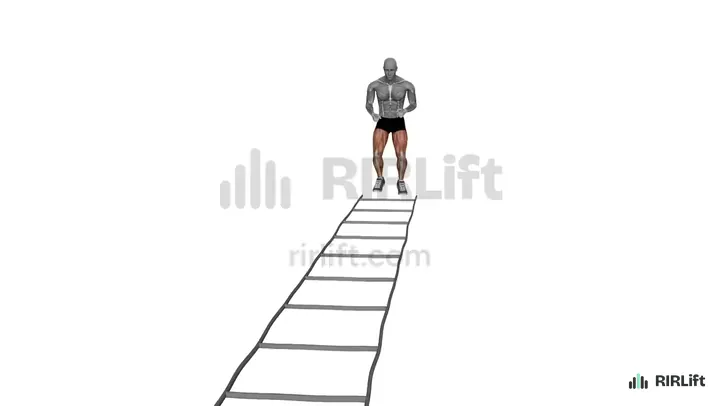
  8. Agility Ladder Drill Calves, Quads
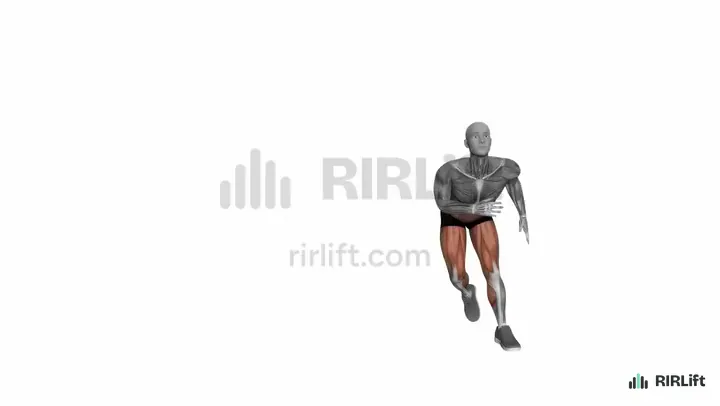
  9. Skater Hop Glutes, Quads, Abductors
Step 1: easy laps (5 minutes)

Two laps of the track at a conversational jog, or jumping jacks in a gym on a rain day, raise your heart rate before anything else.

Easy laps and build-ups

Running

Quads, Hamstrings, Calves

Laps get the whole team warm together; build-ups at the end bring each athlete up to event speed.

How to do it

  1. Start at a pace where you could speak in full sentences.
  2. Keep your stride short so each foot lands close to under your hips.
  3. Swing your arms front to back from the shoulder with the elbows bent.
  4. Lift the pace only once the first minutes feel smooth.

Cues

  • Tall and relaxed
  • Quick, quiet feet

Common mistakes

  • Starting at goal pace from the first step
  • Reaching the foot far out in front

Swap for: Treadmill Run, Brisk Walk

Build a session with Running

Indoor raise

Jumping Jack

Calves, Quads

When practice moves indoors, jacks replace the laps.

How to do it

  1. Start upright, feet touching, hands resting at your thighs.
  2. Hop your feet out wide as your arms sweep overhead.
  3. Hop back to the start as the arms come down.
  4. Hold an even rhythm.

Cues

  • Light on the balls of the feet
  • Full arm sweep

Common mistakes

  • Landing flat and heavy
  • Half-height arm swings

Swap for: Jump Rope, High Knees

Step 2: dynamic mobility (4 minutes)

Every event loads the hips and ankles. Run the team through swings, walkouts, cossack squats and ankle circles in lines.

Hip mobility

Leg Swings

Hamstrings, Glutes

Done against the fence in a line, swings loosen the hips for every event on the track.

How to do it

  1. Stand side-on to a wall or rail and hold it with one hand.
  2. Swing the outside leg forward and back like a pendulum, small at first.
  3. Let each swing travel a bit farther while your torso stays upright.
  4. Finish the count, turn around, and swing the other leg.

Cues

  • Loose leg, still torso
  • A little bigger each swing

Common mistakes

  • Arching the lower back on the backswing
  • Forcing full range on the first rep

Swap for: Standing Cable Hip Flexion, Cossack Squat

Hamstrings and trunk

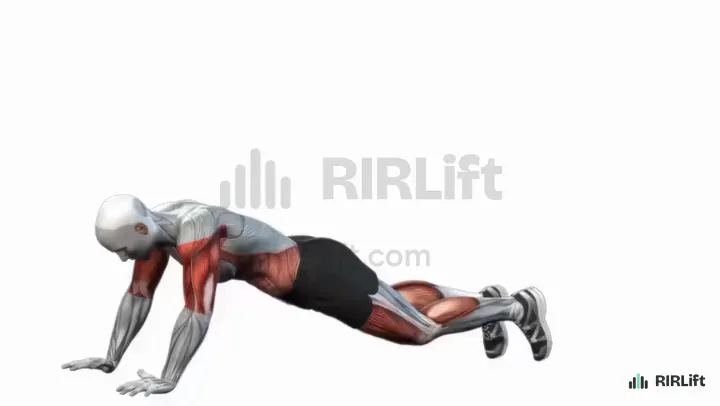
Walkout

Abs, Shoulders, Chest

Walkouts lengthen the back of the legs while the plank wakes the trunk.

How to do it

  1. Stand tall, hinge forward, and put both palms down, bending your knees as much as you need.
  2. Walk the hands out until you reach a push-up position.
  3. Pause one beat with your body in a straight line.
  4. Walk the hands back toward your feet and roll up to standing.

Cues

  • Hands travel, feet stay
  • Ribs tucked at the plank

Common mistakes

  • Hips sagging at the far end
  • Walking out farther than you can hold

Swap for: Bear Crawl, Plank

Build a session with Walkout

Groin and hip mobility

Cossack Squat

Quads, Adductors

Side-to-side squats prepare the inner thigh, which hurdlers and jumpers load hard.

How to do it

  1. Take a wide stance with your toes turned slightly out.
  2. Shift to one side and sit into that hip while the other leg straightens.
  3. Keep the bent leg's heel down and your chest up.
  4. Push back through the middle and lower to the other side.

Cues

  • Sit into one hip
  • Toes of the straight leg point up

Common mistakes

  • Heel lifting on the bent side
  • Rounding forward to get lower

Swap for: Dumbbell Lateral Lunge, Bodyweight Squat

Ankle mobility

Ankle Circles

Calves

Ankles take every landing in track. A few slow circles get them moving fully.

How to do it

  1. Hold a support and stand on one foot, or sit, with the other foot off the floor.
  2. Trace slow, full circles with your toes, moving only at the ankle.
  3. Do the count one way, then reverse.
  4. Change feet.

Cues

  • As big a circle as you can draw
  • Slow and even

Common mistakes

  • Turning the whole leg instead of the ankle
  • Rushing the circles

Swap for: Single-Leg Calf Raise, Standing Calf Raise

Step 3: hips and core (3 minutes)

Short sets for the glutes and trunk. On the infield grass they take three minutes.

Side-of-hip activation, standing

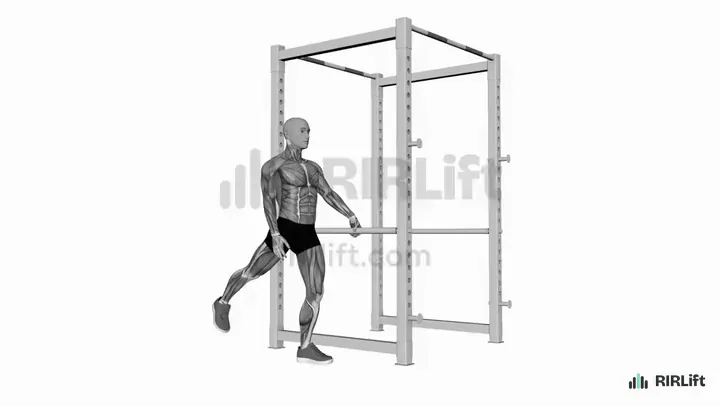
Standing Side Leg Raise

Abductors

Lifting a straight leg sideways works the outside of the hip, which keeps the pelvis level and the knee in line when you land on one foot or cut.

How to do it

  1. Stand tall, hands resting at your waist.
  2. Keep the leg straight and the toes facing forward as you lift it sideways.
  3. Lower it with control, finish the reps, then switch legs.

Cues

  • Toes point forward
  • Torso stays upright

Common mistakes

  • Leaning away from the lifting leg: a lower lift with a still torso works better.

Swap for: Clamshell, Lateral Band Walk

Core activation

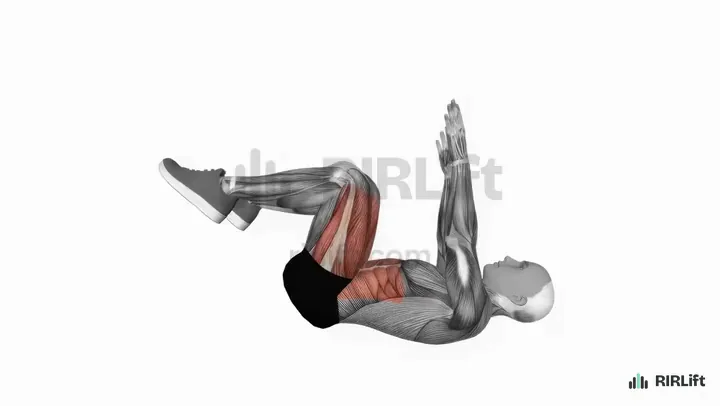
Dead Bug

Abs

Dead bugs switch on the deep trunk without tiring it.

How to do it

  1. Lie on your back with arms toward the ceiling and knees bent over your hips.
  2. Press your lower back into the floor.
  3. Reach one arm overhead and the opposite leg long, just above the floor.
  4. Return and switch sides.

Cues

  • Back pinned to the floor
  • Breathe out as you reach

Common mistakes

  • Lower back peeling up
  • Moving fast

Swap for: Side Plank, Plank

Build a session with Dead Bug

Core activation, sideways

Side Plank

Abs

A short hold on each side readies the trunk for bends and curves.

How to do it

  1. Lie on one side, propped on the elbow under your shoulder.
  2. Lift your hips until your body is one straight line.
  3. Hold and breathe steadily.
  4. Turn over and repeat.

Cues

  • Hips high
  • Stack the shoulders

Common mistakes

  • Hips sagging
  • Rolling forward

Swap for: Dead Bug, Plank

Step 4: running drills (6-8 minutes)

Drills over 20 meters, walking back between each. Keep them sharp and quick.

Drill, bounce

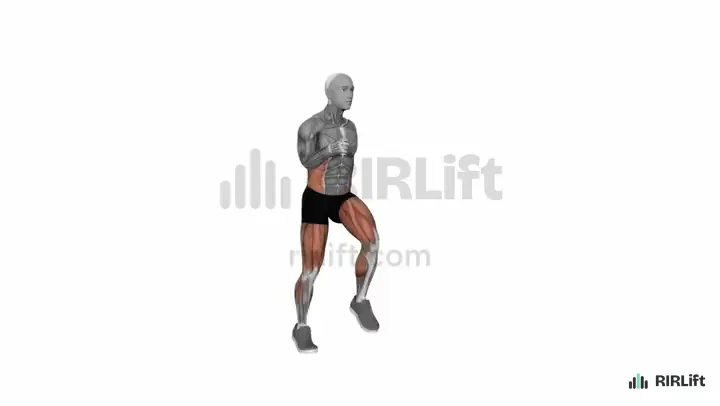
Skipping in Place

Calves, Quads, Hamstrings

Light rope-free skipping builds rhythm and spring in the feet before faster drills.

How to do it

  1. Stand tall with your fists beside your hips as if holding rope handles.
  2. Circle your hands and bounce lightly from one foot to the other, as if skipping over a turning rope.
  3. Keep the bounces low and springy for the whole interval.

Cues

  • Bounce off the balls of your feet
  • Hands circle, elbows close
  • Relaxed shoulders

Common mistakes

  • Stomping on the heels: stay on the front of your feet.
  • Hopping high: a small bounce clears an imaginary rope.

Swap for: High Knees, Butt Kicks

Drill, knee lift

High Knees

Quads

High knees rehearse a quick knee drive.

How to do it

  1. Stand tall, feet under your hips.
  2. Run in place, bringing one knee toward hip height, then the other.
  3. Touch down on the front of your feet right under your hips.
  4. Pump the arms in time with the knees.

Cues

  • Knees up, chest up
  • Short ground contacts

Common mistakes

  • Leaning back to get the knees higher
  • Landing on the heels

Swap for: Skipping in Place, Fast Feet

Drill, heel recovery

Butt Kicks

Hamstrings

Butt kicks rehearse a quick fold of the back leg.

How to do it

  1. Stand tall and jog in place.
  2. Pull each heel up toward your seat as it leaves the ground.
  3. Keep your knees pointing down at the floor.
  4. Speed the turnover up for the last part of the set.

Cues

  • Heel to seat
  • Fast turnover

Common mistakes

  • Folding forward at the hips
  • Letting the knees swing forward

Swap for: High Knees, Running

Footwork

Agility Ladder Drill

Calves, Quads

Ladder drills sharpen foot speed and coordination, useful for sprinters and hurdlers.

How to do it

  1. Stand at the end of the ladder.
  2. Step both feet into the first square, one after the other.
  3. Step both feet out to either side of the next square.
  4. Keep repeating down the ladder on the front of your feet.

Cues

  • In, in, out, out
  • Eyes up

Common mistakes

  • Looking down at every rung
  • Heavy flat steps

Swap for: Fast Feet, Skater Hop

Step 5: hops and jumps for sprinters and jumpers

Short plyometrics wake up power. Distance runners can skip this step.

Lateral hops

Skater Hop

Glutes, Quads, Abductors
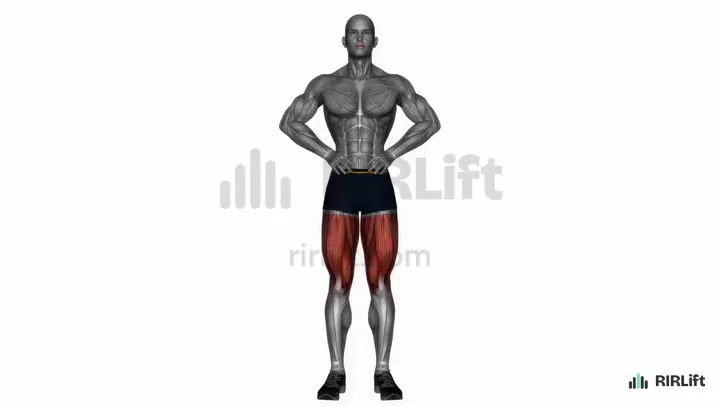
Skater hops prepare the legs for single-leg landings in the jumps.

How to do it

  1. Stand on one leg with the knee softly bent.
  2. Push off sideways and land on the opposite foot.
  3. Let the trailing leg sweep behind the landing leg.
  4. Hold each landing briefly, then hop back.

Cues

  • Soft landings
  • Push out sideways

Common mistakes

  • Stiff-legged landings
  • Knee collapsing on the landing

Swap for: Single-Leg Jump, Fast Feet

Jumps, power

Box Jump

Quads, Glutes, Hamstrings

Two or three box jumps wake up power just before the event.

How to do it

  1. Stand a short step back from a sturdy box.
  2. Dip the hips and swing the arms back.
  3. Jump onto the box and land with both feet flat and knees bent.
  4. Stand up tall, then step back down.

Cues

  • Land quiet
  • Step down, never jump down

Common mistakes

  • Picking a box that is too high
  • Landing on your toes

Swap for: Jump Squat, Single-Leg Jump

Build a session with Box Jump

Put them together: example sessions

Each session below picks from the exercises above for one situation, with the sets, reps, rest and RIR filled in. Open one in the session builder to change a pick, price it from a recent set, and add it to RIRLift.

Session 1

Practice day, whole team

Open in the session builder
  • Workouts4× a week
  • Working sets64 a week
  • Per workout~15 min
  • EquipmentBodyweight

You are running the warm-up before a regular track practice.

On practice days the warm-up teaches drills as well as preparing the body, so every athlete runs the full sequence, including footwork on the ladder.

Team Warm-Up
ExerciseSets × repsRIRRest
RunningSeconds. Two easy laps. 5 × 60 4 0 s
Leg SwingsPer leg, each direction. 1 × 10 4 0 s
Walkout 1 × 5 4 0 s
Cossack SquatPer side. 1 × 6 4 0 s
Standing Side Leg RaisePer side. 1 × 10 4 0 s
Dead BugPer side. 1 × 8 4 0 s
Skipping in PlaceSeconds. 2 × 20 4 0 s
High KneesSeconds. 2 × 20 4 0 s
Agility Ladder DrillLengths of the ladder. 2 × 1 4 30 s
How to run it
Run it as a group in lines, then split by event group for the main session.
How to progress
Rotate in new drills every few weeks; keep the order of raise, mobility, activation, drills.

Session 2

Meet day: sprints and hurdles

Open in the session builder
  • Workouts1× a week
  • Working sets18 a week
  • Per workout~25 min
  • EquipmentPlyo Box

You are racing the 100, 200, 400 or hurdles at a meet.

A race demands full speed straight away, so the drills are followed by skater hops, box jumps and build-ups at rising speed, finishing 10 to 15 minutes before your heat.

Meet Warm-Up
ExerciseSets × repsRIRRest
RunningSeconds. Easy laps. 5 × 60 4 0 s
Leg SwingsPer leg, each direction. 1 × 10 4 0 s
Ankle CirclesEach way, per foot. 1 × 10 4 0 s
Side PlankSeconds per side. 1 × 20 4 0 s
High KneesSeconds. 2 × 20 4 0 s
Butt KicksSeconds. 2 × 20 4 0 s
Skater HopPer side. 1 × 6 3 30 s
Box Jump 2 × 3 3 1 min
RunningSeconds. Build-ups to race speed. 3 × 30 1 90 s
How to run it
Start about 45 minutes before your event and finish with the build-ups. Stay warm in a layer until you are called.
How to progress
Keep the routine identical at every meet so it becomes familiar.

Session 3

Meet day: 800 m to 3200 m

Open in the session builder
  • Workouts1× a week
  • Working sets19 a week
  • Per workout~20 min
  • EquipmentBodyweight

You are racing a middle or distance event.

Distance races start fast but do not need jumps, so this plan uses a longer jog, mobility, light activation and strides at race pace.

Meet Warm-Up
ExerciseSets × repsRIRRest
RunningSeconds. Easy jog. 10 × 60 4 0 s
Leg SwingsPer leg, each direction. 1 × 10 4 0 s
Walkout 1 × 5 4 0 s
Standing Side Leg RaisePer side. 1 × 10 4 0 s
Skipping in PlaceSeconds. 2 × 20 4 0 s
RunningSeconds. Strides at race pace. 4 × 20 2 1 min
How to run it
Finish the last stride 10 minutes before your race and keep jogging gently.
How to progress
Make the jog longer for the shorter races, where the pace is faster.

Make it fit you

Questions

What is a good track warm up?

Two easy laps, a few minutes of leg swings and mobility moves, short glute and core sets, then 20-meter drills like skips and high knees, plus hops and build-ups for sprinters.

How to warm up before a 100m race?

Run the full routine, then two or three build-ups or starts at race speed, finishing 10 to 15 minutes before the race.

How long is a track warm up?

About 20 to 25 minutes for practice or sprint races; distance runners can drop the jumps.

What drills should I do in a track warm-up?

Skips, high knees, butt kicks, ladder footwork, and for sprinters and jumpers a few skater hops and box jumps.

Should distance runners do the same warm-up as sprinters?

The first steps are the same, but distance runners skip the jumps and finish with strides at race pace.