
Workout warm up exercises: the four stages before your first set
Published October 24, 2026
Warm up for a workout in four stages that take about ten minutes: five easy minutes on the rower, 10 leg swings per leg and 5 walkouts, 15 band pull-aparts and 12 glute bridges, then three or four light sets of your first lift that climb toward your working weight. The first three stages get you warm and moving; the ramp-up sets rehearse the exact lift you are about to load.
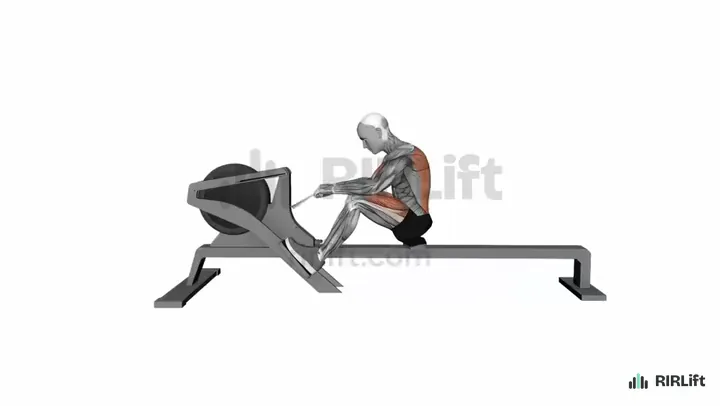
- Rowing Machine Quads, Hamstrings, Glutes, Lats
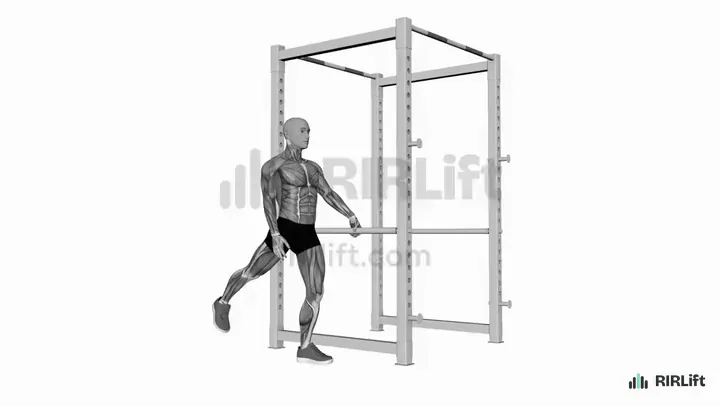
- Leg Swings Hamstrings, Glutes
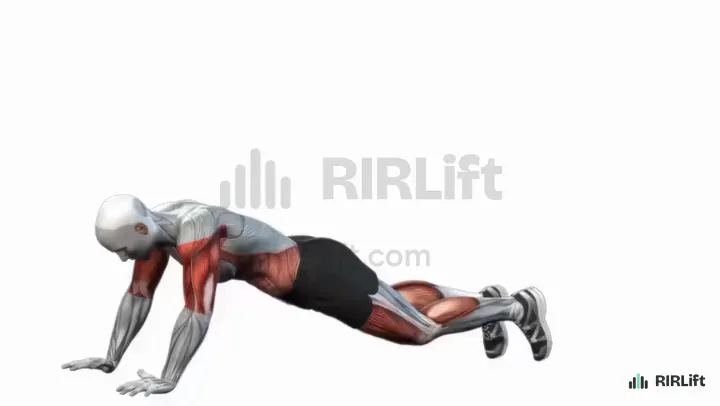
- Walkout Abs, Shoulders, Chest
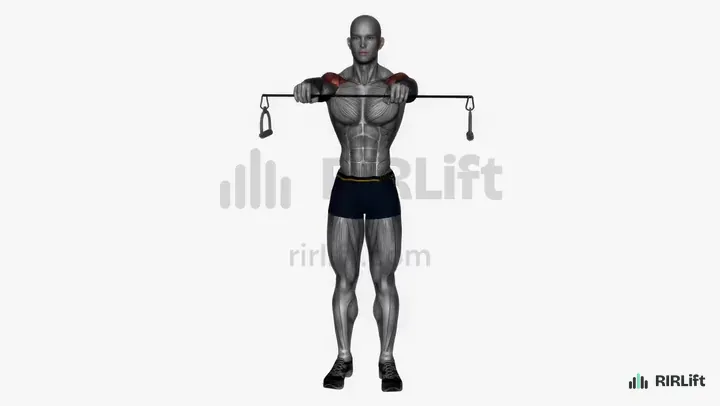
- Band Pull-Apart Shoulders, Upper Back
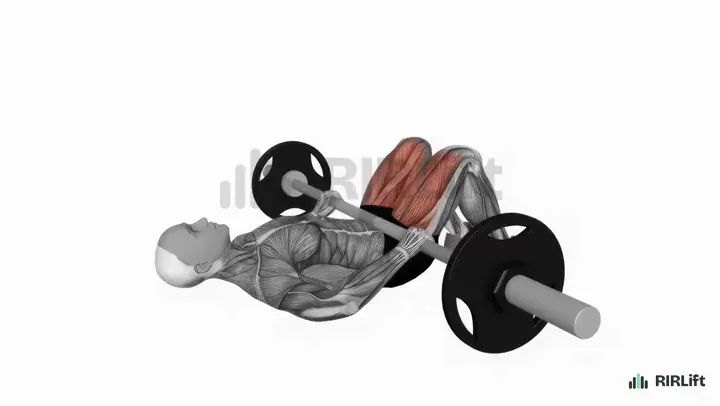
- Glute Bridge Glutes
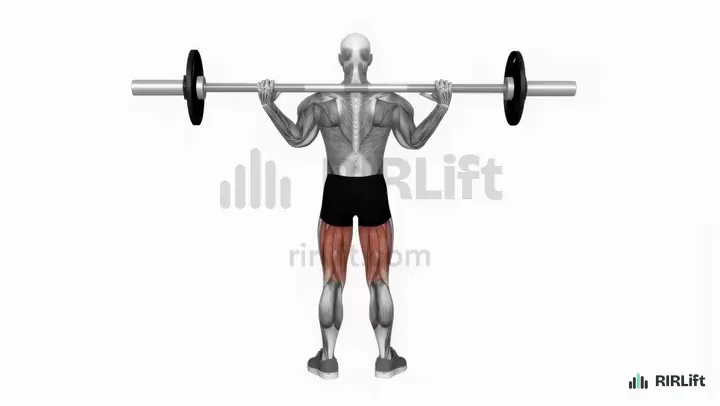
- Barbell Back Squat Quads, Glutes, Adductors
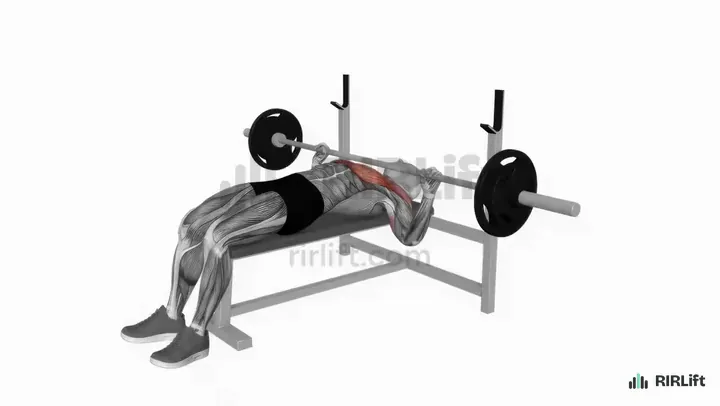
- Barbell Bench Press Chest
Put them together: example sessions
Each session below picks from the exercises above for one situation, with the sets, reps, rest and RIR filled in. Open one in the session builder to change a pick, price it from a recent set, and add it to RIRLift.
-
Session 1
Heavy squat day
Your session opens with back squats you take close to your limit.
2× a week · 22 sets a week · ~25 min
-
Session 2
Bench press day
Your session opens with the bench press.
2× a week · 20 sets a week · ~20 min
-
Session 3
Bodyweight workout at home
You train at home with no equipment and start with push-ups.
3× a week · 21 sets a week · ~15 min
Session 1
Heavy squat day
- Workouts2× a week
- Working sets22 a week
- Per workout~25 min
- EquipmentRowing Machine, Barbells
Your session opens with back squats you take close to your limit.
Heavy squats load hips, knees and spine together, so all four stages lead into the squat, and the four ramp-up sets climb gradually to the first working set. The warm-up blocks sit 4 reps short of effort; the working sets stop 1 to 2 reps short to leave room for the rest of the session.
| Exercise | Sets × reps | RIR | Rest |
|---|---|---|---|
| Rowing MachineSeconds. Five easy minutes, a little quicker each minute. | 5 × 60 | 4 | 0 s |
| Leg SwingsPer leg. | 1 × 10 | 4 | 15 s |
| Walkout | 1 × 5 | 4 | 15 s |
| Glute Bridge | 1 × 12–15 | 4 | 15 s |
| Barbell Back Squat4 warm-up sets first | 3 × 4–6 | 2 | 3 min |
- How to run it
- Do the blocks in order, then squat. Load the ramp-up sets at roughly the bar, 50, 70 and 85 percent of your working weight.
- How to progress
- Add weight to the working sets when all three reach the top of the range at 2 RIR; the warm-up stays the same.
Session 2
Bench press day
- Workouts2× a week
- Working sets20 a week
- Per workout~20 min
- EquipmentRowing Machine, Resistance Bands, Barbells, Flat Bench
Your session opens with the bench press.
Pressing days need the shoulders warm and the upper back switched on, so this plan swaps the bridges for band pull-aparts and keeps the walkouts for shoulder loading. Three ramp-up sets are plenty, since the bench moves less mass than a squat.
| Exercise | Sets × reps | RIR | Rest |
|---|---|---|---|
| Rowing MachineSeconds. Five easy minutes. | 5 × 60 | 4 | 0 s |
| Walkout | 1 × 5 | 4 | 15 s |
| Band Pull-Apart | 1 × 15–20 | 4 | 15 s |
| Barbell Bench Press3 warm-up sets first | 3 × 5–8 | 2 | 2:30 min |
- How to run it
- Rower, walkouts, pull-aparts, then bench. Ramp at roughly the bar, 60 and 80 percent of your working weight.
- How to progress
- Add 5 pounds when every working set hits 8 reps at 1 to 2 RIR.
Session 3
Bodyweight workout at home
- Workouts3× a week
- Working sets21 a week
- Per workout~15 min
- EquipmentBarbells
You train at home with no equipment and start with push-ups.
Without a machine, jumping jacks do the warming, and without a bar the ramp-up is a single easy push-up set before the hard ones. The leg swings and bridges keep the hips moving for whatever lower-body work follows.
| Exercise | Sets × reps | RIR | Rest |
|---|---|---|---|
| Jumping JackSeconds. Two rounds back to back. | 2 × 60 | 4 | 0 s |
| Leg SwingsPer leg. | 1 × 10 | 4 | 15 s |
| Glute BridgeNo weight. | 1 × 15 | 4 | 15 s |
| Push-Up2 warm-up sets first | 3 × 8–20 | 1 | 90 s |
- How to run it
- Jacks, leg swings, bridges, then push-ups. The first push-up set is the ramp-up.
- How to progress
- When all three sets reach 20 reps at 1 RIR, slow the lowering to three seconds.
Make it fit you
-
Short on time
Cut the cardio to two minutes and keep the ramp-up sets. They are the stage that most directly prepares the lift.
-
Training a second big lift
Give the second lift one or two ramp-up sets of its own; you are already warm, so it needs fewer.
-
Let RIR steer the weight
Log each working set with its reps in reserve in RIRLift so the next session's weight is picked from how hard today felt; warm-up sets stay out of that pick.
-
Cold gym or early morning
Stretch the rower to eight minutes and add a second round of leg swings before you touch a bar.
-
Lower back feels tight
Add a second set of bridges and slow the walkouts down before your first squat or deadlift.
Questions
What are four warm-up exercises?
One per stage: rowing for warmth, walkouts for mobility, band pull-aparts for activation, and light sets of your first lift to ramp up.
How long should I warm up before a workout?
About ten minutes for a lifting session: five of cardio, three of mobility and activation, and two or three ramp-up sets.
Is it warm-up or warmup?
Both appear. "Warm up" is the verb, and "warm-up" or "warmup" is the noun.
What's the difference between a warm-up and a cool-down?
A warm-up raises temperature and rehearses the session before you train; a cool-down brings breathing down afterward and is where static stretches fit.
Do warm-up sets count toward my workout?
No. They are light enough to leave you fresh, so they are not counted as working sets. RIRLift logs them separately as warm-up sets.
Related templates
-
Warm-up sets explained
undefined
-
Warm up exercises: 10 basic moves and how to string them together
undefined
-
Pre workout warm up: from the locker room to your first set
undefined
-
Warm up for squats: rehearse the depth, then climb the bar
undefined
-
How to warm up for bench press: drills, then ramp-up sets
undefined