
Zercher squat: how to do it, what it works, and why people use it
Published October 19, 2026
A Zercher squat is a barbell squat where you hold the bar in the crooks of your elbows, in front of your body, instead of on your back. Holding the load in front keeps your torso upright and makes your upper back and abs work hard. Unrack the bar from about waist height, clasp your hands, squat to below parallel with your chest up, and stand.
- WorksQuads, Glutes
- AlsoUpper Back, Lower Back
- EquipmentBarbells
- Start with3 × 8–12, 2 in reserve, 3 min rest
How to do the Zercher squat
It loads the legs heavily without putting the bar on your back or needing the wrist position of a front squat. Because the weight sits in front of you, it builds the upper back and trunk strength you need for lifting and carrying awkward objects.
Steps
- Set the bar in a rack a little below your elbows when your arms hang down.
- Step in, bend your knees and slide the bar into the creases of your elbows, then clasp your hands or touch your fists together close to your chest.
- Stand up to unrack, take two short steps back and set your feet about shoulder width with your toes slightly out.
- Breathe in, brace hard and sit down between your heels, keeping your elbows high and your chest up; let your elbows pass inside your knees at the bottom.
- Push through your whole foot to stand, keeping the bar close to your body.
Cues
- Elbows up, chest proud
- Squeeze the bar into your body
- Sit between your heels
Common mistakes
- Letting the elbows drop and the bar roll forward: keep your upper back tight and hold the bar close; if it keeps slipping, the weight is too heavy for your upper back.
- Rounding the lower back at the bottom: squat only as deep as you can with a flat back and widen your stance a little if your elbows hit your thighs.
- Wrapping the bar in a thick pad: a thin pad or a towel is fine, but a thick one pushes the bar away from your elbows and makes it harder to hold.
Swap for: Front Squat, Goblet Squat, Barbell Back Squat
Muscles the Zercher squat works
The Zercher squat works your quads and glutes as the main movers, with your adductors helping. Holding the bar in front makes your upper back, spinal erectors and abs work hard to keep you upright, and your biceps hold the bar in place.
Sets, reps and reps in reserve for the Zercher squat
| Goal | Sets × reps | RIR | Rest |
|---|---|---|---|
| Build strength | 4–5 × 3–6 | 2 | 2–3 min |
| Use a thin pad or towel if the bar hurts your elbows; the pain eases as you get used to it. | |||
| Build muscle | 3–4 × 6–10 | 1–2 | 2 min |
| Your upper back may tire before your legs; stop the set when your position slips. | |||
| Learning it | 3 × 5–8 | 3 | 2 min |
| Start with an empty bar from the rack and add weight in small steps. | |||
Zercher squat variations
-
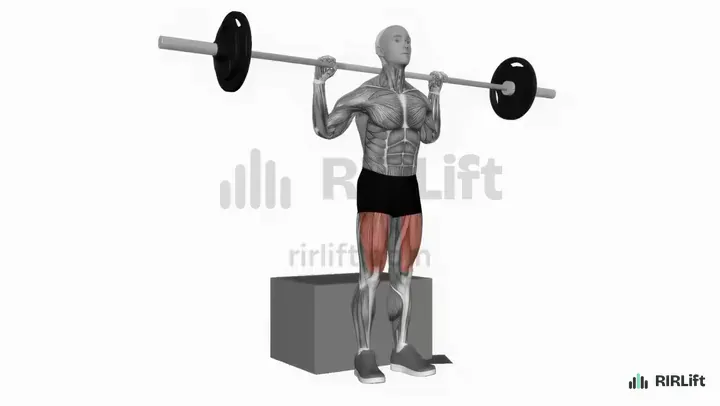
Box Squat
Squat to a box behind you when you want a set depth to practice holding the bar.
Build a session with it -
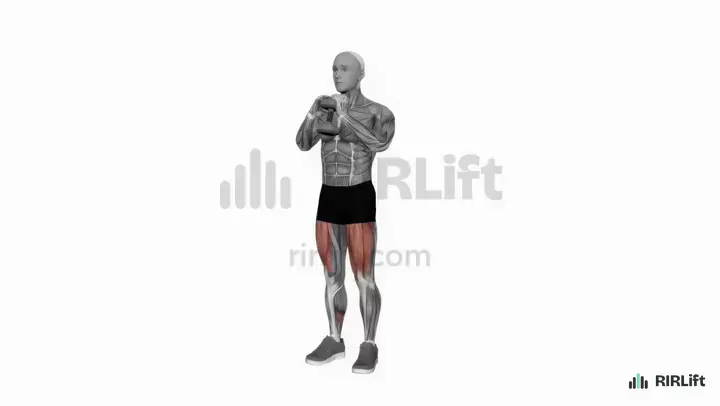
Goblet Squat
Hold a dumbbell at your chest for a lighter, front-loaded squat that teaches the same upright position.
Build a session with it -
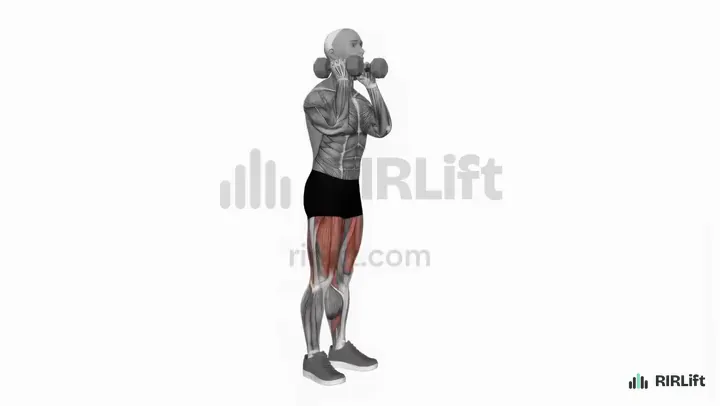
Dumbbell Front Squat
Hold two dumbbells on your shoulders when you want a front-loaded squat without a barbell.
Build a session with it
Zercher squat alternatives
Barbell squats
-
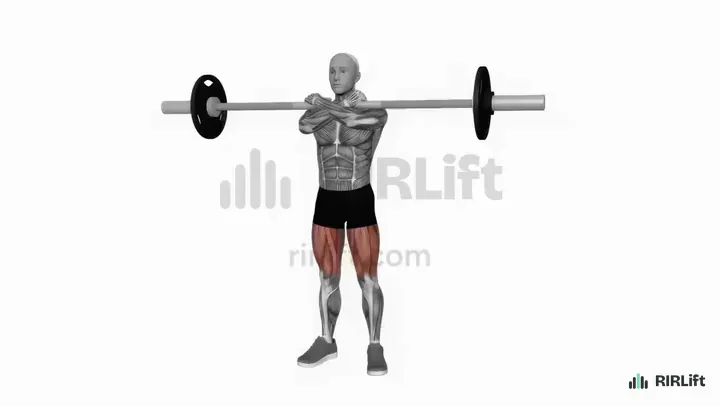
Front Squat
Hold the bar on the front of your shoulders when you want the same upright squat with heavier loads.
Build a session with it -
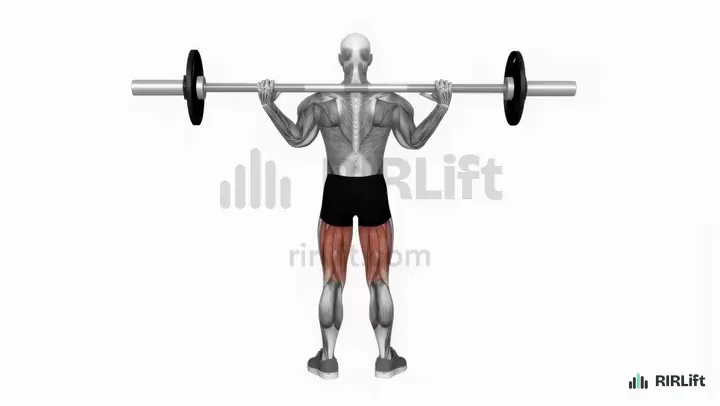
Barbell Back Squat
Put the bar on your back when you want the most weight on your legs.
Build a session with it
Machines
-
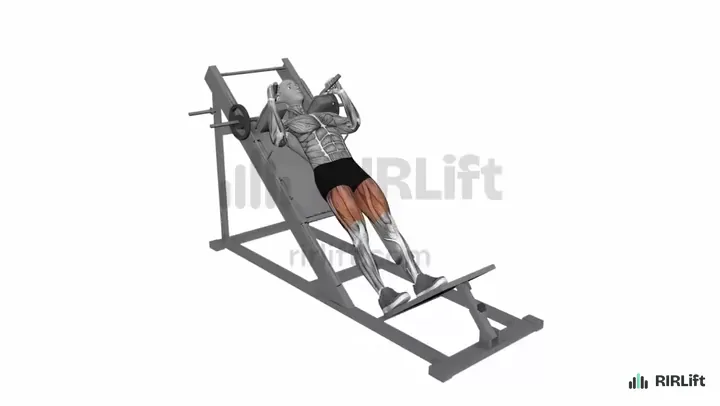
Hack Squat
Use a hack squat when you want heavy quad work without your upper back limiting you.
Build a session with it -
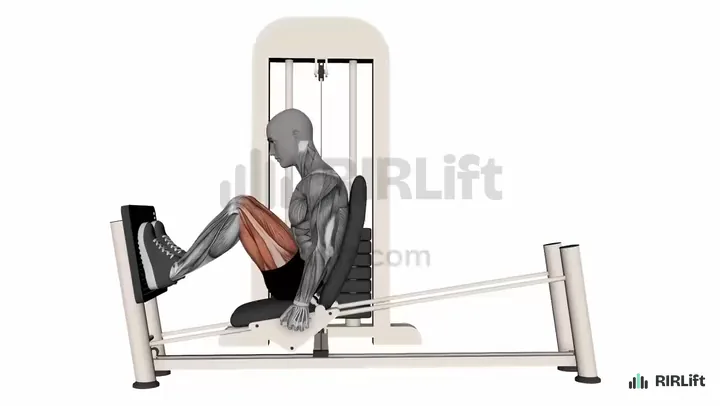
Leg Press
Use the leg press when you want to train legs hard with no load on your back at all.
Build a session with it
Why do a Zercher squat?
It suits people who find back squats uncomfortable on the shoulders or neck, or front squats hard on the wrists. The front load keeps your torso upright, the upper back and core get heavy work, and it carries over to picking up and carrying awkward loads. Many strongman and wrestling programs use it for that reason.
Downsides of the Zercher squat
The bar presses into the crooks of your elbows, which hurts at first, and your upper back usually gives out before your legs, so you can't load your legs as heavily as in a back squat. If your main goal is the biggest legs possible, keep a back squat, hack squat or leg press as your main lift and use the Zercher as a variation.
Questions
What muscles does the Zercher squat work?
Mainly the quads and glutes, with the adductors helping. Your upper back, lower back, abs and biceps work hard to hold the bar and keep you upright.
Why do people do Zercher squats?
It trains the legs with an upright torso and no bar on the back, builds upper back and core strength, and carries over to lifting and carrying awkward loads.
What are the disadvantages of Zercher squats?
The bar hurts the crooks of your elbows at first, and your upper back often limits the load before your legs do.
What is a good alternative to the Zercher squat?
The front squat is the closest, followed by the goblet squat if you only have dumbbells. Both keep the load in front and the torso upright.
Is a 225-pound Zercher squat good?
Yes, Zercher squatting 225 pounds for clean reps is strong for most lifters, since most people Zercher less than they front squat.
Do Zercher squats hurt your elbows?
They are uncomfortable at first. Wear long sleeves, use a thin pad or towel, and build up slowly; most people get used to it within a few sessions.
Related templates
-
Front squat: how to do it, how to hold the bar and what to swap in
The closest barbell squat to the Zercher.
-
Goblet squat: how to do it, what it works and what to swap in
A lighter front-loaded squat with one dumbbell.
-
Box squat: how to do it, how high the box should be, and when to use it
A set-depth squat that pairs well with the Zercher.
-
Barbell leg exercises: squats, hinges, thrusts and split squats
More barbell lifts for a leg day.
-
The best workout for legs, built for your situation
A full leg session around one main squat.
-
How to use RIR
How to judge reps in reserve on heavy sets.