
Ab exercises for men: weighted crunches, leg raises, rollouts and rotation
Published October 29, 2026
The best ab exercises for men are the cable crunch and decline crunch for building thicker abs with load, the hanging leg raise and reverse crunch for curling the pelvis up, the ab wheel rollout and plank for resisting a sagging lower back, and the cable woodchop and side plank for the obliques. Pick three, one from each group, do 2 to 4 sets of 8 to 15 reps stopping 1 to 2 reps short of failure, two or three times a week after your main lifts. Train abs like any other muscle and add weight over time; a visible six-pack also depends on losing enough overall fat to see it.
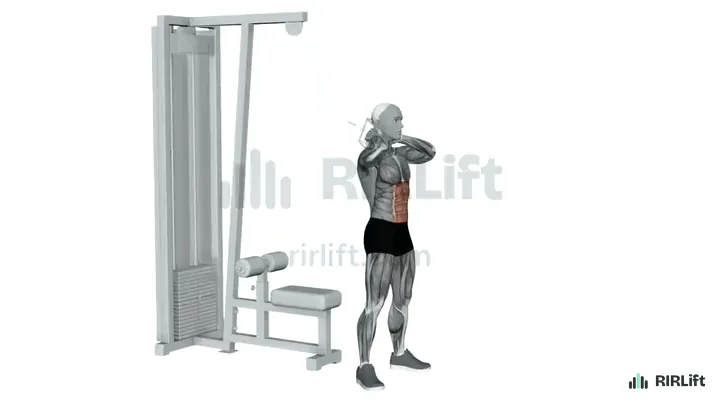
- Cable Crunch Abs
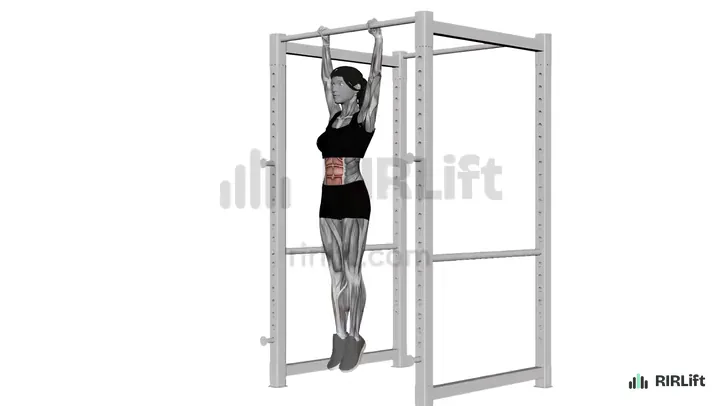
- Hanging Leg Raise Abs
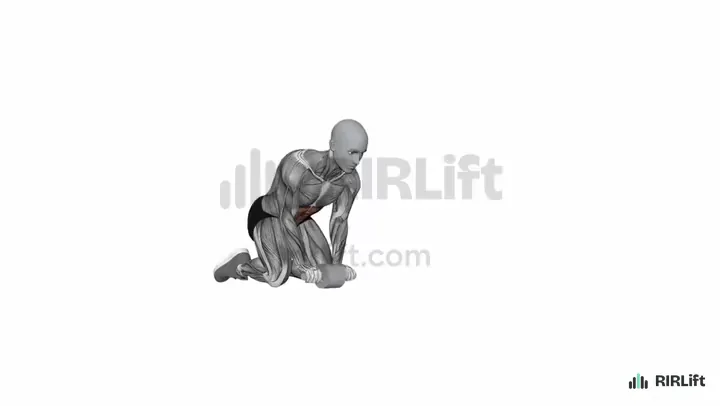
- Ab Wheel Rollout Abs
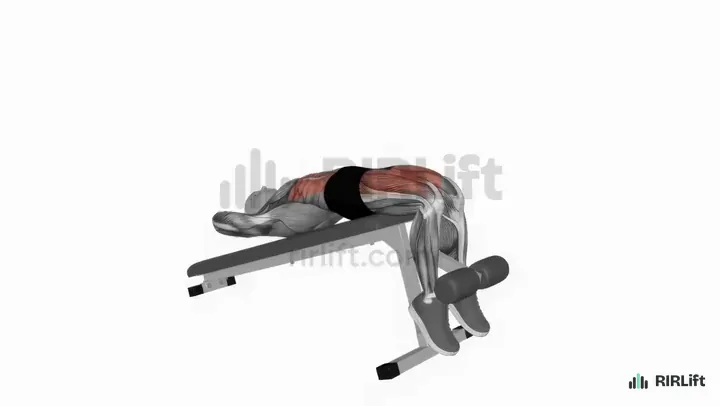
- Decline Crunch Abs
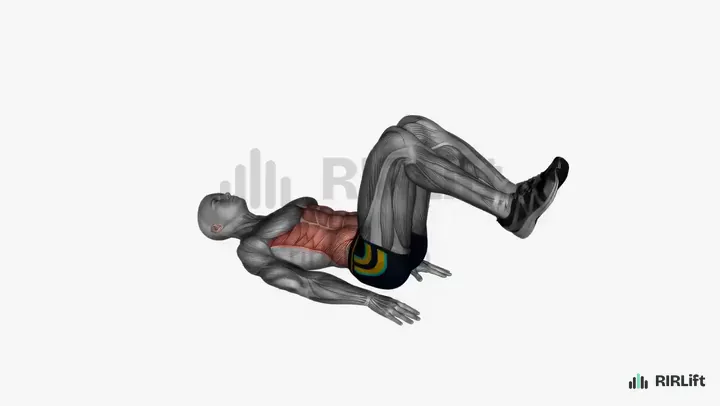
- Reverse Crunch Abs
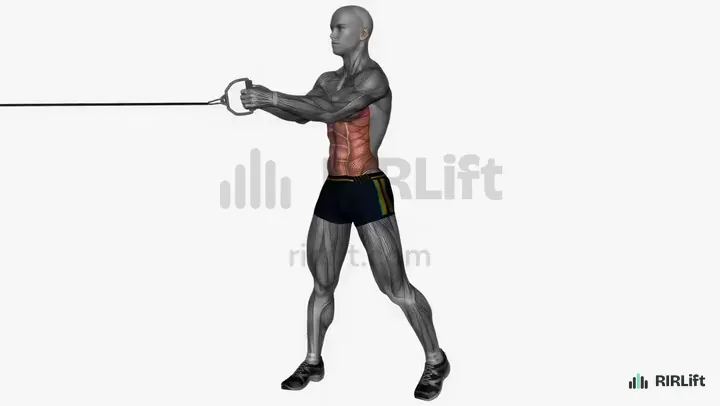
- Cable Woodchop Abs
- Plank Abs
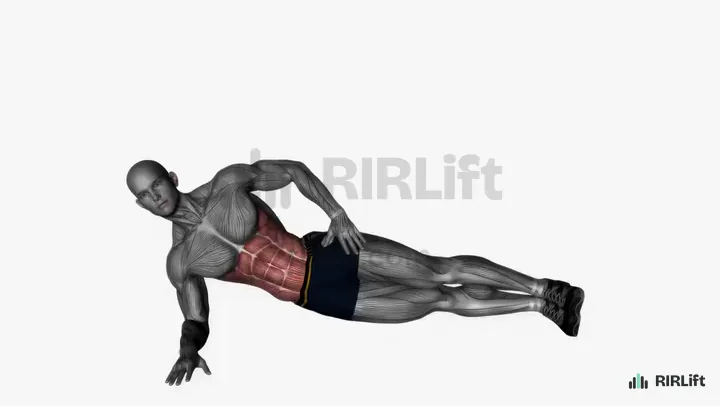
- Side Plank Abs
Put them together: example sessions
Each session below picks from the exercises above for one situation, with the sets, reps, rest and RIR filled in.
-
Session 1
Abs at the end of your gym sessions, twice a week
You already lift three or four times a week and want your abs to grow like the rest of you, without a separate ab day.
2× a week · 16 sets a week · ~20 min
-
Session 2
At home with a floor and one dumbbell
You train at home or want abs on days you don't make it to the gym, and you have a mat and a single dumbbell or plate.
3× a week · 15 sets a week · ~10 min
-
Session 3
Advanced lifter, abs as their own session
You have trained for years, planks and bodyweight crunches feel like nothing, and you want an ab session that is as hard as an arm day.
2× a week · 18 sets a week · ~20 min
Session 1
Abs at the end of your gym sessions, twice a week
- Workouts2× a week
- Working sets16 a week
- Per workout~20 min
- EquipmentAdjustable Cable, Pull-Up Bar, Decline Bench, Ab Wheel
You already lift three or four times a week and want your abs to grow like the rest of you, without a separate ab day.
Three exercises at the end of two sessions gives about 10 hard sets a week, covering a weighted crunch, a leg raise and one rotation or anti-rotation move. Abs recover fast, so two short blocks do more than one long one.
| Exercise | Sets × reps | RIR | Rest |
|---|---|---|---|
| Cable Crunch | 3 × 10–15 | 1 | 75 s |
| Hanging Leg Raise | 3 × 6–12 | 2 | 90 s |
| Cable WoodchopPer side. | 2 × 10–12 | 2 | 1 min |
| Exercise | Sets × reps | RIR | Rest |
|---|---|---|---|
| Decline Crunch | 3 × 8–12 | 1 | 75 s |
| Ab Wheel Rollout | 3 × 6–10 | 2 | 90 s |
| Pallof PressPer side. | 2 × 10–12 | 2 | 1 min |
- How to run it
- Add Session A after one upper or lower day and Session B after another, with at least a day between them. Keep them under 15 minutes.
- How to progress
- Use double progression: when every set of the cable crunch or woodchop reaches 15 reps at 1 rep in reserve, add one plate. For hanging leg raises, add reps until you get 12, then slow the lowering to 3 seconds.
Session 2
At home with a floor and one dumbbell
- Workouts3× a week
- Working sets15 a week
- Per workout~10 min
- EquipmentBodyweight
You train at home or want abs on days you don't make it to the gym, and you have a mat and a single dumbbell or plate.
Without a cable stack the load comes from leverage and holding a weight, so the plan runs three short sessions for about 15 sets a week. Each session has a curl, a hold and a rotation so every part of the trunk gets work.
| Exercise | Sets × reps | RIR | Rest |
|---|---|---|---|
| Reverse Crunch | 3 × 10–15 | 2 | 1 min |
| PlankSeconds per hold. | 2 × 20–45 | 2 | 1 min |
| Exercise | Sets × reps | RIR | Rest |
|---|---|---|---|
| Dead BugPer side. | 3 × 8–12 | 2 | 1 min |
| Russian TwistHold a dumbbell once 16 is easy. | 3 × 10–16 | 2 | 1 min |
| Exercise | Sets × reps | RIR | Rest |
|---|---|---|---|
| Reverse Crunch | 2 × 10–15 | 1 | 1 min |
| Side PlankSeconds per side. | 2 × 20–40 | 2 | 45 s |
- How to run it
- Leave a day between ab sessions, for example Monday, Wednesday and Friday, and fit each 12 to 15 minute session in before or after anything else you do that day.
- How to progress
- Add reps first, then hold the dumbbell for the Russian twist and lengthen the plank and side plank by 5 seconds at a time. When a hold passes 45 seconds, make it harder rather than longer: feet closer together, or one arm reaching forward.
Session 3
Advanced lifter, abs as their own session
- Workouts2× a week
- Working sets18 a week
- Per workout~20 min
- EquipmentAb Crunch Machine, Pull-Up Bar, Ab Wheel, Adjustable Cable
You have trained for years, planks and bodyweight crunches feel like nothing, and you want an ab session that is as hard as an arm day.
One focused session of 12 to 14 sets lets you push each ab exercise close to failure while fresh, which bodyweight finishers never do. A second, shorter dose on another day keeps the weekly total near 18 sets.
| Exercise | Sets × reps | RIR | Rest |
|---|---|---|---|
| Machine Crunch | 4 × 8–12 | 0 | 90 s |
| Hanging Leg Raise | 3 × 8–12 | 1 | 90 s |
| Ab Wheel Rollout | 3 × 8–12 | 1 | 90 s |
| Cable WoodchopPer side. | 3 × 8–12 | 1 | 1 min |
| Exercise | Sets × reps | RIR | Rest |
|---|---|---|---|
| Cable Crunch | 3 × 10–15 | 1 | 1 min |
| Side PlankSeconds per side. | 2 × 30–60 | 1 | 45 s |
- How to run it
- Do Day 1 on a day without heavy squats or deadlifts, so your trunk is fresh. Tack Day 2 onto the end of any other session.
- How to progress
- Take the machine crunch and cable crunch to 0 to 1 reps in reserve and add weight as soon as you hit the top of the range. For the ab wheel, move from kneeling to longer reach, then to rollouts from your toes.
Make it fit you
-
If you can't hang from a bar yet
Replace the hanging leg raise with reverse crunches for the same sets. When you can do 15 reverse crunches with a clear pelvic tilt, try hanging knee raises before straight legs.
-
If your lower back aches on crunches
Swap Russian twists for the Pallof press and decline crunches for the machine crunch, and keep the dead bug in every session. Shorten the rollout to a wall so your back never sags.
-
If you want a visible six-pack
Keep the ab plan as it is and look at your overall fat loss: the abs show once enough body fat comes off everywhere. Lifting heavy and eating enough protein keeps the muscle while you lose it.
-
Log ab sets like any lift
Write down the weight and the reps you had left on every set. RIRLift uses those reps in reserve to set the next session's load, so cable crunches move up a plate when you are ready instead of staying at the same pin for months.
-
Short on time
Pair the crunch and the rotation exercise as a superset and rest only after the second one. A three-exercise ab block then takes under 10 minutes.
Questions
What is the number one exercise for abs?
For men who want abs that show, the cable crunch, because you can add weight to it like any other lift. If you have no gym, the hanging leg raise is the hardest bodyweight option.
What are the 5 best core exercises?
The cable crunch, hanging leg raise, ab wheel rollout, Pallof press and side plank. Between them they train flexion, the bottom-up curl, anti-extension, anti-rotation and side bending.
Will 100 sit-ups a day get you abs?
No. Once you can do 100, each rep is too easy to build much muscle, and sit-ups do nothing about the fat covering your abs. Fewer, harder reps with weight build more, and fat loss comes from your overall diet and activity.
What exercise burns the most belly fat in men?
No exercise burns fat from one spot. Belly fat comes off with overall fat loss, from eating a bit less than you burn and staying active. Heavy compound lifts and these ab exercises build the muscle that shows when it does.
How often should men train abs?
Two or three times a week, 6 to 15 hard sets in total. Abs recover quickly, but daily ab work rarely adds anything if each set is already close to failure.
Should I train abs with weights?
Yes. Abs are muscle like any other, and adding weight is what keeps them growing once bodyweight reps get easy. Keep most weighted sets between 8 and 15 reps.
Related templates
-
Exercises for lower abs for men: reverse crunches, hanging raises and harder holds
More leg raises and pelvic curls if the bottom of your abs is the part you want to bring up.
-
Oblique exercises for men: rotation, side bends, side planks and anti-rotation
The side and rotation work in more depth, with its own plans.
-
Core exercises for men: bracing, carries, lower back and rotation
Carries, planks and anti-rotation work for a stronger trunk under heavy lifts.
-
Ab exercises at the gym: machines, cables and stations
Every ab machine and cable option in a typical gym.
-
How to use RIR
How to judge reps in reserve on ab sets, where failure is harder to feel.