Ab exercises for seniors: mat, standing and machine options

Good ab exercises for seniors start on the mat with the dead bug, lying knee raise and alternating leg raise, add gentle curls like the crunch and reverse crunch, and move to weighted options such as the ab crunch machine, standing cable crunch and dumbbell side bend. Planks and side planks round it out. Do 2 or 3 of them, 2 sets each, two or three times a week, and stop each set when you have 2 to 3 good reps left. Breathe out on the hard part and keep your neck relaxed.

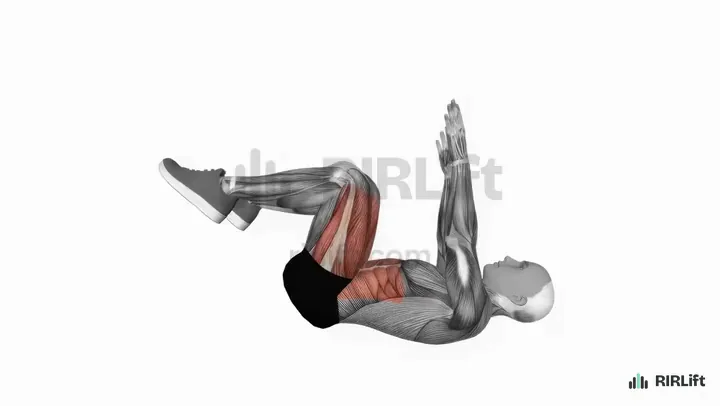
  1. Dead Bug Abs
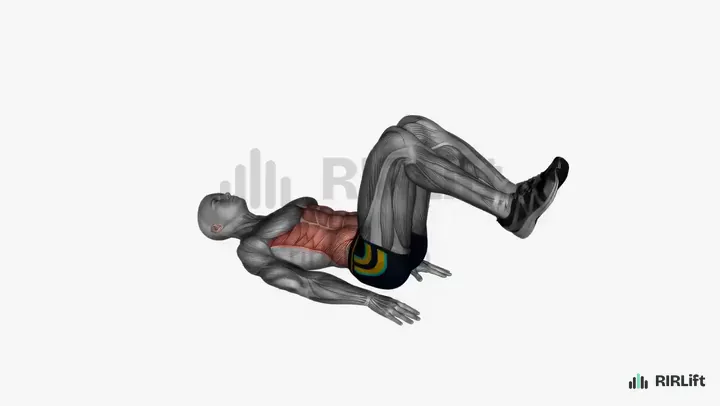
  2. Reverse Crunch Abs
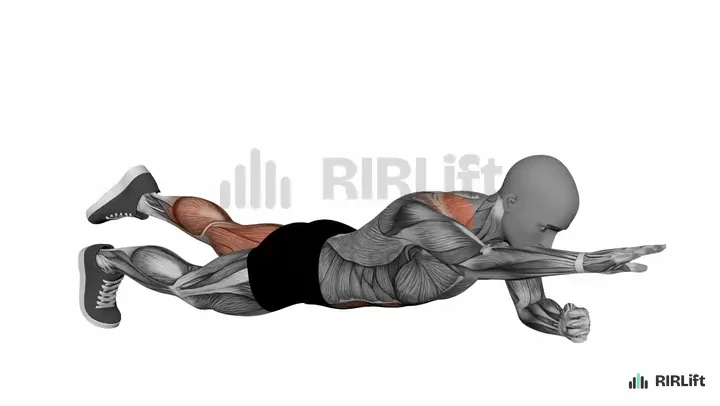
  3. Plank Abs
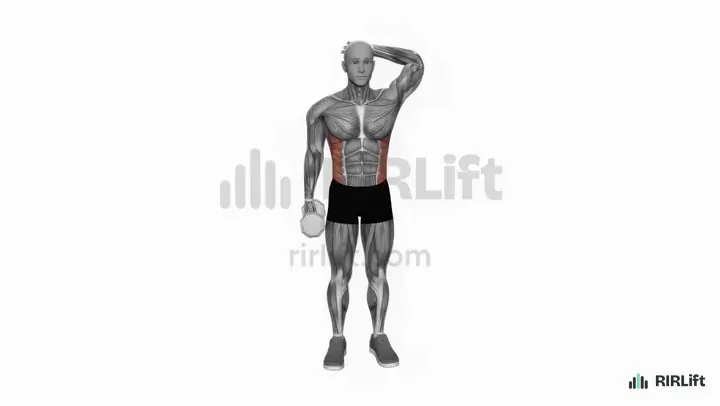
  4. Dumbbell Side Bend Abs
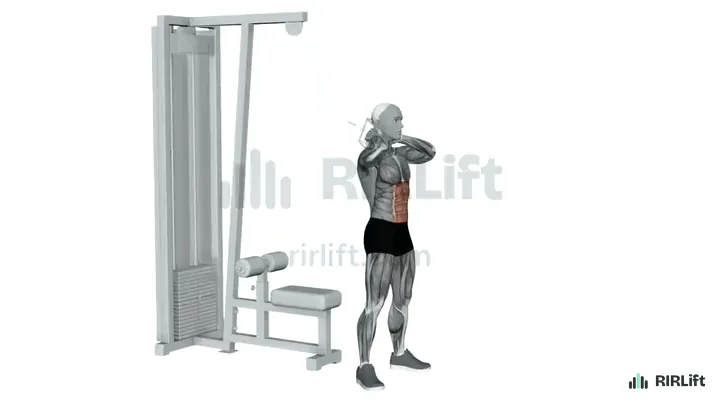
  5. Cable Crunch Abs
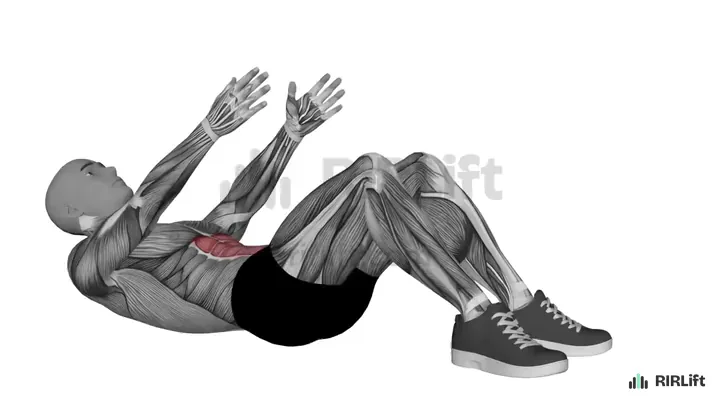
  6. Crunch Abs
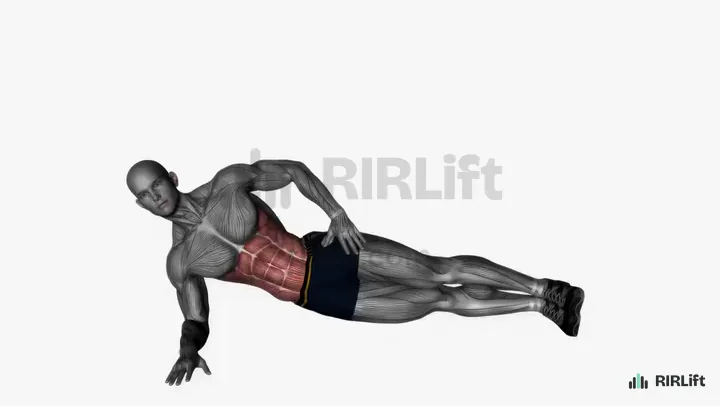
  7. Side Plank Abs

On the mat, easiest first

These three keep your lower back pressed into the floor while your legs do the moving, which makes them easy to control and easy to scale: bend the knees more to make them easier, straighten them to make them harder.

Abs, anti-extension

Dead Bug

Abs

For a first ab exercise, the dead bug teaches the most important skill, keeping your lower back still, with the floor giving you feedback the whole time. If the full reach is too much, move just the leg and leave the arms up.

How to do it

  1. Lie face up, arms pointing up and knees bent at right angles over your hips.
  2. Press your lower back into the floor.
  3. Reach one arm overhead and the opposite leg out long, both hovering above the floor.
  4. Bring them back and repeat with the other pair.

Cues

  • Back glued down
  • Breathe out as you reach
  • Opposite arm and leg

Common mistakes

  • Letting the back arch when the leg goes long: reach less far.
  • Going fast: each rep should take about three seconds.

Swap for: Plank, Alternating Leg Raise

Lower abs, bent-knee raise

Lying Knee Raise

Abs

Pulling bent knees toward your chest works the lower part of your stomach without the long, heavy lever of straight legs. It is a good bridge between the dead bug and harder leg raises.

How to do it

  1. Lie face up on a mat with your knees bent, feet flat and fingertips resting lightly behind your head.
  2. Press your lower back into the floor and lift your feet.
  3. Draw your knees in toward your chest, keeping them bent.
  4. Lower your feet back out until your heels hover just above the floor, then repeat.

Cues

  • Low back down
  • Knees in
  • Heels hover

Common mistakes

  • Arching your lower back as the legs go out: shorten the range until you can keep it flat.
  • Dropping your heels to rest between reps: keep them hovering so the next rep starts under load.
  • Pulling on your head: your hands only rest there.

Swap for: Reverse Crunch, Captain's Chair Knee Raise

Lower abs, scissor

Alternating Leg Raise

Abs

Lifting one straight leg at a time halves the load on your abs compared with raising both, while your lower back stays on the mat. Keep the lifts small until your back stays flat for every rep.

How to do it

  1. Lie on your back, legs straight, fingertips resting lightly behind your head.
  2. Press your lower back into the floor and lift both heels a few inches.
  3. Lift one straight leg toward the ceiling while the other stays just off the floor.
  4. Lower it as the other one comes up, switching legs in a smooth scissor.

Cues

  • Back stays flat
  • Long legs
  • Slow switch

Common mistakes

  • Letting the lower back lift off the mat: keep the bottom leg higher until it stays down.
  • Rushing the switch so the legs swing rather than lift: count two seconds up and two down.
  • Pulling on your head: your hands only rest there, elbows wide.

Swap for: Lying Knee Raise, Hanging Leg Raise

Curls for the six-pack muscle, done gently

Curling your ribs toward your hips is what the front ab muscle actually does. Small, slow curls with a relaxed neck are fine for most older adults; the machine version adds load while your back stays supported.

Upper abs, curl

Crunch

Abs

A short crunch, shoulder blades just clearing the mat, works the front abs directly with no load on the spine beyond your body. Reach your hands toward your knees rather than pulling on your head.

How to do it

  1. Lie on your back with your knees bent, feet flat, and your arms reaching straight forward at shoulder height.
  2. Breathe out and curl your head and shoulders up until the shoulder blades clear the mat, sliding your hands toward your knees as your ribs move toward your hips.
  3. Pause for a second when your shoulder blades are just off the floor.
  4. Uncurl slowly until your shoulders touch down, then start the next rep.

Cues

  • Ribs to hips
  • Reach, don't pull
  • Exhale up

Common mistakes

  • Jerking your arms forward to get up: the reach follows the curl, your abs start it.
  • Bouncing off the floor: lower under control so every rep starts from rest.

Swap for: Decline Crunch, Cable Crunch

Lower abs, hip curl

Reverse Crunch

Abs

Curling your hips off the floor brings your pelvis toward your ribs, the lower half of what a crunch does. It suits anyone whose neck gets sore during crunches because the head stays down.

How to do it

  1. Lie face up, hands by your sides, knees bent and feet lifted.
  2. Pull your knees toward your chest and keep going until your hips peel off the floor.
  3. Lower your hips one vertebra at a time, then let your feet drift back to just above the floor.

Cues

  • Hips peel up
  • Slow way down
  • No swinging

Common mistakes

  • Throwing the legs back for momentum: the hips should curl up, not get flung.
  • Stopping when the knees reach the chest: the rep counts once the hips lift.

Swap for: Lying Knee Raise, Hanging Knee Raise

Abs, machine

Machine Crunch

Abs

The ab crunch machine lets you add weight to a crunch in small steps while sitting supported, which is useful when bodyweight curls get too easy. Use a light pin and a slow squeeze.

How to do it

  1. Set the seat height so the machine's pivot sits near your belly button and your feet hook under the pads or rest on the footplate.
  2. Hold the handles or place your arms on the pads with your elbows pointing forward, and sit tall with your back on the pad.
  3. Breathe out and curl your chest down toward your hips by rounding your spine, keeping your hips on the seat.
  4. Hold the squeeze for a second when your ribs are closest to your pelvis.
  5. Uncurl slowly back to upright and let the weight touch down lightly before the next rep.

Cues

  • Ribs to hips
  • Arms just hold on
  • Slow on the way back

Common mistakes

  • Pulling with your arms: if your shoulders and arms burn first, lower the weight and let your hands rest on the handles.
  • Hinging at the hips instead of curling: keep your lower back on the pad and think about shortening the distance from your ribs to your pelvis.
  • Bouncing the stack between reps: pause briefly at the top so the abs start every rep from a stop.

Swap for: Cable Crunch, Decline Crunch, Crunch

Standing ab exercises with weights

If the floor is uncomfortable or you want to load your abs like any other muscle, these work standing up. Each uses a cable or dumbbell, so you can add weight in small steps.

Abs, standing cable

Cable Crunch

Abs

The standing cable crunch trains the front abs without lying down, and the weight stack makes progress easy to see. Keep the hips still so the curl comes from your stomach, not your hips.

How to do it

  1. Attach a rope to a high pulley, turn your back to the stack and hold the ends behind your head.
  2. Step forward so the weight lifts, then brace your hips in place and curl your ribs down toward your pelvis.
  3. Pause when your trunk is fully curled, then let the rope pull you back up slowly.

Cues

  • Ribs to pelvis
  • Hips still
  • Round, don't hinge

Common mistakes

  • Hinging at the hips so the body weight pulls the stack down.
  • Pulling the rope with the arms instead of keeping the hands at the head.

Swap for: Machine Crunch, Decline Crunch

Obliques, side bend

Dumbbell Side Bend

Abs

Bending sideways with one dumbbell trains the obliques at your waist through a full range while you stand. A light weight and a slow pace are all it needs.

How to do it

  1. Stand tall with a dumbbell in one hand.
  2. Bend sideways toward the weight, sliding it down your leg.
  3. Pull yourself back to upright using the opposite side of your waist.
  4. Do all your reps, then switch hands.

Cues

  • Straight sideways
  • Pull up from the side
  • No twisting

Common mistakes

  • Leaning forward or twisting as you bend.
  • Holding a weight in each hand, which cancels the exercise out.

Swap for: Plate Side Bend, Dumbbell Suitcase Carry

Obliques, anti-rotation

Pallof Press

Abs

Pressing a cable or band straight out from your chest makes your stomach muscles stop the pull from turning you. It is a standing ab exercise with no bending of the spine, so it suits anyone who finds curls uncomfortable.

How to do it

  1. Set a cable at chest height, stand side-on to it and grip the handle two-handed at your chest.
  2. Step away until the cable pulls, feet hip-width.
  3. Press the handle straight out, hold for two seconds without turning, then bring it back.

Cues

  • Hands on the midline
  • Don't turn
  • Hold it out

Common mistakes

  • Standing too close, so the cable barely pulls.
  • Letting the arms drift toward the stack.

Swap for: Cable Woodchop, Landmine Twist

Holds for endurance

Planks train your abs to stay tight for a while, the way they work when you stand, carry or reach. Start with short holds and build time before trying harder versions.

Abs, front hold

Plank

Abs

The plank works the whole stomach wall at once and is easy to scale: hands on a counter, then a bench, then forearms on the floor. Build to 30 seconds before moving lower.

How to do it

  1. Set your forearms under your shoulders and your feet behind you, body in a straight line.
  2. Squeeze your glutes and pull your ribs down toward your hips.
  3. Hold, breathing normally, without letting your hips sag or rise.
  4. For the harder version, reach one arm forward and lift the opposite foot, hold, then switch sides.

Cues

  • Ribs down
  • Glutes tight
  • Straight line

Common mistakes

  • Hips sagging toward the floor: that hangs on your lower back.
  • Holding for minutes at an easy level: make it harder instead.

Swap for: Long Lever Plank, Plank Shoulder Tap

Obliques, side hold

Side Plank

Abs

A side plank works the sides of your waist the way they work when you lean or stand on one leg. Start on your forearm and bottom knee, then straighten the legs when 30 seconds feels steady.

How to do it

  1. Lie on one side with your elbow under your shoulder and your legs stacked.
  2. Lift your hips until your body is straight from head to feet.
  3. Hold, then switch sides.

Cues

  • Hips high
  • Stacked feet
  • Elbow under shoulder

Common mistakes

  • Letting the hips drop toward the floor as the hold goes on.
  • Rolling the chest forward or back.

Swap for: Dumbbell Side Plank, Copenhagen Plank

Put them together: example sessions

Each session below picks from the exercises above for one situation, with the sets, reps, rest and RIR filled in.

Session 1

Mat at home, two days a week

  • Workouts2× a week
  • Working sets12 a week
  • Per workout~15 min
  • EquipmentBodyweight

You are comfortable getting down to the floor and up again, you have a mat at home, and you want firmer, stronger stomach muscles.

Each day trains the front abs, lower abs and sides with 6 working sets, so the week totals 12 sets, plenty for muscles that also work during walking and lifting. Every set stops with 2 to 3 reps left.

Day A
ExerciseSets × repsRIRRest
Dead BugPer side. 2 × 6–10 3 1 min
Crunch 2 × 10–15 2 1 min
Side PlankSeconds per side. 2 × 15–30 2 1 min
Day B
ExerciseSets × repsRIRRest
Lying Knee Raise 2 × 8–12 2 1 min
Alternating Leg RaisePer leg. 2 × 8–12 3 1 min
PlankSeconds per hold. 2 × 15–30 2 1 min
How to run it
Do Day A and Day B twice a week with a day or more between, after a short walk or on its own. Each takes about 12 minutes.
How to progress
When every set reaches the top of the range with reps to spare, add 2 reps or 5 seconds next time. After that, make each move harder: straighter legs on the dead bug and leg raise, a longer hold on planks, a light dumbbell held at your chest for crunches.

Session 2

Gym abs with weights

  • Workouts2× a week
  • Working sets18 a week
  • Per workout~20 min
  • EquipmentAb Crunch Machine, Adjustable Cable, Dumbbells

You already lift at a gym, bodyweight ab work has become easy, and you want to train your stomach like the rest of your body.

Weighted exercises let you keep adding load in small steps once 15 bodyweight reps are easy. Each session has 9 working sets, so two sessions put 18 sets a week on the abs, enough on top of the bracing your other lifts already ask for.

Weighted abs
ExerciseSets × repsRIRRest
Machine Crunch 3 × 10–15 2 75 s
Cable Crunch 2 × 10–15 2 75 s
Dumbbell Side BendPer side. 2 × 10–15 2 1 min
Pallof PressPer side. 2 × 8–12 2 1 min
How to run it
Add it to the end of two strength sessions a week. The machine and cable crunch can run as a pair with the side bend and Pallof press to save time.
How to progress
Add a rep each session until every set hits the top of the range at 2 reps in reserve, then move up one pin on the stack or 2.5 to 5 pounds on the dumbbell. Single-arm exercises progress per side.

Session 3

Crunches bother your back or neck

  • Workouts2× a week
  • Working sets18 a week
  • Per workout~20 min
  • EquipmentAdjustable Cable

Curling exercises leave your lower back or neck sore, but you still want a stronger stomach.

This plan drops every curl and keeps exercises where the spine stays still: four exercises, 9 sets a session, 18 a week. Holding the trunk still against a cable or your own weight trains the same muscles a curl does.

Holds and presses
ExerciseSets × repsRIRRest
Dead BugPer side. 3 × 6–10 3 1 min
Pallof PressPer side. Hold 2 seconds. 2 × 8–12 2 1 min
PlankSeconds per hold. Hands on a bench if needed. 2 × 15–30 2 1 min
Side PlankSeconds per side. Bottom knee down. 2 × 15–30 2 1 min
How to run it
Do it twice a week. Start each session with the dead bug so you feel your lower back pressed down before the holds.
How to progress
Add 5 seconds to each hold or 1 rep per side when every set ends with 2 to 3 reps or seconds left. Once the floor plank reaches 30 seconds, try lifting one foot for part of the hold.

Make it fit you

Questions

How can I tell if my stomach muscles are weak?

Three common signs: you need your arms or a roll onto your side to sit up from lying down, your lower back arches off the floor when you lower your legs during a dead bug, and you cannot hold a plank with hands on a bench for 20 seconds. All three improve as the dead bug, crunch and plank on this page get easier.

What are some good core exercises I can do on the mat?

The dead bug, lying knee raise, alternating leg raise, reverse crunch and plank all work on a mat with no equipment. The mat plan on this page puts them into two short sessions.

What are the top 3 core strengthening exercises for seniors?

The dead bug, plank and side plank. Together they train the front and sides of your stomach, they scale from very easy to hard, and none needs equipment.

Are crunches safe for seniors?

Short, slow crunches are fine for most people. Lift only until your shoulder blades clear the floor and keep your neck relaxed. If they bother your back or neck, the spine-friendly plan gets the same muscles working without curling.

How many times a week should seniors do ab exercises?

Two or three times. Your abs recover quickly, but more sessions add little once you are already doing a few hard sets.