
Hip exercises at home: glutes, outer hips, inner thighs and balance
Published October 19, 2026
The best hip exercises at home are the dumbbell hip thrust and kettlebell swing for the back of the hips, the clamshell, fire hydrant and lateral band walk for the outer hips, the Copenhagen plank and Cossack squat for the inner hips, and the skater squat, curtsy lunge and step-up for single-leg control. With no equipment, the one-leg hip thrust and skater squat supply the load. Train each area twice a week and push the sets close to failure.
- Dumbbell Hip Thrust Glutes
- Cossack Squat Quads, Adductors
- Lateral Band Walk Abductors
- Kettlebell Swing Glutes, Hamstrings
- Skater Squat Quads, Glutes
- Copenhagen Plank Adductors, Abs
- Clamshell Abductors
- Dumbbell Curtsy Lunge Quads, Glutes
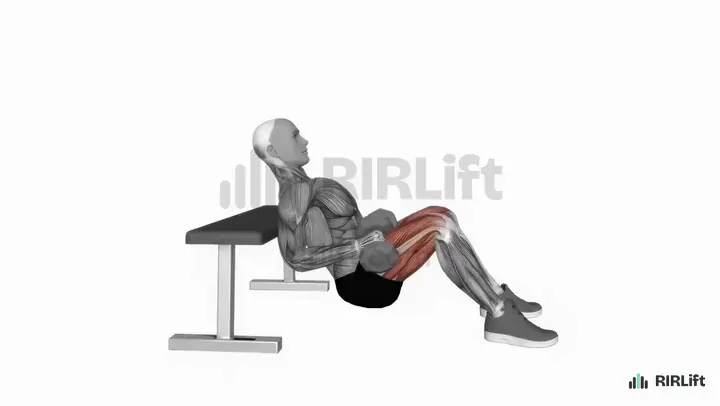
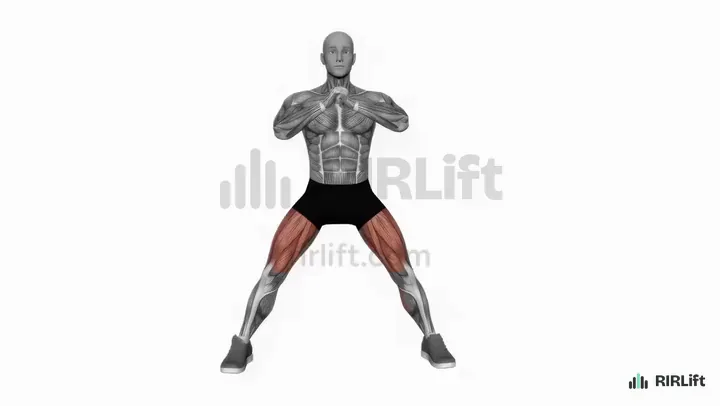
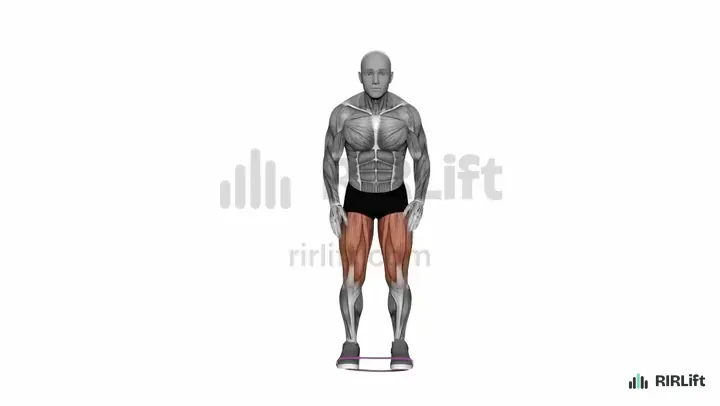
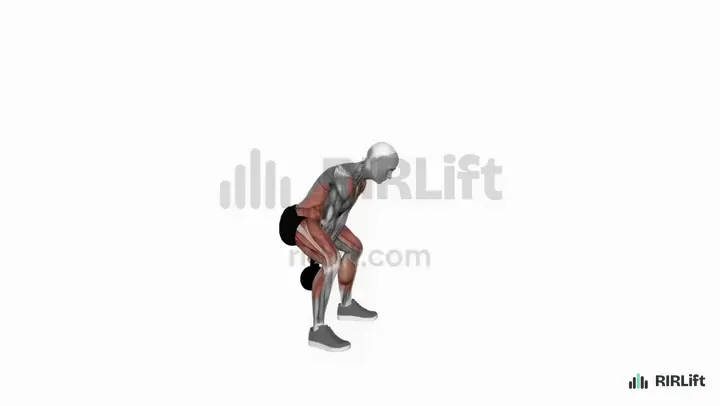
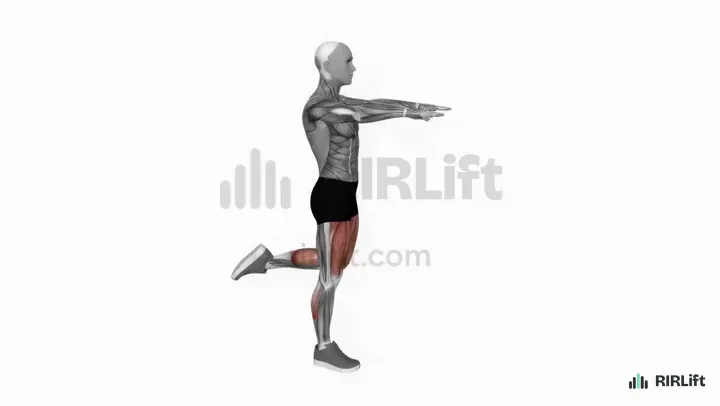
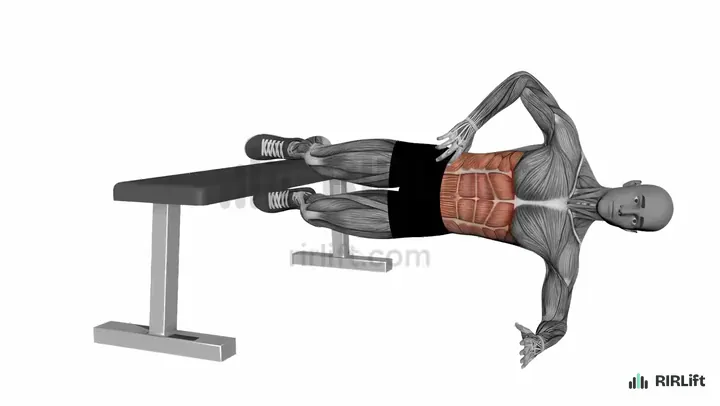
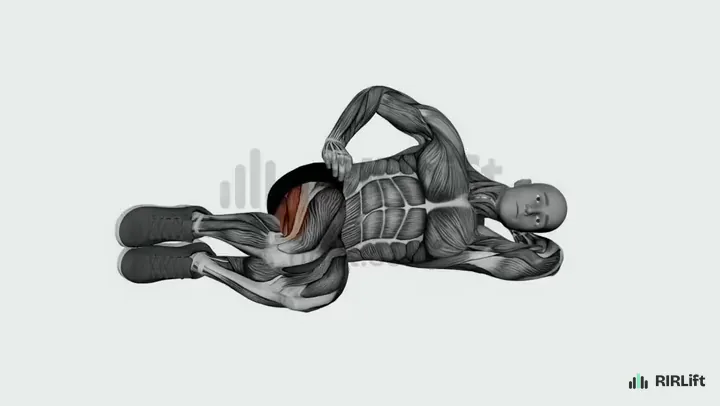
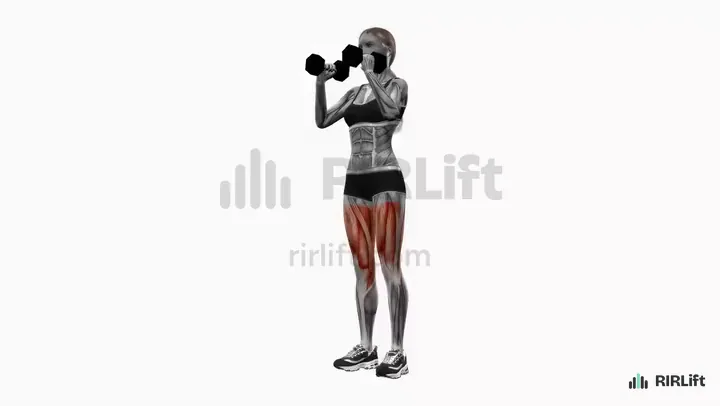
Put them together: example sessions
Each session below picks from the exercises above for one situation, with the sets, reps, rest and RIR filled in. Open one in the session builder to change a pick, price it from a recent set, and add it to RIRLift.
-
Session 1
No equipment at all
You have a floor, a couch and a cushion, and you want to strengthen your hips without buying anything.
2× a week · 30 sets a week · ~40 min
-
Session 2
One kettlebell or dumbbell set and a loop band
You have a kettlebell or a pair of dumbbells, a mini loop and a sturdy step, and you want your hips to get bigger and stronger.
2× a week · 23 sets a week · ~30 min
-
Session 3
Rebuilding balance after time off
You have not trained in a while, standing on one leg feels shaky, and you want your hips stronger and steadier before moving on to harder exercises.
3× a week · 30 sets a week · ~25 min
Session 1
No equipment at all
- Workouts2× a week
- Working sets30 a week
- Per workout~40 min
- EquipmentDumbbells
You have a floor, a couch and a cushion, and you want to strengthen your hips without buying anything.
Without weights, single-leg versions supply the load: the one-leg hip thrust and skater squat lead the session at 1 to 2 reps in reserve. The clamshell and fire hydrant follow for the outer hips, taken to 0 or 1 in reserve since they are safe to push hard, and the Copenhagen plank and Cossack squat cover the inner hips. About 15 working sets.
| Exercise | Sets × reps | RIR | Rest |
|---|---|---|---|
| Single-Leg Hip ThrustPer leg. Back on the couch. | 3 × 10–20 | 1 | 1 min |
| Skater SquatPer leg. Cushion under the knee. | 3 × 5–10 | 2 | 90 s |
| Cossack SquatPer side. | 2 × 6–10 | 2 | 1 min |
| ClamshellPer side. | 3 × 15–30 | 0 | 45 s |
| Fire HydrantPer side. | 2 × 12–20 | 1 | 45 s |
| Copenhagen PlankReps per side. | 2 × 6–12 | 2 | 1 min |
- How to run it
- Do it twice a week with two days between. Use a cushion under the back knee on the skater squat.
- How to progress
- Add reps each week. When an exercise passes the top of its range, slow the lowering to three seconds or add a pause at the hardest point.
Session 2
One kettlebell or dumbbell set and a loop band
- Workouts2× a week
- Working sets23 a week
- Per workout~30 min
- EquipmentKettlebells, Dumbbells, Resistance Bands, Flat Bench
You have a kettlebell or a pair of dumbbells, a mini loop and a sturdy step, and you want your hips to get bigger and stronger.
With load, the hip extensors carry the session. Day A uses the swing and the thrust; day B the staggered RDL and step-up, both at 1 to 2 in reserve. The curtsy lunge and band walk each appear once to work the outer hips under load and alone. Each day is 12 to 13 working sets.
| Exercise | Sets × reps | RIR | Rest |
|---|---|---|---|
| Kettlebell Swing1 warm-up set firstHips snap. Stand tall. | 4 × 12–20 | 2 | 90 s |
| Dumbbell Hip ThrustPause 1 s at the top. | 3 × 10–15 | 1 | 90 s |
| Dumbbell Curtsy LungePer leg. | 3 × 8–12 | 1 | 90 s |
| Lateral Band WalkSteps per direction. | 2 × 12–20 | 1 | 45 s |
Open Hips A in the session builder
| Exercise | Sets × reps | RIR | Rest |
|---|---|---|---|
| Dumbbell B-Stance RDL1 warm-up set firstPer leg. | 3 × 8–12 | 2 | 90 s |
| Step-UpPer leg. | 3 × 8–12 | 1 | 90 s |
| Single-Leg Hip ThrustPer leg. | 3 × 10–15 | 1 | 1 min |
| Copenhagen PlankReps per side. | 2 × 8–12 | 2 | 1 min |
Open Hips B in the session builder
- How to run it
- Run Hips A and Hips B once each per week, with at least one day between.
- How to progress
- Double progression: once every set reaches the top of the range at the target RIR, go up a weight step. With one kettlebell, add reps to the swing and a pause to the thrust.
Session 3
Rebuilding balance after time off
- Workouts3× a week
- Working sets30 a week
- Per workout~25 min
- EquipmentDumbbells, Flat Bench
You have not trained in a while, standing on one leg feels shaky, and you want your hips stronger and steadier before moving on to harder exercises.
This plan starts with support and short ranges: the side leg raise holding a chair, the clamshell lying down, and the step-up on a low step. Every set stops 2 to 3 reps short of failure so you learn the positions without soreness, and the staggered RDL builds the hinge with a back foot for balance. Ten working sets, three times a week.
| Exercise | Sets × reps | RIR | Rest |
|---|---|---|---|
| Step-UpPer leg. Low step. | 3 × 8–12 | 3 | 1 min |
| Standing Side Leg RaisePer side. Hold a chair. | 2 × 10–15 | 2 | 45 s |
| ClamshellPer side. | 3 × 12–20 | 2 | 45 s |
| Dumbbell B-Stance RDLPer leg. Light or bodyweight. | 2 × 8–12 | 3 | 1 min |
- How to run it
- Do it three times a week. Start with a low step, about the height of a stair, and hold a chair for balance on anything that feels shaky.
- How to progress
- Add reps first. When you reach the top of every range at RIR 2, raise the step, let go of the chair on the side leg raise, or add a light dumbbell to the staggered RDL.
Make it fit you
-
Use what is in the room
A couch is a hip-thrust bench, a stair is a step-up box, and a backpack full of books is a weight. Push the couch against a wall before you thrust off it.
-
Fix the side you feel least
If one hip feels weaker or less steady on single-leg work, start every set on that side and match the reps on the other.
-
Go deeper before heavier
On the Cossack squat and skater squat, add range before load. Lower the cushion or step you touch a little each week.
-
Know when a set counts
Bodyweight sets only build muscle when they end close to failure. Log each set's reps in reserve in RIRLift, so you can see when 20 easy reps should become a harder version.
-
Combine with walking, not instead of it
Walking keeps hips moving, but it is too easy to make them stronger once you are used to it. Keep your walks and add two short strength sessions a week.
Questions
What exercises build hip muscles?
Hip thrusts, swings and Romanian deadlifts build the glutes; clamshells, side leg raises and band walks build the outer hips; Copenhagen planks and Cossack squats build the inner hips. Single-leg squats and step-ups tie them together.
Can you strengthen your hips at home without equipment?
Yes. The one-leg hip thrust, skater squat, Cossack squat, Copenhagen plank, clamshell and fire hydrant all use bodyweight and furniture. Use single-leg versions and slow lowering to keep them hard as you get stronger.
Does walking strengthen the hips?
Walking keeps the hips active, but once you are used to it the effort is too low to build strength. Exercises that take each set close to failure, like the ones on this page, build strength much faster.
How often should I do hip exercises at home?
Two or three times a week. Short sessions of 10 to 15 sets, with a day between, are easy to recover from and fit around other training.
What is the best single hip exercise at home?
If you can only do one, the skater squat trains hip extension, outer-hip stability and knee control together. Add a hip thrust and a side lift when you have time for more.
How many reps should I do for hip exercises?
Loaded lifts like the hip thrust and swing work well at 8 to 20 reps. Bodyweight outer-hip exercises often need 15 to 30 to get close to failure. Stop each set 0 to 2 reps short of failure.
Related templates
-
Hip exercises with resistance bands: outer hips, inner thighs, glutes and hinges
A full hip routine using only bands.
-
Adductor exercises at home: direct squeezes, side lunges and deep squats
More inner-thigh exercises and plans.
-
Glute exercises at home, with or without equipment
Home exercises focused on the glutes.
-
Leg exercises at home: squats, lunges, hinges, glutes and calves without a gym
Full leg days including quads and calves.
-
Kettlebell swing: how to do it, what it works, and what to swap it for
Form and programming for the hip snap.