Apple Watch bodyweight workout: push-ups, pull-ups and squats logged on your wrist

For a bodyweight workout on Apple Watch, log each set's reps and how many you had left, not only the time: that record tells you when to move to a harder version or add weight. In RIRLift you start the session on your wrist, tap in the reps after each set and the rest timer starts; once a move gets easy, you add a backpack and log the added pounds. A session with push-ups, pull-ups or squats in it is saved to Apple Health as Traditional Strength Training.

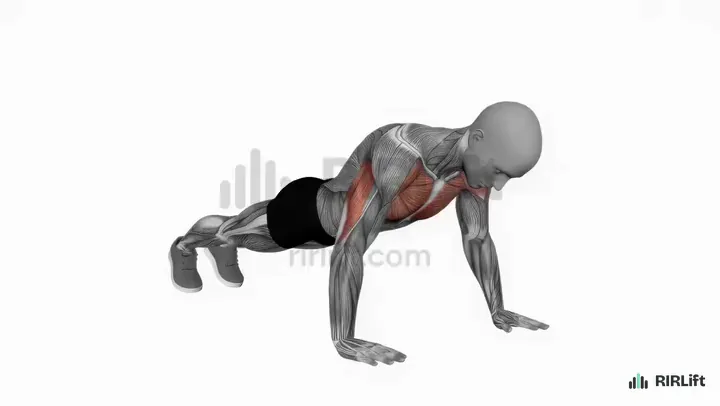
  1. Push-Up Chest
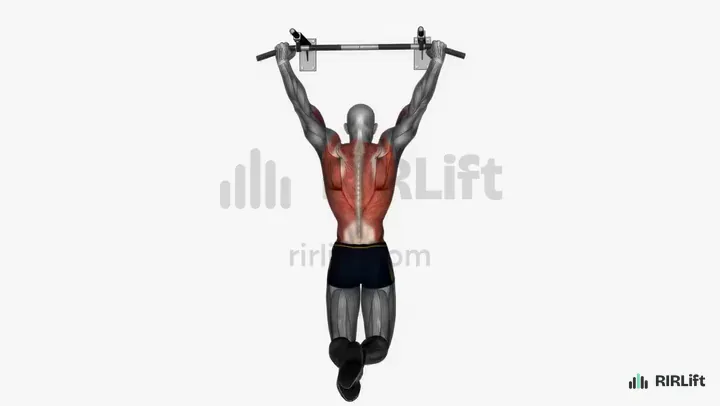
  2. Pull-Up Lats
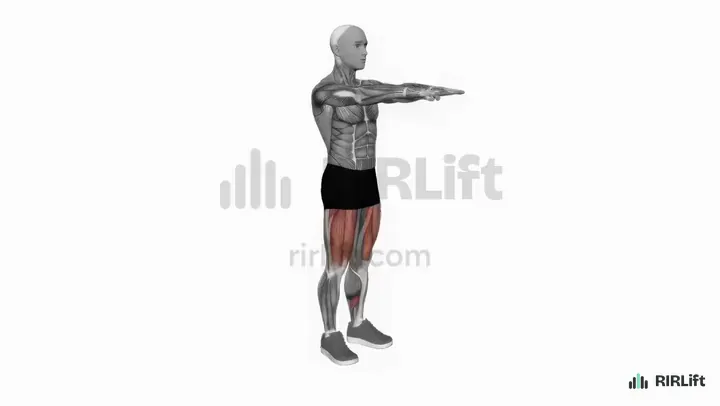
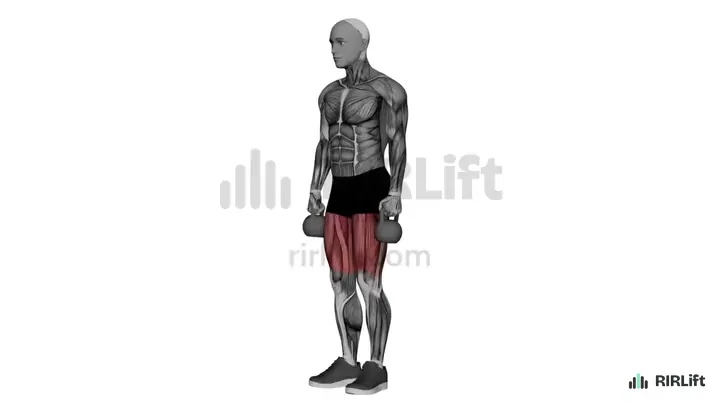
  3. Bodyweight Squat Quads
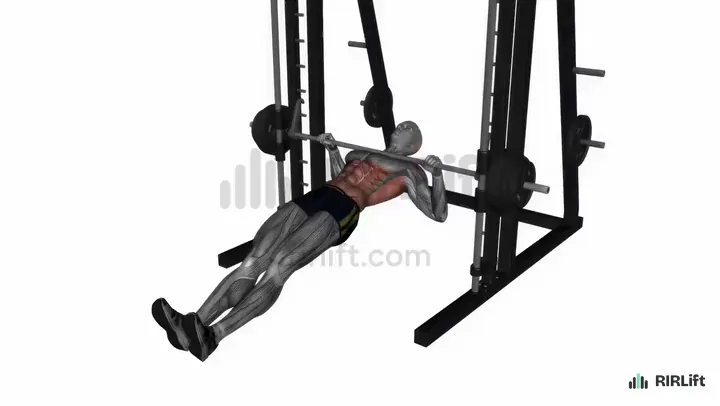
  4. Inverted Row Upper Back, Lats
  5. Reverse Lunge Quads, Glutes
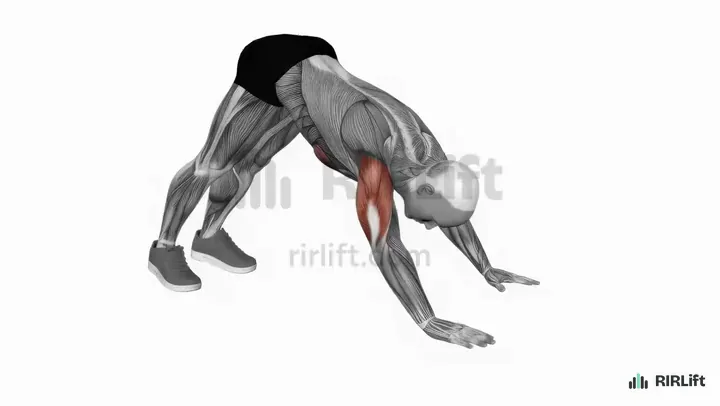
  6. Pike Push-Up Shoulders
  7. Plank Abs

Push

From the floor push-up to dips on parallel bars. Each one is harder than the one before, so you always have a next step.

Chest, shoulders and triceps

Push-Up

Chest

The base of every bodyweight session. Log the reps and how many more you could have done.

How to do it

  1. Set your hands slightly wider than your shoulders with your body straight from head to heels.
  2. Lower until your chest nearly touches the floor, elbows at about 45 degrees.
  3. Press back up to straight arms.

Cues

  • One straight line
  • Elbows angled back

Common mistakes

  • Flaring the elbows straight out: tuck them toward your ribs.

Swap for: Kneeling Push-Up, Incline Push-Up, Push-Up Plus

Upper chest and shoulders, feet raised

Decline Push-Up

Chest

Raising your feet puts more of your weight on your hands. It is the next step once floor push-ups reach 20.

How to do it

  1. Put your feet on a chair or bench and your hands on the floor under your shoulders.
  2. Brace so your body is straight from heels to head, no sag at the hips.
  3. Lower until your forehead is just above the floor, elbows about 45 degrees from your sides.
  4. Press back to locked arms, keeping your hips from rising first.

Cues

  • Higher feet, harder rep
  • Forehead toward the floor
  • Press the floor away

Common mistakes

  • Piking your hips to make the press easier: if the straight line goes, use a lower chair.
  • Letting your shoulders ride up to your ears at the bottom: keep them pulled down and back.

Swap for: Push-Up, Archer Push-Up, Weighted Push-Up

Shoulders, overhead push

Pike Push-Up

Shoulders

The overhead press of bodyweight training, with no equipment at all.

How to do it

  1. Start in a push-up position with your hands a bit wider than your shoulders and fingers spread.
  2. Walk your feet toward your hands and raise your hips until your body forms an upside-down V, with your weight leaning over your hands.
  3. Bend your elbows and lower the top of your head toward a point a few inches in front of your hands, so your head and hands form a triangle.
  4. Bend your elbows out to the sides and stop when your head lightly touches the floor or just above it.
  5. Press the floor away and straighten your arms, pushing your hips back up to the V.

Cues

  • Hips stay high
  • Head forward of hands
  • Push the floor away

Common mistakes

  • Letting the hips drop as you lower: that turns it back into a regular push-up; keep the hips stacked over your shoulders as much as you can.
  • Lowering your head straight between your hands: aim slightly forward so your forearms stay close to vertical.
  • Cutting the range short: lower until your head is near the floor, using a yoga block or book as a target if you need one.

Swap for: Handstand Push-Up, Dumbbell Shoulder Press

Chest and triceps, parallel bars

Chest Dip

Chest, Triceps

A heavy push on park bars or a dip station. Lean forward a little to bring in the chest.

How to do it

  1. Grip parallel bars and step or jump up until your arms are straight and you are holding yourself above the bars.
  2. Lean your chest slightly forward with your legs under you or a little behind.
  3. Bend your elbows to sink down until your upper arms are about level with the bars.
  4. Press back up to straight arms and lock out.

Cues

  • Shoulders down, chest proud
  • Slight forward lean
  • Lock out every rep

Common mistakes

  • Sinking so deep your shoulders ache: stop when your upper arms reach the level of the bars.
  • Swinging your legs to get up: keep them still and end the set when you need momentum.

Swap for: Bench Dip, Deep Push-Up, Close-Grip Push-Up

Chest and triceps, push-up with load

Weighted Push-Up

Chest

A backpack or a plate on your back. Log the added weight as the load and RIRLift counts your bodyweight plus it.

How to do it

  1. Get into the top of a push-up with your hands a bit outside your shoulders.
  2. Have a partner set a plate flat across your upper back, between your shoulder blades, or wear a loaded backpack.
  3. Lower your chest close to the floor without letting the load slide.
  4. Press up to straight arms with your body rigid.

Cues

  • Load between the shoulder blades
  • Same depth as unloaded reps
  • Brace before every rep

Common mistakes

  • Letting the plate slide toward your neck: keep your back flat and the plate centered.
  • Adding so much weight that depth gets shorter: lighten it until your chest reaches the floor again.

Pull

Pulling needs something to hang from: a doorway bar, a park bar, or a low bar for rows. The band gets you there before your first pull-up.

Lats and upper back, overhand pull-up

Pull-Up

Lats

The main pull. Log every rep you get, even when a set is short of the target.

How to do it

  1. Grab the bar overhand, hands a little wider than your shoulders, and hang from fully straight arms.
  2. Pull your shoulders down away from your ears before your elbows start to bend.
  3. Drive the elbows toward your ribs until your chin passes over the bar.
  4. Lower slowly to a dead hang and pull again.

Cues

  • Shoulders down, then pull
  • Legs still and together
  • Two seconds on the way down

Common mistakes

  • Swinging the legs to cheat reps: cross your ankles and brace the abs.
  • Half reps from a bent-arm start: finish each rep at a full hang.

Swap for: Chin-Up, Lat Pulldown, Band-Assisted Pull-Up

Lats and biceps, underhand pull-up

Chin-Up

Lats

Palms toward you lets the biceps help the pull. Use it to vary your pulling across sessions.

How to do it

  1. Hang from the bar with your palms toward you and hands shoulder-width.
  2. Pull your elbows down and back until your chin is over the bar.
  3. Lower to a full hang with straight arms.
  4. Keep your legs quiet and your body still between reps.

Cues

  • Palms toward you
  • Chin over the bar
  • Dead hang at the bottom

Common mistakes

  • Kipping or kicking to finish: stop the set when you cannot pull cleanly.
  • Half reps at the top: straighten your arms fully every time.

Swap for: Close-Grip Chin-Up, Assisted Pull-Up

Lats, pull-up with a band

Band-Assisted Pull-Up

Lats

Takes part of your weight so you can train full pull-up sets now. Log it as its own exercise, apart from strict pull-ups.

How to do it

  1. Loop a strong resistance band over the bar and pull it through itself so it hangs down tight.
  2. Grip the bar a little wider than your shoulders and step one knee or foot into the loop at the bottom.
  3. Pull your elbows down toward your hips until your chin clears the bar.
  4. Lower under control to straight arms, letting the band stretch back out, and repeat.

Cues

  • Thinnest band you can do 8 reps with
  • Full range every rep
  • Stay vertical, no swing

Common mistakes

  • Using a band so thick that the set never gets hard: move down a band once you pass 12 reps at the target reps in reserve.
  • Bouncing out of the bottom off the band: pause for a moment at the hang before each pull.

Swap for: Assisted Pull-Up, Inverted Row, Lat Pulldown

Upper back, horizontal pull

Inverted Row

Upper Back, Lats

A row under a low bar or a sturdy table. Walk your feet forward to make it easier.

How to do it

  1. Set a bar at about hip height, lie under it, and grip it with your hands a little wider than your shoulders.
  2. Straighten your body from heels to head, or bend your knees with feet flat for an easier version.
  3. Pull your chest up to the bar, leading with your elbows, and keep your hips in line.
  4. Lower until your arms are straight, then pull again.

Cues

  • Body stays a straight plank
  • Chest touches the bar
  • Bend your knees to make it easier

Common mistakes

  • Letting your hips sag so only your chest rises: squeeze your glutes and move as one piece.
  • Pulling the bar to your neck: aim for the bottom of your chest.

Swap for: TRX Row, Lat Pulldown, Assisted Pull-Up

Legs

Squats and lunges for volume, and the one-leg and side squats for when two legs get too easy.

Quads and glutes, squat

Bodyweight Squat

Quads

High-rep legs with no equipment. Slow the lowering when 25 reps feels easy.

How to do it

  1. Stand with your feet about shoulder-width apart, toes turned out slightly, arms out in front for balance.
  2. Push your hips back and bend your knees, keeping your heels flat and your chest up.
  3. Lower until your thighs are at least parallel to the floor, deeper if your heels stay down.
  4. Drive through your whole foot to stand tall, then go straight into the next rep.

Cues

  • Heels glued to the floor
  • Knees over toes
  • Thighs to parallel or lower

Common mistakes

  • Knees caving in on the way up: push them out over your little toes.
  • Quarter squats to hit a rep count: a full-depth set of 12 beats a shallow set of 30.

Swap for: Reverse Lunge, Wall Sit, Jump Squat

Quads and glutes, single leg

Reverse Lunge

Quads, Glutes

One leg at a time makes your bodyweight a heavier load for each leg.

How to do it

  1. Start tall with feet hip-width apart, hands on your hips or holding a kettlebell at your chest or a weight in each hand.
  2. Shift your weight onto one foot and step the other foot straight back about two feet, landing on the ball of the foot.
  3. Lower your back knee toward the floor until it nearly touches, with your front shin close to vertical and your chest up.
  4. Keep most of your weight in the front foot and push through its whole sole to stand and bring the back foot forward.
  5. Finish standing tall on both feet, then repeat on the same side for all reps or alternate legs.

Cues

  • Weight stays in the front foot
  • Back knee straight down
  • Push the floor away to stand

Common mistakes

  • Stepping back too short: if your front knee shoots far past your toes and your heel lifts, take a longer step.
  • Pushing off the back foot: the back leg only balances you; drive up through the front heel and mid-foot.
  • Front knee caving in: keep it tracking over your middle toes; slow the descent or reduce the weight until it does.

Inner thighs and glutes, side squat

Cossack Squat

Quads, Adductors

Moves your legs sideways and through a deep range that squats and lunges do not.

How to do it

  1. Take a very wide stance, about twice the width of your shoulders, with the toes turned out a little.
  2. Bend your right knee and sit your hips down toward your right heel, letting the left leg straighten with the toes pointing up.
  3. Sink as deep as you can with the right foot flat and your chest lifted.
  4. Press the floor away with the right foot to return to the middle, then sit to the left.

Cues

  • Sit down, not forward
  • Flat foot on the bent side
  • Long leg stays straight

Common mistakes

  • Folding the chest down to the knee to get lower: hold a light weight out in front as a counterbalance instead.
  • Rushing from side to side: stop in the middle for a breath between reps.

Swap for: Dumbbell Lateral Lunge, Kettlebell Lateral Lunge, Balance Board Lateral Squat

Quads and glutes, one-leg squat to a chair

Pistol Squat

Quads, Glutes

The hardest leg move here. Lower the chair over the weeks until you reach the floor.

How to do it

  1. Stand on one leg in front of a chair or box, the other leg straight out in front and arms reaching forward.
  2. Push your hips back and bend the standing knee, lowering slowly toward the seat.
  3. Touch the chair lightly, without sitting your weight down, and keep the front leg off the floor.
  4. Drive through the standing heel to stand all the way up; sets are per leg.

Cues

  • Touch the chair, don't sit
  • Reach forward to stay balanced
  • Lower the chair as you get stronger

Common mistakes

  • Dropping onto the seat and bouncing back up: control the lowering and barely touch, or raise the seat.
  • Heel popping up at the bottom: shift your weight to mid-foot and use a higher box until it stays down.

Swap for: Skater Squat, Reverse Lunge, Sissy Squat

Core

One hold, one hang and one slow floor move. They fit at the end of any session.

Abs, plank

Plank

Abs

A timed hold. Start it on the Watch and the seconds are logged for you.

How to do it

  1. Set your forearms under your shoulders and your feet behind you, body in a straight line.
  2. Squeeze your glutes and pull your ribs down toward your hips.
  3. Hold, breathing normally, without letting your hips sag or rise.
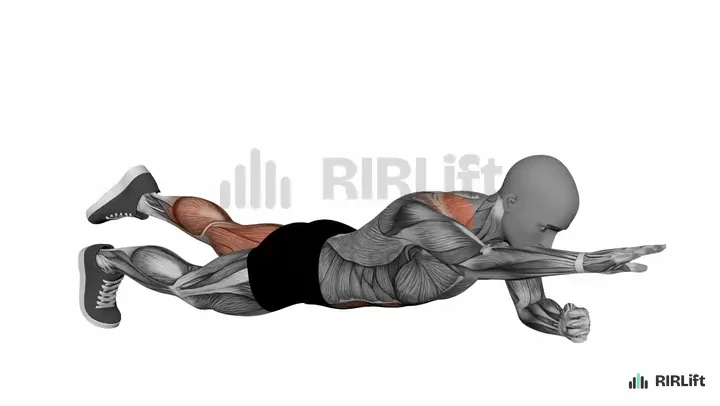
  4. For the harder version, reach one arm forward and lift the opposite foot, hold, then switch sides.

Cues

  • Ribs down
  • Glutes tight
  • Straight line

Common mistakes

  • Hips sagging toward the floor: that hangs on your lower back.
  • Holding for minutes at an easy level: make it harder instead.

Swap for: Long Lever Plank, Plank Shoulder Tap

Abs and hip flexors, hanging raise

Hanging Leg Raise

Abs

Uses the pull-up bar for your trunk. Bend your knees until straight legs are possible.

How to do it

  1. Hang from the bar, legs long and pressed together.
  2. Lift your legs, keeping your knees straight, until your feet reach at least hip height.
  3. Tilt your pelvis up at the top, then lower under control.

Cues

  • Legs locked
  • Pelvis tilts
  • No kip

Common mistakes

  • Bending the knees as you tire: switch to knee raises for the rest of the set.
  • Using a swing to get the legs up.

Swap for: Hanging Knee Raise, Lying Knee Raise

Deep abs, lying core

Dead Bug

Abs

Slow and controlled on the floor, a good finisher on days with no bar.

How to do it

  1. Lie face up, arms pointing up and knees bent at right angles over your hips.
  2. Press your lower back into the floor.
  3. Reach one arm overhead and the opposite leg out long, both hovering above the floor.
  4. Bring them back and repeat with the other pair.

Cues

  • Back glued down
  • Breathe out as you reach
  • Opposite arm and leg

Common mistakes

  • Letting the back arch when the leg goes long: reach less far.
  • Going fast: each rep should take about three seconds.

Swap for: Plank, Alternating Leg Raise

Put them together: example sessions

Each session below picks from the exercises above for one situation, with the sets, reps, rest and RIR filled in.

Session 1

Floor only, 3 days a week

  • Workouts3× a week
  • Working sets33 a week
  • Per workout~25 min
  • EquipmentBodyweight

No bar and no weights: a bit of floor, a chair to raise your feet, and 25 minutes.

Two sessions alternate, with push, legs and core in each, for 11 working sets a session. With nothing to pull on, there is no back work here; the doorway bar session adds it.

Day A
ExerciseSets × repsRIRRest
Push-Up 3 × 8–20 2 90 s
Bodyweight Squat 3 × 15–25 2 1 min
Pike Push-Up 3 × 5–10 2 90 s
Plank 2 × 30–60 s 0 1 min
Day B
ExerciseSets × repsRIRRest
Decline Push-Up 3 × 6–15 2 90 s
Reverse LungePer leg. 3 × 10–15 2 1 min
Cossack SquatPer side. 3 × 6–10 2 1 min
Dead BugPer side. 2 × 8–12 2 45 s
How to run it
Alternate Day A and Day B, three times a week. Start the routine on the Watch, and start each plank from the Watch so the hold is timed.
How to progress
Bodyweight lifts progress by reps. Push-ups 15, 14, 12 with a target of 12: the weakest set hit it, so the next target is 13. When every set reaches 20, swap to decline push-ups from the Watch, or add a backpack and log its weight.

Session 2

A doorway bar, working toward your first pull-up

  • Workouts3× a week
  • Working sets42 a week
  • Per workout~30 min
  • EquipmentPull-Up Bar, Resistance Bands

You have a pull-up bar in a door frame, a resistance band, and cannot do a full pull-up yet, or can do one or two.

Strict attempts come first while you are fresh, then band-assisted sets build the volume. Push-ups, squats and leg raises fill out a 14-set session.

Bar day
ExerciseSets × repsRIRRest
Pull-Up 3 × 1–5 1 2:30 min
Band-Assisted Pull-Up 3 × 5–8 2 90 s
Push-Up 3 × 8–15 2 90 s
Bodyweight Squat 3 × 15–20 2 1 min
Hanging Leg RaiseKnees bent if needed. 2 × 5–10 2 1 min
How to run it
Three times a week with a day between. Log strict pull-ups and band-assisted pull-ups as two separate exercises so each keeps its own history.
How to progress
Pull-ups 2, 2, 1 against a target of 1: the weakest set hit it, so the next target is 2. When band-assisted pull-ups reach 8, 8, 8, step down to a thinner band. Once strict pull-ups reach 5 on every set, drop the band sets.

Session 3

Park bars, adding weight

  • Workouts2× a week
  • Working sets34 a week
  • Per workout~45 min
  • EquipmentPull-Up Bar, Dip Bar, Barbells

You can do 8 pull-ups and 10 dips, train at a park with a pull-up bar, dip bars and a low bar, and want to keep getting stronger.

Fewer reps with added weight keep the main lifts in a strength range: pull-ups and dips with a loaded backpack, one-leg squats and rows. 17 working sets, twice a week.

Park day
ExerciseSets × repsRIRRest
Pull-UpLog added weight as the load. 4 × 5–8 2 2:30 min
Chest DipLog added weight as the load. 4 × 6–10 2 2 min
Pistol SquatPer leg. 3 × 5–8 2 90 s
Inverted Row 3 × 8–12 2 90 s
Hanging Leg Raise 3 × 6–12 2 1 min
How to run it
Twice a week. Bring a backpack you can load with water bottles or a plate, and log the added weight as the load on the Watch.
How to progress
Pull-ups at bodyweight for 8, 8, 8, 8 are at the top of 5 to 8: put 10 lb in the backpack and log 10 lb as the load. From then on RIRLift counts your bodyweight plus the added weight. Expect fewer reps at first, and build back to 8 on every set before adding more.

Make it fit you

Questions

Can Apple Watch count push-ups?

Not on its own: after each set you confirm the reps with a tap. With the rep counting beta in RIRLift Labs turned on, the Watch can suggest a count on some exercises, and you still confirm it with Log.

Which Apple Watch workout is a bodyweight workout?

For push-ups, pull-ups, squats and dips, Traditional Strength Training, which is how RIRLift saves them to Apple Health. A session of only jumps, like burpees and jumping jacks, is saved as Cross Training.

How do I add weight to pull-ups in the log?

Log the added weight as the load: a 10 lb backpack is 10 lb. RIRLift adds it to your bodyweight, which you enter once on the iPhone.

How often should I do a bodyweight workout?

The floor and doorway bar sessions above run three times a week with a day between. The heavier park session runs twice a week.