Park workout: pull-up bars, dip bars, a bench and some grass

A complete park workout uses three fixtures: the pull-up bar for pull-ups, chin-ups, hanging knee raises and dead hangs; the parallel bars or a low bar for dips and inverted rows; and a bench for incline push-ups, decline push-ups and bench dips. Add squats, reverse lunges, skater squats and jump squats on the grass. Do 2 or 3 full-body sessions a week, 3 sets per exercise, and stop each set 1 to 3 reps short of failure. Bench-only parks still give you a full session.

  1. Pull-Up Lats
  2. Inverted Row Upper Back, Lats
  3. Chest Dip Chest, Triceps
  4. Incline Push-Up Chest
  5. Bench Dip Triceps
  6. Skater Squat Quads, Glutes
  7. Hanging Knee Raise Abs

Pull-up bar and monkey bars

The bar is the most useful thing in any park, because pulling is the one movement you cannot do on the floor. Monkey bars on a playground work the same way if they are high enough to hang from.

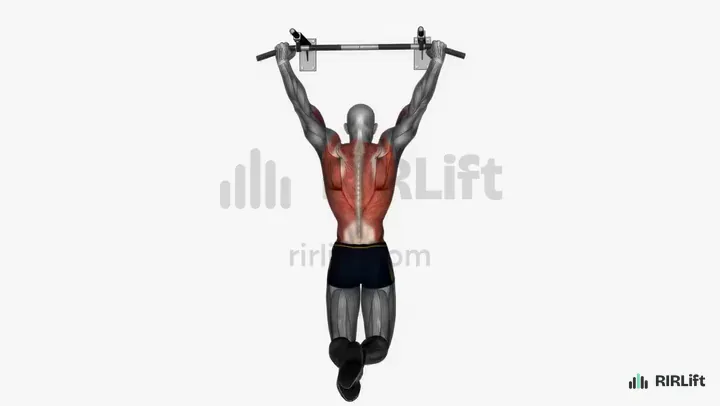
Lats and upper back, overhand pull-up

Pull-Up

Lats

The main reason to train in a park with a bar. Even 3 sets of 3 to 5 reps train your back harder than anything you can do on the floor.

How to do it

  1. Grab the bar overhand, hands a little wider than your shoulders, and hang from fully straight arms.
  2. Pull your shoulders down away from your ears before your elbows start to bend.
  3. Drive the elbows toward your ribs until your chin passes over the bar.
  4. Lower slowly to a dead hang and pull again.

Cues

  • Shoulders down, then pull
  • Legs still and together
  • Two seconds on the way down

Common mistakes

  • Swinging the legs to cheat reps: cross your ankles and brace the abs.
  • Half reps from a bent-arm start: finish each rep at a full hang.

Swap for: Chin-Up, Band-Assisted Pull-Up, Inverted Row

Lats and biceps, palms-toward-you pull-up

Chin-Up

Lats

Most people can do one or two more chin-ups than pull-ups, so it is the first one to learn. On a playground with only a low bar, use the jump-and-lower version.

How to do it

  1. Hang from the bar with your palms toward you and hands shoulder-width.
  2. Pull your elbows down and back until your chin is over the bar.
  3. Lower to a full hang with straight arms.
  4. Keep your legs quiet and your body still between reps.

Cues

  • Palms toward you
  • Chin over the bar
  • Dead hang at the bottom

Common mistakes

  • Kipping or kicking to finish: stop the set when you cannot pull cleanly.
  • Half reps at the top: straighten your arms fully every time.

Swap for: Close-Grip Chin-Up, Assisted Pull-Up

Grip and shoulders, hang from the bar

Dead Hang

Forearms

Hanging builds the grip you need for pull-ups and loosens your shoulders after a day at a desk. It is the first step if you cannot do a pull-up yet.

How to do it

  1. Grip a pull-up bar overhand with your hands about shoulder width.
  2. Lift your feet and let your body hang with straight arms.
  3. Breathe slowly and let your shoulders rise toward your ears, then step down.

Cues

  • Relaxed, straight arms
  • Slow breathing

Common mistakes

  • Swinging or kicking: hang still so the stretch reaches the lats.

Swap for: Straight-Arm Pulldown, Pull-Up, Arm Circles

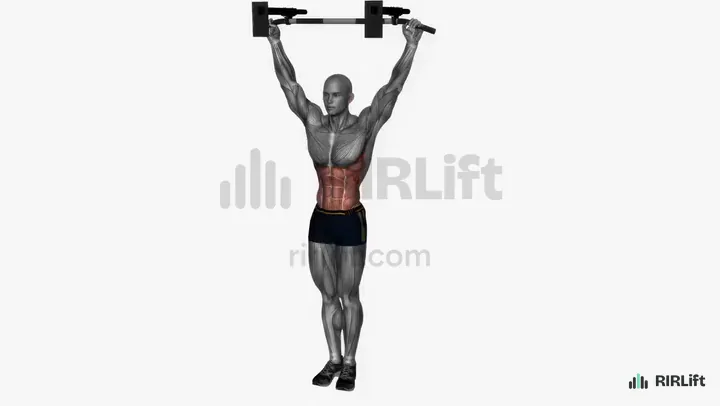
Lower abs and hip flexors, hanging from the bar

Hanging Knee Raise

Abs

Hanging from the bar makes it harder on the lower abs than any floor crunch. Swinging is the giveaway that you are going too fast.

How to do it

  1. Hang from the bar with straight arms and your legs together.
  2. Draw your knees up toward your chest and curl your pelvis up at the top.
  3. Lower your legs slowly until they hang straight and still.

Cues

  • Curl the pelvis
  • Stop the swing
  • Slow down

Common mistakes

  • Swinging into each rep: pause at the bottom until you are still.
  • Lifting the knees only to hip height, which works the hip flexors more than the abs.

Swap for: Captain's Chair Knee Raise, Reverse Crunch

Dip bars and low bars

Outdoor gyms usually have parallel bars for dips and a bar at hip height for rows. A sturdy low rail or the lower rung of a climbing frame works for the row.

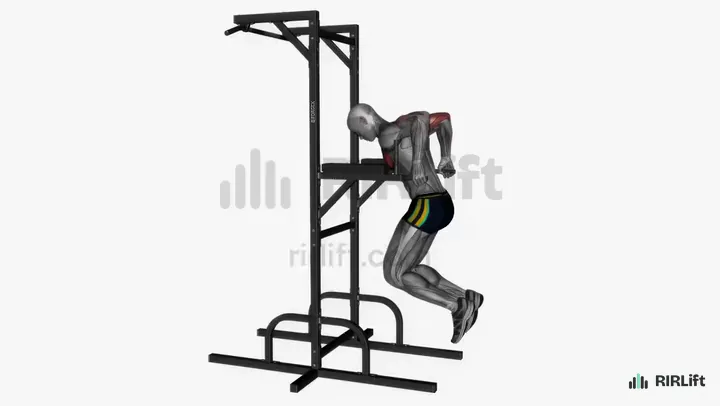
Chest and triceps, parallel bar dip

Chest Dip

Chest, Triceps

Dip bars are on most outdoor gym stations. Dips load your chest and triceps with your whole body weight, so they stay hard for a long time.

How to do it

  1. Grip parallel bars and step or jump up until your arms are straight and you are holding yourself above the bars.
  2. Lean your chest slightly forward with your legs under you or a little behind.
  3. Bend your elbows to sink down until your upper arms are about level with the bars.
  4. Press back up to straight arms and lock out.

Cues

  • Shoulders down, chest proud
  • Slight forward lean
  • Lock out every rep

Common mistakes

  • Sinking so deep your shoulders ache: stop when your upper arms reach the level of the bars.
  • Swinging your legs to get up: keep them still and end the set when you need momentum.

Swap for: Bench Dip, Decline Push-Up, Machine Chest Dip

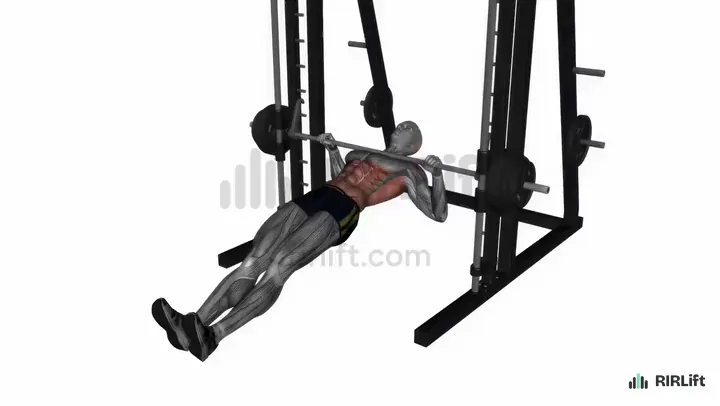
Upper back and lats, row under a low bar

Inverted Row

Upper Back, Lats

Lying under a hip-high bar and pulling your chest up to it trains the same muscles as a pull-up with less of your weight. Walking your feet forward makes it easier.

How to do it

  1. Set a bar at about hip height, lie under it, and grip it with your hands a little wider than your shoulders.
  2. Straighten your body from heels to head, or bend your knees with feet flat for an easier version.
  3. Pull your chest up to the bar, leading with your elbows, and keep your hips in line.
  4. Lower until your arms are straight, then pull again.

Cues

  • Body stays a straight plank
  • Chest touches the bar
  • Bend your knees to make it easier

Common mistakes

  • Letting your hips sag so only your chest rises: squeeze your glutes and move as one piece.
  • Pulling the bar to your neck: aim for the bottom of your chest.

Swap for: TRX Row, Bodyweight Bicep Curl, One-Arm Dumbbell Row

The park bench

A bench gives you a push-up at three heights and a dip station. Check it is bolted down and dry before you load it.

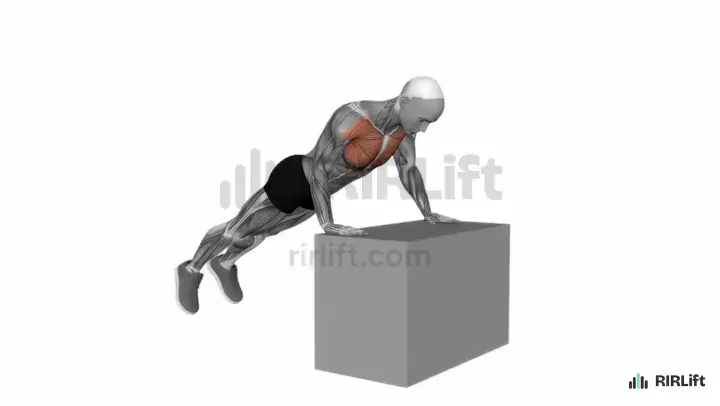
Chest and triceps, hands on the bench

Incline Push-Up

Chest

With your hands on the bench, you push less of your weight, so you can get 10 to 15 good reps while you build up to floor push-ups.

How to do it

  1. Put your hands on a bench, box or counter, a little wider than shoulder width.
  2. Walk your feet back until your body is a straight line from head to heels.
  3. Lower your chest to the edge, elbows angled about 45 degrees from your sides.
  4. Press back up until your arms are straight.

Cues

  • Body like a plank
  • Elbows at about 45 degrees
  • Higher surface, easier rep

Common mistakes

  • Hips sagging toward the floor: squeeze your glutes and brace as if you were about to be poked in the stomach.
  • Flaring the elbows straight out: tuck them back at about 45 degrees.

Swap for: Kneeling Push-Up, Close-Grip Push-Up, Bench Dip

Upper chest and shoulders, feet on the bench

Decline Push-Up

Chest

Feet up on the bench makes a push-up harder and shifts it toward the shoulders. Use it once floor push-ups feel easy.

How to do it

  1. Put your feet on a chair or bench and your hands on the floor under your shoulders.
  2. Brace so your body is straight from heels to head, no sag at the hips.
  3. Lower until your forehead is just above the floor, elbows about 45 degrees from your sides.
  4. Press back to locked arms, keeping your hips from rising first.

Cues

  • Higher feet, harder rep
  • Forehead toward the floor
  • Press the floor away

Common mistakes

  • Piking your hips to make the press easier: if the straight line goes, use a lower chair.
  • Letting your shoulders ride up to your ears at the bottom: keep them pulled down and back.

Swap for: Push-Up, Archer Push-Up, Weighted Push-Up

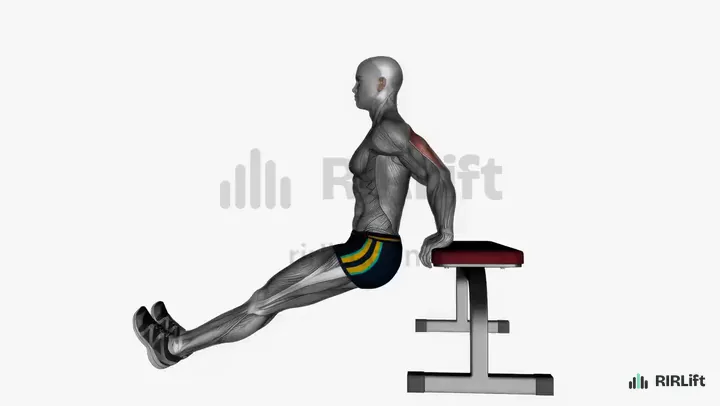
Triceps, dip off the bench

Bench Dip

Triceps

The bench edge doubles as a triceps station. Bent knees make it easier and feet far out make it harder.

How to do it

  1. Sit on the front of a stable chair, hands gripping the edge next to your hips.
  2. Move your hips off the seat and set your heels out in front.
  3. Lower your body by bending your elbows until your upper arms are level with the floor.
  4. Straighten your arms to come back up.

Cues

  • Hips close to the chair
  • Elbows point back
  • Stop at level

Common mistakes

  • Going so deep that your shoulders pinch: shorten the range.
  • Pushing with your legs: keep them relaxed and let your arms lift you.

Swap for: Floor Triceps Dip, Close-Grip Push-Up

Legs on the grass

Open ground is for legs and conditioning. Single-leg squats make up for the lack of weights, and jumps and crawls add work your heart can feel.

Quads and glutes, squat

Bodyweight Squat

Quads

It warms up your legs and finishes a circuit. Do them slowly if they get easy; 3 seconds down makes 15 reps hard.

How to do it

  1. Stand with your feet about shoulder-width apart, toes turned out slightly, arms out in front for balance.
  2. Push your hips back and bend your knees, keeping your heels flat and your chest up.
  3. Lower until your thighs are at least parallel to the floor, deeper if your heels stay down.
  4. Drive through your whole foot to stand tall, then go straight into the next rep.

Cues

  • Heels glued to the floor
  • Knees over toes
  • Thighs to parallel or lower

Common mistakes

  • Knees caving in on the way up: push them out over your little toes.
  • Quarter squats to hit a rep count: a full-depth set of 12 beats a shallow set of 30.

Swap for: Reverse Lunge, Wall Sit, Jump Squat

Quads and glutes, stepping back

Reverse Lunge

Quads, Glutes

Lunges on the grass work each leg on its own. Step back onto soft ground and keep your weight on the front foot.

How to do it

  1. Stand tall holding a kettlebell in each hand at your sides.
  2. Step one foot back and lower until the back knee nearly touches the floor.
  3. Keep most of your weight on the front foot.
  4. Push through the front foot to step back up, then alternate or finish one side.

Cues

  • Step long, drop straight down
  • Front foot does the work
  • Tall chest

Common mistakes

  • Short steps that push the front knee far over the toes: step back further.
  • Wobbling side to side: narrow the load or slow down.

Swap for: Bulgarian Split Squat, Dumbbell Reverse Lunge, Step-Up

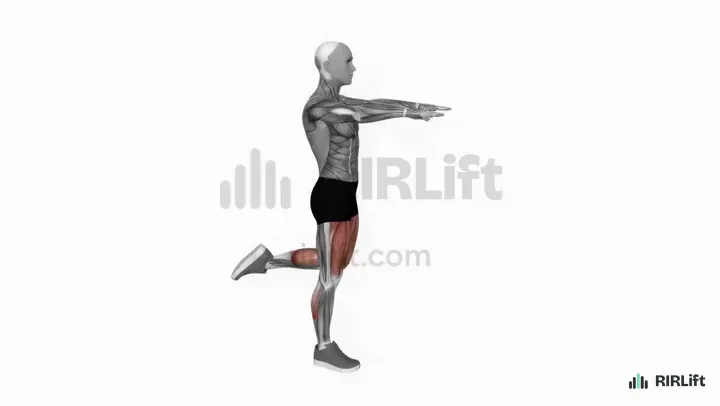
Quads and glutes, single-leg squat

Skater Squat

Quads, Glutes

The skater squat loads one leg with your full body weight, the closest thing to a heavy squat with no weights. Lower to a folded jacket under your back knee to start.

How to do it

  1. Stand on one foot and bend the other knee so that foot is behind you, arms straight out in front as a counterweight.
  2. Push your hips back and lean your chest forward as you bend the standing knee.
  3. Lower until the back knee is just above the floor.
  4. Drive through your standing foot to stand tall; sets are per leg.

Cues

  • Arms forward as the counterweight
  • Chest leans, back stays flat
  • Back knee to a folded towel

Common mistakes

  • Only going down a few inches: put a folded towel or cushion where your knee should land and touch it every rep.
  • Letting the standing knee collapse inward: track it over your toes, and slow the lowering if it wobbles.

Swap for: Pistol Squat, Reverse Lunge, Cossack Squat

Quads and glutes, jumping

Jump Squat

Quads, Glutes

Grass absorbs the landing better than a gym floor. A few sets of jumps train power and leave your legs and lungs working hard.

How to do it

  1. Stand with your feet about shoulder width and your arms ready.
  2. Dip into a quarter to half squat, then jump straight up, swinging your arms.
  3. Land softly with bent knees and reset before the next jump.

Cues

  • Soft, quiet landing
  • Reset between reps

Common mistakes

  • Landing stiff-legged: let the hips and knees bend to absorb the landing.

Swap for: Box Jump, Bodyweight Squat

Shoulders and core, crawling

Bear Crawl

Abs, Shoulders

Crawling across the grass for 15 to 20 yards works your shoulders and trunk together. It finishes a park session in two or three lengths.

How to do it

  1. Start on hands and toes with knees bent and just off the floor.
  2. Move one hand and the opposite foot forward together, then the other pair.
  3. Keep the hips low and your back flat as you crawl forward and backward.

Cues

  • Knees hover low
  • Opposite hand and foot
  • Flat back

Common mistakes

  • Hips riding high: keep them at shoulder height.

Swap for: Gorilla Walk, Walkout, Plank Shoulder Tap

Put them together: example sessions

Each session below picks from the exercises above for one situation, with the sets, reps, rest and RIR filled in.

Session 1

Outdoor gym with a pull-up bar and dip bars

  • Workouts2× a week
  • Working sets25 a week
  • Per workout~35 min
  • EquipmentPull-Up Bar, Dip Bar, Barbells

Your park has a calisthenics station with a high bar and parallel bars, and you can already do a few pull-ups and dips.

Two full-body sessions, each with a pull, a push, a single-leg squat and core work, give 10 sets of pulling and 6 of pushing a week. Pull-ups and dips stay at 1 to 2 reps in reserve so the quality holds across all three sets.

Session A
ExerciseSets × repsRIRRest
Pull-Up 4 × 3–8 2 2:30 min
Chest Dip 3 × 5–10 2 2 min
Skater SquatPer leg. 3 × 6–10 2 90 s
Hanging Knee Raise 3 × 8–12 2 75 s
Session B
ExerciseSets × repsRIRRest
Chin-Up 3 × 4–8 1 2:30 min
Inverted Row 3 × 8–12 2 90 s
Decline Push-UpFeet on the bench. 3 × 8–15 2 90 s
Jump SquatLand softly, reset each rep. 3 × 5–8 3 90 s
How to run it
Train on two non-consecutive days, such as Tuesday and Saturday. Add a third if you recover well and the weather holds.
How to progress
Add a rep to the first set of pull-ups and dips each session until you reach the top of the range in all sets. Then slow the lowering to 3 seconds or move to the harder single-leg version.

Session 2

Just a bench and some grass

  • Workouts3× a week
  • Working sets45 a week
  • Per workout~30 min
  • EquipmentFlat Bench

Your nearest park has benches and open grass but no bars.

Without bars you cannot pull with bodyweight, so the session leans on pushing, legs and crawling for conditioning. About 15 sets per session, two or three times a week, still trains most of your body hard.

Bench loop
ExerciseSets × repsRIRRest
Incline Push-Up 3 × 10–15 2 1 min
Reverse LungePer leg. 3 × 8–12 2 1 min
Bench Dip 3 × 8–12 2 1 min
Bodyweight Squat3 s down. 3 × 15–20 2 1 min
Bear CrawlSteps per hand. 3 × 10–16 2 1 min
How to run it
Run it as a loop: one set of each exercise in order with a minute between them, three rounds. Two or three sessions a week.
How to progress
When every round reaches the top of the range with 2 reps left, move up a version: incline to floor to decline push-ups, bent to straight legs on bench dips, and a slower lunge.

Session 3

On the playground: working to a first pull-up

  • Workouts2× a week
  • Working sets20 a week
  • Per workout~20 min
  • EquipmentPull-Up Bar, Barbells, Flat Bench

You train while your kids play, there is a low bar or monkey bars, and you cannot do a pull-up yet.

This plan spends most of its sets on pulling, 11 a week counting the hangs, because that is the skill you are building. Pushing and legs get a smaller dose that keeps them moving.

Session 1
ExerciseSets × repsRIRRest
Dead HangSeconds per hang. 3 × 15–30 2 1 min
Inverted RowWalk your feet forward to make it easier. 3 × 6–10 2 90 s
Incline Push-Up 3 × 8–12 2 75 s
Bodyweight Squat 2 × 12–15 3 1 min
Session 2
ExerciseSets × repsRIRRest
Chin-UpJump to the top and lower in 4 to 5 s. 3 × 2–5 2 2 min
Inverted Row 2 × 8–12 2 90 s
Bench Dip 2 × 8–12 2 75 s
Reverse LungePer leg. 2 × 8–10 3 75 s
How to run it
Twice a week, any two days with a gap. Start each session with the hangs while your grip is fresh.
How to progress
Add 5 seconds to hangs and a rep to the jump-and-lower chin-ups each week. When you can lower for 5 seconds on every rep, try a pull from a dead hang at the start of each session.

Make it fit you

Questions

What is a good park workout for beginners?

A circuit of incline push-ups on a bench, bodyweight squats, inverted rows under a low bar, bench dips and dead hangs, 3 rounds, twice a week. It covers every major muscle, and each move has a harder version for later.

What is the 3-3-3 rule for a workout?

There is no single definition; the common version is three exercises for three sets, three times a week. For a park, pull-ups, dips and skater squats for 3 sets, three days a week, is a solid minimal version.

Can I build muscle with a park workout?

Yes. Pull-ups, dips and single-leg squats taken close to failure build real muscle, and the bars give you more pulling options than most home setups.

What equipment do outdoor gyms usually have?

Most calisthenics stations have a high pull-up bar, parallel dip bars, a low bar for rows and sometimes a sit-up bench. Fitness trails add step-up platforms and balance beams.

How long should a park workout take?

About 30 to 45 minutes for the bar plans and 20 to 30 for the bench circuit, including a short warm-up. Longer rest in cold weather is fine.