
Bodyweight exercises for strength, and the progression that keeps each one hard
Published October 29, 2026
The best bodyweight exercises for strength are push-ups, decline push-ups, archer push-ups and dips for pushing, pike push-ups for your shoulders, inverted rows, chin-ups and pull-ups for pulling, bodyweight squats, skater squats and pistol squats for your legs, Nordic hamstring curls for the back of your thighs, and hanging leg raises and L-sits for your trunk. Bodyweight builds strength only while sets stay in the 3 to 12 rep range, so once you pass about 12 reps, move to the next harder version instead of doing more.
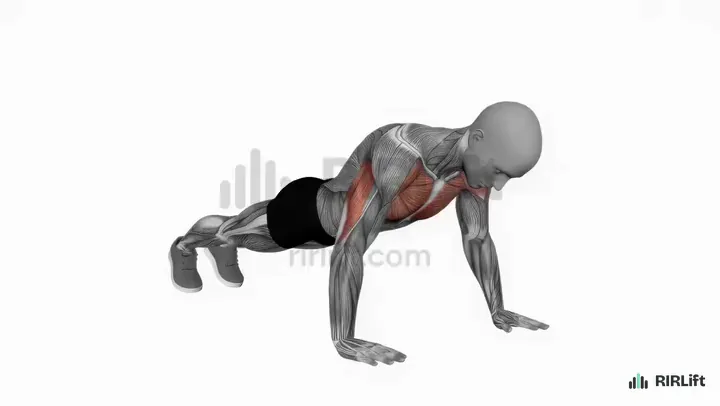
- Push-Up Chest
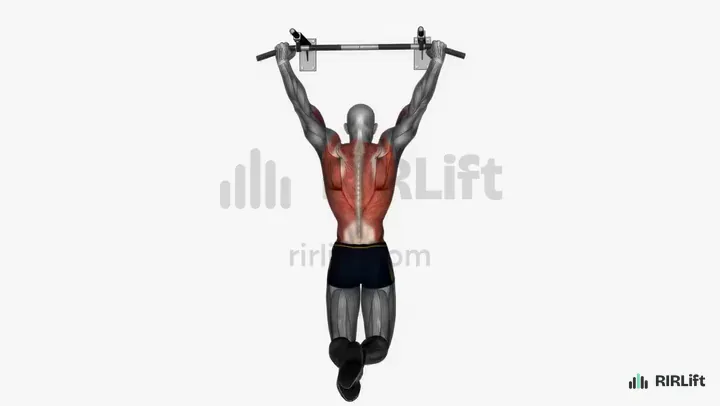
- Pull-Up Lats
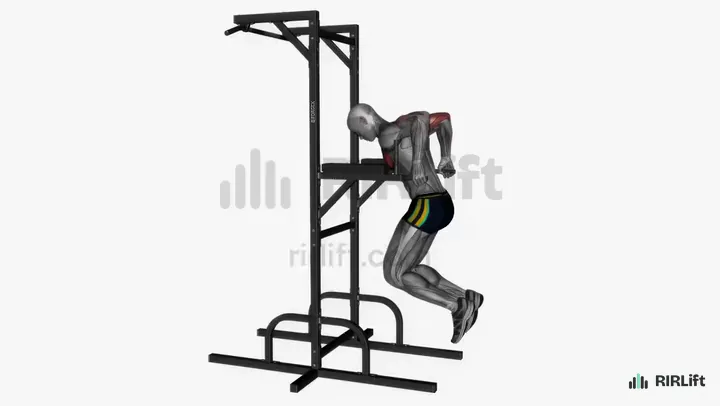
- Chest Dip Chest, Triceps
- Pistol Squat Quads, Glutes
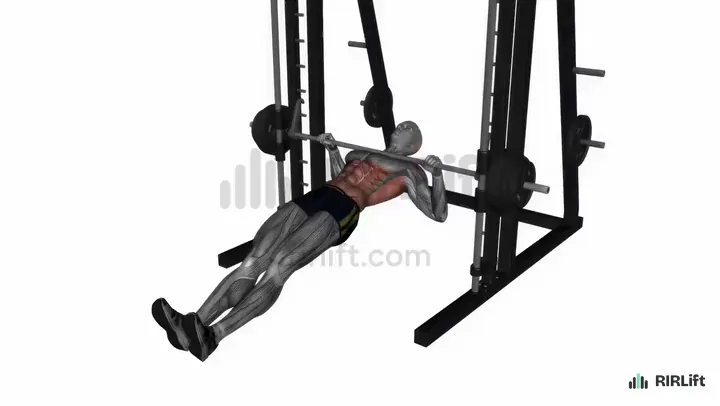
- Inverted Row Upper Back, Lats
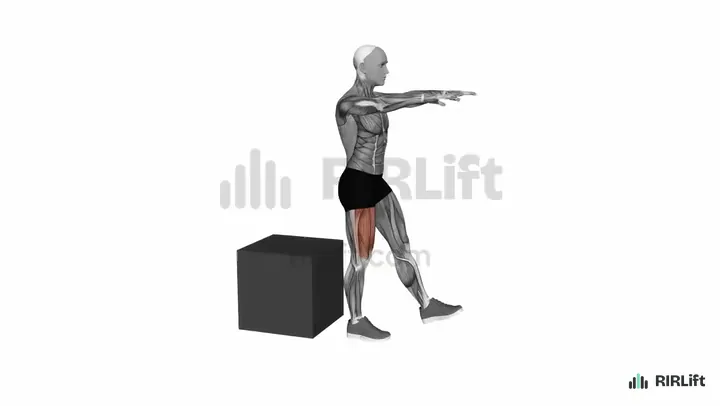
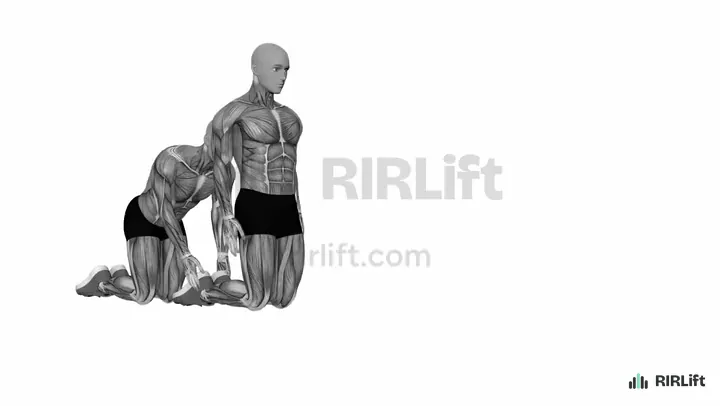
- Nordic Hamstring Curl Hamstrings
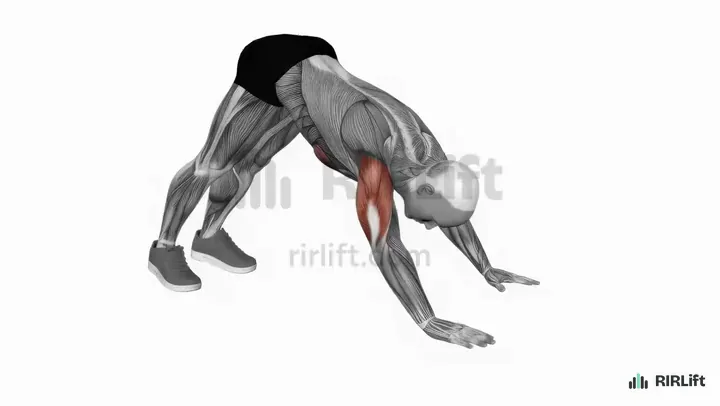
- Pike Push-Up Shoulders
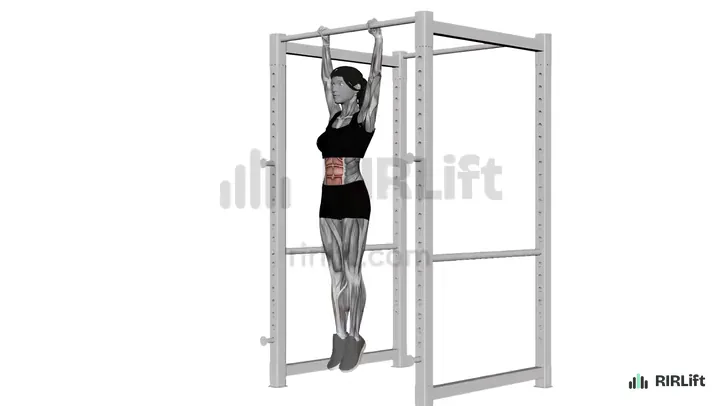
- Hanging Leg Raise Abs
Put them together: example sessions
Each session below picks from the exercises above for one situation, with the sets, reps, rest and RIR filled in.
-
Session 1
Starting out, no pull-up yet
You want to build strength with bodyweight only, you cannot do a pull-up yet, and you have a sturdy table or low bar for rows.
3× a week · 48 sets a week · ~35 min
-
Session 2
A pull-up bar at home, three days
You can do a few pull-ups or chin-ups, you have a doorway or wall-mounted bar, and you want steady strength gains without weights.
3× a week · 39 sets a week · ~35 min
-
Session 3
Advanced: bar and dip station, low reps
You can do 10 pull-ups and 20 push-ups, you train at a park or have a bar and parallel bars, and you want heavier, lower-rep strength work.
2× a week · 26 sets a week · ~45 min
Session 1
Starting out, no pull-up yet
- Workouts3× a week
- Working sets48 a week
- Per workout~35 min
- EquipmentBarbells
You want to build strength with bodyweight only, you cannot do a pull-up yet, and you have a sturdy table or low bar for rows.
One full-body routine three times a week practices each pattern often, which is how bodyweight skills improve fastest. It is 16 sets, about 40 minutes.
| Exercise | Sets × reps | RIR | Rest |
|---|---|---|---|
| Push-Up | 3 × 5–12 | 2 | 90 s |
| Inverted Row | 3 × 5–12 | 2 | 90 s |
| Bodyweight Squat3 s lowering. | 3 × 12–20 | 2 | 1 min |
| Skater SquatPer leg. | 3 × 5–10 | 2 | 90 s |
| Pike Push-Up | 2 × 5–10 | 2 | 90 s |
| L-Sit HoldSeconds per hold. Knees tucked. | 2 × 10–20 | 2 | 1 min |
- How to run it
- Train three non-consecutive days a week. For each exercise, choose the version that lets you do the bottom of the rep range with 2 reps left.
- How to progress
- Add reps each session until every set reaches the top of the range, then move to the harder version: push-ups to decline push-ups, inverted rows with your body lower, skater squats with less counterbalance.
Session 2
A pull-up bar at home, three days
- Workouts3× a week
- Working sets39 a week
- Per workout~35 min
- EquipmentPull-Up Bar
You can do a few pull-ups or chin-ups, you have a doorway or wall-mounted bar, and you want steady strength gains without weights.
Two alternating days put a vertical pull, a push, a single-leg squat and a trunk exercise in every session. Each day has 13 sets, about 40 minutes, and the pull-ups get trained in every session because they improve with frequent practice.
| Exercise | Sets × reps | RIR | Rest |
|---|---|---|---|
| Pull-Up | 4 × 3–8 | 1 | 2:30 min |
| Decline Push-Up | 3 × 6–12 | 1 | 90 s |
| Skater SquatPer leg. | 3 × 6–10 | 2 | 90 s |
| Hanging Leg RaiseKnees bent until straight legs reach 6. | 3 × 6–12 | 2 | 75 s |
| Exercise | Sets × reps | RIR | Rest |
|---|---|---|---|
| Chin-Up | 4 × 4–10 | 1 | 2:30 min |
| Pike Push-UpFeet on a box when 10 is easy. | 3 × 5–10 | 1 | 90 s |
| Pistol SquatPer leg, to a box or chair. | 3 × 4–8 | 2 | 2 min |
| Nordic Hamstring CurlAnkles under a couch. | 3 × 3–6 | 2 | 2 min |
- How to run it
- Train three days a week, alternating A and B. Do the pulling exercise first while your grip is fresh.
- How to progress
- On pull-ups and chin-ups, add one rep to one set each session until all sets reach 8, then add a backpack with a few books. For the other exercises, move to the next harder version once you reach the top of the range.
Session 3
Advanced: bar and dip station, low reps
- Workouts2× a week
- Working sets26 a week
- Per workout~45 min
- EquipmentPull-Up Bar, Dip Bar
You can do 10 pull-ups and 20 push-ups, you train at a park or have a bar and parallel bars, and you want heavier, lower-rep strength work.
Harder variations at 3 to 8 reps train strength rather than endurance. Two sessions a week with 13 hard sets each leave enough recovery for near-limit sets on the hardest variations.
| Exercise | Sets × reps | RIR | Rest |
|---|---|---|---|
| Pull-UpAdd weight once 6 reps are easy. | 4 × 3–6 | 1 | 3 min |
| Chest Dip | 4 × 5–8 | 1 | 2:30 min |
| Pistol SquatPer leg. | 3 × 3–6 | 2 | 2:30 min |
| L-Sit HoldSeconds per hold. Legs straight. | 2 × 10–25 | 2 | 90 s |
| Exercise | Sets × reps | RIR | Rest |
|---|---|---|---|
| Chin-Up | 4 × 4–8 | 1 | 3 min |
| Archer Push-UpPer side. | 3 × 4–8 | 1 | 2 min |
| Nordic Hamstring Curl | 3 × 3–6 | 2 | 2:30 min |
| Hanging Leg RaiseStraight legs. | 3 × 6–10 | 1 | 90 s |
- How to run it
- Space the two sessions two or three days apart. Rest a full 2 to 3 minutes between sets of pull-ups, dips and pistols so every set gets your best effort.
- How to progress
- Add weight to pull-ups and dips with a backpack or belt once every set reaches 8 reps. On pistols, lower the box; on archer push-ups, slow the lowering, then move toward one-arm push-ups.
Make it fit you
-
Too many reps on everything
Slow every lowering to 3 to 4 seconds and pause at the bottom. That makes most exercises much harder and buys time until you can do the next variation.
-
No bar anywhere
Use the inverted row under a sturdy table as your only pull and train it in every session. A doorway pull-up bar is the single most useful purchase for bodyweight strength.
-
Adding a little load
A backpack with books on pull-ups, dips, push-ups and pistols turns them into weighted lifts. Add 5 pounds at a time.
-
Track the variation, not just reps
Log which version you did and the reps you had left in RIRLift. The variation and the reps in reserve together show when you are ready to move up a step.
Questions
Can you build strength with bodyweight exercises alone?
Yes, if you keep moving to harder variations. Pull-ups, dips, pistol squats and archer push-ups load your muscles heavily. The limit is the legs, which eventually need very hard single-leg work or added weight.
What is a bodyweight strength workout?
A session built on hard bodyweight exercises, a push, a pull, a single-leg squat and a trunk exercise, done for 3 to 5 sets of 3 to 12 reps with full rest. It differs from a circuit, which uses easy variations and short rest for conditioning.
How many reps should I do for bodyweight strength?
3 to 12 reps per set. If you can do more than 12 good reps, the variation is too easy for building strength. Move to the harder version or add a pause.
How long does it take to do a pull-up?
Starting from zero, expect a few months of rows and assisted pull-ups two to three times a week. Log your best assisted set each week: when the assistance you need keeps shrinking, the first full rep is close.
How often should I train bodyweight strength?
Two to four times a week. Pull-ups and push-ups respond well to frequent practice, so training them 3 times a week at moderate effort works better than once a week to failure.
Related templates
-
Bodyweight exercises: the 18 that build muscle, by muscle group
The full list of bodyweight exercises for every muscle.
-
Calisthenics exercises for beginners: the progressions from first rep to pull-ups and dips
Starting points if the first plan here is still too hard.
-
Isometric exercises: 12 holds that build real strength
Static holds like the handstand and dead hang to pair with these.
-
Pull-up calculator
Estimate your weighted pull-up strength.
-
Progressive overload workout plan
How to keep making progress when you cannot just add weight.