Apple Watch for triathlon: the strength sessions Multisport leaves out

Apple Watch records a triathlon with the Multisport workout, which combines swimming, cycling and running in one workout and recognizes when you switch from one to the next. The strength sessions that keep a triathlete healthy are not part of it. RIRLift runs them on the same Watch: weight, reps and reps left for every set, the next weight set from what you logged, and each session saved to Apple Health as Traditional Strength Training next to your swims, rides and runs.

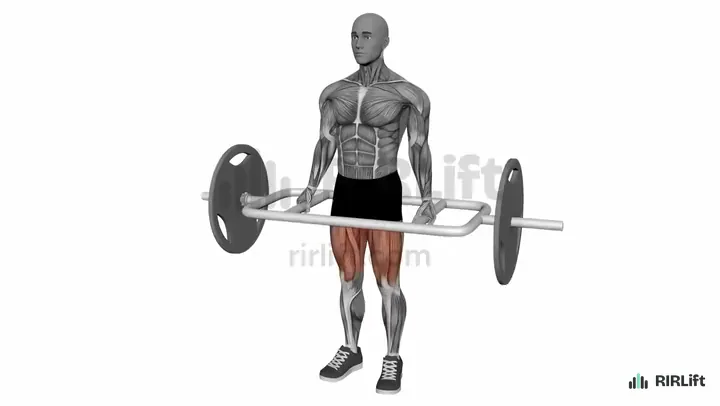
  1. Trap Bar Deadlift Quads, Glutes
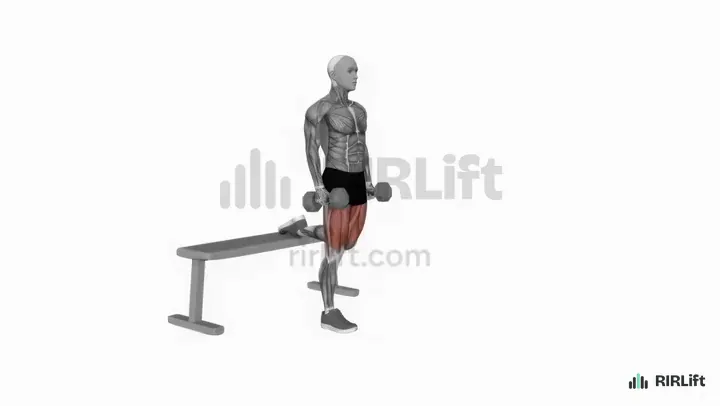
  2. Bulgarian Split Squat Quads, Glutes
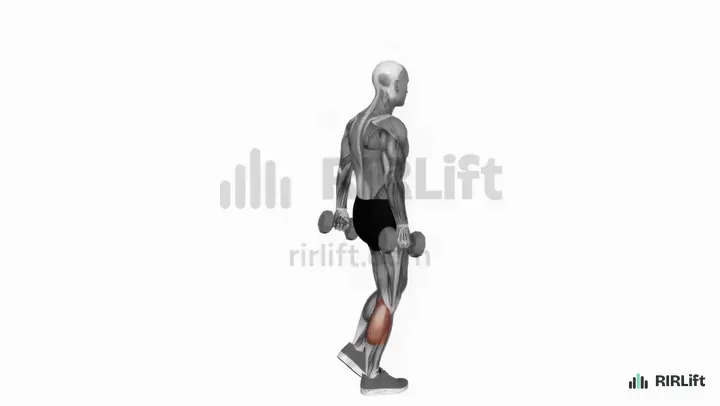
  3. Single-Leg Calf Raise Calves
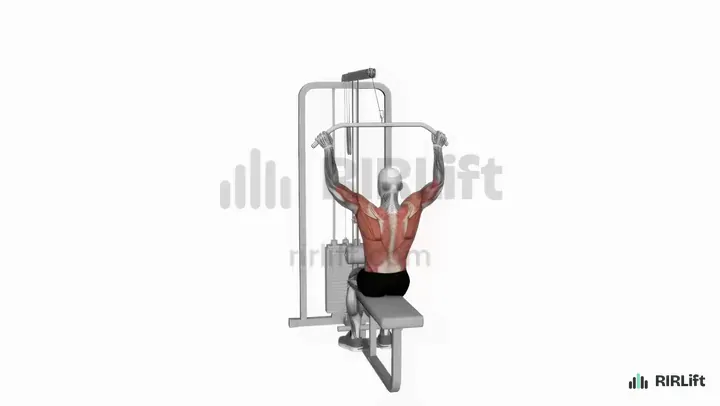
  4. Lat Pulldown Lats
  5. Face Pull Shoulders, Upper Back
  6. Copenhagen Plank Adductors, Abs

Legs for the bike and the run

A heavy hinge, a squat and three single-leg lifts. Running and pedaling are one leg at a time, so most of the leg work is too.

Hips and legs, heavy

Trap Bar Deadlift

Quads, Glutes

The one heavy lift worth keeping all year. Sets of 3 to 6 build strength without the soreness that higher reps leave for tomorrow's run.

How to do it

  1. Step inside the trap bar with the handles beside your feet.
  2. Push your hips back, bend your knees, and grip the handles.
  3. Flatten your back, take the slack out, and stand up by pushing the floor away.
  4. Lower under control. Each warm-up set adds weight toward your working sets.

Cues

  • Push the floor away
  • Flat back
  • Slack out before you pull

Common mistakes

  • Yanking the bar off the floor: pull the slack out first.
  • Rounding the back as the weight climbs: hold the ramp until the setup is solid.

Swap for: Barbell Deadlift, Romanian Deadlift, Kettlebell Deadlift

Squat with one dumbbell

Goblet Squat

Quads, Glutes

The squat you can do anywhere, from the gym to the pool deck. One dumbbell, no setup.

How to do it

  1. Hold a dumbbell or kettlebell vertically against your chest.
  2. Sit down between your knees, elbows inside them at the bottom.
  3. Stand up tall.

Cues

  • Elbows nudge the knees out at the bottom.
  • Chest stays up behind the weight.

Common mistakes

  • Letting the weight pull you forward.

Swap for: Bodyweight Squat, Barbell Back Squat

One leg at a time, quads and glutes

Bulgarian Split Squat

Quads, Glutes

Single-leg strength for the run and the climbs on the bike. Log the reps for one leg and keep both sides even.

How to do it

  1. Stand a stride ahead of a bench and rest the laces of your back foot on it.
  2. Let a pair of dumbbells hang at your sides and stand tall on the front leg.
  3. Descend until the back knee hovers an inch off the ground.
  4. Press the front foot down to stand. Complete the set, then switch.

Cues

  • Front foot does the lifting
  • Straight down, straight up
  • Slight forward lean

Common mistakes

  • Front foot too close to the bench: step out so the front knee is not crushed forward.
  • Bouncing off the bottom: pause briefly with the knee just off the floor.

Swap for: Dumbbell Split Squat, Step-Up, Dumbbell Reverse Lunge

One leg, hip and knee drive

Step-Up

Quads, Glutes

Close to the running stride, and easy to set up on a bench or box. Lower slowly on each rep.

How to do it

  1. Stand facing the bench with two dumbbells.
  2. Place one whole foot on the bench.
  3. Lean forward a little and push through the top foot to stand up on the bench.
  4. Bring the other foot up only to touch, then lower it back to the floor.
  5. Finish all reps on one leg before switching.

Cues

  • Whole foot on the bench
  • Push through the top heel
  • Lower slowly, do not drop

Common mistakes

  • Pushing off the floor with the back foot: that halves the work. Keep the trailing foot light.
  • Using a bench so high that your knee is far above your hip: you will rock instead of step.

Swap for: Barbell Step-Up

Hamstrings and balance

Single-Leg RDL

Hamstrings, Glutes

Hamstrings and hip control on one leg, the position your stance leg holds at every running step.

How to do it

  1. Stand on your left leg with a dumbbell in your left hand and the standing knee softly bent.
  2. Hinge forward at the left hip while your right leg extends straight behind you, keeping your hips level.
  3. Lower until your torso and back leg are close to parallel to the floor or the standing hamstring stops you.
  4. Drive the left hip forward to come back up, then finish the set before switching sides.

Cues

  • Back leg and torso move as one
  • Hips level, back toes down
  • Slow on the way down

Common mistakes

  • Opening the hip so the back leg rotates out: point the back toes at the floor the whole time.
  • Touching the free foot down between reps to rebalance: slow down and hold a wall with your free hand if needed.

Calves and Achilles

Single-Leg Calf Raise

Calves

The run lands on your calves thousands of times. Slow single-leg raises build them; add a dumbbell once bodyweight sets top out.

How to do it

  1. Stand on one foot on the floor with a dumbbell at your side and a hand on a wall for balance.
  2. Rise as high as you can onto the ball of your foot.
  3. Hold the top for a second.
  4. Take two or three seconds to lower. Switch legs after the set.

Cues

  • Highest point every rep
  • Slow on the way down
  • Pressure through the big toe

Common mistakes

  • Short, bouncy reps: use the whole range and slow the lowering.
  • Rolling to the outside of the foot: keep the weight over the big toe.

Swap for: Standing Calf Raise, Seated Calf Raise, Dumbbell Standing Calf Raise

The swim pull

Lats and mid-back for the catch and the pull, and for holding an aero position on the bike.

Lats, the swim pull

Lat Pulldown

Lats

The closest gym lift to the freestyle pull. Sets of 8 to 12 build the lats without leaving your arms too tired to swim.

How to do it

  1. Sit with your thighs fixed under the pads and grip the bar a little wider than your shoulders.
  2. Pull your shoulders down, then pull the bar to the top of your chest.
  3. Pause with your elbows by your sides.
  4. Let the bar rise all the way until your arms are straight.

Cues

  • Shoulders down first
  • Bar to the top of your chest
  • Full stretch overhead

Common mistakes

  • Leaning way back and rowing: stay close to upright.
  • Letting the bar yank your arms up fast: control the way up.

Swap for: Pull-Up, Straight-Arm Pulldown, Neutral-Grip Lat Pulldown

Lats, straight-arm

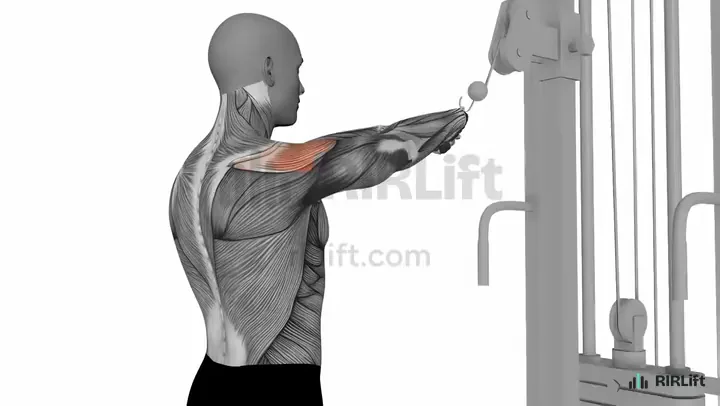
Straight-Arm Pulldown

Lats

The arm path of the catch, with straight elbows. Light enough to do well the day before a swim.

How to do it

  1. Attach a straight bar to a high pulley, take it palms down about shoulder width, and step back a couple of feet.
  2. Hinge forward slightly and hold the bar at about shoulder height with your arms long, a small fixed bend in your elbows, and brace your abs.
  3. Sweep the bar down in an arc until it reaches your thighs, squeezing your lats at the bottom.
  4. Let it rise back up under control until your arms are at shoulder height again, then repeat.

Cues

  • Arms long, elbows fixed
  • Bar to the thighs
  • Torso angle never changes

Common mistakes

  • Bending the elbows and turning it into a triceps pushdown: lighten the stack and keep the arms long.
  • Bobbing the torso up and down to move the weight: lock your hinge and move only the arms.

Swap for: Single-Arm Lat Pulldown, Dumbbell Lat Pullover, Lat Pulldown

Mid-back, one arm

Single-Arm Cable Row

Upper Back, Lats

Rows one arm at a time keep the two sides even and train the back that holds you in aero.

How to do it

  1. Set a single handle at about chest height, stand facing the stack with your feet shoulder-width apart, and hold the handle in one hand, arm extended and palm facing in.
  2. Soften your knees, lean forward slightly from the hips, and let your shoulder reach toward the stack with a slight turn of the torso.
  3. Row the handle toward your hip as you square your chest, elbow tight to your side.
  4. Return slowly to the reach, finish the set, then switch hands.

Cues

  • Reach, then pull
  • Elbow tight to the side
  • Finish square

Common mistakes

  • Twisting far back at the finish to move more weight: the rotation stays small.
  • Letting the stack yank your arm forward: control the return.

Swap for: Seated Cable Row, Single-Arm Lat Pulldown, One-Arm Dumbbell Row

Shoulder balance

Thousands of freestyle strokes a week train the front of the shoulder. These train the back of it.

Rear shoulders

Face Pull

Shoulders, Upper Back

Balances the front-of-shoulder work every swim set adds. Light, smooth reps.

How to do it

  1. Fix a rope attachment to a cable at about head height and hold both ends.
  2. Step back until the arms are straight and the weight lifts.
  3. Pull the rope toward your forehead, spreading the ends as your hands come past your ears.
  4. Hold a moment, then return slowly.

Cues

  • Elbows high
  • Hands end beside your head
  • Light and controlled

Common mistakes

  • Leaning back to move heavy weight: go light and pause each rep.
  • Pulling low to the chest: keep the elbows up near shoulder height.

Swap for: Band Face Pull, Reverse Pec Deck, Band Pull-Apart

Upper back, band only

Band Pull-Apart

Shoulders, Upper Back

The rear-shoulder work for days with only a band. It fits in a swim bag.

How to do it

  1. Hold a light band at shoulder height with straight arms and hands about shoulder width.
  2. Pull your hands apart until the band touches your chest.
  3. Let the band bring your hands back slowly.

Cues

  • Squeeze the shoulder blades together at the end.
  • Keep your ribs down.

Common mistakes

  • Bending the elbows to make it easier.

Swap for: Band Face Pull, Band Scapular Retraction

Shoulder blades, push

Push-Up Plus

Chest

A push-up with an extra reach at the top that trains the muscles holding the shoulder blade to the ribs.

How to do it

  1. Set up in a high plank with hands under shoulders.
  2. Do a push-up, then at the top keep pushing the floor away so your upper back rounds slightly.
  3. Let the shoulder blades come back together before the next rep.

Cues

  • Push the floor away at the top
  • Body in one line

Common mistakes

  • Skipping the extra push at the top: that last bit is the point.

Swap for: Push-Up, Band Scapular Retraction

Hips and trunk

Inner thighs, anti-rotation and a loaded carry: the trunk that keeps your form late in the run.

Inner thighs, hold

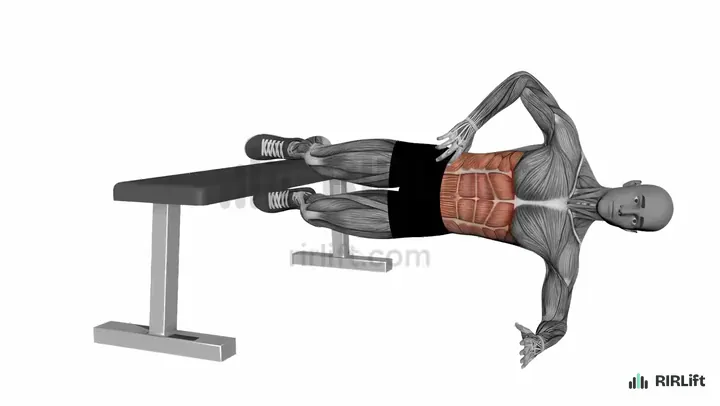
Copenhagen Plank

Adductors, Abs

Strong inner thighs keep your knees tracking on the bike and your hips level on the run. Time each side.

How to do it

  1. Lie on your side next to a flat bench or sturdy chair, propped on your bottom forearm with the elbow under your shoulder.
  2. Lay your straight top leg on the seat so the inside of your foot and ankle rest on it; tuck the bottom leg under it or let it rest on the floor.
  3. Press the top foot down into the seat and raise your hips until your body runs in one line from head to feet.
  4. Hold for the set's time or lower and raise your hips for reps, then turn over and do the other side.

Cues

  • Push the seat away with your top foot
  • Hips stacked, not rolled back
  • Breathe while you hold

Common mistakes

  • Starting with the foot on the seat before you can hold a side plank: rest your knee there instead until 30-second holds feel solid.
  • Hips drifting backward so the plank turns into a pike: keep your hips in line with your shoulders.

Swap for: Band Hip Adduction, Cossack Squat, Balance Board Lateral Squat

Trunk, anti-rotation

Pallof Press

Abs

Teaches your trunk to resist twisting, the job it does while your arms swing in the run.

How to do it

  1. Set a cable at chest height, stand side-on to it and grip the handle two-handed at your chest.
  2. Step away until the cable pulls, feet hip-width.
  3. Press the handle straight out, hold for two seconds without turning, then bring it back.

Cues

  • Hands on the midline
  • Don't turn
  • Hold it out

Common mistakes

  • Standing too close, so the cable barely pulls.
  • Letting the arms drift toward the stack.

Swap for: Cable Woodchop, Landmine Twist

Trunk and grip, one side

Dumbbell Suitcase Carry

Abs, Quads

A heavy dumbbell in one hand, walking tall. Late-race posture, trained in lengths.

How to do it

  1. Pick up one heavy dumbbell and let it hang at your side.
  2. Stand tall with your shoulders level.
  3. Walk with steady steps without leaning toward or away from the weight.
  4. Put it down, switch hands and walk back.

Cues

  • Shoulders level
  • Tall posture
  • Smooth steps

Common mistakes

  • Leaning away from the dumbbell: use a weight you can carry upright.
  • Letting the dumbbell bump your leg: keep it still at your side.

Swap for: Farmer's Walk, Side Plank, Plate Overhead Carry

Put them together: example sessions

Each session below picks from the exercises above for one situation, with the sets, reps, rest and RIR filled in.

Session 1

Off-season in the gym, two days after easy sessions

  • Workouts2× a week
  • Working sets30 a week
  • Per workout~35 min
  • EquipmentTrap Bar, Dumbbells, Lat Pulldown, Flat Bench +1

Winter or the months after your last race. Volume is down, you swim, ride and run easy, and you lift on two of those days.

A hinge day and a single-leg day, each with a swim pull and a trunk exercise. 15 working sets a day, heavy enough to build strength while the endurance work is easy.

Day A: Hinge and pull
ExerciseSets × repsRIRRest
Trap Bar Deadlift 4 × 4–6 2 2:30 min
Bulgarian Split SquatPer leg. 3 × 6–10 2 90 s
Lat Pulldown 3 × 8–12 2 90 s
Single-Leg Calf RaisePer leg. 3 × 10–15 2 1 min
Copenhagen PlankPer side. 2 × 20–30 s 2 45 s
Day B: Single leg and shoulders
ExerciseSets × repsRIRRest
Step-UpPer leg. Slow on the way down. 3 × 8–10 2 90 s
Single-Leg RDLPer leg. 3 × 8–10 2 75 s
Straight-Arm Pulldown 3 × 10–15 2 1 min
Face Pull 3 × 12–15 2 1 min
Pallof PressPer side. 3 × 10–12 2 45 s
How to run it
Put each day after an easy swim or ride, never before a key session. Import the program and switch to it in My Programs; both days then appear on the Watch. Start the day there and log each set before you rest.
How to progress
Trap bar deadlift at 225 lb for 6, 6, 6 tops the 4 to 6 range, so the next Day A opens at 230 lb for 4. Single-leg calf raises are bodyweight, so they move by reps: 15, 14, 13 against a target of 13 earns a target of 14.

Session 2

One dumbbell and a band, 25 minutes after a swim

  • Workouts2× a week
  • Working sets30 a week
  • Per workout~30 min
  • EquipmentDumbbells, Resistance Bands

Your gym time is the pool. You keep a dumbbell and a band in the car and lift on the deck or at home right after swimming.

One dumbbell covers the squat and the hinge, the band covers the rear shoulders, and push-ups plus and calf raises need nothing. 15 working sets with short rests.

Deck session
ExerciseSets × repsRIRRest
Goblet Squat 3 × 10–15 2 1 min
Single-Leg RDLPer leg. One dumbbell. 3 × 8–12 2 1 min
Push-Up Plus 3 × 8–15 2 1 min
Band Pull-Apart 3 × 15–20 2 45 s
Single-Leg Calf RaisePer leg. 3 × 12–20 2 45 s
How to run it
Twice a week, after an easy swim. End the swim workout on the Watch, then start this routine in RIRLift. Add the pool as a gym in RIRLift with a dumbbell and a band, and the Watch offers a swap before the session starts for anything else a routine asks for.
How to progress
Goblet squat with a 40 lb dumbbell for 15, 15, 15 tops the 10 to 15 range, so next time it is 45 lb for 10. Until you own a 45, keep the 40, log what you did and the next session works from that. Push-ups plus move by reps: 12, 11, 10 against a target of 10 earns a target of 11.

Session 3

Race block: one 30-minute session a week

  • Workouts1× a week
  • Working sets10 a week
  • Per workout~25 min
  • EquipmentTrap Bar, Dumbbells, Flat Bench, Cable Row

Peak training weeks before an Olympic, 70.3 or full distance race. Swim, bike and run come first, and you want strength held, not built.

Two sets of each lift, two or three reps short of failure: about 10 working sets that keep what the off-season built.

Maintenance
ExerciseSets × repsRIRRest
Trap Bar Deadlift 2 × 3–5 3 2:30 min
Step-UpPer leg. 2 × 6–8 3 75 s
Single-Arm Cable RowPer arm. 2 × 8–10 2 1 min
Single-Leg Calf RaisePer leg. 2 × 10–12 2 45 s
Dumbbell Suitcase CarryEach rep is one 20 m length. Switch hands each length. 2 × 2–4 2 1 min
How to run it
Once a week, at least two days before your long ride or long run. Set weights to Ask first in RIRLift, so any increase waits for your confirmation on the iPhone.
How to progress
Trap bar deadlift at 230 lb for 5, 5 tops the 3 to 5 range. With Ask first on, the recap shows 235 lb for next week and saves it only if you confirm; leave it at 230 lb through race week if you want.

Make it fit you

Questions

Can I use Apple Watch for a triathlon?

Yes. The Multisport workout combines swimming, cycling and running in one workout and recognizes when you switch legs; on Apple Watch Ultra you can set the transitions to automatic or manual.

How do I track strength training for triathlon on Apple Watch?

Run the session in RIRLift on the Watch and log weight, reps and reps left after each set. Heart rate is recorded while it runs, and the session is saved to Apple Health as Traditional Strength Training.

How often should triathletes lift?

Twice a week when volume is low, once a week in a race block. The plans above are laid out that way.

Is it free?

Logging, the rest timer and the next weight on the Watch are free on iPhone and Apple Watch.