
Arm exercises for strength: heavy presses, pulls, curls and extensions
Published October 29, 2026
The best arm exercises for strength start with heavy compound lifts: close-grip bench press and dips for the triceps, chin-ups for the biceps. Add barbell curls, incline dumbbell curls and hammer curls for the biceps, EZ-bar skullcrushers, cable pressdowns and overhead extensions for the triceps, and reverse curls and farmer's walks for the forearms and grip. Do the compound lift first for 4 to 8 reps, then curls and extensions for 6 to 12, about 6 to 10 hard sets per arm muscle each week, stopping 1 to 2 reps short of failure.
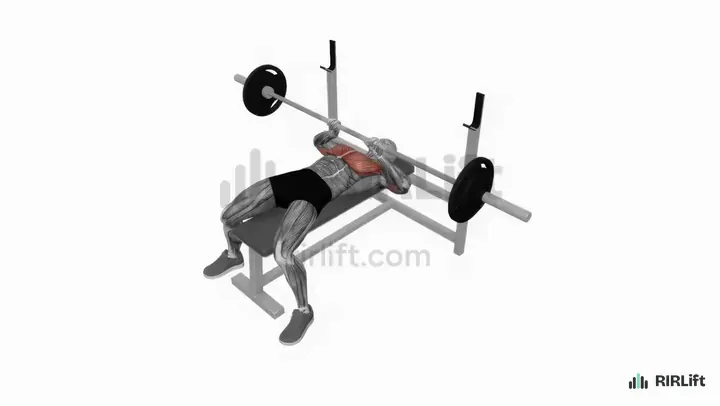
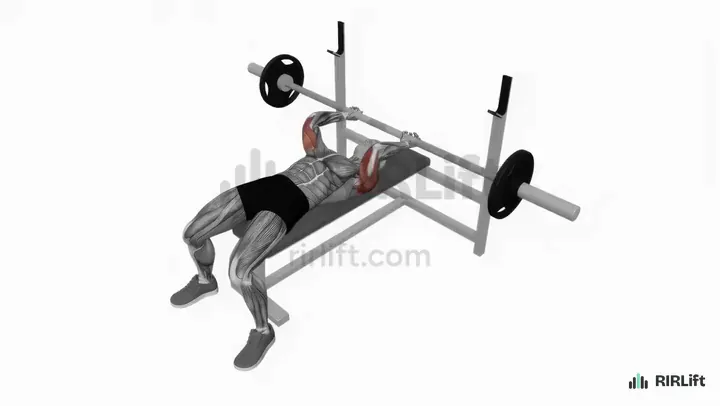
- Close-Grip Bench Press Triceps, Chest
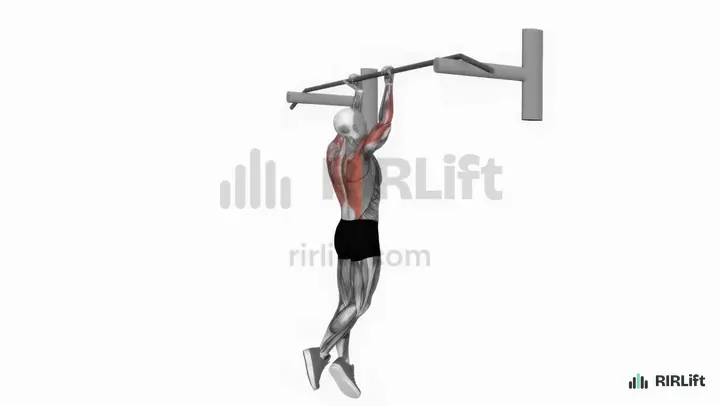
- Chin-Up Lats
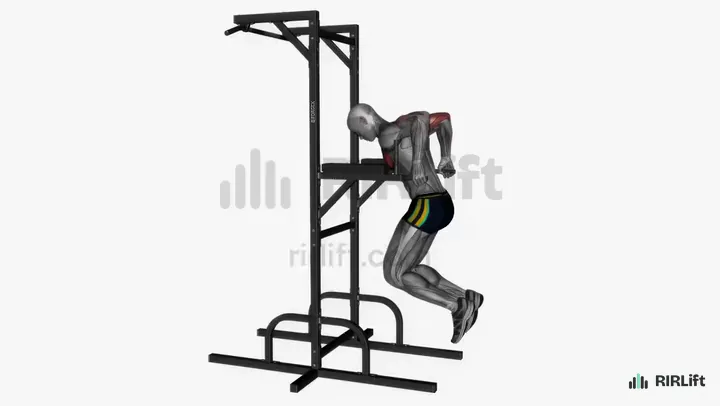
- Chest Dip Chest, Triceps
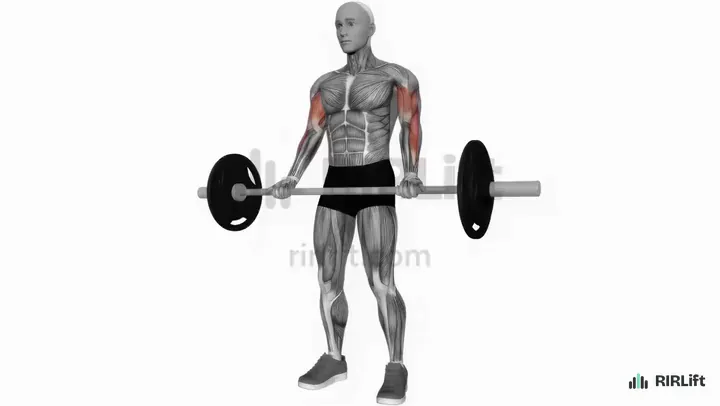
- Barbell Curl Biceps
- EZ-Bar Skullcrusher Triceps
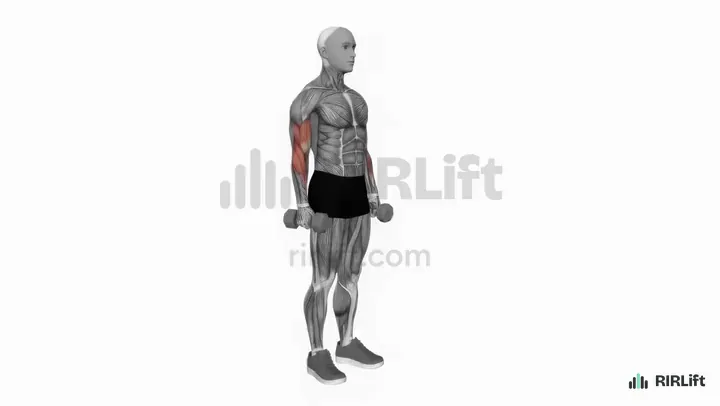
- Hammer Curl Biceps, Forearms
Put them together: example sessions
Each session below picks from the exercises above for one situation, with the sets, reps, rest and RIR filled in.
-
Session 1
Gym, arms added to two upper-body days
You run an upper/lower or full-body split and want stronger arms without a separate arm day.
2× a week · 23 sets a week · ~30 min
-
Session 2
Gym, one dedicated arm day
You train a body-part split or have one spare session a week and want to spend it on arms.
1× a week · 18 sets a week · ~40 min
-
Session 3
Home with dumbbells and a pull-up bar
You train at home with adjustable dumbbells, a bench and a bar for chin-ups.
2× a week · 21 sets a week · ~25 min
Session 1
Gym, arms added to two upper-body days
- Workouts2× a week
- Working sets23 a week
- Per workout~30 min
- EquipmentBarbells, Flat Bench, Adjustable Cable, Pull-Up Bar +4
You run an upper/lower or full-body split and want stronger arms without a separate arm day.
Each upper day leads with a compound lift that loads the arms heavy, then adds one curl and one extension. Biceps and triceps each get 6 curl or extension sets a week, on top of 4 sets of chin-ups, 4 of close-grip bench and 3 of dips, which brings each muscle to about 10 hard sets.
| Exercise | Sets × reps | RIR | Rest |
|---|---|---|---|
| Close-Grip Bench Press2 warm-up sets first | 4 × 4–6 | 2 | 3 min |
| Barbell Curl | 3 × 6–10 | 1 | 90 s |
| Cable Triceps Pressdown | 3 × 8–12 | 1 | 75 s |
| Exercise | Sets × reps | RIR | Rest |
|---|---|---|---|
| Chin-Up | 4 × 5–8 | 2 | 2:30 min |
| Chest Dip | 3 × 6–10 | 2 | 2 min |
| Incline Dumbbell Curl | 3 × 8–12 | 1 | 75 s |
| EZ-Bar Skullcrusher | 3 × 8–10 | 1 | 90 s |
- How to run it
- Add these blocks to the end of your two upper-body days, or run them as written if you want short arm-focused upper sessions. Keep two days between them.
- How to progress
- Add 5 pounds to the close-grip bench and a few pounds on a belt for chin-ups when every set reaches the top of the range at 1 to 2 reps in reserve. On curls and extensions, add reps until you hit the top, then the smallest jump available.
Session 2
Gym, one dedicated arm day
- Workouts1× a week
- Working sets18 a week
- Per workout~40 min
- EquipmentBarbells, Flat Bench, EZ Bar, Dumbbells
You train a body-part split or have one spare session a week and want to spend it on arms.
One longer session alternates biceps and triceps so each rests while the other works. It has 18 sets, 8 for the biceps and forearms and 10 for the triceps, enough for steady progress at once a week.
| Exercise | Sets × reps | RIR | Rest |
|---|---|---|---|
| Close-Grip Bench Press2 warm-up sets first | 4 × 4–6 | 2 | 3 min |
| A1 Barbell Curl | 3 × 6–8 | 1 | 90 s |
| A2 EZ-Bar Skullcrusher | 3 × 6–10 | 1 | 90 s |
| B1 Hammer Curl | 3 × 8–12 | 1 | 75 s |
| B2 Seated Dumbbell Overhead Triceps Extension | 3 × 8–12 | 1 | 75 s |
| Reverse Curl | 2 × 10–15 | 1 | 1 min |
- How to run it
- Put it at least two days away from your chest and back days, so the arms start the session fresh. Pair the curl and extension blocks as written and rest after each pair.
- How to progress
- Use double progression on every block. The close-grip bench and barbell curl take the biggest jumps; the rest move up only after you have reached the top of the range on every set for two sessions in a row.
Session 3
Home with dumbbells and a pull-up bar
- Workouts2× a week
- Working sets21 a week
- Per workout~25 min
- EquipmentPull-Up Bar, Dumbbells, Incline Bench
You train at home with adjustable dumbbells, a bench and a bar for chin-ups.
Chin-ups carry the heavy biceps work, and dumbbells cover curls, overhead extensions and grip. Day 1 has 11 sets and Day 2 has 10, 10 biceps sets counting chin-ups and 6 triceps sets for the week.
| Exercise | Sets × reps | RIR | Rest |
|---|---|---|---|
| Chin-Up | 4 × 4–8 | 2 | 2:30 min |
| Seated Dumbbell Overhead Triceps Extension | 4 × 8–12 | 1 | 90 s |
| Farmer's WalkSeconds. Heaviest pair. | 3 × 30–45 | 1 | 90 s |
| Exercise | Sets × reps | RIR | Rest |
|---|---|---|---|
| Hammer Curl | 3 × 6–10 | 1 | 90 s |
| Incline Dumbbell Curl | 3 × 8–12 | 1 | 75 s |
| Seated Dumbbell Overhead Triceps Extension | 2 × 10–15 | 1 | 75 s |
| Farmer's WalkSeconds. Heaviest pair. | 2 × 30–45 | 1 | 90 s |
- How to run it
- Two sessions a week, three days apart. If you cannot do 5 chin-ups yet, jump to the top and lower yourself for 5 seconds on each rep.
- How to progress
- Add reps until every set reaches the top of the range, then move to the next dumbbell or add a loaded backpack for chin-ups. For farmer's walks, add 10 seconds before going heavier.
Make it fit you
-
Elbows sore from heavy extensions
Swap the skullcrusher for the cable pressdown and keep the close-grip bench at 6 to 8 reps instead of 4 to 6. Cables are usually easier on the elbows at the same effort.
-
Want bigger arms more than stronger arms
Keep the compound lifts, but run curls and extensions for 10 to 15 reps and add one set to each. Size responds to total sets more than to heavy loads.
-
Grip fails on pulling days
Move the farmer's walk to your back day and add 2 sets of reverse curls to the arm day. Use straps on your heaviest deadlift sets so the grip work stays in its own place.
-
Short on time
Pair a curl with an extension as a superset and rest only after the pair. An arm session drops to about 25 minutes.
Questions
How long does it take to see results from arm exercises?
The weights you lift go up within two or three weeks as you get better at the movements. Visible size usually takes 8 to 12 weeks of training each arm muscle with about 6 to 10 hard sets a week.
What is the 7-7-7 bicep exercise?
It is a curl set of 21 reps: 7 half reps from the bottom to the middle, 7 half reps from the middle to the top, then 7 full reps, with no rest. It is a hard finisher, not a strength builder; use heavy sets of 6 to 10 for strength.
Is it OK to do arm exercises every day?
Not hard sets. A biceps or triceps you trained close to failure needs a day or two before it can lift the same weight again. Two or three arm sessions a week, with chin-ups and presses on other days, is plenty.
Do wrist weights help tone arms?
Not much. A 1 or 2 pound wrist weight is far too light to make your arms stronger or firmer after the first week. A pair of dumbbells you can curl and press for 8 to 12 hard reps does far more, and you can keep adding weight as you get stronger.
What is the best exercise for arm strength?
The close-grip bench press for the triceps and the chin-up for the biceps. Both let your arms move much more weight than any isolation exercise.
How many sets for arm strength?
About 6 to 10 hard sets a week each for the biceps and triceps, counting curls, extensions and the arm-heavy compound lifts, split over two sessions.
Related templates
-
Bicep exercises for strength: heavy curls, chin-ups and the curls that build size
Curls and chin-ups in more depth.
-
Tricep exercises for strength: presses, dips and extensions for a stronger lockout
Presses and extensions for a stronger lockout.
-
Exercises for bigger arms: triceps, biceps and the brachialis
The same muscles trained for size first.
-
Arm exercises at the gym, station by station
Cable and machine choices for arm days.
-
Double progression method
When to add a rep and when to add weight, worked through for heavy arm lifts.