Bicep exercises for strength: heavy curls, chin-ups and the curls that build size

The best bicep exercises for strength are the barbell curl, EZ-bar curl and weighted chin-up, the three that let your biceps move the most weight. Add incline dumbbell and preacher curls to load the biceps at long and short muscle lengths, and hammer and reverse curls for the brachialis and forearms. Do one heavy curl or chin-up first for 5 to 8 reps, then one or two curls for 8 to 12, about 8 to 14 hard sets a week over two or three sessions, stopping 0 to 2 reps short of failure.

  1. Barbell Curl Biceps
  2. EZ-Bar Curl Biceps
  3. Chin-Up Lats
  4. Incline Dumbbell Curl Biceps
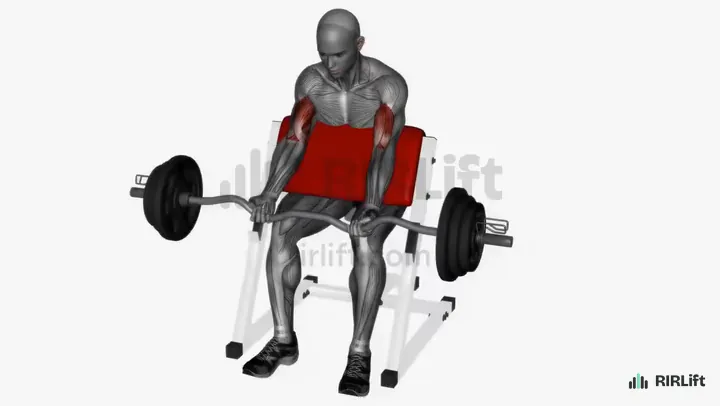
  5. Preacher Curl Biceps
  6. Hammer Curl Biceps, Forearms

Heavy curls and chin-ups

These are the bicep exercises that take the most weight, so they are where strength gets built and measured. Start each session with one of them for sets of 5 to 8.

Biceps, heavy curl

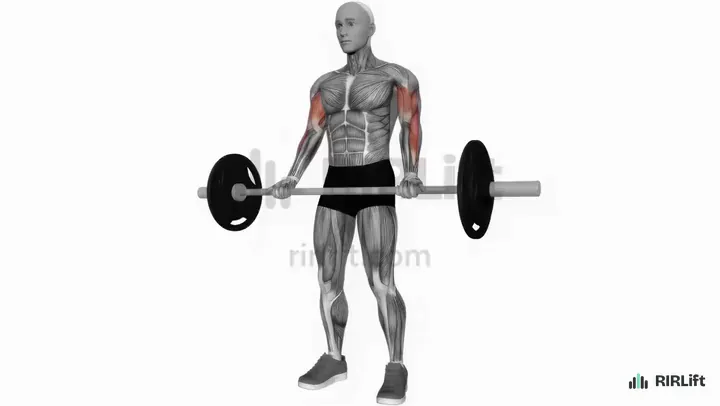
Barbell Curl

Biceps

With both hands on one bar, the barbell curl lets you load the biceps heavier than any other curl and add weight in small steps. It is the curl to test your bicep strength with, kept strict for 5 to 8 reps.

How to do it

  1. Stand tall, barbell in your hands palms up at shoulder-width, arms straight against your thighs.
  2. Set your elbows just in front of your hips.
  3. Curl the bar up in an arc until your forearms are nearly vertical.
  4. Lower it back to straight arms over two to three seconds.

Cues

  • Elbows stay just in front of the hips
  • No hip thrust
  • Straight arms between reps

Common mistakes

  • Swinging the bar up with your lower back: if you need the swing, drop 10 pounds.
  • Stopping halfway down to keep tension: lowering to straight arms is part of the work.

Swap for: EZ-Bar Curl, Cable Curl, Dumbbell Curl

Biceps, angled-grip curl

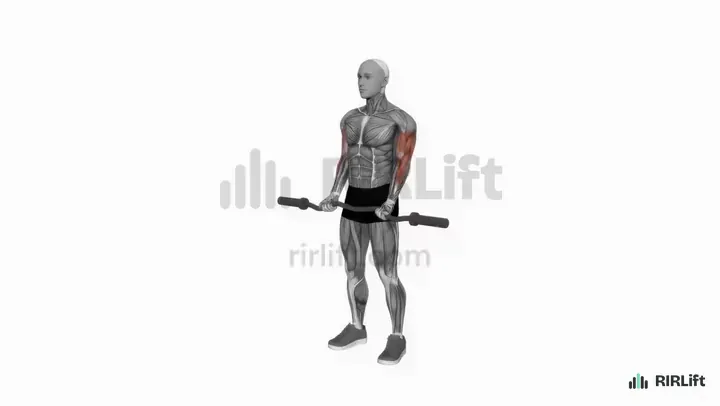
EZ-Bar Curl

Biceps

The bent handles put your wrists at a slight angle, which many people find easier on the wrists and elbows than a straight bar. You lose only a little load compared with the barbell, so it works as the main heavy curl.

How to do it

  1. Grip the angled parts of the bar with palms slightly turned in.
  2. Curl the bar toward your chest while the upper arms stay still.
  3. Lower until your arms are straight.

Cues

  • Upper arms still
  • Finish with straight arms

Common mistakes

  • Cutting the bottom short: every rep starts with straight elbows.

Swap for: Barbell Curl, Preacher Curl, Cable Curl

Biceps and lats, chin-up

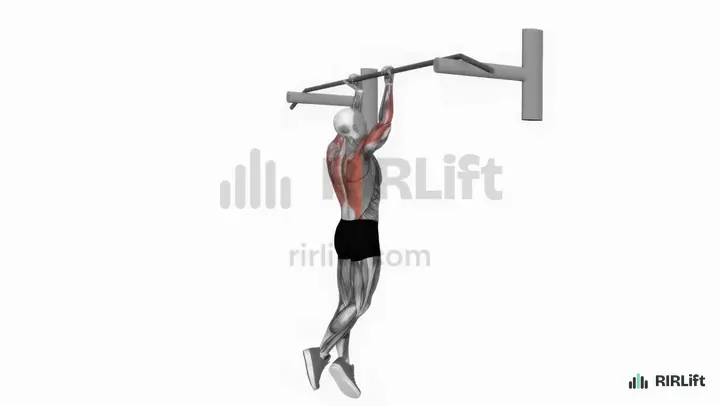
Chin-Up

Lats

Lifting your body weight with an underhand grip puts more load on the biceps than most people can curl. Add weight with a belt once you get 8 good reps, and it becomes the heaviest bicep exercise you do.

How to do it

  1. Hang from the bar with your palms toward you and hands shoulder-width.
  2. Pull your elbows down and back until your chin is over the bar.
  3. Lower to a full hang with straight arms.
  4. Keep your legs quiet and your body still between reps.

Cues

  • Palms toward you
  • Chin over the bar
  • Dead hang at the bottom

Common mistakes

  • Kipping or kicking to finish: stop the set when you cannot pull cleanly.
  • Half reps at the top: straighten your arms fully every time.

Swap for: Close-Grip Chin-Up, Assisted Pull-Up

Curls for the stretched and shortened positions

The biceps are hardest to load at the very bottom and the very top of a curl. These three put the arm in positions where those ends of the movement get trained under real tension.

Biceps long head, stretched curl

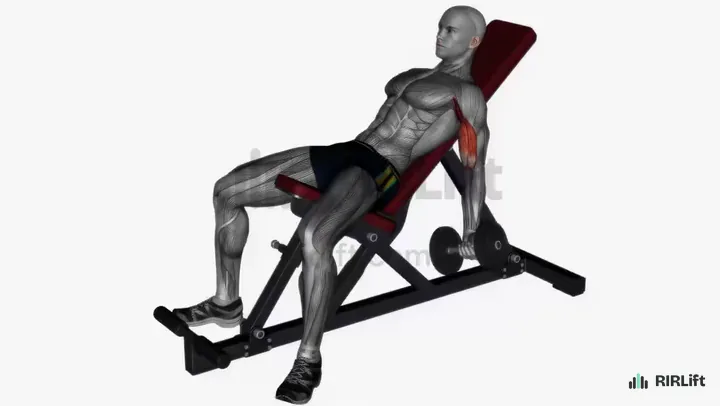
Incline Dumbbell Curl

Biceps

Leaning back on a 45 to 60 degree bench pulls your arms behind your body and stretches the long head of the biceps. Training it hard in that position is one of the best ways to build bicep size.

How to do it

  1. Tilt an adjustable bench back to about 45 to 60 degrees and sit back holding a pair of dumbbells.
  2. Let your arms hang straight down behind your torso with your palms forward.
  3. Curl both dumbbells up without letting your elbows travel forward.
  4. Lower all the way until your arms hang fully stretched again.

Cues

  • Head and shoulders on the pad
  • Elbows point at the floor
  • Full stretch at the bottom

Common mistakes

  • Bringing the elbows forward to make the curl easier: that removes the stretch that makes this exercise worth doing.
  • Choosing your usual curl weight: this angle is harder, so start a little lighter.

Swap for: Spider Curl, Cable Curl, Dumbbell Curl

Biceps, supported curl

Preacher Curl

Biceps

The pad locks your upper arm in place so you cannot swing, and the biceps work hardest near the bottom. It is a good second curl for sets of 8 to 12 on a heavy day.

How to do it

  1. Sit down at the preacher station, armpits snug against the top of the pad.
  2. Hold an EZ bar on its angled grips, palms up, with your arms almost straight down the pad.
  3. Curl the bar up until your forearms are close to vertical.
  4. Lower slowly until your elbows are almost straight, then curl again.

Cues

  • Armpits on the pad
  • Three-second lowering
  • Stop just short of locking out

Common mistakes

  • Letting the bar drop fast at the bottom: that is where elbows get hurt. Control every inch.
  • Lifting your elbows off the pad at the top: keep the upper arms down and stop the curl earlier.

Swap for: Machine Preacher Curl, Spider Curl, Kettlebell Preacher Curl

Biceps short head, prone curl

Spider Curl

Biceps

Lying chest down on an incline bench with the arms hanging straight, you curl with the biceps hardest at the top. It trains the squeeze that the incline curl misses.

How to do it

  1. Set an incline bench to about 45 degrees and lie face down on it with your chest on the top of the pad and your feet planted on the floor behind.
  2. Hold one dumbbell per hand with your palms facing forward and let both arms drop vertically toward the floor.
  3. Curl both dumbbells toward your shoulders by bending only at the elbows, with your upper arms pointing at the floor.
  4. Squeeze hard at the top for a moment, with your pinkies turned slightly up toward your shoulders.
  5. Lower slowly until your arms are straight again, and start the next rep without letting the dumbbells swing.

Cues

  • Upper arms stay pointing at the floor
  • Chest glued to the pad
  • Squeeze, then lower slowly

Common mistakes

  • Pulling the elbows back as you curl: that turns it into a row and takes load off the biceps; keep your elbows directly under your shoulders and use lighter dumbbells.
  • Cutting the bottom short: let your arms go fully straight on every rep, or you lose half of the range.
  • Lifting your chest off the pad to get the last rep: once your chest moves, the set is over; record the rep you got cleanly.

Swap for: Preacher Curl, Concentration Curl, Cable Curl

Dumbbell and cable curls

Simple, adjustable, and good for higher-rep sets once the heavy work is done. Dumbbells let each arm work on its own; cables keep tension through the whole rep.

Biceps, alternating dumbbell curl

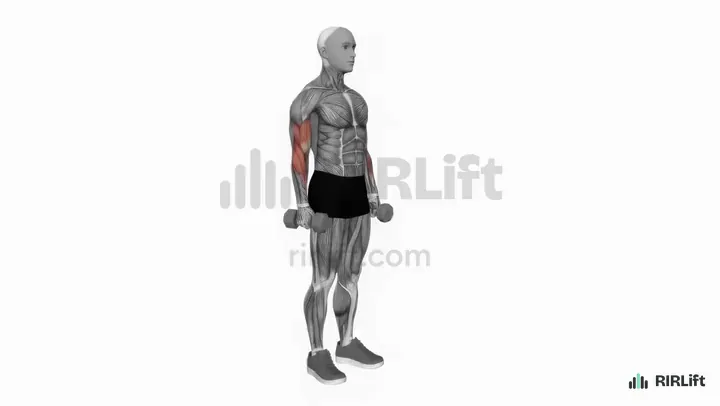
Dumbbell Curl

Biceps

Alternating arms lets you focus on one curl at a time and turn the palm up fully at the top. It is the simplest bicep exercise for home or a crowded gym.

How to do it

  1. Stand tall with one or two dumbbells, palms facing forward.
  2. Curl the weight toward your shoulder, keeping your upper arm still.
  3. Squeeze the biceps hard when your forearm is upright.
  4. Lower until your elbow is straight.

Cues

  • Upper arm still
  • Squeeze at the top
  • Straight elbow at the bottom

Common mistakes

  • Rocking your body: brace against a wall.
  • Stopping short at the bottom: lower all the way.

Swap for: Kettlebell Curl, EZ-Bar Curl

Biceps, cable curl

Cable Curl

Biceps

The cable keeps the biceps working at the top of the rep, where a dumbbell gets light. Use it last for 10 to 15 reps, close to failure.

How to do it

  1. Attach a bar to a low pulley and grip it palms up.
  2. Stand close and curl the bar toward your chest.
  3. Lower until your arms are straight, keeping tension on the cable.

Cues

  • Elbows pinned
  • Straight arms at the bottom

Common mistakes

  • Stepping too far from the stack: stand close so the cable pulls straight up.

Swap for: EZ-Bar Curl, Dumbbell Curl, Band Hammer Curl

Hammer and reverse curls

The brachialis sits under the biceps and is a strong elbow flexor in its own right. Training it with a neutral or overhand grip adds pulling strength and fills out the arm.

Brachialis and forearms, neutral curl

Hammer Curl

Biceps, Forearms

Palms facing in moves more of the work onto the brachialis and the forearm. Most people can hammer curl heavier than they can curl, which makes it useful for strength.

How to do it

  1. Hold the dumbbells at your sides with your palms facing your thighs.
  2. Bend one elbow to bring that dumbbell up, thumb leading.
  3. Keep the dumbbell vertical the whole way, then lower it slowly to the start.
  4. Curl the other arm, and keep alternating until the set is done.

Cues

  • Thumbs lead
  • Dumbbells vertical
  • Elbows by your sides

Common mistakes

  • Swinging heavier weight with your back: keep your torso still.
  • Curling across your body: keep each dumbbell in line with its shoulder.

Swap for: Band Hammer Curl, Alternating Hammer Curl

Brachialis and forearms, overhand curl

Reverse Curl

Biceps, Forearms

An overhand grip on the bar takes the biceps partly out and makes the brachialis and forearm extensors do the lifting. Two sets at the end of a session are enough.

How to do it

  1. Take the barbell palms down at shoulder-width, bar hanging against your thighs.
  2. Tuck your elbows in and hold your wrists straight.
  3. Curl the bar up toward your shoulders with your knuckles leading.
  4. Lower it under control to straight arms.

Cues

  • Knuckles up all the way
  • Wrists flat
  • Light bar, strict reps

Common mistakes

  • Letting your wrists bend back under the load: lower the weight until they stay straight.
  • Swinging the bar up: overhand curls are easy to cheat, so keep the tempo slow.

Swap for: Zottman Curl, Hammer Curl, EZ-Bar Curl

Put them together: example sessions

Each session below picks from the exercises above for one situation, with the sets, reps, rest and RIR filled in.

Session 1

Gym, two bicep sessions a week

  • Workouts2× a week
  • Working sets18 a week
  • Per workout~25 min
  • EquipmentBarbells, Dumbbells, Incline Bench, Pull-Up Bar +3

You train in a gym with bars, a preacher bench and cables, and want a heavier curl.

One day leads with a heavy barbell curl and the other with weighted chin-ups, so the biceps get two different heavy loads each week. Day 1 has 9 sets and Day 2 has 9, 18 for the week counting chin-ups.

Day 1: Barbell curl
ExerciseSets × repsRIRRest
Barbell Curl1 warm-up set first 4 × 5–8 1 2 min
Incline Dumbbell Curl 3 × 8–12 1 90 s
Hammer Curl 2 × 8–12 1 75 s
Day 2: Chin-up
ExerciseSets × repsRIRRest
Chin-UpHang extra weight from a belt past 8 reps. 4 × 5–8 1 2:30 min
Preacher Curl 3 × 8–10 1 90 s
Cable Curl 2 × 10–15 0 1 min
How to run it
Add these to the end of two upper-body or pull days, at least two days apart. Do the heavy curl or chin-up first in that part of the session.
How to progress
Add 5 pounds to the barbell curl and 2.5 to 5 pounds on the chin-up belt when every set reaches the top of the range at 1 rep in reserve. Other curls go up one step after you hit the top of the range on all sets.

Session 2

Home with dumbbells and a bar

  • Workouts2× a week
  • Working sets18 a week
  • Per workout~20 min
  • EquipmentPull-Up Bar, Dumbbells, Incline Bench

You train at home with adjustable dumbbells, an incline bench and a pull-up bar.

Chin-ups give you the heavy load a barbell would, and the dumbbells cover every curl angle. Day 1 has 10 sets and Day 2 has 8, 18 for the week.

Day 1
ExerciseSets × repsRIRRest
Chin-Up 4 × 4–8 1 2:30 min
Dumbbell Curl 3 × 6–10 1 90 s
Hammer Curl 3 × 8–12 1 75 s
Day 2
ExerciseSets × repsRIRRest
Incline Dumbbell Curl 3 × 8–12 1 90 s
Spider Curl 3 × 10–12 1 75 s
Hammer Curl 2 × 10–15 0 1 min
How to run it
Two sessions a week, three days apart, after your back work or on their own.
How to progress
Add reps until every set reaches the top of the range with 1 rep in reserve, then go up one dumbbell size. When chin-ups pass 8 reps, add a loaded backpack.

Session 3

Biceps lag behind, three short sessions

  • Workouts3× a week
  • Working sets16 a week
  • Per workout~10 min
  • EquipmentEZ Bar, Barbells, Dumbbells, Incline Bench +2

Your arms are behind the rest of your body and you can spare 10 minutes on three days a week.

Hitting the biceps three times a week with 5 or 6 sets each spreads 16 sets across fresh sessions, more total work than one long arm day allows. Each session pairs a bicep curl with a brachialis or long-head exercise.

Session 1
ExerciseSets × repsRIRRest
EZ-Bar Curl 3 × 6–8 1 90 s
Reverse Curl 2 × 10–12 1 1 min
Session 2
ExerciseSets × repsRIRRest
Incline Dumbbell Curl 3 × 8–12 1 75 s
Cable Curl 2 × 12–15 0 1 min
Session 3
ExerciseSets × repsRIRRest
Preacher Curl 3 × 8–10 1 75 s
Hammer Curl 3 × 8–12 1 1 min
How to run it
Tack each mini-session onto the end of a training day, for example Monday, Wednesday and Friday. Keep the rest periods short and stop with 0 to 1 rep in reserve.
How to progress
Use double progression on all six exercises. Because each one is done only once a week, add weight only when you have hit the top of the range on every set two weeks in a row.

Make it fit you

Questions

How do I grow strength in my biceps?

Train them two or three times a week with one heavy exercise, a barbell curl or weighted chin-up for 5 to 8 reps, then one or two curls for 8 to 12. Stop 0 to 2 reps short of failure and add weight every time you reach the top of the rep range.

What are 7-7-7 bicep curls?

Also called 21s: 7 reps from the bottom to halfway, 7 from halfway to the top, then 7 full reps, without rest. They make a hard finisher but use light weight, so heavy sets of 5 to 8 do more for strength.

What are good exercises for the brachialis?

Hammer curls and reverse curls. Both use a grip that reduces how much the biceps can help, so the brachialis does more of the work.

How long does it take to grow biceps?

Size comes slowly: with 8 to 14 hard bicep sets a week, expect a few months before a tape measure shows it. Strength on the curl goes up much sooner, often within the first few weeks.

Are chin-ups enough for biceps?

They build a lot of bicep strength, but chin-ups load the biceps most at the bottom. Adding one or two curls covers the rest of the range.