Arm fat exercises: triceps, biceps and shoulders for firmer arms

Arm fat comes off through overall fat loss, so no arm exercise burns it directly. What firms up flabby arms is the muscle under it, mostly the triceps on the back of the arm: overhead triceps extensions, kickbacks, pressdowns, bench dips and close-grip push-ups. Add dumbbell and hammer curls for the front, shoulder presses and lateral raises for the shoulder cap, and rows for balance. Battle ropes and ball slams add conditioning. Train arms 2 or 3 times a week with 10 to 12 hard sets a week for the triceps and 6 to 8 for the biceps, alongside a calorie deficit.

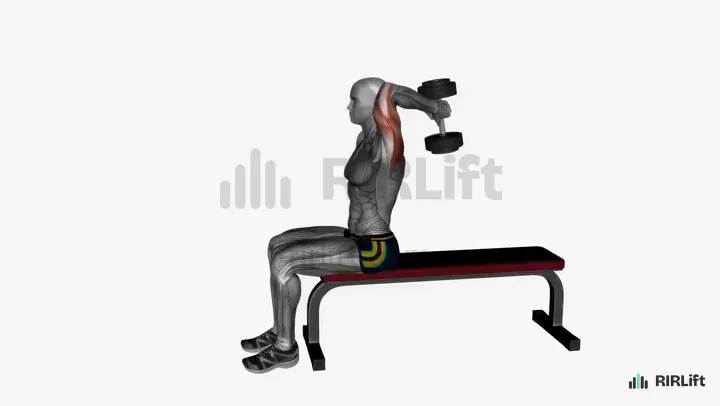
  1. Seated Dumbbell Overhead Triceps Extension Triceps
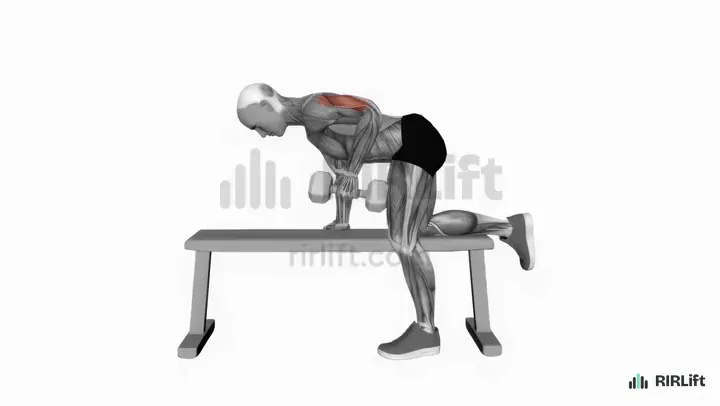
  2. Triceps Kickback Triceps
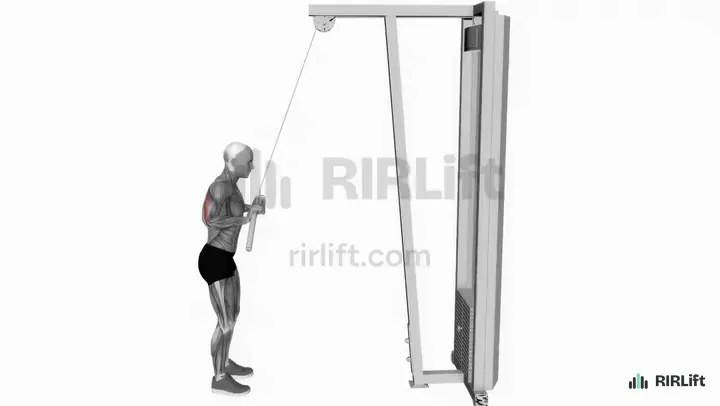
  3. Cable Triceps Pressdown Triceps
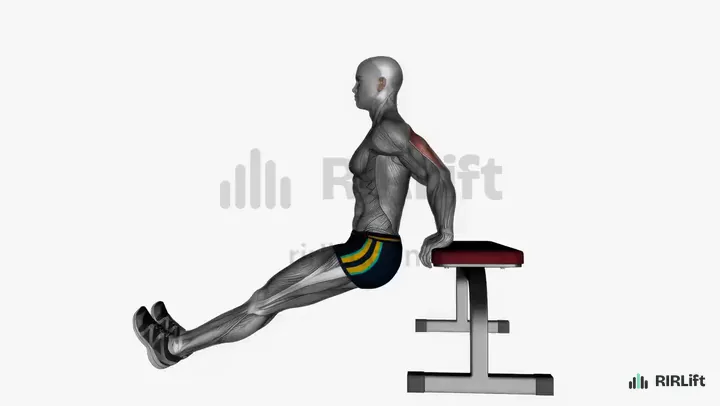
  4. Bench Dip Triceps
  5. Dumbbell Curl Biceps
  6. Dumbbell Shoulder Press Shoulders
  7. Dumbbell Lateral Raise Shoulders
Triceps: the backs of your arms

The triceps are the largest muscle in your upper arm, and they sit right where arms look loose when you wave. Overhead work trains the long head, which runs closest to the armpit; kickbacks, pressdowns and dips train the rest.

Triceps long head, overhead extension

Seated Dumbbell Overhead Triceps Extension

Triceps

With the dumbbell behind your head, the triceps' long head is stretched under load, and that is the part that runs along the back of the arm up toward the armpit. It is the first exercise to learn for the area people call arm fat.

How to do it

  1. Sit tall on a chair and lift one dumbbell overhead, both hands under the top plate.
  2. Bend your elbows to bring the weight down behind your neck, upper arms close to your head.
  3. Feel the stretch, then press it back up to straight arms.
  4. Keep your back from arching as you press.

Cues

  • Elbows forward
  • Weight behind your neck
  • Ribs stay down

Common mistakes

  • Elbows drifting out to the sides: keep them pointed ahead.
  • Short lowering: take it as deep as your shoulders allow.

Swap for: Kettlebell Overhead Triceps Extension, Overhead Cable Triceps Extension

Triceps, kickback

Triceps Kickback

Triceps

Straightening your arm behind you while your upper arm stays still squeezes the triceps hard at the end. It needs only a light dumbbell, so it is a good start at home.

How to do it

  1. Brace one hand on a chair or bench and hinge forward with a flat back.
  2. Lift the dumbbell arm so your upper arm sits against your side, elbow bent.
  3. Push the dumbbell back until your arm is straight, and hold it for a second.
  4. Bend back to the start; finish the set, then change arms.

Cues

  • Upper arm stays level
  • Hold the lockout
  • Light weight

Common mistakes

  • Swinging the weight up: lighten it so you can pause at the top.
  • Upper arm sinking toward the floor: lift it back to your side.

Swap for: Cable Triceps Kickback, Seated Dumbbell Overhead Triceps Extension

Triceps, pressdown

Cable Triceps Pressdown

Triceps

Pushing a cable down from chest height keeps tension on the triceps for the whole rep and lets you add weight in small steps. It is the easiest triceps exercise to take close to failure.

How to do it

  1. Attach a bar or rope to a high pulley and grip it with your elbows at your sides.
  2. Push down until your elbows are straight.
  3. Let the handle rise until your forearms are just past parallel, then push again.

Cues

  • Elbows stay pinned
  • Lock out at the bottom

Common mistakes

  • Letting the elbows rise and flare: keep them glued to your sides.

Swap for: Cable Cross Pushdown, Overhead Cable Triceps Extension, Close-Grip Push-Up

Triceps, body-weight dip

Bench Dip

Triceps

Lowering and pressing yourself up from the edge of a bench or chair works the triceps with your own weight. Bent knees make it easier; straight legs make it harder.

How to do it

  1. Sit on the front of a stable chair, hands gripping the edge next to your hips.
  2. Move your hips off the seat and set your heels out in front.
  3. Lower your body by bending your elbows until your upper arms are level with the floor.
  4. Straighten your arms to come back up.

Cues

  • Hips close to the chair
  • Elbows point back
  • Stop at level

Common mistakes

  • Going so deep that your shoulders pinch: shorten the range.
  • Pushing with your legs: keep them relaxed and let your arms lift you.

Swap for: Floor Triceps Dip, Close-Grip Push-Up

Triceps and chest, narrow push-up

Close-Grip Push-Up

Triceps, Chest

Hands under your shoulders and elbows close to your sides turns a push-up into a triceps exercise. Do it from your knees until you can manage 8 on your toes.

How to do it

  1. Get into a high plank with your hands directly below your shoulders.
  2. Lower yourself with your elbows sliding back past your ribs.
  3. Stop just above the floor, then push up to locked elbows.
  4. Drop to your knees for the last reps if your hips start to sag.

Cues

  • Hands under shoulders
  • Elbows travel back
  • Full lockout

Common mistakes

  • Flaring the elbows into a T: that moves the work to your chest.
  • Half reps near the top: lower until your chest is close to the floor.

Swap for: Kneeling Push-Up, Incline Push-Up

Biceps: the front of your arms

Firm biceps fill out the front of the arm and make the whole arm look more shaped from the side. Two curls, one palm-up and one palm-in, cover them.

Biceps, curl

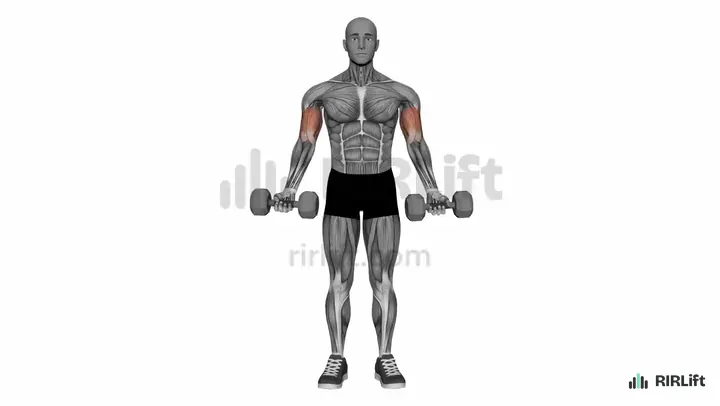
Dumbbell Curl

Biceps

The dumbbell curl builds the front of the upper arm. Keep your elbows by your sides and lower slowly; light weights done properly beat heavy swinging.

How to do it

  1. Stand tall with one or two dumbbells, palms facing forward.
  2. Curl the weight toward your shoulder, keeping your upper arm still.
  3. Squeeze the biceps hard when your forearm is upright.
  4. Lower until your elbow is straight.

Cues

  • Upper arm still
  • Squeeze at the top
  • Straight elbow at the bottom

Common mistakes

  • Rocking your body: brace against a wall.
  • Stopping short at the bottom: lower all the way.

Swap for: Kettlebell Curl, EZ-Bar Curl

Biceps and forearms, neutral curl

Hammer Curl

Biceps, Forearms

Curling with palms facing in trains the brachialis, which sits under the biceps and pushes it up, along with the top of your forearm. It adds thickness to the arm from the side.

How to do it

  1. Hold the dumbbells at your sides with your palms facing your thighs.
  2. Bend one elbow to bring that dumbbell up, thumb leading.
  3. Keep the dumbbell vertical the whole way, then lower it slowly to the start.
  4. Curl the other arm, and keep alternating until the set is done.

Cues

  • Thumbs lead
  • Dumbbells vertical
  • Elbows by your sides

Common mistakes

  • Swinging heavier weight with your back: keep your torso still.
  • Curling across your body: keep each dumbbell in line with its shoulder.

Swap for: Band Hammer Curl, Alternating Hammer Curl

Shoulders and upper back

Rounder shoulders make the upper arm look slimmer by comparison, and rows keep your posture from rounding forward as your arms get stronger.

Shoulders and triceps, press

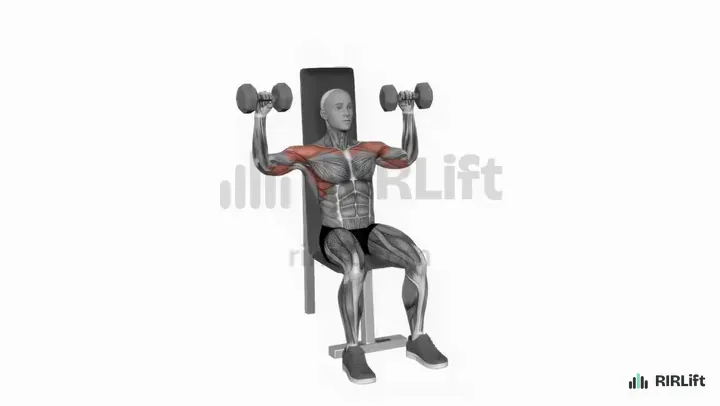
Dumbbell Shoulder Press

Shoulders

Pressing dumbbells overhead builds the shoulder cap and works the triceps as they lock your arms out. It trains more of your arm per rep than any single-joint move.

How to do it

  1. Set a bench upright or one notch back from vertical, sit with your feet flat, and rest a dumbbell on each thigh.
  2. Kick one knee up at a time to bring the dumbbells to shoulder height, then set your back against the pad.
  3. Turn your elbows slightly forward so they sit a little in front of your torso, palms facing forward or angled in.
  4. Drive both weights overhead on a slight inward arc until your elbows are straight, keeping your ribs down and your back on the pad.
  5. Lower slowly until the dumbbells are around ear height or a bit below, then press again.

Cues

  • Ribs down, back on the pad
  • Elbows a little forward
  • Press up and slightly in

Common mistakes

  • Arching your lower back off the pad to finish reps: that turns it into an incline press, so lighten the weight and keep your ribs stacked over your hips.
  • Flaring the elbows straight out at shoulder height: bring them a little forward so the shoulder joint stays comfortable at the bottom.
  • Stopping each rep well above your ears: lower to around ear height so the delts work through a full range.

Swap for: Machine Shoulder Press, Arnold Press, Landmine Press

Side shoulders, raise

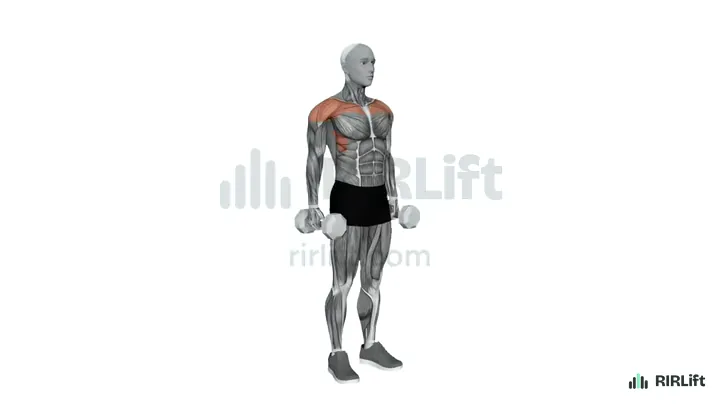
Dumbbell Lateral Raise

Shoulders

Raising light dumbbells out to the side builds the side of the shoulder, which gives the top of your arm a defined edge. Stop at shoulder height and lower slowly.

How to do it

  1. Pick light dumbbells you can raise for 12 clean reps, and stand with your feet hip width apart, the weights hanging by your thighs.
  2. Lean your chest forward a few degrees, pull your shoulders down away from your ears and soften your elbows.
  3. Sweep the weights out and slightly forward, leading with your elbows, until your upper arms are level with your shoulders.
  4. Hold that top position for a beat, then take two to three seconds to lower until the dumbbells are a hand's width from your thighs.
  5. Start the next rep from there without resting at the bottom or bouncing out of it.

Cues

  • Elbows lead, hands follow
  • Shoulders down, neck long
  • Push the weights out, not up

Common mistakes

  • Shrugging the weight up: if your shoulders rise toward your ears, drop to lighter dumbbells and stop each rep where your upper arm is level.
  • Swinging the torso to start each rep: brace, stand still and keep the first inch of the lift as slow as the rest.
  • Bending the elbows more and more as the set goes on: set the bend on rep one and keep it, or the lever shortens and the set gets easier without you noticing.

Swap for: Cable Lateral Raise, Band Lateral Raise, Machine Lateral Raise

Upper back and biceps, row

Dumbbell Bent-Over Row

Upper Back, Lats

Rows balance all the pressing, keep your shoulders from rounding forward, and work your biceps as a bonus. A strong upper back makes the arms look better framed.

How to do it

  1. Take one dumbbell per hand, feet about hip-width apart, and hinge forward from the hips with soft knees until your torso is nearly level with the floor.
  2. Let the dumbbells hang straight down under your shoulders, palms turned in.
  3. Pull both dumbbells up to your lower ribs, keeping the elbows close, and hold the top for a beat.
  4. Lower to straight arms without letting your torso rise and repeat.

Cues

  • Torso angle stays locked
  • Pull to the ribs
  • Squeeze, then lower

Common mistakes

  • Letting the hinge rise until you are rowing upright: keep a mirror or phone camera to the side and stop the set when your chest climbs.
  • Yanking the dumbbells with your hips: the legs stay still and the elbows do the work.

Swap for: One-Arm Dumbbell Row, Kettlebell Gorilla Row, Band Bent-Over Row

Arm-heavy conditioning

These two raise your heart rate while your arms and shoulders do much of the work. Use them as short finishers on fat-loss days.

Shoulders and arms, conditioning

Battle Rope Wave

Shoulders, Abs

Whipping the ropes in waves keeps your shoulders and arms working while your heart rate climbs. Short intervals of 20 to 30 seconds fit at the end of an arm session.

How to do it

  1. Hold one rope end in each hand, feet about shoulder width, knees bent.
  2. Whip one arm up while the other goes down to send alternating waves down the ropes.
  3. Keep the waves small and steady for the warm-up, not all-out.

Cues

  • Athletic stance
  • Small, even waves

Common mistakes

  • Standing up straight: stay in a quarter squat.

Swap for: Battle Rope Slam, Jumping Jack

Full body with arms, conditioning

Medicine Ball Slam

Lats, Abs

Lifting a ball overhead and slamming it down uses your arms, shoulders, trunk and legs in one fast movement. Sets of 10 to 12 make a hard finisher with little skill to learn.

How to do it

  1. Stand with feet about shoulder-width holding a medicine ball.
  2. Reach the ball overhead and rise onto your toes.
  3. Slam it into the floor in front of you as hard as you can, bending the hips and knees.
  4. Pick it up and repeat.

Cues

  • Reach tall
  • Slam with the whole body
  • Exhale hard

Common mistakes

  • Slamming with the arms only: hinge the hips into it.
  • Using a bouncy ball: use a slam ball that stays down.

Swap for: Med Ball Rotational Throw, Battle Rope Slam, Kettlebell Swing

Put them together: example sessions

Each session below picks from the exercises above for one situation, with the sets, reps, rest and RIR filled in.

Session 1

Home, a pair of dumbbells, three days

  • Workouts3× a week
  • Working sets33 a week
  • Per workout~20 min
  • EquipmentDumbbells, Flat Bench

You have light to medium dumbbells and a chair at home, and you want firmer arms with three short sessions a week.

Three sessions give the triceps about 12 sets a week from three different exercises, and the biceps and shoulders about 6 to 9 each. Small arm muscles recover in a day or two, so the frequency works. Day A has 11 working sets and Day B has 11, about 30 minutes each.

Day A
ExerciseSets × repsRIRRest
Dumbbell Shoulder Press1 warm-up set first 3 × 8–12 2 90 s
Seated Dumbbell Overhead Triceps Extension 3 × 10–15 1 1 min
Dumbbell Curl 3 × 10–15 1 1 min
Bench Dip 2 × 8–15 2 1 min
Day B
ExerciseSets × repsRIRRest
Dumbbell Bent-Over Row 3 × 10–12 2 90 s
Triceps Kickback 3 × 12–15 1 1 min
Dumbbell Lateral Raise 3 × 12–20 1 1 min
Hammer Curl 2 × 10–15 1 1 min
How to run it
Alternate Day A and Day B on three non-consecutive days, for example A, B, A one week and B, A, B the next.
How to progress
Light dumbbells run out fast on arm work, so add reps first: go up to 15 or 20 at 1 to 2 reps in reserve, then move to the next dumbbell. Slowing each lowering to 3 seconds makes a light weight harder.

Session 2

Gym, two upper-body days

  • Workouts2× a week
  • Working sets24 a week
  • Per workout~25 min
  • EquipmentDumbbells, Adjustable Cable

You go to the gym, already train legs, and want your two upper-body days to put the arms first.

Starting each upper day with arm work while you are fresh gives the triceps 12 hard sets a week and the biceps 6, enough for visible change in a few months. A press and a row each day keep the shoulders and back moving forward too. Each day has 12 working sets and takes about 45 minutes.

Upper 1
ExerciseSets × repsRIRRest
Seated Dumbbell Overhead Triceps Extension 3 × 8–12 1 90 s
Dumbbell Curl 3 × 8–12 1 90 s
Dumbbell Shoulder Press 3 × 8–12 2 2 min
Cable Triceps Pressdown 3 × 12–15 0 1 min
Upper 2
ExerciseSets × repsRIRRest
Close-Grip Push-Up 3 × 6–12 1 90 s
Hammer Curl 3 × 10–12 1 1 min
Dumbbell Bent-Over Row 3 × 8–12 2 2 min
Triceps Kickback 3 × 12–15 0 1 min
How to run it
Do Upper 1 and Upper 2 on separate days with leg training between, for example Tuesday and Friday.
How to progress
On cables and dumbbells, add weight when every set reaches the top of the rep range at 0 to 1 reps in reserve. The shoulder press and row stay at 2 reps in reserve and go up in 2.5 to 5 pound steps.

Session 3

Losing weight, arm and conditioning circuits

  • Workouts2× a week
  • Working sets32 a week
  • Per workout~25 min
  • EquipmentAdjustable Cable, Dumbbells, Flat Bench, Medicine Ball +1

You are in a calorie deficit, you want to keep your arms firm as the weight comes off, and you like sessions that also get you out of breath.

Supersets of a triceps and a biceps or shoulder move keep you working with short rests, and a conditioning finisher adds energy use. That gives the arms and shoulders about 20 sets a week at 2 reps in reserve, enough to keep muscle while you diet. Each session has 16 working sets and takes about 30 minutes.

Circuit
ExerciseSets × repsRIRRest
A1 Cable Triceps Pressdown 3 × 12–15 2 1 min
A2 Dumbbell Lateral Raise 3 × 12–15 2 1 min
B1 Bench Dip 2 × 8–15 2 1 min
B2 Hammer Curl 2 × 10–15 2 1 min
Medicine Ball Slam 2 × 10–12 3 1 min
Battle Rope WaveSeconds per interval. 4 × 20–30 2 1 min
How to run it
Do the circuit twice a week, with your leg or full-body training on other days. Move straight from the first exercise of each pair to the second, then rest 60 seconds.
How to progress
Keep the weights steady while you are losing weight and add reps instead. Add 5 seconds to each battle rope interval when the last one still feels strong.

Make it fit you

Questions

How do you lose arm fat quickly?

By losing body fat overall with a steady calorie deficit, plus strength training two or three times a week so your arms look firm as it goes.

Can I lose arm fat in 7 days?

Not in a way you would see. A week of dieting removes a small amount of fat from your whole body. Pumped, trained muscle can make arms look firmer for a few hours after a workout, but lasting change takes months.

How can I slim down my arms in 2 weeks?

Two weeks is enough to start a routine and lose some water and a little fat, not to change your arms visibly. Use those two weeks to learn the exercises and settle into a calorie deficit you can keep.

What causes flabby arms?

A mix of body fat stored on the upper arms, small or untrained triceps, and with age, less firm skin. Training builds the muscle, fat loss reduces what sits over it, and both together change how arms look.

Will lifting weights make my arms bigger?

Muscle adds a little size and losing the fat over it takes size away, so how your arms end up depends mostly on your fat loss. Training makes them firmer either way.