Barbell back exercises: rows, pulls, shrugs and hinges

The best barbell back exercises are the bent-over barbell row and the Pendlay row for your lats and mid back, the seal row when you want to row without your lower back holding the position, the deadlift and rack pull for the whole back at once, the shrug and high pull for your traps, and the good morning for your spinal erectors. A complete barbell back session needs only three of them: one row, one heavy pull or hinge, and one shrug.

  1. Barbell Row Upper Back, Lats
  2. Pendlay Row Upper Back, Lats
  3. Seal Row Upper Back, Lats
  4. Barbell Deadlift Glutes, Lower Back
  5. Rack Pull Glutes, Lower Back, Traps
  6. Underhand Barbell Row Upper Back, Lats
  7. Meadows Row Upper Back, Lats
  8. Barbell Shrug Traps
  9. Good Morning Hamstrings, Glutes
Barbell rows for lats and mid back

Rows are the core of barbell back training because the bar lets you load a horizontal pull far heavier than any single dumbbell. The five rows here differ mostly in where your torso is and what holds it there: bent over and braced by your hips and lower back, flat on a bench, or split stance with one hand on your knee. Choose one bent-over row as your main lift and one supported row for the extra volume.

Lats and mid back, main bent-over row

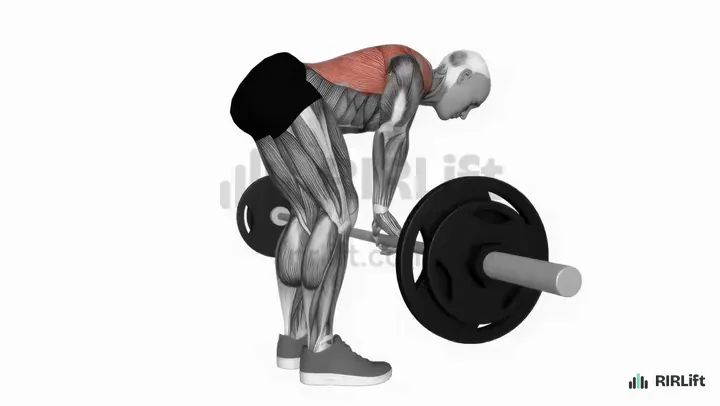
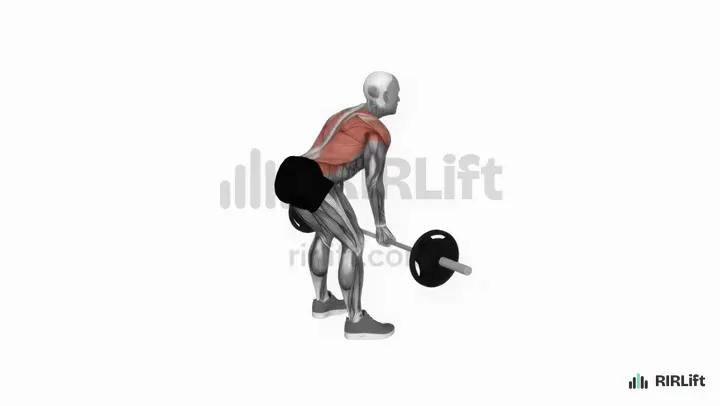
Barbell Row

Upper Back, Lats

Bent over with the bar in both hands, you can row more weight than in any other horizontal pull, and the elbows can tuck for lats or flare for the mid back without changing the setup. It is the barbell back exercise most programs are built around.

How to do it

  1. Stand with your feet roughly hip width and hold the bar with an overhand grip just outside your thighs.
  2. Soften your knees and push your hips back until your torso is around 45 degrees or lower, with the bar hanging at arm's length below your knees.
  3. Pull the bar into your lower ribs, driving your elbows back past your torso.
  4. Lower the bar until your arms are straight again, holding the same torso angle for every rep.

Cues

  • Chest proud, back flat
  • Elbows past the ribs
  • Same angle top to bottom

Common mistakes

  • Standing taller with each rep until the row becomes a shrug: pick a load you can row at a fixed angle for every rep of the set.
  • Bouncing the bar off your thighs with a hip thrust: if you need the hip drive, the weight is too heavy for the rep range.

Swap for: Pendlay Row, Seal Row, Underhand Barbell Row

Lats and mid back, rows from the floor

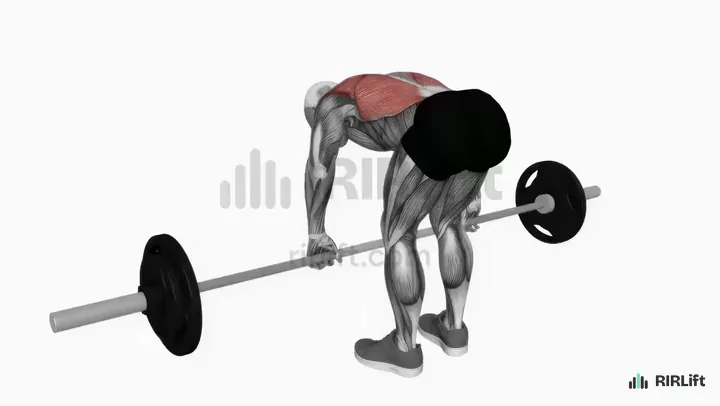
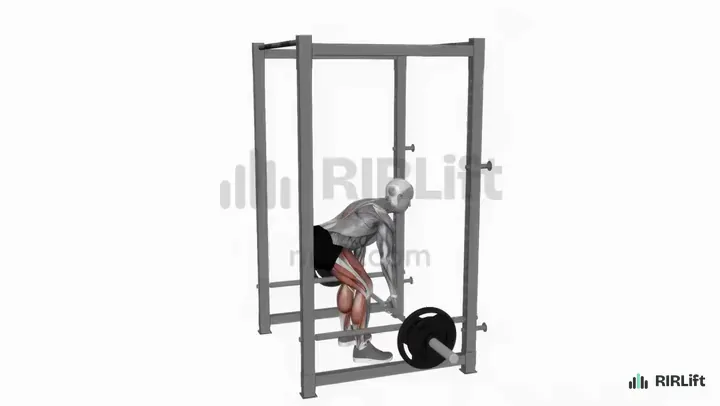
Pendlay Row

Upper Back, Lats

Every rep starts from a dead stop on the floor with your torso close to parallel, so you cannot use momentum from the previous rep and your back gets the full pull every time. Use it when you want a strict, heavy row and the lower back to stay still.

How to do it

  1. Set the bar on the floor over your mid foot and hinge down until your torso is nearly flat, knees bent enough to reach the bar.
  2. Grip a little outside shoulder width with your arms straight and shoulders above the bar.
  3. Pull the bar fast from the floor to your upper belly without lifting your chest.
  4. Lower it back to the floor, let it settle for a moment, reset your brace and pull again.

Cues

  • Torso stays flat
  • Explode off the floor
  • Dead stop every rep

Common mistakes

  • Raising your chest to meet the bar: your torso should stay put while only the bar moves.
  • Letting the bar crash down: lower it under control so it lands where it started and the next rep starts from the same spot.

Swap for: Barbell Row, Seal Row, Meadows Row

Lats, palms-up bent-over row

Underhand Barbell Row

Upper Back, Lats

Turning your palms up pins your elbows tucked in, so the pull travels toward your hips and favors the lats over the mid back. Your biceps help more, which usually lets you handle a little more weight than the overhand row.

How to do it

  1. Hold the bar with your palms facing forward and hands about shoulder width apart.
  2. Hinge forward with soft knees until your torso is roughly 45 degrees and the bar hangs straight below your shoulders.
  3. Row the bar toward your belly button with your elbows brushing your sides.
  4. Return to straight arms slowly, keeping your torso still.

Cues

  • Elbows skim your sides
  • Pull to your belly button
  • Wrists straight

Common mistakes

  • Curling the bar with your forearms: think about the elbows going back, not the hands coming up.
  • Taking a narrow grip that strains the wrists: keep hands at shoulder width and the bar in the heel of your palm.

Swap for: Barbell Row, Meadows Row, Pendlay Row

Upper back and lats, chest supported

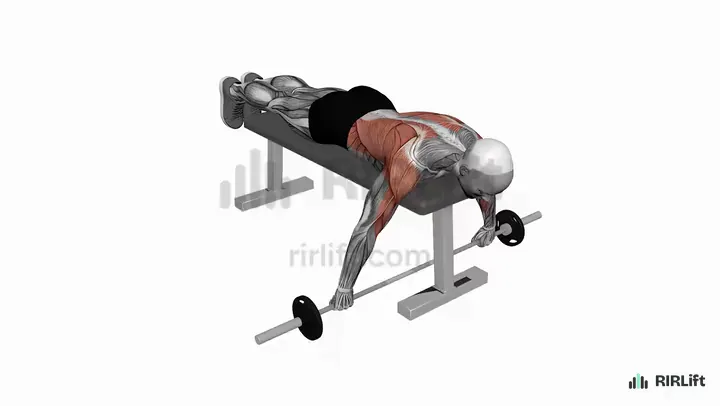
Seal Row

Upper Back, Lats

Lying face down on a raised bench removes your lower back and legs from the row entirely, so the only thing that can move the bar is your back. It is the row to use when your lower back is tired from squats and deadlifts, or when you want to row to failure without your form breaking first.

How to do it

  1. Raise a flat bench on boxes or plates high enough that your arms can hang straight without the bar touching the floor.
  2. Lie face down with your chest at the top edge and grab the bar below you with an overhand grip a little wider than your shoulders.
  3. Row the bar up to the underside of the bench, pinching your shoulder blades at the top.
  4. Lower until your arms are straight and your shoulder blades spread apart, then repeat.

Cues

  • Chest glued to the bench
  • Pinch the blades at the top
  • Full hang at the bottom

Common mistakes

  • Lifting your chest off the bench to finish the rep: stop the set when the bar no longer reaches the bench.
  • Using a bench too low for a full stretch: raise it until your arms are straight with the bar off the floor.

Swap for: Pendlay Row, Barbell Row, Meadows Row

Build a session with Seal Row

Lats, one-arm landmine row

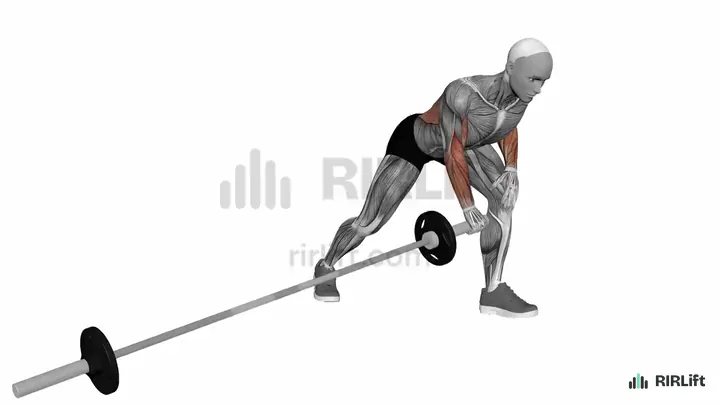
Meadows Row

Upper Back, Lats

With one end of the bar wedged in a corner or landmine, you row the loaded end from the side with one arm. The angled path and the thick sleeve give your lats a long stretch at the bottom, and your free hand on your knee takes most of the strain off your lower back.

How to do it

  1. Wedge one end of the bar into a corner or landmine and load the other end.
  2. Stand side on to the loaded end in a staggered stance, front knee bent, and rest your free forearm on that knee.
  3. Grip the sleeve end overhand and pull it up toward your hip, driving your elbow back and slightly out.
  4. Lower until your arm is fully straight and your shoulder dips toward the floor, then row again. Finish the set and switch sides.

Cues

  • Elbow back and slightly out
  • Let the shoulder drop at the bottom
  • Hips stay square

Common mistakes

  • Rotating your torso to heave the bar: keep your shoulders level and lighten the load.
  • Gripping the thick sleeve too far from the end: hold just behind the collar so your hand does not slip.

Swap for: Underhand Barbell Row, Seal Row, Barbell Row

Heavy pulls that load the whole back

A deadlift does not move your shoulder blades much, but every muscle from your traps to your erectors has to hold the bar in place under the heaviest load you will ever lift. That isometric work is why lifters who pull heavy tend to have thick upper backs. Treat one of these as the first lift of a back day and keep the reps low.

Whole back, heaviest pull

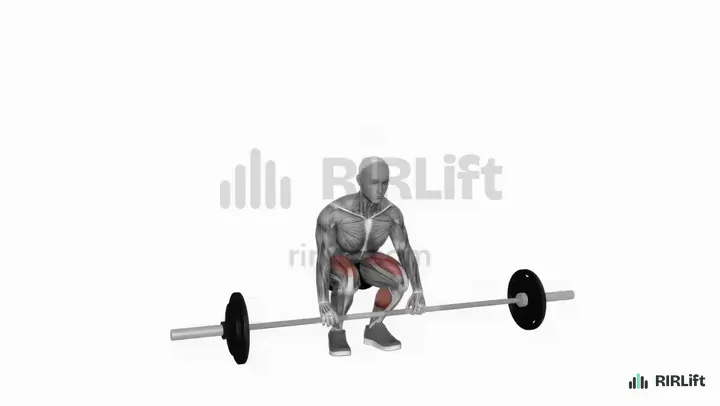
Barbell Deadlift

Glutes, Lower Back

The deadlift puts more weight in your hands than any other lift, and your lats, traps and spinal erectors all work hard to keep the bar tight to you and your spine still. It builds the back by holding position, not by moving the shoulder blades, which is why it pairs with rows rather than replacing them.

How to do it

  1. Stand with the bar over your mid foot, feet roughly hip width.
  2. Hinge, bending your knees, to grab the bar just outside your legs, shins touching it.
  3. Pull the slack out of the bar, set your back flat and squeeze your armpits down to lock the bar to your legs.
  4. Push the floor away and stand up tall with the bar dragging up your legs, then lower it the same way.

Cues

  • Push the floor away
  • Bar stays on your legs
  • Armpits squeezed down

Common mistakes

  • Yanking the bar off the floor with a rounded back: take the slack out first and build tension before it moves.
  • Leaning back at the top: finish by standing straight with your glutes tight.

Swap for: Rack Pull, Snatch-Grip Deadlift, Romanian Deadlift

Upper back and traps, partial deadlift

Rack Pull

Glutes, Lower Back, Traps

Pulling from pins at knee height cuts the range to the top half of the deadlift, where your upper back and traps have to hold more weight than they ever see from the floor. It is a back builder more than a leg lift, and it suits lifters whose hips or knees do not like the bottom of a deadlift.

How to do it

  1. Set the bar on rack pins or blocks just below your knees.
  2. Stand close with your feet under your hips and grip the bar overhand just outside your thighs.
  3. Hinge until your back is flat and your shoulders are slightly in front of the bar.
  4. Drive your hips forward and stand up, pulling your shoulders back at the top, then lower the bar to the pins under control.

Cues

  • Shoulders ahead of the bar
  • Finish tall, shoulders back
  • Set it down, do not drop it

Common mistakes

  • Turning the top of each rep into a lean back: stand straight and let your traps hold the weight.
  • Loading so heavy the bar bends off the pins every rep: keep it to weights you can pull smoothly for the full set.

Swap for: Barbell Deadlift, Snatch-Grip Deadlift, Barbell Shrug

Build a session with Rack Pull

Upper back, wide-grip deadlift

Snatch-Grip Deadlift

Glutes, Lower Back

A grip near the collars forces your hips lower and your upper back to fight harder against the bar pulling your shoulders forward. You lift less than a standard deadlift, but your traps and upper back get more out of each kilogram.

How to do it

  1. Stand with the bar over your mid foot and take a wide overhand grip, roughly where your hands would be for a snatch.
  2. Sit your hips lower than in a regular deadlift until your back is flat and your arms are straight.
  3. Pull your shoulder blades down and back, then stand up with the bar tight to your legs.
  4. Lower the bar the same path back to the floor.

Cues

  • Wide grip, shoulders back
  • Hips lower than usual
  • Bar brushes the thighs

Common mistakes

  • Letting the upper back round under the wide grip: drop the weight until you can hold your shoulders back from the floor.
  • Losing grip: use straps for working sets if your hands fail before your back does.

Swap for: Barbell Deadlift, Rack Pull, Barbell High Pull

Barbell exercises for traps

Your upper traps lift the shoulder blades toward your ears, so the direct work is a shrug. The high pull adds speed and pulls the bar higher with bent elbows, which recruits the traps and rear delts together. One of the two is enough on most back days.

Upper traps, direct work

Barbell Shrug

Traps

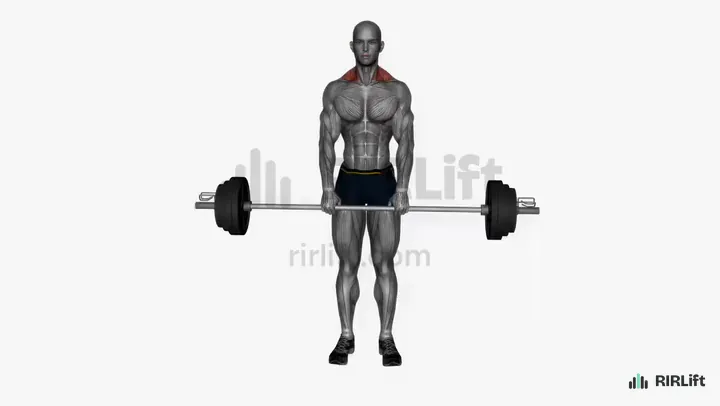
A barbell lets you shrug more weight than two dumbbells usually allow, and holding it against the front of your thighs keeps the setup simple. It is the most direct way to grow the upper traps with a bar.

How to do it

  1. Deadlift the bar to standing or lift it from a rack at hip height, hands just outside your thighs.
  2. Stand tall with your arms straight and shoulders relaxed down.
  3. Raise your shoulders vertically toward your ears, all the way up, and hold for a second.
  4. Lower slowly to a full stretch at the bottom.

Cues

  • Shoulders to your ears
  • Pause at the top
  • Arms stay straight

Common mistakes

  • Rolling the shoulders in circles: shrug straight up and down; rolling adds nothing.
  • Bending the elbows to help: the arms are only hooks, so keep them straight.

Swap for: Barbell High Pull, Rack Pull, Snatch-Grip Deadlift

Traps and upper back, explosive pull

Barbell High Pull

Traps

The high pull starts like a deadlift, then you drive the bar up to your chest with your elbows high and wide. The fast finish puts the traps and rear delts through a bigger range than a shrug and teaches you to pull with your whole body.

How to do it

  1. Set up as for a deadlift with a grip a bit wider than your shoulders.
  2. Stand up with the bar, and as it passes your thighs, extend your hips hard and shrug.
  3. Let the momentum carry the bar up as you pull your elbows high and out, finishing near chest height.
  4. Lower the bar back to your thighs, then to the floor, and reset before the next rep.

Cues

  • Hips first, then arms
  • Elbows high and wide
  • Reset every rep

Common mistakes

  • Pulling with the arms before your hips extend: the arms take over only after the bar passes mid thigh.
  • Going so heavy the bar stalls at the belly: pick a load you can get to chest height every rep.

Swap for: Barbell Shrug, Snatch-Grip Deadlift, Rack Pull

Barbell exercises for the lower back

Your spinal erectors work in every bent-over row, but they only become the target when you hinge with a long lever and a bar that pulls you forward. The good morning puts the bar on your back for the longest lever; the Romanian deadlift keeps it in your hands and shares the work with your hamstrings.

Lower back and hamstrings, bar on the back

Good Morning

Hamstrings, Glutes
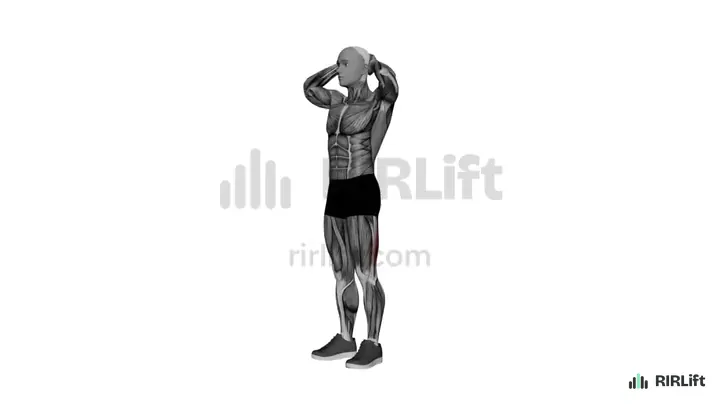
With the bar across your upper back, the lever from your hips to the bar is as long as it gets, so your spinal erectors work hard to keep your back flat as you bow forward. Light weights feel heavy here, which makes it a good finisher after rows.

How to do it

  1. Set the bar across your upper back as for a squat and step out of the rack.
  2. Stand with your feet roughly hip width and knees slightly bent.
  3. Push your hips back and lower your chest toward the floor, keeping your back flat, until you feel a strong pull in your hamstrings.
  4. Push your hips through to stand up again.

Cues

  • Hips back, not chest down
  • Back flat the whole way
  • Soft knees, fixed

Common mistakes

  • Rounding the lower back to reach further: stop each rep where your back would start to bend.
  • Turning it into a squat by bending the knees more as you go down: keep the knee bend the same throughout.

Swap for: Romanian Deadlift, Barbell Deadlift, Rack Pull

Lower back and hamstrings, bar in the hands

Romanian Deadlift

Hamstrings, Glutes

The Romanian deadlift starts from standing and lowers the bar only as far as your hamstrings allow, so your erectors hold your spine still under a heavy load for the whole set. It trains the lower back without the longer lever of the good morning.

How to do it

  1. Hold the bar overhand at hip height with your feet roughly hip width.
  2. Soften your knees and push your hips back, sliding the bar down your thighs.
  3. Stop when the bar is around mid shin or when your back would round, whichever comes first.
  4. Squeeze your glutes and push your hips through to stand back up.

Cues

  • Slide the bar down your legs
  • Hips go back, not down
  • Stop before the back rounds

Common mistakes

  • Squatting the bar down: the knee bend stays small and your hips do the moving.
  • Letting the bar drift forward: keep it touching your legs from top to bottom.

Swap for: Good Morning, Barbell Deadlift, Rack Pull

Put them together: example sessions

Each session below picks from the exercises above for one situation, with the sets, reps, rest and RIR filled in. Open one in the session builder to change a pick, price it from a recent set, and add it to RIRLift.

Session 1

A bar and plates, no rack, no bench

Open in the session builder
  • Workouts2× a week
  • Working sets25 a week
  • Per workout~35 min
  • EquipmentBarbells, Landmine

You train in a garage or basement with a barbell and plates on the floor, and nothing to rest the bar on.

Without a rack, every exercise has to start from the floor, so these sessions use the deadlift and Pendlay row as the heavy lifts and pick the bar up from the floor for the bent-over rows, the meadows row in a corner, and the shrugs after a deadlift to standing. The two heavy pulls stop 2 reps short of failure to keep the lower back fresh for the rows that follow, and the rows and shrugs finish 1 rep short. Session A has 13 working sets and session B has 12.

Back A
ExerciseSets × repsRIRRest
Barbell Deadlift2 warm-up sets firstWork up in 2 or 3 sets first. 3 × 4–6 2 3 min
Pendlay RowDead stop on the floor. 4 × 6–10 1 2 min
Meadows RowPer arm. Bar end in a corner. 3 × 8–12 1 75 s
Barbell ShrugDeadlift the bar up first. Pause 1 s on top. 3 × 10–15 1 75 s

Open Back A in the session builder

Back B
ExerciseSets × repsRIRRest
Underhand Barbell RowElbows close. Pull to the navel. 4 × 8–12 1 2 min
Barbell RowOverhand. Elbows flared to hit the mid back. 3 × 8–12 1 2 min
Romanian DeadliftStop before the back rounds. 3 × 8–10 2 2 min
Barbell High PullElbows high. Reset each rep. 2 × 5–8 2 90 s

Open Back B in the session builder

How to run it
Do Back A and Back B once each per week with at least two days between them. Wedge one end of the bar in a room corner padded with a towel for the meadows row.
How to progress
When every set of a lift reaches the top of its range at the target reps in reserve, add 2.5 to 5 kg (5 to 10 lb) to the deadlift and 2.5 kg (5 lb) to the rows and shrugs the next session.

Session 2

Rack and flat bench, one back day a week

Open in the session builder
  • Workouts1× a week
  • Working sets17 a week
  • Per workout~50 min
  • EquipmentBarbells

You lift in a gym or home gym with a power rack, a flat bench you can raise on plates, and you train back once a week in a body-part split.

A rack lets you pull from the knees and set the bar on your back, and the bench turns into a seal row station, so this session takes advantage of both: the rack pull for heavy upper back and trap work, the bent-over and seal rows for volume, the shrug, then the good morning last when only light weight is needed. With one back day a week, sets run higher, the rows go to 0 to 1 reps in reserve, and the rack pull and good morning stay at 2 to leave nothing on the table but your form. 17 working sets.

Back Day
ExerciseSets × repsRIRRest
Rack Pull2 warm-up sets firstPins just below the knee. 3 × 5–8 2 3 min
Barbell RowTorso near 45 degrees. 4 × 8–12 1 2 min
Seal RowBench on plates. Full hang. 4 × 10–15 0 90 s
Barbell ShrugFrom the rack at hip height. 3 × 10–15 1 75 s
Good MorningLight. Hips back, back flat. 3 × 8–12 2 2 min
How to run it
Do this once a week, ideally two or more days away from leg day. Stack two pairs of bumper plates under the bench ends for the seal row so the bar hangs freely.
How to progress
Add a rep per set each week until you hit the top of every range at the target reps in reserve, then add 5 kg (10 lb) to the rack pull and 2.5 kg (5 lb) to everything else and drop back to the bottom of the range.

Session 3

Already squatting and deadlifting heavy

Open in the session builder
  • Workouts2× a week
  • Working sets17 a week
  • Per workout~20 min
  • EquipmentBarbells, Landmine

You run a strength program built on squats and deadlifts, your lower back is the bottleneck, and you want more back size without adding bent-over work.

Your lower back already gets heavy work from the squats and deadlifts, so this add-on keeps the hinge out entirely and picks the three barbell back exercises that leave it alone: the seal row with your chest on a bench, the meadows row with your hand on your knee, and the shrug standing upright. Because these lifts carry little systemic fatigue, every set goes to 0 to 1 reps in reserve. Each add-on is 8 to 9 sets, short enough to tack onto the end of your existing training days.

Pull A
ExerciseSets × repsRIRRest
Seal RowSqueeze 1 s at the top. 3 × 8–12 1 90 s
Meadows RowPer arm. Hand on the front knee. 3 × 10–15 0 75 s
Barbell ShrugFrom the rack. 2 × 12–20 0 1 min

Open Pull A in the session builder

Pull B
ExerciseSets × repsRIRRest
Seal RowWider grip. Pull to the upper chest. 4 × 12–15 0 90 s
Meadows RowPer arm. Pause at the hip. 3 × 8–12 1 75 s
Barbell ShrugHeavier than Pull A. 2 × 8–12 1 75 s

Open Pull B in the session builder

How to run it
Add Pull A to the end of your squat day and Pull B to the end of your deadlift day. Keep your main program as it is.
How to progress
Add reps first. Once every set hits the top of its range, add 2.5 kg (5 lb) to the seal row and shrug, or the smallest jump your plates allow on the meadows row.

Make it fit you

Questions

What are the big 3 barbell back exercises?

For most lifters the three that do the most are the bent-over row, the deadlift and the shrug: one horizontal pull for lats and mid back, one heavy pull for the whole back, and direct trap work. If your lower back limits you, the seal row can replace the bent-over row.

Are 4 exercises enough for back day?

Yes. Four exercises with 3 or 4 hard sets each gives you 12 to 16 sets, which is a full back day. Make them a row, a heavy pull or hinge, a second row at a different angle, and a shrug, and take them close to failure.

What are the best 3 back exercises with a barbell for size?

The barbell row, the seal row and the rack pull. The bent-over row moves the most weight, the seal row lets you take sets to failure without your lower back giving out, and the rack pull overloads the upper back and traps.

Is the deadlift a back exercise?

It trains the back hard, but as a stabilizer: your lats, traps and erectors hold the bar and your spine still while your hips and legs do the lifting. That builds a thick back but does not replace rows, which move your shoulder blades through their full range.

Barbell row or Pendlay row: which is better?

Neither is better; they suit different goals. The bent-over row keeps tension on the back across the whole set and lets you vary elbow position. The Pendlay row resets on the floor each rep, which is stricter and easier to keep honest as weights get heavy. Many lifters use one as the heavy row and the other for volume.

How can I row with a barbell without hurting my lower back?

Use the seal row with your chest on a raised bench, or the meadows row with your free hand on your knee. Both take the bent-over hold away from your lower back. On regular rows, keep the weight light enough that your torso angle never changes during the set.

How many sets of barbell back exercises per week?

Around 10 to 20 hard sets a week for the back as a whole, counted as sets that finish 0 to 3 reps short of failure. Split it across two sessions if you can, so each set is done fresh.