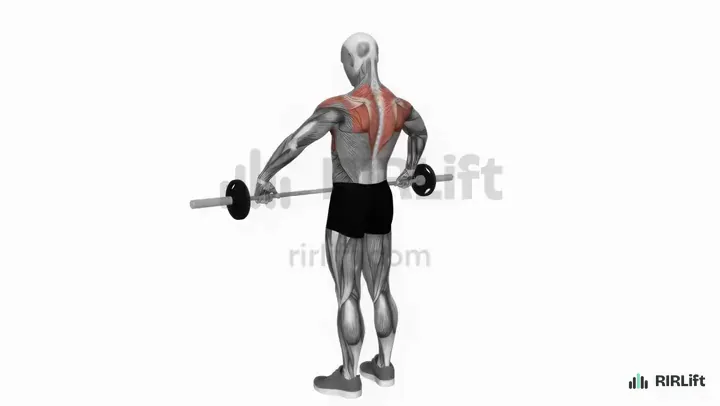
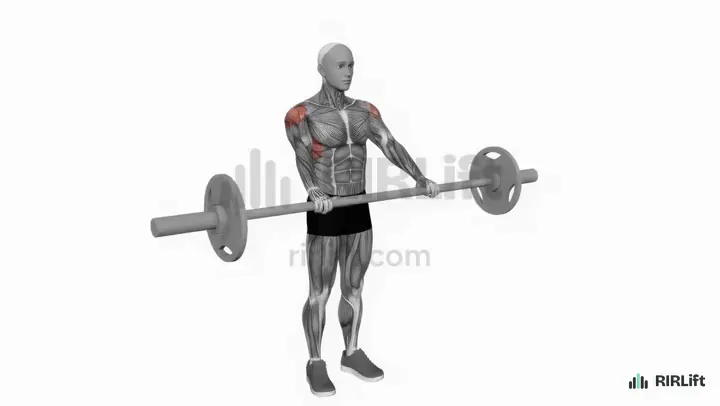
Barbell shoulder exercises: presses, rows and raises

The best barbell shoulder exercises are the standing overhead press and seated press for overall size and strength, the upright row and wide-grip upright row for the side delts, and the landmine press when straight-bar pressing bothers your shoulders. A barbell shoulder session needs one press and one upright row or raise, 3 or 4 sets each at 1 to 2 reps short of failure. A barbell has no good rear delt exercise, so add one from dumbbells, cables or bands.

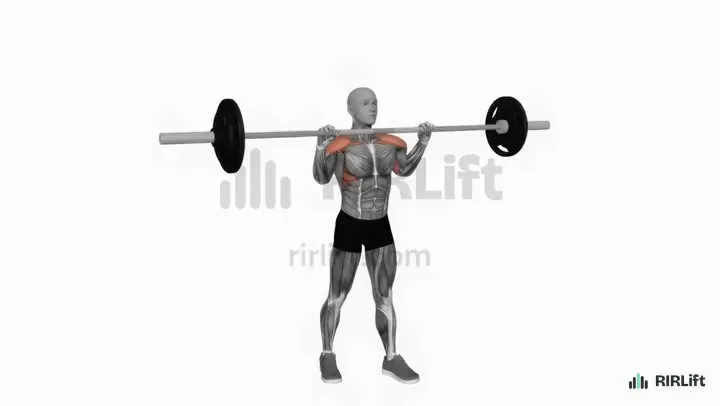
  1. Barbell Overhead Press Shoulders
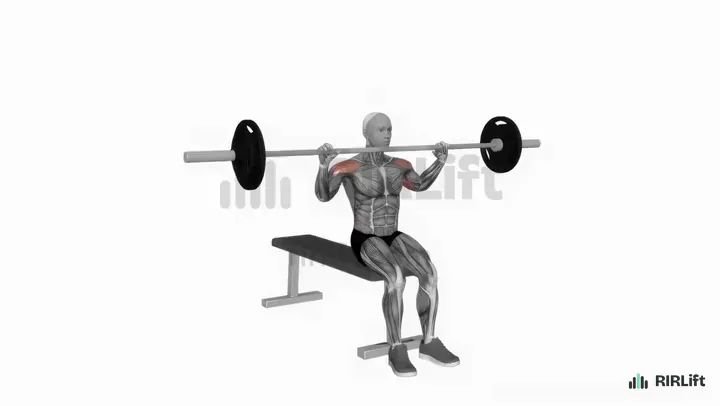
  2. Seated Barbell Overhead Press Shoulders
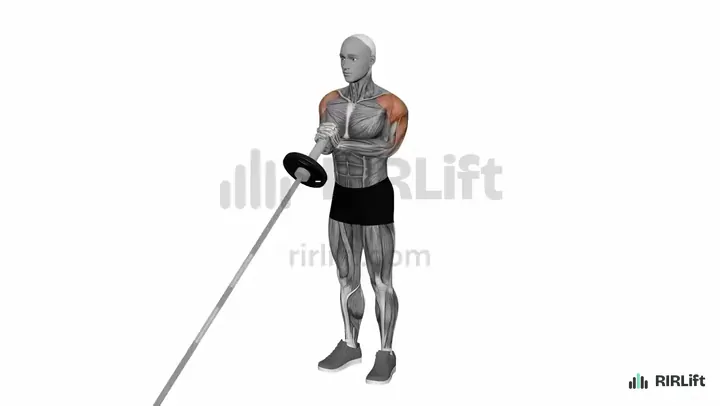
  3. Landmine Press Shoulders
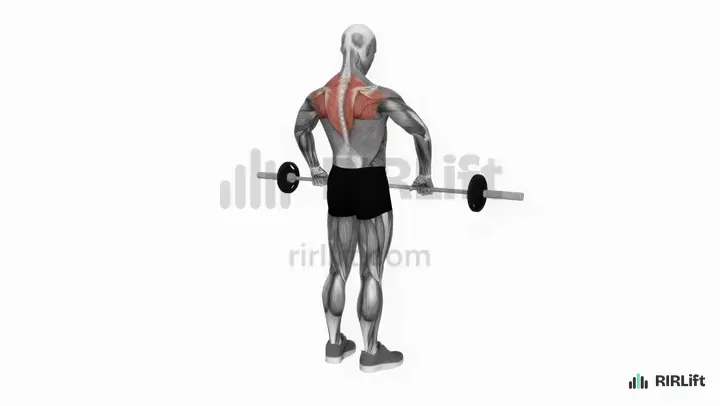
  4. Upright Row Shoulders, Traps
  5. Wide-Grip Upright Row Traps
  6. Barbell Front Raise Shoulders
  7. Barbell Clean and Press Shoulders, Traps, Glutes
  8. Landmine Lateral Raise Shoulders
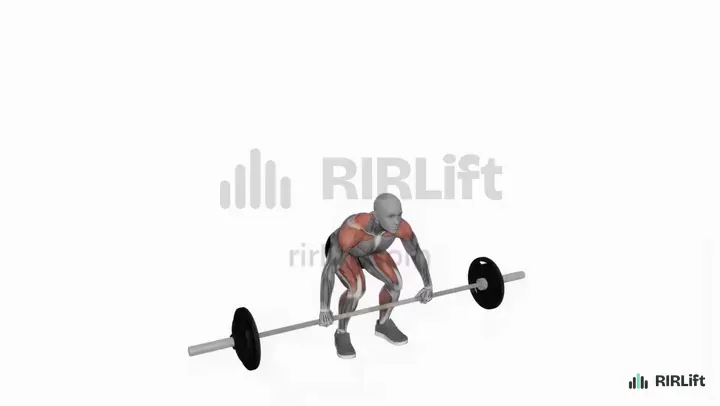
Barbell overhead presses

These are the core of barbell shoulder training. The standing press is the heaviest; the seated, Z and behind-neck versions each take away one way of cheating or move more work to the side delt. Pick one or two per week, not all four.

Front and side delts, the heavy press

Barbell Overhead Press

Shoulders

The standing press moves more weight overhead than any other shoulder exercise on this page, and it is the easiest one to progress in small plate jumps. If you only do one barbell shoulder exercise, make it this.

How to do it

  1. Set the bar in a rack at upper-chest height and grip it just outside your shoulders.
  2. Unrack it so it rests on your front delts, elbows a touch ahead of the bar.
  3. Brace your trunk, squeeze your glutes and press the bar straight up, moving your head back just enough to clear it.
  4. Once the bar passes your forehead, push your head forward under it and lock out, then lower to your collarbone.

Cues

  • Head through at the top
  • Glutes tight
  • Bar over midfoot

Common mistakes

  • Leaning back into a standing incline press as the set gets hard.
  • Pressing the bar out in front of your face instead of straight up.

Swap for: Dumbbell Shoulder Press, Smith Machine Shoulder Press

Front delts, legs and lower back out of it

Seated Barbell Overhead Press

Shoulders

Sitting on a bench with a back support stops the legs from helping and reduces how much you can lean. You lift a little less than standing, but the shoulders do a larger share of the work.

How to do it

  1. Set a bench upright inside a rack with the bar at about head height when seated.
  2. Sit with your back against the pad, feet planted, and take the bar from the hooks.
  3. Lower it to your upper chest.
  4. Press it straight overhead to lockout.

Cues

  • Back on the pad
  • Elbows under the bar
  • Full lockout

Common mistakes

  • Arching hard off the pad, which turns it into an incline press.
  • Stopping the bar at chin height.

Swap for: Machine Shoulder Press, Dumbbell Shoulder Press

Shoulders and trunk, strict

Barbell Z Press

Shoulders

Sitting on the ground, legs straight out ahead, takes away every way of cheating. Any lean or loss of brace shows up at once, which makes it a great teacher for the standing press.

How to do it

  1. Set the bar in a rack low enough to unrack it while sitting on the floor, or use safety pins.
  2. Sit with your legs straight and apart, take the bar on your front delts.
  3. Sit tall and press the bar straight overhead.
  4. Lower it slowly back to your collarbone.

Cues

  • Sit tall
  • Straight up
  • No lean

Common mistakes

  • Rounding the lower back because your hamstrings are tight; spread your legs wider.
  • Using standing-press loads; expect a lot less.

Swap for: Seated Barbell Overhead Press, Landmine Press

Side and front delts, for mobile shoulders

Barbell Behind-Neck Press

Shoulders

Lowering the bar behind your head puts the upper arm out to the side, which shifts more of the work to the side delt. It needs good shoulder mobility; if your elbows have to drop forward or your neck juts out to reach, use the front press.

How to do it

  1. Sit tall on a bench in a rack and take the bar from the hooks with a grip a little wider than for the front press.
  2. Lower the bar behind your head only as far as is comfortable, usually to the top of the ears.
  3. Press it straight up until your arms lock out.
  4. Keep your head neutral throughout.

Cues

  • Head still
  • Only as low as comfortable
  • Light and smooth

Common mistakes

  • Pushing your head forward to clear the bar.
  • Loading it like a front press: use clearly less weight.

Swap for: Barbell Overhead Press, Arnold Press

Landmine shoulder exercises

Anchoring one end of the bar in a landmine or a corner turns it into a lever. That gives you a forward-angled press for touchy shoulders and the only true barbell lateral raise.

Front delts, shoulder-friendly angle

Landmine Press

Shoulders

One end of the bar is anchored, so you press up and forward on an arc instead of straight overhead. That angle suits shoulders that dislike the vertical press, and it works with half-kneeling or standing.

How to do it

  1. Wedge one end of the bar in a landmine or a corner and load the free end.
  2. Hold the end of the bar at your shoulder with one hand, standing in a split stance.
  3. Press it up and forward until your arm is straight.
  4. Lower it back to your shoulder.

Cues

  • Reach at the top
  • Ribs down
  • Stable stance

Common mistakes

  • Twisting to push the bar away.
  • Shortening the reach at lockout.

Swap for: Kettlebell Bottoms-Up Press, Single-Arm Dumbbell Shoulder Press

Side delts with a barbell

Landmine Lateral Raise

Shoulders
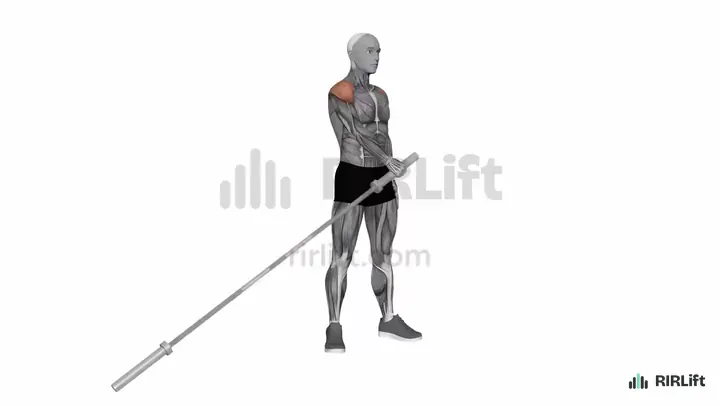
A plain barbell has no good way to raise to the side, but the landmine does. Standing beside the bar and lifting it across and out gives the side delt a rare barbell isolation exercise.

How to do it

  1. Stand side-on to the landmine and grip the end of the bar with the far hand, arm across your body.
  2. Keep your elbow softly bent and raise the bar up and out to the side.
  3. Stop around shoulder height.
  4. Lower it slowly across your body.

Cues

  • Arm long
  • Out, not up
  • Slow down

Common mistakes

  • Rotating the torso to swing the bar up.
  • Using a weight that only moves with momentum.

Swap for: Cable Lateral Raise, Dumbbell Lateral Raise

Upright rows and pulls for the side delts

With a barbell, the side delt grows mostly from upright rows. Keep the elbows above the hands and stop at shoulder height. A wider grip or an EZ bar is easier on most shoulders than a narrow straight bar.

Side delts and traps

Upright Row

Shoulders, Traps

With a grip about shoulder width, pulling the bar up toward your chest makes the side delts and upper traps share the work. It loads heavier than any raise, which makes it the barbell's main side delt builder.

How to do it

  1. Let the bar hang at arm's length, hands about shoulder width apart.
  2. Pull your elbows up and out, keeping the bar close to your body.
  3. Stop when your elbows reach shoulder height.
  4. Lower the bar to straight arms.

Cues

  • Elbows lead
  • Bar close
  • Stop at shoulder height

Common mistakes

  • Pulling the bar up to your chin with a narrow grip, which crowds the front of the shoulder.
  • Bouncing it up with the hips.

Swap for: Cable Upright Row, Dumbbell Upright Row

Side delts, more than traps

Wide-Grip Upright Row

Traps

Widening the grip limits how high the elbows can travel, which shifts the work from the traps to the side delts and is usually easier on the shoulder joint.

How to do it

  1. Grip the bar well outside your shoulders, arms straight.
  2. Raise your elbows out to the sides, letting the bar come up toward your lower chest.
  3. Stop when your upper arms are level with the floor.
  4. Lower it under control.

Cues

  • Wide hands
  • Elbows out
  • Chest high

Common mistakes

  • Shrugging the shoulders toward your ears at the top.
  • Leaning back to finish the rep.

Swap for: Upright Row, Cable Upright Row

Side delts, wrist-friendly

EZ-Bar Upright Row

Shoulders, Traps

The angled grip of an EZ bar lets your wrists turn slightly in, which many people find more comfortable than a straight bar during an upright row.

How to do it

  1. Hold the EZ bar on its outer angled grips, resting it against your thighs.
  2. Pull your elbows up and out, keeping the bar close.
  3. Stop at shoulder height.
  4. Lower slowly to full extension.

Cues

  • Angled grip
  • Elbows over wrists
  • Control down

Common mistakes

  • Letting the wrists bend back sharply at the top.
  • Rushing the lowering half.

Swap for: Upright Row, Band Upright Row

Traps and delts, explosive

Barbell High Pull

Traps

The bar starts from the floor or the hang and is driven up by the hips; the arms finish the pull to chest height. It builds the upper back and delts with more weight than a strict upright row.

How to do it

  1. Stand with the bar over your midfoot and grip it a little wider than your shoulders.
  2. Lift it to above your knees, then jump the hips forward hard.
  3. As the bar rises, pull your elbows high and out.
  4. Let the bar drop back to your thighs, then to the floor or hang.

Cues

  • Hips explode
  • Elbows high
  • Bar close

Common mistakes

  • Pulling early with the arms before the hips extend.
  • Swinging the bar away from your body.

Swap for: Muscle Clean, Kettlebell Sumo Deadlift High Pull

Barbell and EZ-bar front raises

The front delt already works hard on every press, so these are optional. They fit best at the end of a session, light and for higher reps.

Front delts

Barbell Front Raise

Shoulders

A straight bar lets you raise more weight than two dumbbells and keeps both arms moving together. Every press already trains the front delt, so keep this for the end of a session.

How to do it

  1. Hold the bar against your thighs, palms down, about shoulder width.
  2. Keep your arms nearly straight and raise the bar to eye level.
  3. Lower it to your thighs.

Cues

  • Arms long
  • No rocking
  • Eye level

Common mistakes

  • Leaning back to get the bar moving.
  • Going so heavy the reps turn into swings.

Swap for: EZ-Bar Front Raise, Dumbbell Front Raise

Front delts, easier on the wrists

EZ-Bar Front Raise

Shoulders

The same raise on the angled EZ bar grip. It is the answer to the common question of what to do for shoulders with only an EZ bar, together with the EZ-bar upright row.

How to do it

  1. Hold the EZ bar on the angled grips, resting it against your thighs.
  2. Raise it with nearly straight arms to eye level.
  3. Lower it slowly.

Cues

  • Neutral wrists
  • Steady torso
  • Slow lowering

Common mistakes

  • Shrugging the shoulders as the bar rises.
  • Letting the bar drop fast after each rep.

Swap for: Barbell Front Raise, Cable Front Raise

Clean and jerk moves for overhead power

These bring the bar from the floor or shoulders overhead using the legs. They build power and overhead stability and are the way to press with no rack, but they need practice to do well.

Full-body, bar from the floor

Barbell Clean and Press

Shoulders, Traps, Glutes

Cleaning the bar to your shoulders and then pressing it is how to train the shoulders with a barbell when you have no rack. Every rep also trains the legs and back.

How to do it

  1. Stand with the bar over your midfoot and grip it just outside your legs.
  2. Pull it from the floor and, as it passes your hips, drive them forward and catch the bar on your front delts.
  3. Press it straight overhead.
  4. Lower it to your shoulders, then to your thighs and the floor.

Cues

  • Pull close
  • Fast elbows in the catch
  • Brace before the press

Common mistakes

  • Reverse-curling the bar to your shoulders with the arms.
  • Pressing before you are stable in the catch.

Swap for: Kettlebell Clean & Press, Muscle Clean

Overhead power

Power Jerk

Shoulders, Triceps, Traps

A dip and a hard leg drive throw the bar up, and you catch it in a quarter squat with locked arms. It lets you put more weight overhead than any strict press, so it builds overhead strength and stability, but it takes practice.

How to do it

  1. Hold the bar on your front delts with a full grip, elbows a little forward.
  2. Dip a few inches by bending the knees, torso upright.
  3. Drive up hard and push yourself under the bar, landing in a shallow squat with arms locked.
  4. Stand up with the bar overhead, then lower it to your shoulders.

Cues

  • Straight dip
  • Drive, then punch
  • Land locked

Common mistakes

  • Dipping forward onto the toes, which throws the bar out front.
  • Pressing the bar out slowly instead of catching it locked.

Swap for: Split Jerk, Dumbbell Push Press

Put them together: example sessions

Each session below picks from the exercises above for one situation, with the sets, reps, rest and RIR filled in. Open one in the session builder to change a pick, price it from a recent set, and add it to RIRLift.

Session 1

A barbell and plates, no rack

Open in the session builder
  • Workouts2× a week
  • Working sets24 a week
  • Per workout~35 min
  • EquipmentBarbells

You train at home with only a bar and plates on the floor, the classic case of only having a barbell.

Without a rack, anything you press must first come off the floor. The clean and press does that, so it leads at low reps with 2 RIR to keep the clean sharp. The high pull and wide-grip upright row cover the side delts and traps with weights you can lift from the floor. The front raise ends the session with light, higher-rep sets taken to 1 RIR.

Shoulders
ExerciseSets × repsRIRRest
Barbell Clean and Press2 warm-up sets firstReset on the floor each rep. 4 × 4–6 2 2:30 min
Barbell High Pull 3 × 5–8 2 2 min
Wide-Grip Upright Row 3 × 8–12 1 90 s
Barbell Front Raise 2 × 10–15 1 1 min
How to run it
Do this routine twice a week, at least two days apart.
How to progress
Add a rep per set until each set reaches the top of its range, then add 2.5 kg. On the clean and press, add load only when every clean looks the same as the first.

Session 2

Rack and bench, strength and size

Open in the session builder
  • Workouts2× a week
  • Working sets20 a week
  • Per workout~30 min
  • EquipmentBarbells, EZ Bar

You have a squat rack, a bench and a bar, and want a heavier press and bigger delts.

Day A is heavy: the standing press in low reps with 2 RIR, so the technique holds, then the upright row for the side delts. Day B is lighter and higher rep: the seated press and the behind-neck press, then the EZ-bar front raise. The 3 to 4 sets of pressing per day and 6 to 8 sets of side delt work per week cover the shoulder.

Day A
ExerciseSets × repsRIRRest
Barbell Overhead Press3 warm-up sets first 4 × 4–6 2 3 min
Upright Row 3 × 8–12 1 90 s
Barbell Z PressLight. Strict. 2 × 8–10 2 2 min

Open Day A in the session builder

Day B
ExerciseSets × repsRIRRest
Seated Barbell Overhead Press2 warm-up sets first 3 × 8–12 1 2 min
Barbell Behind-Neck PressOnly as deep as is comfortable. 3 × 10–12 2 90 s
EZ-Bar Front Raise 3 × 10–15 1 1 min
EZ-Bar Upright Row 2 × 12–15 0 1 min

Open Day B in the session builder

How to run it
Train Day A and Day B once each per week, with two or more days between them.
How to progress
On Day A, add 2.5 kg to the press when all sets reach 6 reps at 2 RIR. On Day B, work to the top of each rep range before adding weight.

Session 3

Shoulders that dislike the straight bar

Open in the session builder
  • Workouts2× a week
  • Working sets24 a week
  • Per workout~30 min
  • EquipmentLandmine, EZ Bar

Straight-bar pressing overhead bothers your shoulders, but you still want to train them with a bar.

The landmine press angles the bar forward, away from the position that usually bothers a shoulder, and the landmine lateral raise covers the side delts without a narrow upright-row grip. The EZ-bar upright row stops at shoulder height with angled hands. RIR stays 1 to 2 on the presses so you stop well before form slips.

Shoulders
ExerciseSets × repsRIRRest
Landmine Press1 warm-up set firstPer arm. Half-kneeling. 4 × 8–12 1 90 s
Landmine Lateral RaisePer arm. 3 × 10–15 1 1 min
EZ-Bar Upright RowElbows to shoulder height. 3 × 10–15 1 75 s
EZ-Bar Front Raise 2 × 12–15 1 1 min
How to run it
Do the session twice a week. Do every landmine move for the same reps on each side, starting with your weaker arm.
How to progress
Work every set up to the top of its rep range, then add the smallest plate. If a move feels sharp in the shoulder, cut its range of motion before you cut the weight.

Make it fit you

Questions

What is the best barbell exercise for shoulders?

The standing overhead press. It trains the front and side delts with the most weight and progresses in small steps. Add an upright row for more side delt work, and you have the two barbell lifts that matter most.

If I only have a barbell, what can I do for shoulders besides the overhead press?

Upright rows with a shoulder-width or wide grip, the high pull, and the front raise all work with just a bar. With no rack, the clean and press replaces the strict press. For the rear delts, add band pull-aparts or a dumbbell reverse fly if you can.

What shoulder exercises can I do with an EZ bar?

The EZ-bar upright row and the EZ-bar front raise. The angled grip turns your wrists slightly in, which many lifters find more comfortable than a straight bar for both moves.

How do I train the rear delts without dumbbells?

Bands and cables do it best: face pulls, reverse flies and pull-aparts. With bodyweight only, the plank IYTW works the upper back and rear delts. A barbell does not isolate them well.

Are upright rows bad for your shoulders?

They are fine for most people when the elbows stop at shoulder height and the grip is at least shoulder width. A narrow grip pulled to the chin is the version that tends to bother people; the wide-grip or EZ-bar row is the easy fix.

Which 3 shoulder exercises should I do with a barbell?

The standing overhead press, the wide-grip upright row, and a front raise or landmine lateral raise. Add a band or dumbbell rear delt move to cover the back of the shoulder.

Is the behind-the-neck press dangerous?

It needs more shoulder mobility than the front press. If you can lower the bar to your ears without pushing your head forward or feeling a pinch, use light to moderate weights. If not, the front press trains the same muscles.