
Shoulder exercises at the gym: machines, cables and bars
Published October 19, 2026
The best shoulder exercises at the gym are the machine shoulder press or barbell overhead press for the front delts, the cable or machine lateral raise for the side delts, and the reverse pec deck and face pull for the rear delts. The gym's advantage is constant tension: cables and machines load the delts at the bottom of a raise, where dumbbells go slack. Use one press, two side delt moves and one or two rear delt moves, 2 to 4 sets each, stopping presses 1 to 2 reps from failure and raises 0 to 1.
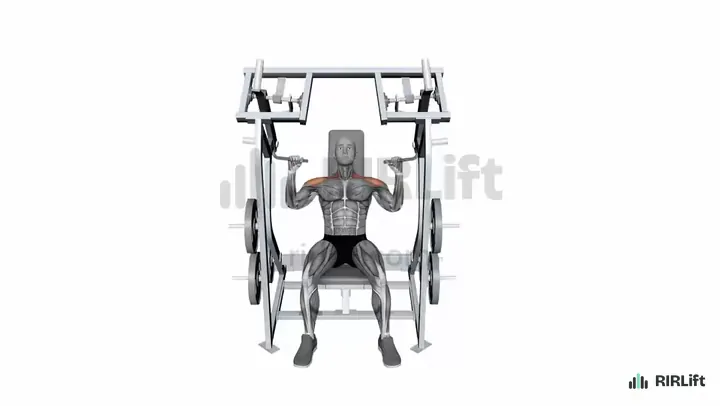
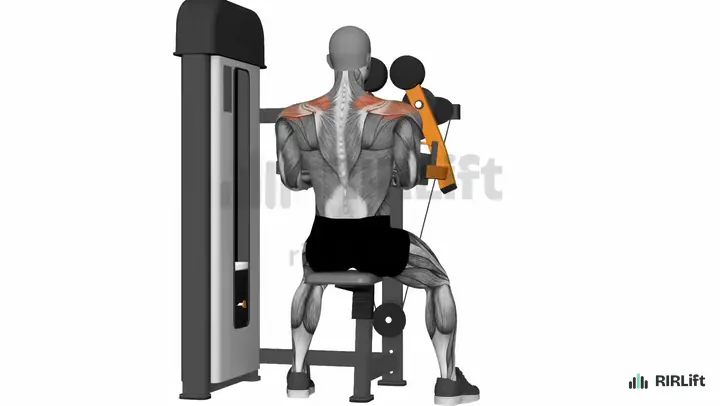
- Machine Shoulder Press Shoulders
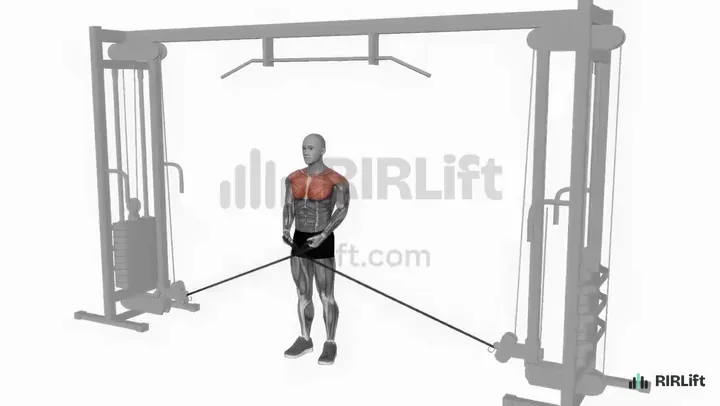
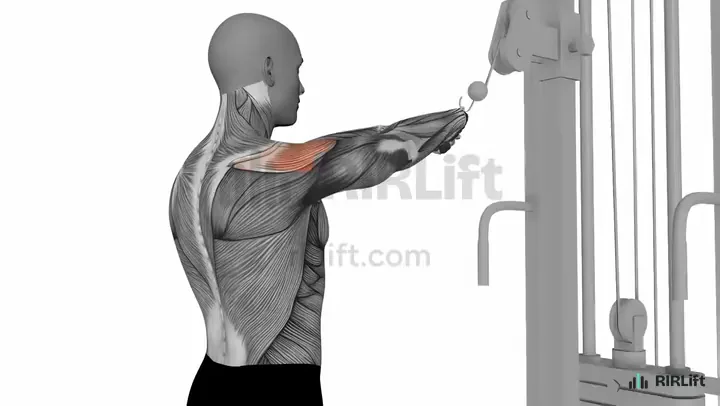
- Cable Lateral Raise Shoulders
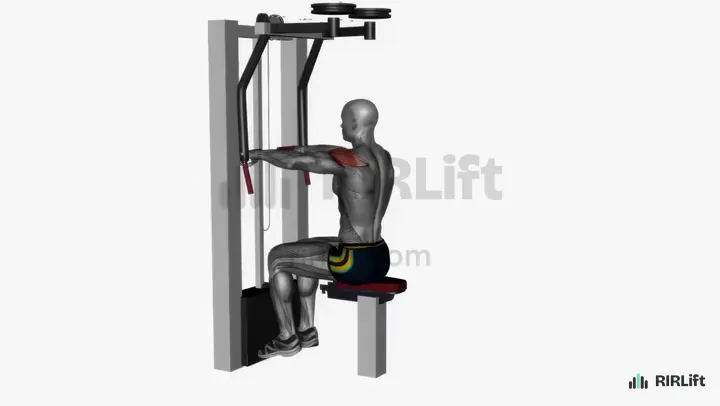
- Reverse Pec Deck Shoulders
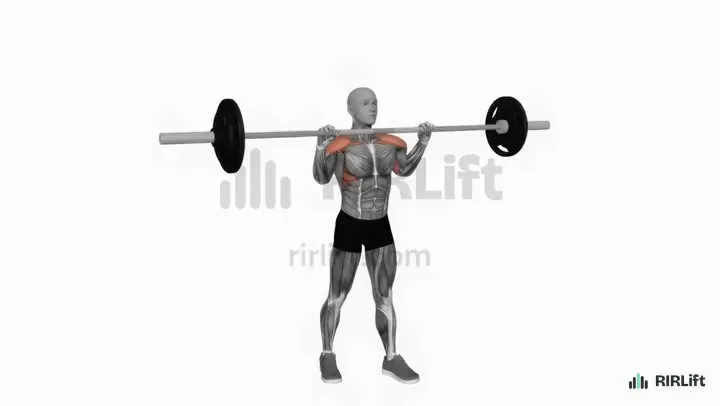
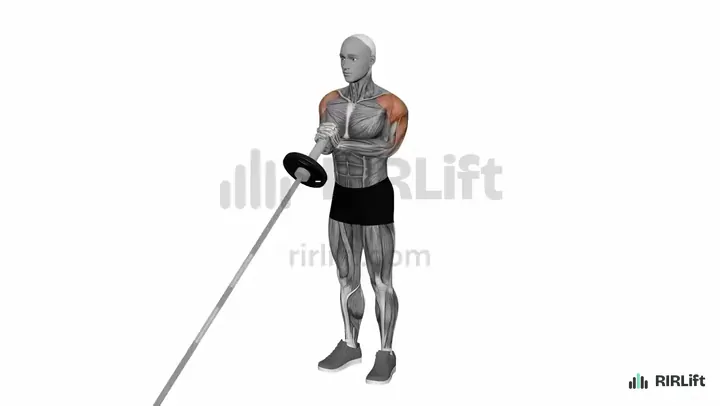
- Barbell Overhead Press Shoulders
- Machine Lateral Raise Shoulders
- Face Pull Shoulders, Upper Back
- Landmine Press Shoulders
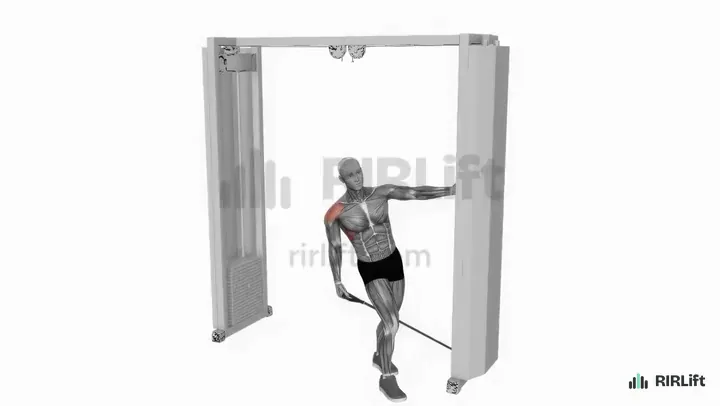
- Leaning Cable Lateral Raise Shoulders
Put them together: example sessions
Each session below picks from the exercises above for one situation, with the sets, reps, rest and RIR filled in. Open one in the session builder to change a pick, price it from a recent set, and add it to RIRLift.
-
Session 1
New to the gym, machines only, about 35 minutes
You are learning your way around the gym and want a shoulder session where every exercise has a seat, a pad and a fixed path.
2× a week · 18 sets a week · ~20 min
-
Session 2
Free weights and cables, pressing strength is the goal
You train regularly and want a heavier overhead press, plus enough side and rear delt work to keep the shoulders balanced.
2× a week · 26 sets a week · ~35 min
-
Session 3
Straight overhead pressing bothers your shoulder
Barbell and machine presses pinch at the top for you, but you still want to train the delts hard at the gym.
2× a week · 18 sets a week · ~20 min
Session 1
New to the gym, machines only, about 35 minutes
- Workouts2× a week
- Working sets18 a week
- Per workout~20 min
- EquipmentShoulder Press, Lateral Raise Machine, Fly Machine
You are learning your way around the gym and want a shoulder session where every exercise has a seat, a pad and a fixed path.
Machines let you push close to failure on day one without learning to balance a bar, so all three picks are selectorized: the shoulder press, the lateral raise machine and the reverse pec deck, one for each head of the delts. Sets stay at 2 RIR at first so you learn what a hard set feels like before you chase failure. Nine working sets per session, twice a week, is enough to grow while you are new.
| Exercise | Sets × reps | RIR | Rest |
|---|---|---|---|
| Machine Shoulder Press1 warm-up set firstHandles at shoulder level. | 3 × 8–12 | 2 | 2 min |
| Machine Lateral RaisePivots in line with shoulders. | 3 × 10–15 | 2 | 75 s |
| Reverse Pec DeckChest on the pad. | 3 × 12–15 | 2 | 75 s |
- How to run it
- Do the same session twice a week with two or more days between. Note each machine's seat setting the first time so you can set up quickly next time.
- How to progress
- Add a rep per set until you reach the top of the range on every set, then move the pin down one plate. After four weeks, take the last set of each exercise to 1 RIR.
Session 2
Free weights and cables, pressing strength is the goal
- Workouts2× a week
- Working sets26 a week
- Per workout~35 min
- EquipmentBarbells, Adjustable Cable, Smith Machine, Cable Crossover +1
You train regularly and want a heavier overhead press, plus enough side and rear delt work to keep the shoulders balanced.
The standing barbell press leads both sessions at 4 to 8 reps and 2 RIR, since strength comes from heavy sets you can repeat, not from failure. The rest of each day uses cables for the side and rear delts, where the constant tension makes moderate weights hard. Day B uses the Smith press as a second, guided press at higher reps. Raises go to 0 to 1 RIR. Each session has 13 working sets.
| Exercise | Sets × reps | RIR | Rest |
|---|---|---|---|
| Barbell Overhead Press2 warm-up sets firstGlutes tight. | 4 × 4–8 | 2 | 3 min |
| Cable Lateral RaisePer side. | 3 × 12–20 | 0 | 1 min |
| Face PullPull to the eyes. | 3 × 12–20 | 1 | 1 min |
| Cable Upright RowStop at mid-chest. | 3 × 10–15 | 1 | 75 s |
Open Day A in the session builder
| Exercise | Sets × reps | RIR | Rest |
|---|---|---|---|
| Smith Machine Shoulder Press1 warm-up set first | 3 × 8–12 | 1 | 2 min |
| Leaning Cable Lateral RaisePer side. | 3 × 12–20 | 0 | 1 min |
| Rear Delt Cable FlyArms nearly straight. | 4 × 15–20 | 0 | 1 min |
| Machine Lateral Raise | 3 × 12–20 | 0 | 1 min |
Open Day B in the session builder
- How to run it
- Do Day A and Day B in the same week, at least two days apart. Use full rest on the barbell press; the cable work can be paired up if the stations are free.
- How to progress
- On the barbell press, add 5 lb once every set reaches 8 reps at 2 RIR. On cable work, add reps to the top of the range, then go up one pin.
Session 3
Straight overhead pressing bothers your shoulder
- Workouts2× a week
- Working sets18 a week
- Per workout~20 min
- EquipmentLandmine, Lateral Raise Machine, Adjustable Cable, Cable Crossover +1
Barbell and machine presses pinch at the top for you, but you still want to train the delts hard at the gym.
The landmine press moves the arm up and forward instead of straight overhead, which most lifters with cranky shoulders tolerate, so it is the only press here and stays at 2 RIR. The rest of the work is cables and machines that keep the arm below or beside the head: the lateral raise machine, the Y raise with light weight, the face pull and the reverse pec deck. Rear delt and cuff work gets as many sets as the side delts, since both help keep the shoulder stable.
| Exercise | Sets × reps | RIR | Rest |
|---|---|---|---|
| Landmine Press1 warm-up set firstPer arm. Staggered stance. | 3 × 8–12 | 2 | 90 s |
| Machine Lateral Raise | 3 × 12–20 | 1 | 1 min |
| Face Pull | 3 × 15–20 | 1 | 1 min |
Open Session 1 in the session builder
| Exercise | Sets × reps | RIR | Rest |
|---|---|---|---|
| Landmine PressPer arm. | 3 × 10–15 | 2 | 90 s |
| Cable Y RaiseLight. Thumbs up. | 3 × 12–20 | 1 | 1 min |
| Reverse Pec Deck | 3 × 12–20 | 0 | 1 min |
Open Session 2 in the session builder
- How to run it
- Do Session 1 and Session 2 once each a week. If any exercise pinches, shorten the range for that set rather than pushing through it.
- How to progress
- Add reps first on every exercise. Move up a weight only when every set reaches the top of its range and the movement still feels clean.
Make it fit you
-
Every station is taken
Swap freely within a section: the cable lateral raise for the machine, the reverse pec deck for the cable fly, the Smith press for the machine press. The set and RIR targets stay the same.
-
Short on time
Superset a side delt move with a rear delt move at neighboring stations, such as the cable lateral raise with the face pull. Two exercises done that way after a press is a full shoulder session in about 25 minutes.
-
Training shoulders on push day
Your chest presses already work the front delts, so skip the shoulder press on that day and add only a cable or machine lateral raise and a rear delt move at the end.
-
Side delts are lagging
Start the session with the leaning cable lateral raise while you are fresh, then add a second side delt exercise later. Run both to 0 RIR on the last set.
-
First weeks at the gym
Use the machine plan and keep every set at 2 reps in reserve. Learn the barbell press with an empty bar at the end of a session before you make it your main lift.
-
Log the RIR, not just the weight
Machine weight stacks differ from gym to gym, so the plate number alone tells you little. If you log in RIRLift, the reps you had left on each set set the weight it suggests next time, wherever you train.
Questions
What gym machines are good for shoulders?
The shoulder press machine for the front delts, the lateral raise machine and a cable stack for the side delts, and the reverse pec deck and cable face pull for the rear delts. The Smith machine is another option for guided pressing.
Which exercise is best for a gym shoulder workout?
For overall size, a press plus a cable or machine lateral raise covers the most. If you can do only one, pick the lateral raise variation you can do strictly, since presses on chest day already train the front delts.
Are cables better than dumbbells for shoulders?
For raises, cables have an edge because they keep tension at the bottom of the movement, where dumbbells feel weightless. For pressing, dumbbells, barbells and machines all work; choose by what you can load and repeat.
How many shoulder exercises should I do at the gym?
Three or four per session is enough: one press, one or two side delt moves and one rear delt move. More exercises with fewer hard sets each rarely adds anything.
Should I use the barbell press or the shoulder press machine?
Use the barbell if you want pressing strength and enjoy learning the lift. Use the machine if you want to grow the front delts with less to learn and can push it closer to failure safely.
How often should I train shoulders at the gym?
Two sessions a week works well for most people, spreading 8 to 16 hard sets each for the side and rear delts across them. Front delt sets from chest pressing count toward their total.
Related templates
-
Dumbbell shoulder exercises for all three delts
The same three delt heads trained with dumbbells and a bench only.
-
Cable exercises by muscle, with sessions for the cables you have
Every cable movement in the gym, sorted by muscle, for building full sessions.
-
Overhead press: how to do it, and what to do instead
The barbell press in detail: setup, bar path and programming.
-
Face pulls: how to do them, what they work, and what to do instead
Rope setup, grip options and set targets for the rear delts and cuff.
-
The best workout for shoulders, for your situation
Complete shoulder programs to run from week to week.