
Bicep exercises for beginners: the curls to learn first and how to progress them
Published October 29, 2026
The best bicep exercises for beginners are the dumbbell curl, hammer curl and concentration curl if you train with dumbbells, the EZ-bar curl, cable curl and machine preacher curl in a gym, and the band hammer curl and doorway curl if you have no weights. Pick two of them, do 3 sets of 8 to 15 reps two days a week, keep your elbows pinned to your sides, and stop each set with 2 reps left. Raise the weight once every set reaches the top of the range.
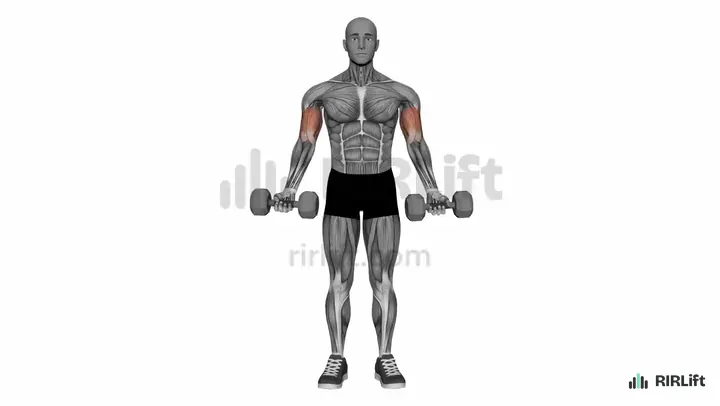
- Dumbbell Curl Biceps
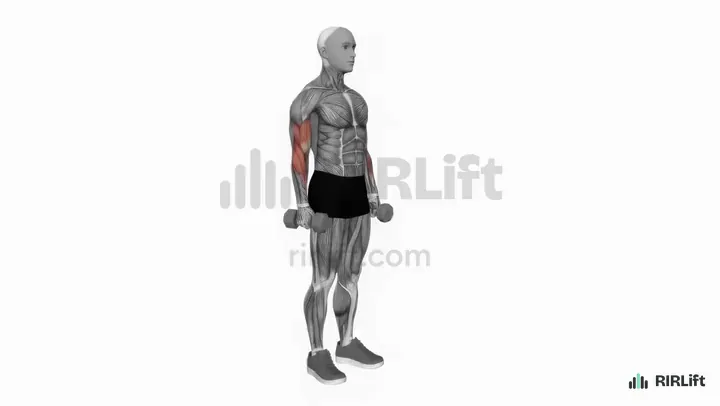
- Hammer Curl Biceps, Forearms
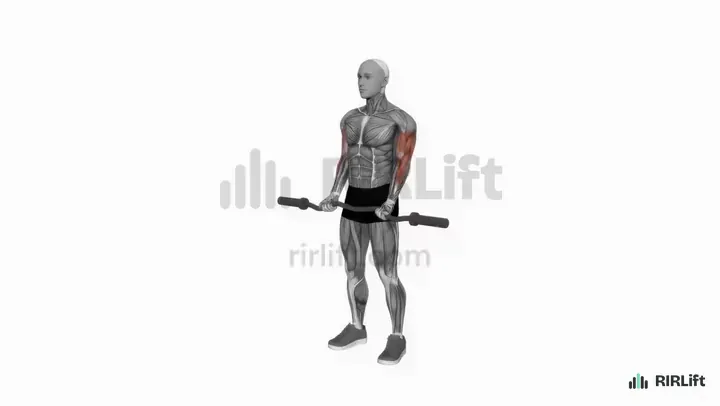
- EZ-Bar Curl Biceps
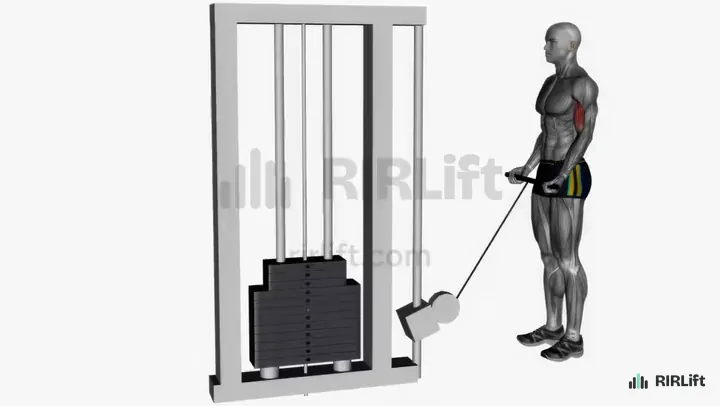
- Cable Curl Biceps
- Concentration Curl Biceps
- Chin-Up Lats
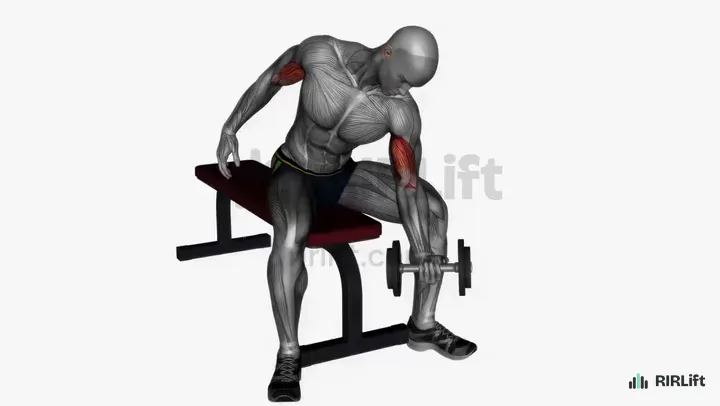
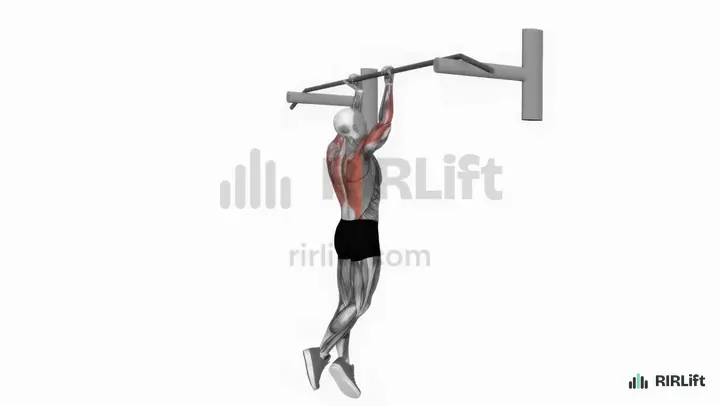
Put them together: example sessions
Each session below picks from the exercises above for one situation, with the sets, reps, rest and RIR filled in.
-
Session 1
Home with a pair of dumbbells, twice a week
You have one or two pairs of dumbbells at home and want to add biceps work to two full-body sessions.
2× a week · 9 sets a week · ~10 min
-
Session 2
Gym, biceps after your back work
You train in a gym two or three days a week with rows and pulldowns, and want two biceps exercises after them.
2× a week · 10 sets a week · ~10 min
-
Session 3
No dumbbells: a band and a door frame
You train at home with no weights, only a light resistance band and a sturdy door frame.
2× a week · 10 sets a week · ~10 min
Session 1
Home with a pair of dumbbells, twice a week
- Workouts2× a week
- Working sets9 a week
- Per workout~10 min
- EquipmentDumbbells
You have one or two pairs of dumbbells at home and want to add biceps work to two full-body sessions.
Two short blocks a week add up to 9 hard sets for the biceps, 5 on the first day and 4 on the second, enough for steady growth when you are new. Rows and other pulls in your full-body days add a little more without extra time.
| Exercise | Sets × reps | RIR | Rest |
|---|---|---|---|
| Dumbbell CurlPer arm. Elbows pinned to your sides. | 3 × 8–12 | 2 | 75 s |
| Hammer Curl | 2 × 10–15 | 2 | 1 min |
| Exercise | Sets × reps | RIR | Rest |
|---|---|---|---|
| Hammer Curl | 2 × 8–12 | 2 | 75 s |
| Concentration CurlPer arm. 2 s down. | 2 × 10–15 | 2 | 1 min |
- How to run it
- Put the block at the end of two full-body sessions, two or three days apart. It takes about 10 minutes.
- How to progress
- Double progression: when every set reaches the top of the range with 2 reps in reserve, move to the next dumbbell and work back up from the bottom of the range. If the next dumbbell is a big jump, add 2 reps to the range first.
Session 2
Gym, biceps after your back work
- Workouts2× a week
- Working sets10 a week
- Per workout~10 min
- EquipmentEZ Bar, Adjustable Cable, Pull-Up Bar, Preacher Curl Machine
You train in a gym two or three days a week with rows and pulldowns, and want two biceps exercises after them.
Back exercises already load the biceps, so 5 sets per session on two days, chin-ups included, reaches about 10 sets a week without wearing you out. The cable and preacher curls go to 1 rep in reserve because a machine keeps the reps clean near failure.
| Exercise | Sets × reps | RIR | Rest |
|---|---|---|---|
| EZ-Bar Curl1 warm-up set first | 3 × 8–12 | 2 | 90 s |
| Cable Curl | 2 × 10–15 | 1 | 1 min |
| Exercise | Sets × reps | RIR | Rest |
|---|---|---|---|
| Chin-UpJump up and lower in 4 s if you cannot pull up yet. | 3 × 3–8 | 2 | 2 min |
| Machine Preacher Curl | 2 × 10–15 | 1 | 1 min |
- How to run it
- Add these after your rows or pulldowns on two different days. Rest at least one day between them.
- How to progress
- Add the smallest plate or pin step once every set reaches the top of the range at the target reps in reserve. On the EZ bar, expect to add weight every week or two in the first months.
Session 3
No dumbbells: a band and a door frame
- Workouts2× a week
- Working sets10 a week
- Per workout~10 min
- EquipmentResistance Bands
You train at home with no weights, only a light resistance band and a sturdy door frame.
Without weights, more sets and more reps do the job: 5 sets per session, two sessions a week, about 10 sets total. The higher rep ranges make up for lighter loads, as long as the last reps are hard.
| Exercise | Sets × reps | RIR | Rest |
|---|---|---|---|
| Bodyweight Bicep CurlFeet closer to the frame makes it harder. | 3 × 10–15 | 2 | 1 min |
| Band Hammer CurlPer arm. | 2 × 12–20 | 2 | 1 min |
| Exercise | Sets × reps | RIR | Rest |
|---|---|---|---|
| Band Hammer CurlPer arm. Pause 1 s at the top. | 3 × 12–20 | 2 | 1 min |
| Bodyweight Bicep Curl | 2 × 10–15 | 2 | 1 min |
- How to run it
- Do it at the end of two home workouts, or on its own on any two non-consecutive days.
- How to progress
- When you reach the top of the range with 2 reps in reserve, make it harder rather than adding reps: walk your feet closer to the door frame, step wider on the band, or double it over.
Make it fit you
-
Pick the weight by the last rep
The right weight is the one where rep 10 is slow but clean and you could do two more. If you are swinging your hips from rep 3, go lighter.
-
Sore wrists
Use hammer curls, the band hammer curl and the EZ bar, and leave the straight barbell out. A neutral or angled grip keeps your wrists in a more natural position.
-
One arm is weaker
Use the dumbbell and concentration curls, start each set with the weaker arm, and stop the stronger arm at the same rep count.
-
Log your reps in reserve
Curls progress in small steps, so they are easy to forget. Log each set and the reps you had left; RIRLift uses those to tell you when the next dumbbell is due.
-
Fold it into full-body days
Biceps do not need their own day as a beginner. Two exercises at the end of full-body sessions, twice a week, is all the plans above ask for.
Questions
What three bicep exercises should I do?
For dumbbells: the dumbbell curl, hammer curl and concentration curl. In a gym: the EZ-bar curl, cable curl and preacher curl. Beginners only need two per session; the third rotates in on the other day.
What is the 7-7-7 bicep exercise?
Often called 21s: 7 reps from the bottom to halfway, 7 from halfway to the top, then 7 full reps, without rest. It is a hard finisher, but beginners grow fine on straight sets and can save 21s for later.
How long does it take to grow biceps?
Most beginners feel stronger within a few weeks, mainly because they learn the movement. Visible size takes longer and depends on eating enough protein and adding weight over a few months.
Can I train biceps every day?
You can, but there is no reason to as a beginner. Two sessions a week with hard sets, plus the pulling you already do, grows them, and the days off are when they recover.
How heavy should a beginner curl?
Heavy enough that 8 to 15 reps leave you 2 short of failure with your elbows still. Start lighter than you think and let your logged reps tell you when to move up.
Can I build biceps without weights?
Yes, with a door frame, a band or a bar. The doorway curl and band hammer curl work for months at home, and chin-ups load the biceps as much as a heavy curl.
Related templates
-
Arm exercises for beginners: start on machines, then add dumbbells
Biceps and triceps together for a complete beginner arm routine.
-
Tricep exercises for beginners: pushdowns, overhead extensions and dips
The other half of your upper arm, with the same beginner plans.
-
Bicep exercises at home: chin-ups, bands and curls with one weight
More curl options when you train with limited equipment.
-
Dumbbell curl: how to do it, alternating or together, and how heavy to go
A deeper guide to the first curl most beginners learn.
-
Double progression
The rule these plans use to decide when to pick up a heavier dumbbell.