
Bodyweight arm exercises: triceps, biceps and grip without weights
Published October 19, 2026
The best bodyweight arm exercises are the close-grip push-up, bench dip and parallel-bar dip for your triceps, the pike push-up for your triceps and shoulders, the chin-up and doorway curl for your biceps, and the dead hang for your grip. With no equipment at all, you can still train both sides of the arm with close-grip push-ups, floor dips and the doorway curl. A pull-up bar is the one piece of gear worth buying, because chin-ups give your biceps far more load than any no-weight curl.
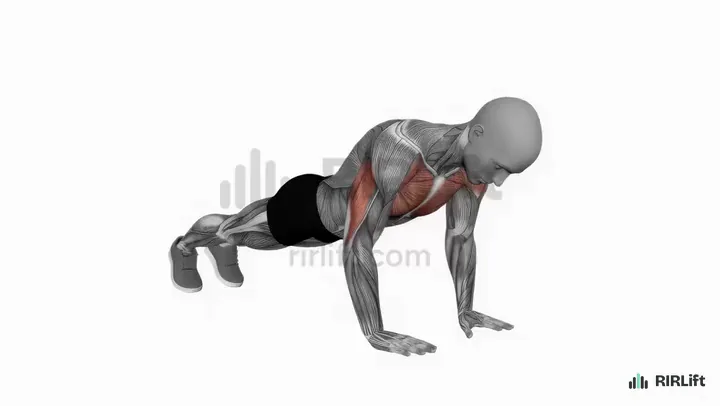
- Close-Grip Push-Up Triceps, Chest
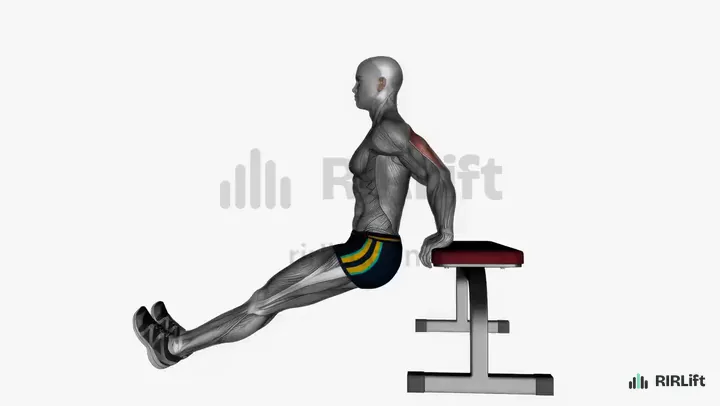
- Bench Dip Triceps
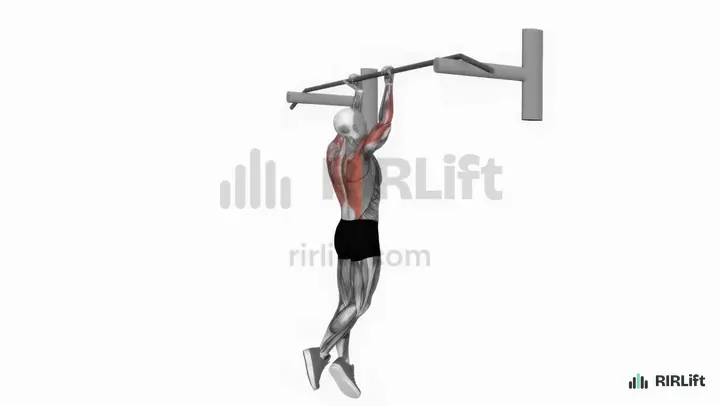
- Chin-Up Lats
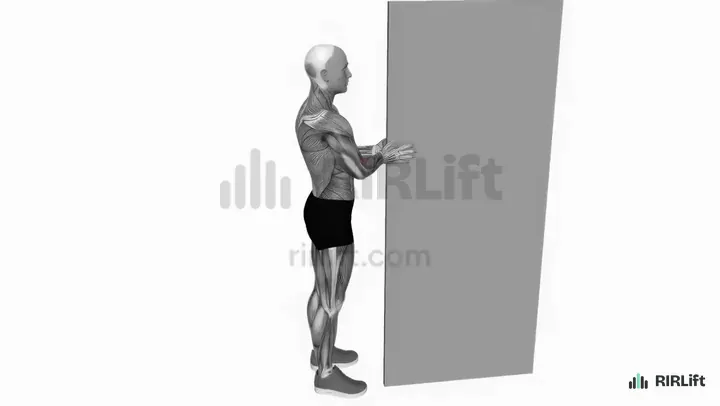
- Bodyweight Bicep Curl Biceps
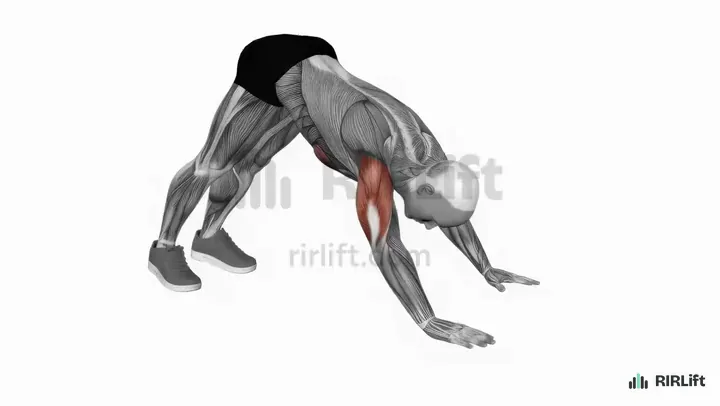
- Pike Push-Up Shoulders
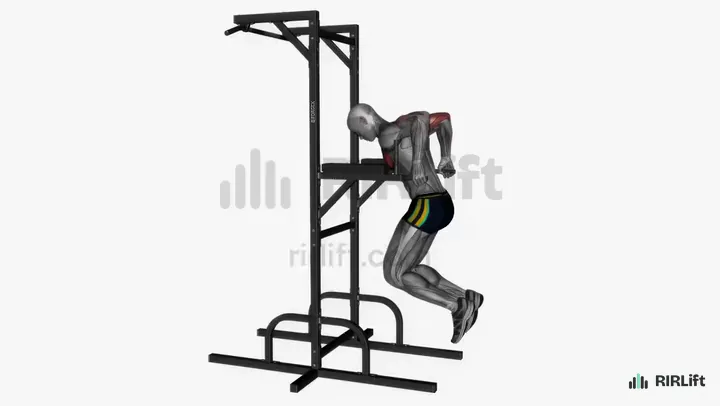
- Chest Dip Chest, Triceps
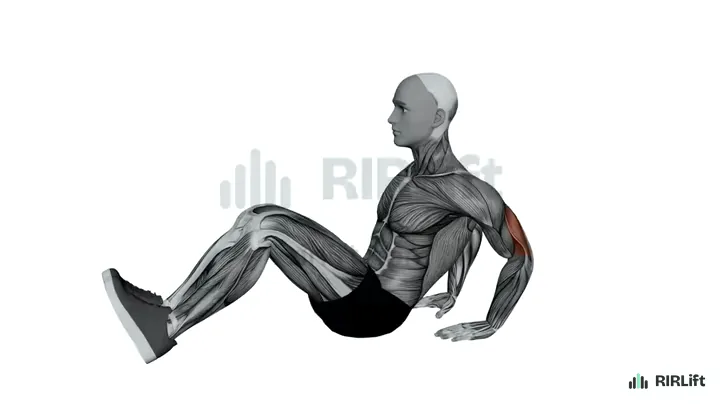
- Floor Triceps Dip Triceps
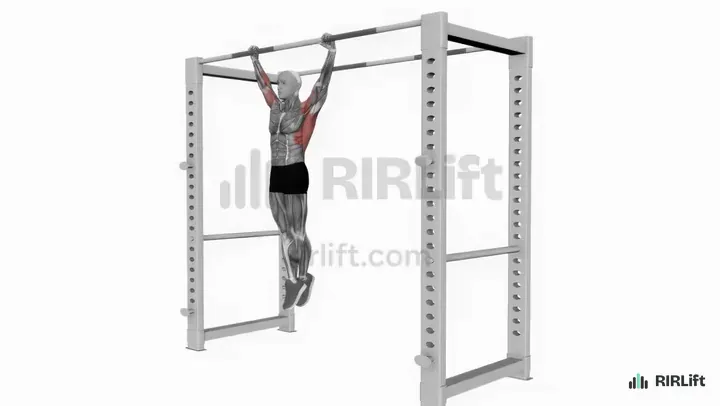
- Dead Hang Forearms
Put them together: example sessions
Each session below picks from the exercises above for one situation, with the sets, reps, rest and RIR filled in. Open one in the session builder to change a pick, price it from a recent set, and add it to RIRLift.
-
Session 1
No equipment at all: floor and a doorway
You train at home or in a hotel with no bar, no bench and no weights, just floor space and a door frame.
3× a week · 36 sets a week · ~20 min
-
Session 2
Pull-up bar and a sturdy chair at home
You have a doorway pull-up bar and a chair or bench, and you want bigger arms rather than just endurance.
2× a week · 21 sets a week · ~25 min
-
Session 3
Outdoor park with dip and pull-up bars
You train at an outdoor calisthenics park or a playground with parallel bars and a high bar, three times a week.
3× a week · 33 sets a week · ~20 min
Session 1
No equipment at all: floor and a doorway
- Workouts3× a week
- Working sets36 a week
- Per workout~20 min
- EquipmentBodyweight
You train at home or in a hotel with no bar, no bench and no weights, just floor space and a door frame.
With nothing to pull on except a doorway, the doorway curl carries all the bicep work and the three floor pushes cover the triceps. Bodyweight does not get heavier, so reps run high and each set ends 1 rep short of failure: at 15 to 30 reps, the final hard reps are what makes the set count. The pike push-up comes first while your shoulders are fresh. Each session is 12 working sets.
| Exercise | Sets × reps | RIR | Rest |
|---|---|---|---|
| Pike Push-UpFeet on a step once 15 is easy. | 3 × 6–15 | 1 | 90 s |
| Close-Grip Push-UpHands under shoulders. Lock out. | 3 × 8–25 | 1 | 75 s |
| A1 Floor Triceps DipHips never rest. | 3 × 15–30 | 1 | 45 s |
| A2 Bodyweight Bicep CurlLean back farther as you get stronger. | 3 × 12–25 | 1 | 45 s |
- How to run it
- Do this session three times a week on non-consecutive days. Put the floor dip and doorway curl back to back to save time.
- How to progress
- Add reps each session until you hit the top of every range, then make the move harder: feet on a step for the push-ups, a slower three-second lowering, or walk your feet farther forward on the doorway curl.
Session 2
Pull-up bar and a sturdy chair at home
- Workouts2× a week
- Working sets21 a week
- Per workout~25 min
- EquipmentPull-Up Bar, Flat Bench
You have a doorway pull-up bar and a chair or bench, and you want bigger arms rather than just endurance.
Chin-ups replace the doorway curl because they load the biceps with your full bodyweight, so the reps drop to 5 to 12 and the targets sit at 1 to 2 reps in reserve to keep each rep complete. Bench dips and close-grip push-ups cover the triceps, Two sessions with 12 and 9 working sets give your biceps 8 hard sets and your triceps 13 each week.
| Exercise | Sets × reps | RIR | Rest |
|---|---|---|---|
| Chin-UpFull hang each rep. | 4 × 5–12 | 1 | 2 min |
| Bench DipLegs straight once bent-knee is easy. | 4 × 10–20 | 1 | 75 s |
| Close-Grip Push-UpElbows brush ribs. | 4 × 8–20 | 1 | 75 s |
Open Arms A in the session builder
| Exercise | Sets × reps | RIR | Rest |
|---|---|---|---|
| Close-Grip Chin-UpHands a fist apart. | 4 × 5–12 | 2 | 2 min |
| Close-Grip Push-UpLast set to failure. | 3 × 10–25 | 0 | 75 s |
| Bench Dip | 2 × 12–20 | 0 | 1 min |
Open Arms B in the session builder
- How to run it
- Alternate Arms A and Arms B with at least one rest day between them, two or three times a week. Use a chair that cannot slide, back it against a wall.
- How to progress
- Add one rep per set until you hit the top of the range, then add difficulty: a backpack with books on chin-ups and dips, feet raised on the bench dip, or a three-second lowering on every rep.
Session 3
Outdoor park with dip and pull-up bars
- Workouts3× a week
- Working sets33 a week
- Per workout~20 min
- EquipmentDip Bar, Pull-Up Bar
You train at an outdoor calisthenics park or a playground with parallel bars and a high bar, three times a week.
Parallel bars give you the full dip, the heaviest triceps exercise without weights, so it leads and replaces the chair dip. The close-grip chin-up handles biceps and the pike push-up adds overhead triceps work on the ground between bar sets. Sets stop 1 to 2 reps short of failure on the heavy bar movements; finish with one long dead hang if your grip still has anything left.
| Exercise | Sets × reps | RIR | Rest |
|---|---|---|---|
| A1 Chest DipStay upright for triceps. | 4 × 6–15 | 1 | 2 min |
| A2 Close-Grip Chin-UpFull hang each rep. | 4 × 5–12 | 1 | 2 min |
| Pike Push-UpOn the ground between bar sets. | 3 × 6–15 | 2 | 90 s |
- How to run it
- Run the session three times a week on non-consecutive days. Alternate a set of dips with a set of chin-ups to keep the session under 30 minutes.
- How to progress
- When you get 15 dips and 12 chin-ups on every set at the target reps in reserve, slow the lowering to four seconds or move to an archer-style dip and chin-up with more weight on one arm.
Make it fit you
-
Can't do a single chin-up yet
Use the doorway curl for biceps and practice chin-up negatives: jump to the top and lower yourself over five seconds, 3 sets of 3 to 5. Once you can lower slowly for 5 reps, try full chin-ups.
-
Push-ups on the floor are too hard
Do close-grip push-ups with your hands on a counter or table, then lower the surface every week or two until you reach the floor. Do bench dips with bent knees for the same reason.
-
Elbows or shoulders feel the dips
Shorten the range so your upper arms stop at level, and swap the bench dip for extra close-grip push-ups for two weeks. The floor dip is the gentlest dip on the shoulders.
-
Arms grow slowly on bodyweight alone
Make the exercises harder instead of adding reps past 30: raise your feet on push-ups, wear a loaded backpack for dips and chin-ups, or slow every lowering to four seconds. Load matters more than rep count.
-
Only 10 minutes a day
Pick one push and one pull: close-grip push-ups and doorway curls, or bench dips and chin-ups. Do three rounds back to back, five days a week, and take the last round of each close to failure.
-
Keep score in reps in reserve
Bodyweight never changes, so the only number that shows progress is reps at a given effort. If you log in RIRLift, record reps and how many you had left on every set, and you can see each week whether your push-ups and chin-ups are moving.
Questions
Can you build arm muscle with just bodyweight?
Yes, if the sets are hard. Muscle grows from sets taken close to failure, and bodyweight gives you that for your triceps with push-ups and dips and for your biceps with chin-ups. The catch is that the load never rises on its own, so you need harder variations or a backpack once you pass about 20 to 30 reps.
How do I work my arms without equipment?
Close-grip push-ups, floor dips and pike push-ups cover your triceps, and the doorway curl covers your biceps. Do three or four of those, three times a week, and take each set to 1 or 2 reps short of failure.
Will 100 push-ups a day make your arms bigger?
Not much, once 100 gets easy. A hundred push-ups spread through the day are mostly easy reps, and easy reps do little for growth. Fewer, harder sets work better: close-grip or feet-raised push-ups taken to 1 rep short of failure.
Are 4 exercises enough for arm day?
Yes. Two triceps exercises and two biceps exercises, three or four hard sets each, is a full arm session. All three plans on this page use four or fewer.
How often should I train arms for growth?
Two or three times a week, with each muscle getting around 10 hard sets a week. Bodyweight arm sessions are short and easy to recover from, which is why two of the plans here run three times a week.
Can flabby arms be toned with bodyweight exercises?
The exercises build the muscle under the skin, which makes the arm firmer. They do not burn fat from the arm itself; losing body fat overall is what shows that muscle. Both together are what people usually mean by toned.
Related templates
-
Bodyweight bicep exercises: no equipment, then a bar
More pulling and curling options for the front of the arm without weights.
-
Bodyweight tricep exercises: push-ups and dips that train the back of the arm
Every push-up and dip variation for the back of the arm.
-
Arm exercises at home: biceps, triceps and grip with whatever you have
Add dumbbells or bands to the bodyweight moves here.
-
Dips: how to do them, chest vs triceps, and what to do instead
Setup, depth and progressions for the bar dip in this guide.
-
Chin ups: form, muscles worked and the best alternatives
How to get your first chin-up and add load once you have it.