
Bodyweight quad exercises you can do without equipment
Published October 19, 2026
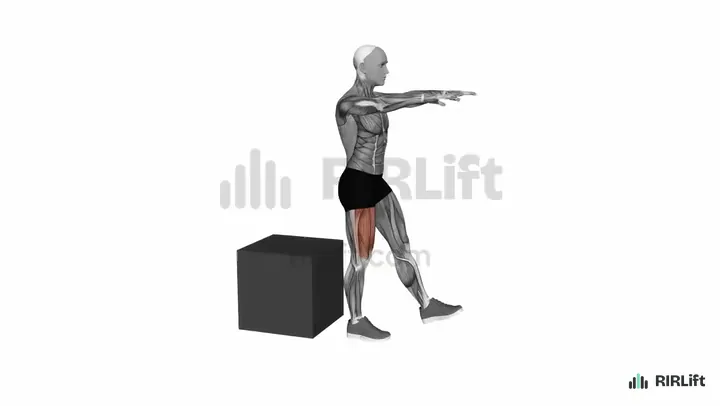
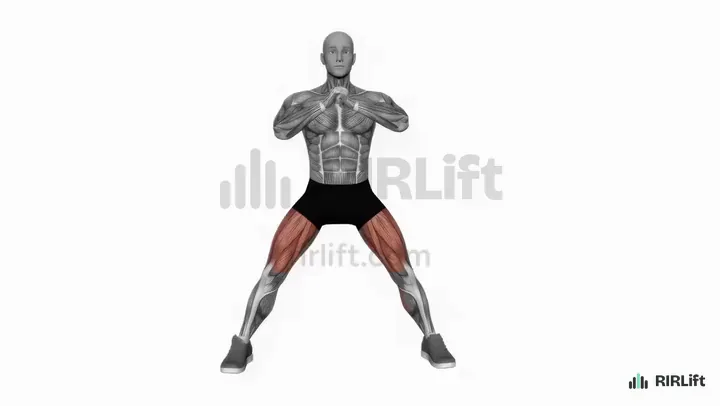
The best bodyweight quad exercises are the reverse lunge, the kneeling sissy squat and the skater squat, with the air squat as the starting point and the pistol squat as the hardest goal. Without weights, you make your quads work harder by moving onto one leg or changing your leverage, not by adding load, and by ending each set close to failure. The wall sit and the cossack squat round it out for sore knees and side-to-side range.
- Reverse Lunge Quads, Glutes
- Sissy Squat Quads
- Skater Squat Quads, Glutes
- Bodyweight Squat Quads
- Pistol Squat Quads, Glutes
- Cossack Squat Quads, Adductors
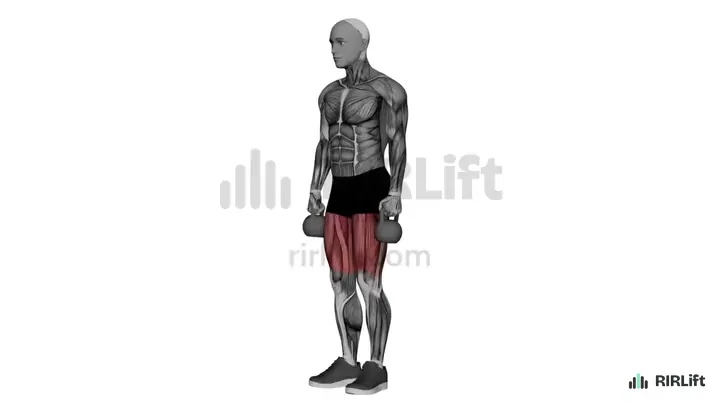
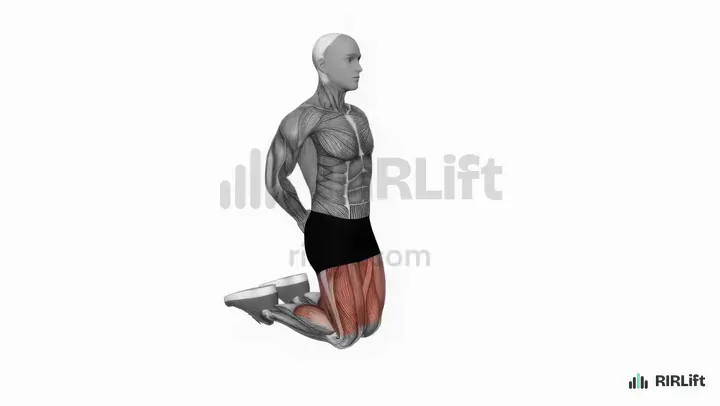
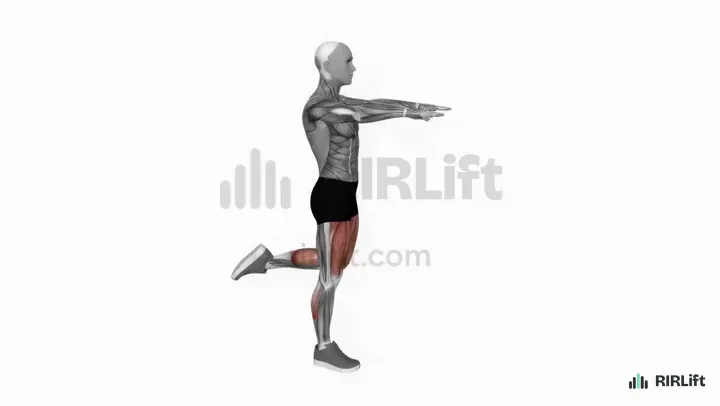
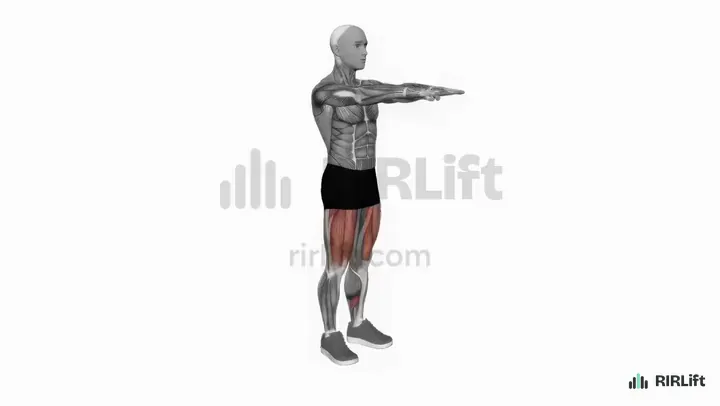
Put them together: example sessions
Each session below picks from the exercises above for one situation, with the sets, reps, rest and RIR filled in. Open one in the session builder to change a pick, price it from a recent set, and add it to RIRLift.
-
Session 1
Brand new, no equipment
You have not trained legs before, you have only floor space, and you want a routine you can follow three times a week.
3× a week · 21 sets a week · ~15 min
-
Session 2
Building size with only bodyweight
You have trained for a while, you only have a floor and a wall, and you want the front of your thighs to grow.
2× a week · 18 sets a week · ~25 min
-
Session 3
Working toward a full pistol squat
You can do 20 clean air squats and want the strength and balance for a full pistol squat.
2× a week · 18 sets a week · ~25 min
Session 1
Brand new, no equipment
- Workouts3× a week
- Working sets21 a week
- Per workout~15 min
- EquipmentBodyweight
You have not trained legs before, you have only floor space, and you want a routine you can follow three times a week.
Three moves keep it simple: air squats to learn the pattern, reverse lunges for one-leg strength, and a shallow cossack squat for side-to-side range. Every set ends 2 to 3 reps short of failure while you learn the movements, which is enough to grow in the first months. Seven working sets in about 20 minutes.
| Exercise | Sets × reps | RIR | Rest |
|---|---|---|---|
| Bodyweight SquatFull depth you can control. | 3 × 12–25 | 2 | 1 min |
| Reverse LungePer leg. Long step back. | 2 × 8–12 | 3 | 75 s |
| Cossack SquatPer side. Hold a chair if needed. | 2 × 6–10 | 3 | 1 min |
- How to run it
- Do it three times a week on non-consecutive days. Use a chair to hold onto for the cossack squat at first.
- How to progress
- Add reps until you reach the top of every range, then move to the next plan or add a slow three-second lowering to every rep.
Session 2
Building size with only bodyweight
- Workouts2× a week
- Working sets18 a week
- Per workout~25 min
- EquipmentBodyweight
You have trained for a while, you only have a floor and a wall, and you want the front of your thighs to grow.
Bodyweight is light, so the load comes from leverage: the sissy squat isolates the quads with a deep stretch, the skater squat puts your whole weight on one leg, and reverse lunges pile up the volume. All three go to 0 to 1 reps in reserve, because lighter loads only build muscle when sets end near failure. The air squat finishes with one long set. Twelve working sets twice a week.
| Exercise | Sets × reps | RIR | Rest |
|---|---|---|---|
| Sissy SquatHips locked. Add range weekly. | 4 × 8–15 | 1 | 90 s |
| Reverse LungePer leg. 3 s down. | 4 × 12–20 | 0 | 75 s |
| Bodyweight SquatOne set to failure. | 1 × 25–50 | 0 | 1 min |
Open Quads A in the session builder
| Exercise | Sets × reps | RIR | Rest |
|---|---|---|---|
| Skater SquatPer leg. Touch the knee softly. | 4 × 6–12 | 1 | 90 s |
| Sissy SquatPause 1 s at the bottom. | 3 × 10–15 | 0 | 75 s |
| Reverse LungePer leg. | 2 × 12–20 | 1 | 75 s |
Open Quads B in the session builder
- How to run it
- Run Quads A and B on alternate days with at least one rest day between each.
- How to progress
- When a set passes the top of its range, slow the lowering to four seconds or add a one-second pause at the bottom before adding reps again.
Session 3
Working toward a full pistol squat
- Workouts2× a week
- Working sets18 a week
- Per workout~25 min
- EquipmentBodyweight
You can do 20 clean air squats and want the strength and balance for a full pistol squat.
The plan stacks the one-leg moves that build toward a pistol: box pistols for the pattern, skater squats for single-leg strength, and cossack squats for the depth and ankle range the bottom of a pistol needs. Pistols stay at 2 reps in reserve because sloppy reps teach bad balance; the support moves go to 1. Eleven working sets twice a week.
| Exercise | Sets × reps | RIR | Rest |
|---|---|---|---|
| Pistol SquatPer leg. To a box. | 4 × 3–8 | 2 | 2 min |
| Cossack SquatPer side. Pause at the bottom. | 3 × 6–10 | 1 | 75 s |
| Sissy SquatShort range is fine. | 2 × 8–12 | 1 | 75 s |
Open Pistol A in the session builder
| Exercise | Sets × reps | RIR | Rest |
|---|---|---|---|
| Skater SquatPer leg. Arms forward. | 4 × 6–10 | 1 | 90 s |
| Pistol SquatPer leg. Lower box than A. | 3 × 3–6 | 2 | 2 min |
| Cossack SquatPer side. | 2 × 8–12 | 1 | 1 min |
Open Pistol B in the session builder
- How to run it
- Do both sessions each week with two days between them. Choose a box height where your last rep is hard but controlled.
- How to progress
- When you hit 8 reps on all pistol sets, lower the box by about two inches and start again at 3 reps.
Make it fit you
-
Knees ache on deep squats
Swap air squats for reverse lunges and wall sits for a few weeks, and keep the sissy squat range short. Build depth back gradually as long as it feels fine.
-
Air squats feel too easy
Go straight to the size plan. Sissy squats and skater squats are far harder per rep, and you will likely find 10 to 15 reps is plenty.
-
Only 15 minutes
Do one round of the size plan's Quads A with 2 sets each, and do it three times a week instead of two.
-
Balance is the limit on one-leg moves
Hold a doorframe or chair with one hand on skater squats and pistols. Let your legs, not your balance, decide when the set ends, then drop the support as your stability improves.
-
You run or cycle as well
Keep the quad sessions on the days after your easy runs or rides, not before hard ones, and stay at 2 reps in reserve in race weeks.
-
Count reps in reserve
Bodyweight sets run long, so stopping by feel is easy to get wrong. Log the reps you had left on each set in RIRLift, and when the reps climb past the top of the range, it is time to make the move harder.
Questions
Can you build quads with bodyweight exercises only?
Yes, as long as the sets end near failure and you keep making them harder. Move to single-leg exercises and leverage moves like the sissy squat once two-leg squats are easy, and aim for 10 to 16 hard sets a week.
How do you strengthen quads without squatting?
Use reverse lunges, wall sits and kneeling sissy squats. Lunges load one leg in a split stance, wall sits hold the quads without moving the knee, and sissy squats load the quads with the hips straight.
How long does it take to see quad gains?
Most people feel stronger in two to four weeks and see a visible change after about two to three months of consistent training. The speed depends mostly on how often you train them hard and how much you eat.
What is the mother of all exercises?
The squat is often called that, because it trains the quads, glutes and trunk in one natural movement. For bodyweight training, the full progression goes from air squat to pistol squat.
What are some good exercises for the front of the thighs?
The sissy squat for pure quad work, the reverse lunge and skater squat for single-leg strength, and the air squat for volume. The front of the thighs is the quads, so every exercise on this page trains it.
How many reps should I do for bodyweight quad exercises?
Usually more than with weights: 12 to 25 reps for two-leg moves and 6 to 15 for single-leg moves, each set ending 0 to 2 reps short of failure. If a set runs past 30, the exercise is too easy to grow muscle efficiently.
Related templates
-
Quad exercises at home: squats, split squats and no-equipment moves
Adds dumbbells, bands and a bench for when you have some home gear.
-
Pistol squat: how to do a single-leg squat and build up to your first rep
The full progression for the hardest move on this page.
-
Reverse lunge: how to do it, what it works, and how to load it
Setup, variations and programming for the top pick.
-
Bodyweight glute exercises you can do without equipment
The other half of a no-equipment leg day.
-
How to use reps in reserve (RIR)
Why bodyweight sets have to end close to failure to build muscle.