
Reverse lunge: how to do it, what it works, and how to load it
Published October 19, 2026
A reverse lunge is a lunge where you step backward instead of forward. Stand tall, step one foot back about two feet, lower until your back knee nearly touches the floor with most of your weight on the front leg, then push through the front foot to step back up. It works the quads and glutes of the front leg, and because you step away from the load, most people find it easier on the knees and easier to balance than a forward lunge.
- WorksQuads, Glutes
- AlsoAdductors, Abductors
- EquipmentBodyweight
- Start with3 × 8–15, 2 in reserve, 2 min rest
How to do the reverse lunge
Stepping back keeps your weight over the front foot the whole rep, so the front knee does not have to brake a forward step. That makes the reverse lunge easier to control and to load than a forward lunge, and it trains each leg separately, which evens out side-to-side differences. You can do it with nothing, or hold a kettlebell or dumbbells.
Steps
- Start tall with feet hip-width apart, hands on your hips or holding a kettlebell at your chest or a weight in each hand.
- Shift your weight onto one foot and step the other foot straight back about two feet, landing on the ball of the foot.
- Lower your back knee toward the floor until it nearly touches, with your front shin close to vertical and your chest up.
- Keep most of your weight in the front foot and push through its whole sole to stand and bring the back foot forward.
- Finish standing tall on both feet, then repeat on the same side for all reps or alternate legs.
Cues
- Weight stays in the front foot
- Back knee straight down
- Push the floor away to stand
Common mistakes
- Stepping back too short: if your front knee shoots far past your toes and your heel lifts, take a longer step.
- Pushing off the back foot: the back leg only balances you; drive up through the front heel and mid-foot.
- Front knee caving in: keep it tracking over your middle toes; slow the descent or reduce the weight until it does.
Swap for: Dumbbell Split Squat, Step-Up, Bulgarian Split Squat
Muscles the reverse lunge works
The reverse lunge works the quads and glutes of the front leg most, with the hamstrings, adductors and calves helping to steady the hip, knee and ankle. Your core keeps your torso upright. Leaning your chest slightly forward and taking a longer step shifts more of the work to the glutes; staying upright with a shorter step keeps more on the quads.
Sets, reps and reps in reserve for the reverse lunge
| Goal | Sets × reps | RIR | Rest |
|---|---|---|---|
| Build muscle | 3 × 8–12 per leg | 1–2 | 90 s–2 min |
| Hold a kettlebell or dumbbells once bodyweight is easy for 15 per leg. | |||
| Bodyweight at home | 3–4 × 12–20 per leg | 1 | 60–90 s |
| Do all reps on one leg before switching, and slow the lowering. | |||
| Glute focus | 3 × 10–12 per leg | 1–2 | 90 s |
| Take a longer step and lean your chest slightly forward over the front thigh. | |||
Reverse lunge variations
-
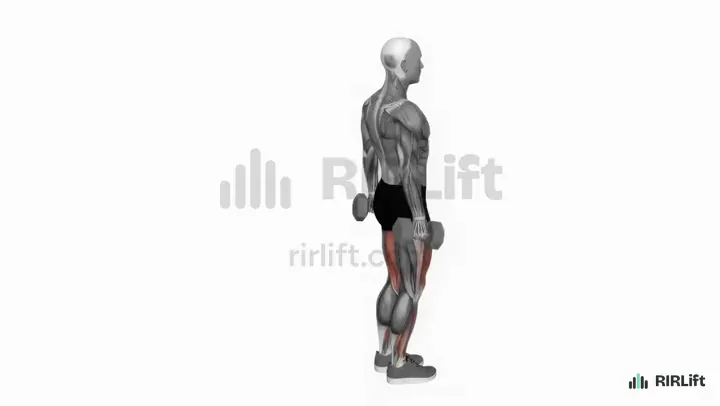
Dumbbell Reverse Lunge
Hold dumbbells at your sides when bodyweight lunges get easy and you want to load both sides evenly.
Build a session with it -
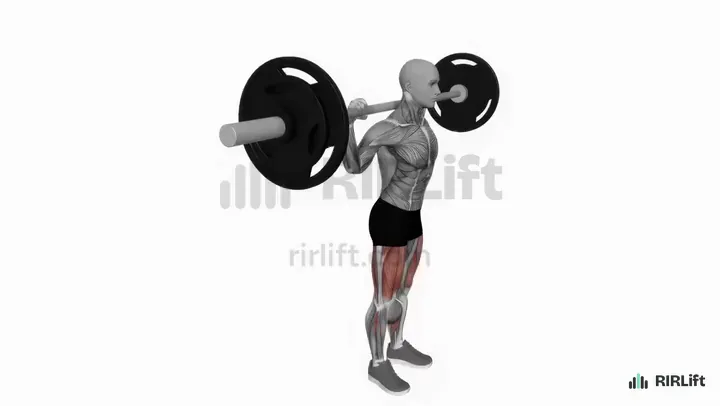
Barbell Reverse Lunge
Put a barbell on your back when you want to lunge heavier than dumbbells allow.
Build a session with it -
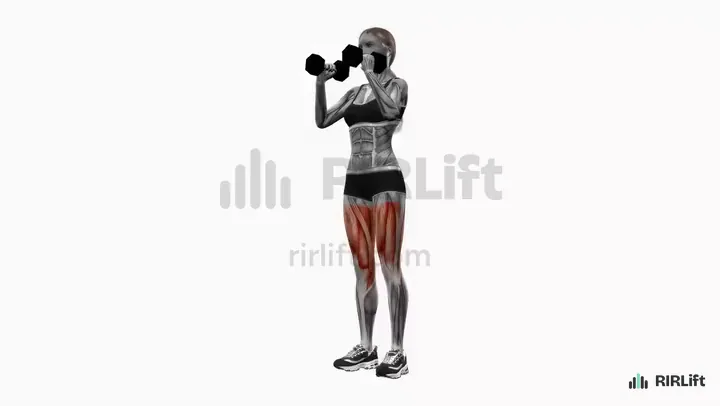
Dumbbell Curtsy Lunge
Step the back foot diagonally behind you when you want more of the outer glute.
Build a session with it
Reverse lunge alternatives
Other lunges
-
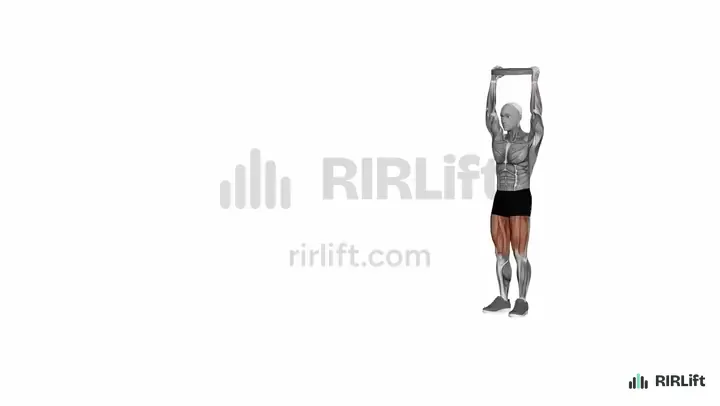
Walking Lunge
Step forward continuously across the room when you have space and want a harder conditioning effect.
Build a session with it -
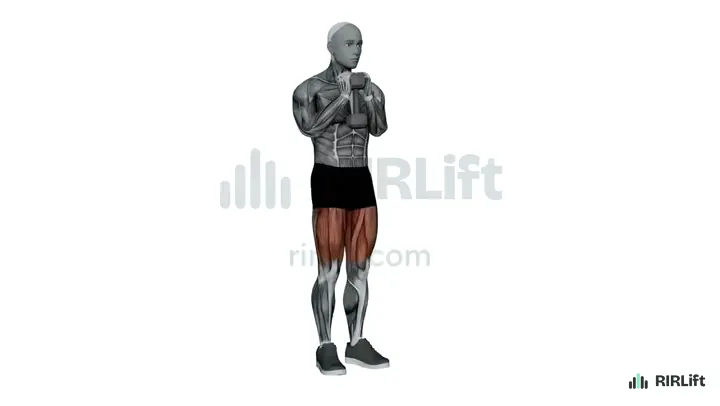
Dumbbell Forward Lunge
Step forward and back when you want more quad and braking work for sports.
Build a session with it
Stable single-leg work
-
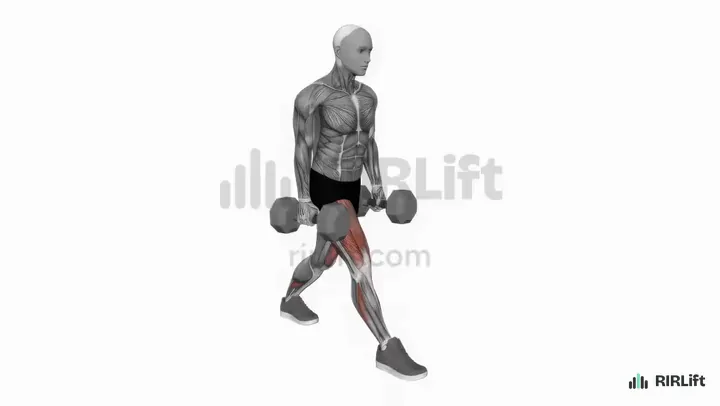
Dumbbell Split Squat
Keep both feet planted and just move up and down when balance limits your lunges.
Build a session with it -
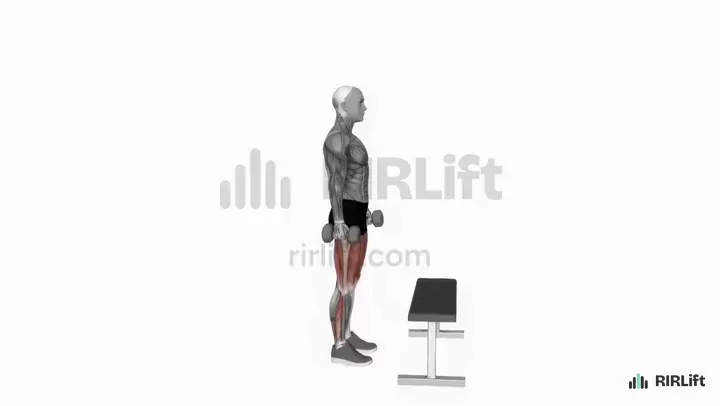
Step-Up
Step onto a box when you want the front-leg glute work with no impact at all.
Build a session with it
Reverse lunge vs forward lunge
In a forward lunge your front foot lands and has to stop your body moving forward, which puts more braking load on the front knee and makes balance harder. In a reverse lunge the front foot never moves; you step away from it, so your weight stays over it and the knee bends more gently.
That is why most people find the reverse lunge easier on the knees and easier to load. The forward lunge is still useful for quad work and for sports that involve stopping fast; the reverse lunge is the better default for building legs and glutes.
Which lunge targets the glutes most?
Among lunges, the reverse lunge with a long step and a slight forward lean puts the most work on the glutes, because your hip bends deeper while the front shin stays fairly vertical. A deficit reverse lunge, standing with the front foot on a low step, adds more range and more glute stretch. The curtsy lunge works the side of the glute more.
What is a deficit reverse lunge?
Stand with your front foot on a step or a plate a few inches high and lunge back to the floor. The raised front foot lets your back knee drop lower, so the front hip and thigh work through a bigger range. Start with bodyweight and a low step, since the extra depth makes the lunge noticeably harder.
Questions
Is the reverse lunge a good exercise?
Yes. It trains the quads and glutes one leg at a time, needs no equipment, and is easier on the knees and easier to balance than most lunges.
Is a reverse lunge better than a forward lunge?
For building legs and glutes, usually yes, because it is easier to control and load. The forward lunge trains more braking, which matters for some sports.
What muscles do reverse lunges work?
The quads and glutes of the front leg most, with the hamstrings, adductors, calves and core helping you balance.
How many reverse lunges should you do?
Three sets of 8–12 reps per leg with weight, or 12–20 per leg with bodyweight, stopping one or two reps short of failure.
Should you alternate legs on reverse lunges?
Either works. Doing all reps on one leg first makes each set harder for that leg; alternating gives each leg a short rest and is easier to balance.
Why do reverse lunges hurt my knee?
Usually the step is too short so the front knee travels far forward, or the knee caves in. Lengthen the step and keep the knee over your toes; if it still hurts, try a split squat with a shorter range.
Related templates
-
Walking lunge: how to do it with dumbbells, what it works, and how to program it
The forward-moving version when you have space.
-
Curtsy lunge: how to do it, what it works, and how it differs from a lunge
A diagonal step that hits the side of the glutes.
-
Split squat: how to do it, muscles worked and alternatives
The planted-feet version for when balance is the limit.
-
Leg exercises at home: squats, lunges, hinges, glutes and calves without a gym
More bodyweight and dumbbell leg moves.
-
The best workout for your glutes and butt
A full glute session built around lunges and hip thrusts.