
Cable lat exercises: pulldowns, rows and single-arm work
Published October 19, 2026
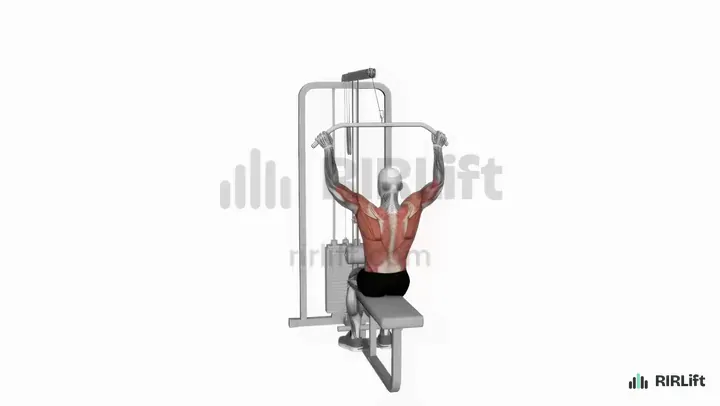
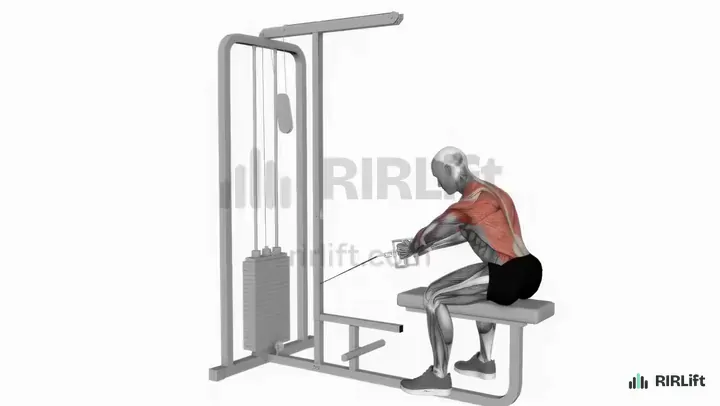
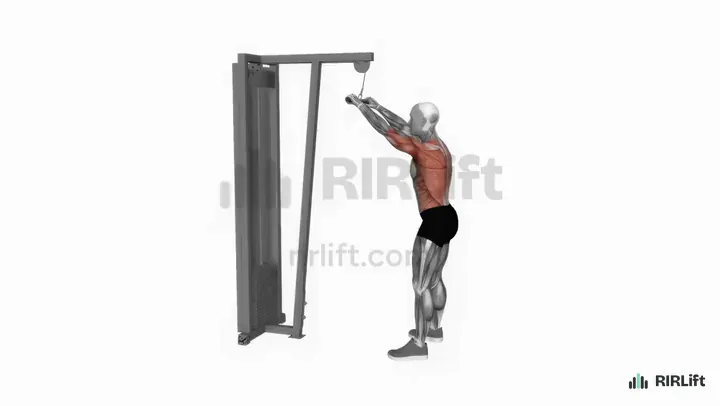
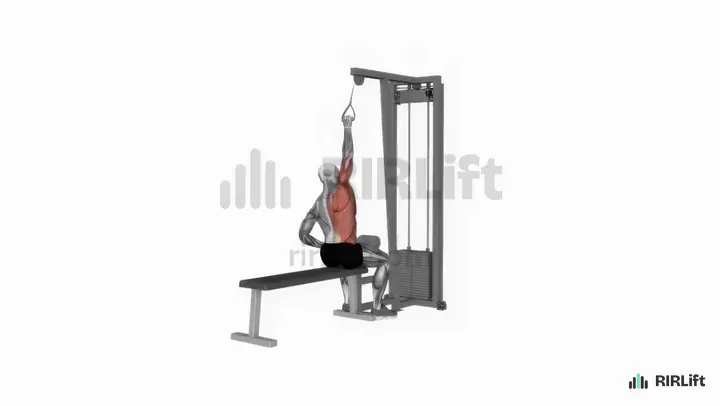
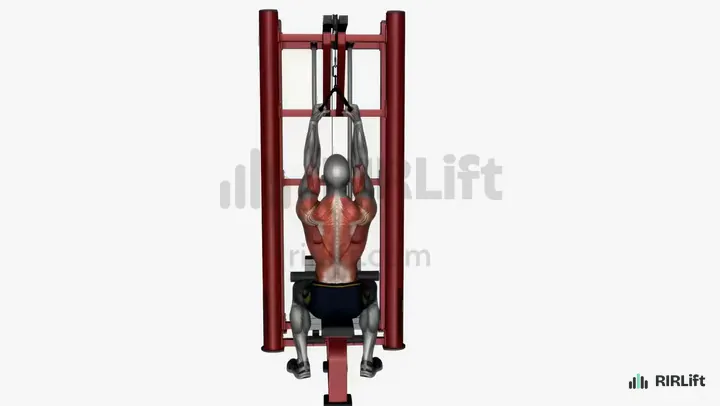
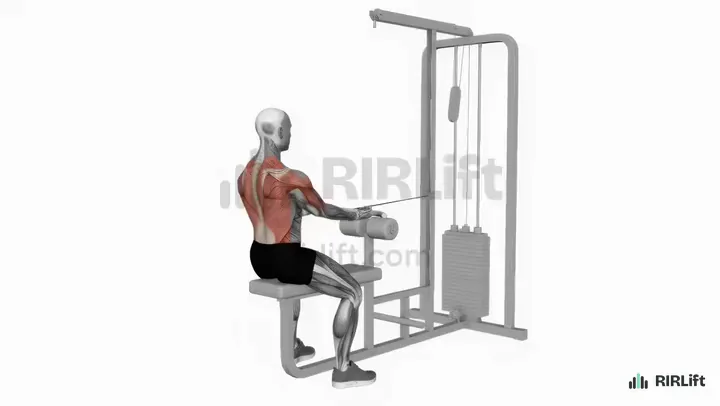
The best cable lat exercises are the lat pulldown for the overhead stretch, the close-grip seated cable row pulled to your waist, the straight-arm pulldown to isolate the lats without your biceps, and the single-arm lat pulldown for the longest range on each side. Your lats draw the upper arm down and back toward your hips, so on every cable exercise keep your elbows tucked in and finish low, near your waist.
- Lat Pulldown Lats
- Seated Cable Row Upper Back, Lats
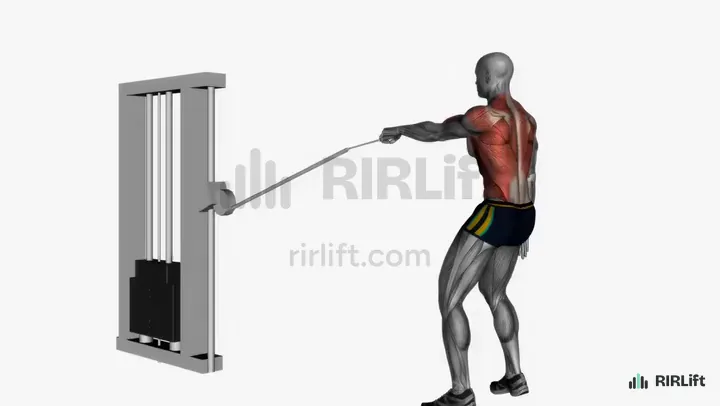
- Straight-Arm Pulldown Lats
- Single-Arm Lat Pulldown Lats
- V-Bar Lat Pulldown Lats
- Reverse-Grip Cable Row Lats
- Single-Arm Cable Row Upper Back, Lats
Put them together: example sessions
Each session below picks from the exercises above for one situation, with the sets, reps, rest and RIR filled in. Open one in the session builder to change a pick, price it from a recent set, and add it to RIRLift.
-
Session 1
A gym with a pulldown, seated row and cable column
Your gym has the usual cable equipment and you want two lat-focused pulling days a week built only on cables.
2× a week · 20 sets a week · ~30 min
-
Session 2
One adjustable cable column, no pulldown seat
You train on a single cable column at a busy gym or a home cable unit, with no seat for pulldowns.
2× a week · 24 sets a week · ~30 min
-
Session 3
Lat finisher after pull-ups or barbell rows
Your back day already has pull-ups and a barbell row, and you want a short cable block for the lats at the end.
1× a week · 6 sets a week · ~10 min
Session 1
A gym with a pulldown, seated row and cable column
- Workouts2× a week
- Working sets20 a week
- Per workout~30 min
- EquipmentLat Pulldown, Cable Row
Your gym has the usual cable equipment and you want two lat-focused pulling days a week built only on cables.
Each session starts with a heavy pulldown and follows it with a row, so the lats get both the overhead stretch and the pull to the hip. A single-arm or straight-arm exercise finishes each day, taken to 0 reps in reserve because cables are safe to fail on. Session A leads with the wide bar and session B with the underhand bar, so the main pull changes angle. Each session is 10 working sets; the main pulls stay at 1 to 2 reps in reserve so you can keep adding weight.
| Exercise | Sets × reps | RIR | Rest |
|---|---|---|---|
| Lat Pulldown1 warm-up set firstBar to the upper chest. | 4 × 6–10 | 2 | 2:30 min |
| Seated Cable RowV handle. Elbows past the ribs. | 3 × 8–12 | 1 | 2 min |
| Straight-Arm PulldownArms locked. Bar to the thighs. | 3 × 12–20 | 0 | 1 min |
Open Lat A in the session builder
| Exercise | Sets × reps | RIR | Rest |
|---|---|---|---|
| Reverse-Grip Lat Pulldown1 warm-up set firstPalms toward you. Elbows tight. | 4 × 8–12 | 1 | 2 min |
| Single-Arm Cable RowPer arm. Reach long. | 3 × 10–15 | 1 | 1 min |
| Single-Arm Lat PulldownPer arm. Elbow to the hip. | 3 × 12–15 | 0 | 1 min |
Open Lat B in the session builder
- How to run it
- Run Lat A and Lat B once each per week with at least two days between. Add a set of biceps curls at the end if this is your whole pull day.
- How to progress
- Double progression: when every set of an exercise hits the top of its rep range at the target reps in reserve, move the pin one plate down and work back up. On single-arm work, add reps on the weaker side first.
Session 2
One adjustable cable column, no pulldown seat
- Workouts2× a week
- Working sets24 a week
- Per workout~30 min
- EquipmentLat Pulldown, Cable Row
You train on a single cable column at a busy gym or a home cable unit, with no seat for pulldowns.
Without a seat or a row bench, every exercise here is done standing or kneeling at one column, and you only move the pulley between high, middle and low. Kneeling single-arm pulldowns stand in for the bar, standing one-arm rows for the seated row, and the bent-over cable row gives you a two-handed pull from the low setting. Twelve working sets, with the two-handed row at 1 to 2 reps in reserve and the one-arm work at 0 to 1, since you can stop a one-arm set at any point.
| Exercise | Sets × reps | RIR | Rest |
|---|---|---|---|
| Single-Arm Lat PulldownPer arm. Kneel under the high pulley. | 3 × 10–15 | 1 | 1 min |
| Straight-Arm PulldownHigh pulley. Rope or bar. | 3 × 12–20 | 0 | 1 min |
| Single-Arm Cable RowPer arm. Pulley at chest height. | 3 × 10–15 | 1 | 1 min |
| Standing Cable Row1 warm-up set firstLow pulley. Hold the hinge. | 3 × 8–12 | 2 | 90 s |
- How to run it
- Do this session twice a week. Set the pulley high first and work down so you only move it twice.
- How to progress
- Add reps until you reach the top of every range, then go up one weight step. If your column's steps are big, stay at a weight longer and add a two-second pause at the end of each rep before moving up.
Session 3
Lat finisher after pull-ups or barbell rows
- Workouts1× a week
- Working sets6 a week
- Per workout~10 min
- EquipmentLat Pulldown, Cable Row
Your back day already has pull-ups and a barbell row, and you want a short cable block for the lats at the end.
Pull-ups and barbell rows are heavy and hard to push to failure safely, and they leave your biceps and grip tired. This block picks the two cable lat moves that rely least on either: the straight-arm pulldown and the underhand cable row with the elbows tight, done as a superset. Six sets at 0 to 1 reps in reserve finish the lats without adding much fatigue elsewhere.
| Exercise | Sets × reps | RIR | Rest |
|---|---|---|---|
| A1 Straight-Arm PulldownSuperset with the row. | 3 × 12–15 | 0 | 30 s |
| A2 Reverse-Grip Cable RowBar to the waistband. | 3 × 8–12 | 1 | 90 s |
- How to run it
- Do it once a week after your last heavy pull. Alternate the two exercises with about 30 seconds between, and rest 90 seconds after each pair.
- How to progress
- Keep the load until you reach 15 reps on every straight-arm set and 12 on every row set, then go one step heavier on that exercise.
Make it fit you
-
You feel pulldowns in your biceps and forearms
Use a thumbless grip, with the thumb on the same side of the bar as your fingers, and think of your hands as hooks. Start the session with straight-arm pulldowns so your lats are already working before the bar comes down.
-
One lat is smaller
Swap one two-handed exercise per session for its single-arm version, start every one-arm set with the weaker side, and match its reps on the stronger side even if the stronger side could do more.
-
Wide grip bothers your shoulders
Use the V handle or the underhand bar for every pulldown. Both keep your elbows in front of your body, which most shoulders tolerate better than the wide bar.
-
The weight stack jumps are too big
Stay at a weight until you beat the top of the rep range by two or three reps before moving up, or slow the lowering to three seconds to make the current weight harder.
-
Upper back gets the work instead of lats
Bring the handle lower on every row, toward your waist, and keep your elbows at 30 degrees from your sides or less. A wide grip and high elbows move the work to the rear delts and the muscles between the shoulder blades.
-
Track RIR on your cable sets
Write down the reps you had left on every working set, along with the pin position. If you log in RIRLift, it uses those reps in reserve to tell you when to move the pin, so your stack weight keeps climbing without guesswork.
Questions
What are the best cable exercises for lats?
The wide-bar lat pulldown, the close-grip seated cable row, the straight-arm pulldown and the single-arm lat pulldown. Pick one pulldown, one row, and one single-arm or straight-arm move per session, and you have trained the lats through their full range.
Which cable row is best for lats?
A close-grip or underhand row where you pull the handle to your waist with your elbows tight to your sides. That path follows the lats down and back. Rows with a wide grip and elbows up at shoulder height train the upper back more than the lats.
Are lats the hardest muscle to grow?
They are hard to feel, which makes them seem hard to grow. Most people pull with their arms and never take the lats near failure. Use straight-arm pulldowns to learn the feeling, keep your elbows close on rows, and log reps in reserve so you know each set was hard enough.
Is the lat pulldown or the seated cable row better for lats?
Do both. The pulldown loads the lats in their overhead stretch, and the row works them from in front of your body to behind it. Training only one leaves part of the range untrained.
How many sets of cable lat exercises per week?
Around 10 to 20 hard sets per week for the back, split over two sessions. The full-station plan here gives the lats 20 sets a week, and the one-column plan gives 24 when you run it twice.
Can you build lats with only cables?
Yes. Cables let you load the lats in every direction they pull, they keep tension through the whole range, and you can take every set close to failure safely. The pulldown and the cable row cover what pull-ups and barbell rows would.
What weight should I use on the lat pulldown?
A weight you can pull for 6 to 10 controlled reps with 1 to 2 reps left, without leaning far back. Pick the first weight by feel, then let the reps you had left decide whether to move the pin next time.
Related templates
-
Lat pulldown: form, grip width and the best alternatives
Grip widths, seat setup and rep targets for the main exercise on this page.
-
Dumbbell lat exercises: rows and pullovers for wider lats
Lat rows and pullovers for days without a cable station.
-
Lat exercises at home: with a bar, dumbbells, a kettlebell or a band
Pull-up bar, band and dumbbell lat work when you train at home.
-
Single-arm lat pulldown: how to do it, why it helps, and what to swap it for
The full guide to the one-arm pulldown, including kneeling setups.
-
The best workout for back: width, thickness and traps
Complete back programs the cable lat finisher fits into.