
Dumbbell lat exercises: rows and pullovers for wider lats
Published October 19, 2026
The best dumbbell lat exercises are the dumbbell pullover, which trains the lats at full stretch, and the one-arm row, which loads them hard with your elbow driving toward your hip. Add an underhand two-arm row or a lawnmower row for a second pulling angle. For lats rather than upper back, keep your elbows close to your body and pull toward your hips, not your chest.
- Dumbbell Lat Pullover Lats
- One-Arm Dumbbell Row Lats, Upper Back
- Dumbbell Lawnmower Row Lats
- Reverse-Grip Dumbbell Row Lats
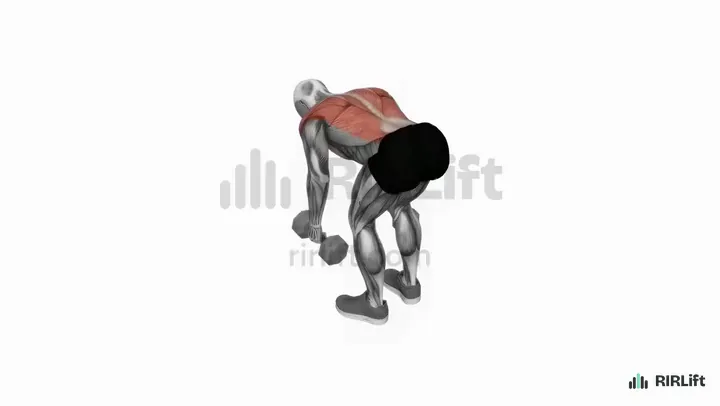
- Dumbbell Bent-Over Row Upper Back, Lats
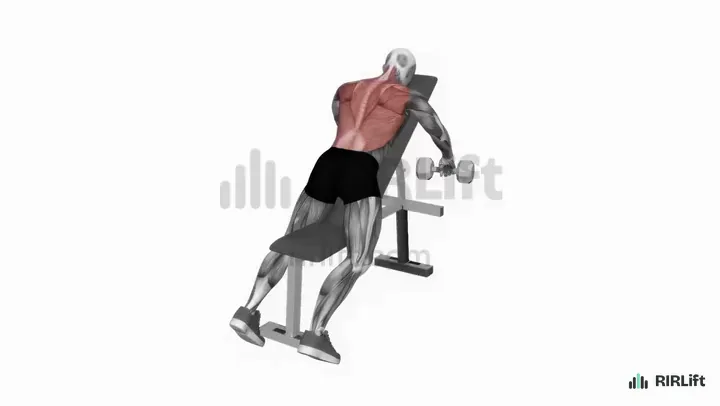
- Incline Dumbbell Row Upper Back, Lats
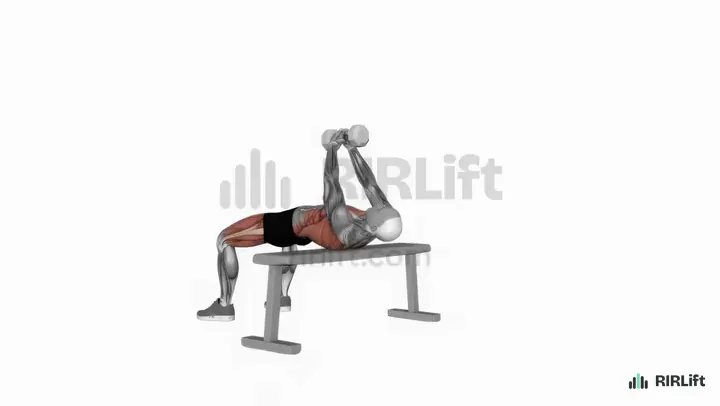
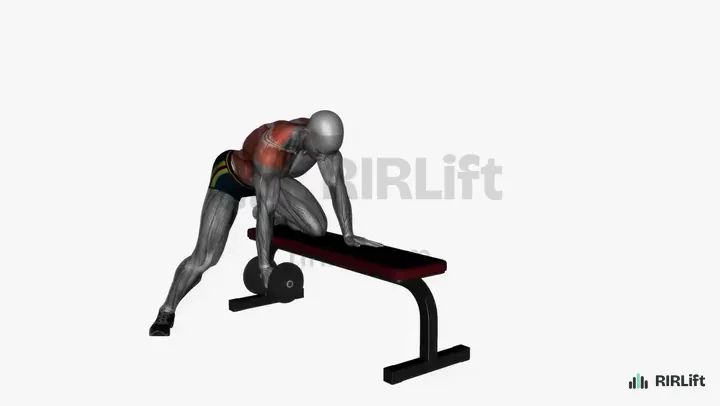
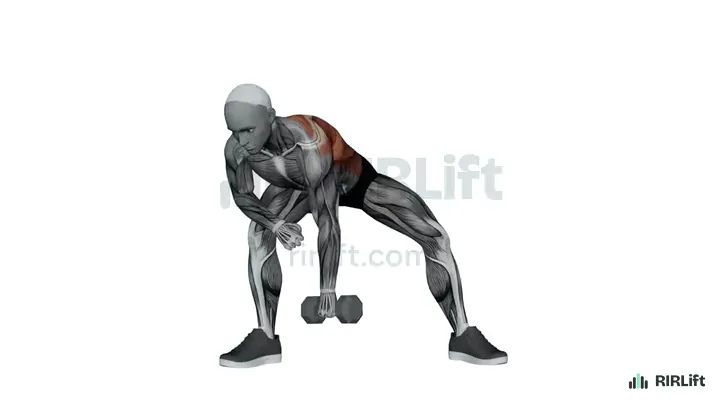
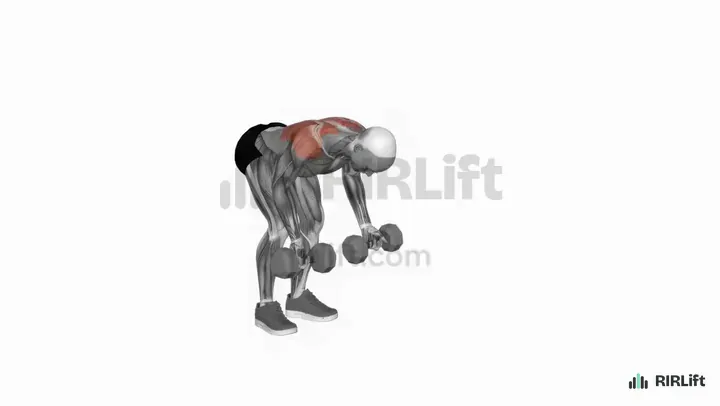
Put them together: example sessions
Each session below picks from the exercises above for one situation, with the sets, reps, rest and RIR filled in. Open one in the session builder to change a pick, price it from a recent set, and add it to RIRLift.
-
Session 1
One light pair, no bench
You have a single pair of dumbbells, around 15 to 30 pounds, a chair, and floor space.
2× a week · 20 sets a week · ~20 min
-
Session 2
Adjustable dumbbells and a bench
Your dumbbells go heavy enough that 8 to 12 reps on a row is hard, and you have an adjustable bench.
2× a week · 20 sets a week · ~25 min
-
Session 3
Lat add-on for a 25-minute slot
You already train back with other gear or a full-body plan, and you want one short dumbbell session to bring up lat width.
1× a week · 9 sets a week · ~15 min
Session 1
One light pair, no bench
- Workouts2× a week
- Working sets20 a week
- Per workout~20 min
- EquipmentDumbbells
You have a single pair of dumbbells, around 15 to 30 pounds, a chair, and floor space.
A light pair cannot make two-arm rows hard at 10 reps, so these sessions go one arm at a time where the same dumbbell is effectively twice as heavy, and take rows to 0 to 1 reps in reserve for 12 to 20 reps. The pullover is done on the floor and the renegade row finishes the second session as a lat and trunk set. Each session is 11 to 12 sets of lat work.
| Exercise | Sets × reps | RIR | Rest |
|---|---|---|---|
| One-Arm Dumbbell RowPer arm. Hand on a chair. 3 s down. | 4 × 12–20 | 0 | 1 min |
| Dumbbell Lat PulloverOn the floor. Stop above the eyes. | 4 × 12–20 | 1 | 1 min |
| Reverse-Grip Dumbbell RowPalms forward. To the hips. | 3 × 12–20 | 1 | 75 s |
Open Lats A in the session builder
| Exercise | Sets × reps | RIR | Rest |
|---|---|---|---|
| Dumbbell Lawnmower RowPer arm. Staggered stance. | 4 × 12–20 | 0 | 1 min |
| Dumbbell Bent-Over RowPause 1 s at the top. | 3 × 12–20 | 1 | 75 s |
| Renegade RowPer side. Feet wide. | 2 × 8–12 | 1 | 1 min |
Open Lats B in the session builder
- How to run it
- Do Lats A and Lats B on two non-consecutive days a week, or add them after a push day if you train full body.
- How to progress
- Add reps until each set hits the top of the range at the target reps in reserve. When it is easy at 20, slow every lowering to three seconds, then add a one-second pause at the top before you buy heavier dumbbells.
Session 2
Adjustable dumbbells and a bench
- Workouts2× a week
- Working sets20 a week
- Per workout~25 min
- EquipmentDumbbells, Incline Bench
Your dumbbells go heavy enough that 8 to 12 reps on a row is hard, and you have an adjustable bench.
Heavy dumbbells make the dead-stop row and the one-arm row worth loading, so the heavy session opens with them at 6 to 10 reps and long rests. The bench adds the chest-supported row and the bench pullover, the two lat exercises you can push to 1 rep in reserve without your lower back limiting you. The pendlay row stays at 2 in reserve because it is the most tiring. Each session is 10 sets of lat work.
| Exercise | Sets × reps | RIR | Rest |
|---|---|---|---|
| Dumbbell Pendlay Row1 warm-up set firstDead stop every rep. | 4 × 6–10 | 2 | 2:30 min |
| One-Arm Dumbbell RowPer arm. Knee on the bench. | 3 × 6–10 | 1 | 2 min |
| Dumbbell Lat PulloverAcross the bench. Deep stretch. | 3 × 8–12 | 1 | 90 s |
Open Heavy in the session builder
| Exercise | Sets × reps | RIR | Rest |
|---|---|---|---|
| Incline Dumbbell Row1 warm-up set firstLow incline. Elbows in. | 4 × 10–15 | 1 | 90 s |
| Reverse-Grip Dumbbell RowUnderhand. To the hips. | 3 × 10–15 | 1 | 90 s |
| Dumbbell Lat PulloverLast set: hold the stretch 2 s. | 3 × 12–15 | 0 | 75 s |
Open Volume in the session builder
- How to run it
- Do Heavy and Volume once each per week, two or three days apart. If you train back twice a week already, these replace your rows.
- How to progress
- Double progression: once every set hits the top of its range at the target reps in reserve, go up one dumbbell step and build back up. Drop the incline one notch whenever the incline row starts to feel like upper back.
Session 3
Lat add-on for a 25-minute slot
- Workouts1× a week
- Working sets9 a week
- Per workout~15 min
- EquipmentDumbbells
You already train back with other gear or a full-body plan, and you want one short dumbbell session to bring up lat width.
A short add-on works best with the two exercises that hit the lats most directly and least like your other back work: the pullover for the stretched range and the underhand row for the lower lats, done as a superset to fit the slot. Sets end at 1 rep in reserve with a lawnmower row finisher, 9 sets total.
| Exercise | Sets × reps | RIR | Rest |
|---|---|---|---|
| A1 Dumbbell Lat PulloverSuperset with the underhand row. | 3 × 10–15 | 1 | 0 s |
| A2 Reverse-Grip Dumbbell RowRest after this one. | 3 × 10–15 | 1 | 90 s |
| Dumbbell Lawnmower RowPer arm. Slow lowering. | 3 × 10–15 | 1 | 1 min |
- How to run it
- Run it once a week on a day your back is not trained otherwise, or after legs. Pair the pullover and the underhand row back to back, rest 90 seconds, repeat.
- How to progress
- Keep the same weight until every set reaches the top of the range at the target reps in reserve, then move up one step. Keep this block for 6 to 8 weeks and log whether your other rows climb with it.
Make it fit you
-
You feel rows in your arms, not your lats
Use straps or a looser grip, think of your hands as hooks, and start each rep by pulling your shoulder down before the elbow bends. The pullover is the best place to learn the feeling, because the biceps barely work.
-
Upper back gets the work instead
Pull toward your hips, not your armpits, and keep your elbows within a hand's width of your sides. On the incline row, lower the bench a notch; on two-arm rows, switch to the underhand grip.
-
Only one dumbbell
Run the light-pair plan with the one-arm row, lawnmower row and pullover only. All three use a single dumbbell, and that is enough to fill 10 to 12 sets a week.
-
Lower back tires before your lats
Replace the two-arm bent-over and pendlay rows with the one-arm row braced on a bench or chair, and use the incline row if you have a bench. Your lats get the same sets without the hinge.
-
One lat side is smaller
Start every session with the weaker side on one-arm rows, and do the same reps on the stronger side, no more. Add one extra set for the weaker side only if the gap stays after a couple of months.
-
Track RIR per arm
Log the reps in reserve for each arm on one-arm rows, not just the weight. If you log in RIRLift, it picks the next dumbbell from that RIR, so the side that is ready moves up and the other waits.
Questions
What are the 3 best dumbbell exercises for lats?
The dumbbell pullover, the one-arm row and the underhand (reverse-grip) row. The pullover covers the stretched range overhead, the one-arm row lets you go heavy, and the underhand row brings the elbows in tight so two arms can work the lower lats at once.
Can you build lats with only dumbbells?
Yes. Rows that drive the elbow toward the hip and the pullover cover the lats' full range, and dumbbells let you take those sets close to failure. What dumbbells cannot easily match is a heavy vertical pull, so add pull-ups if you ever get a bar.
Will 20 lb dumbbells build lats?
They can, as long as the sets end 0 to 2 reps short of failure. With 20 pounds that means one-arm rows and pullovers for 12 to 20 reps with slow lowerings. Two-arm rows will feel easy first, so move those to the end of the session.
Are lats the hardest to grow?
Not because of the muscle itself. Lats are hard to feel working, so many people do rows that load their upper back and arms instead. Keep the elbows tight, pull toward the hips, and include a pullover, and the lats get the sets you think they are getting.
Are 3 exercises enough for lats?
Yes. A pullover, a one-arm row and an underhand row cover the full range, and 3 or 4 hard sets of each twice a week puts you at 10 to 20 lat sets, which is where most lifters grow well.
How do you target lats instead of upper back on dumbbell rows?
Keep your elbows close to your torso and pull toward your hips. Flaring the elbows wide and pulling toward the armpits trains the upper back. A lower bench angle on incline rows and an underhand grip on two-arm rows both nudge the work toward the lats.
Related templates
-
Back exercises with dumbbells: lats, upper back, traps and lower back
The traps, rear delts and lower back work that rounds out a dumbbell back day.
-
Dumbbell pullover: form, lats vs chest, and the best alternatives
The full setup and variations for the lat pullover.
-
Dumbbell row: how to do the one-arm row and get your back to do the work
One-arm row technique and programming in more depth.
-
Back exercises at home: with a bar, weights, bands or no equipment
Add a pull-up bar and bands to these dumbbell lat sessions.
-
How to use reps in reserve (RIR)
How to judge the 0 to 2 reps in reserve targets used here.