Calf exercises for strength: straight-knee and bent-knee raises that build stronger calves

The best calf exercises for strength are heavy straight-knee raises for the gastrocnemius (the standing machine, barbell, Smith machine, leg press and donkey calf raises) and bent-knee raises for the soleus (seated machine or dumbbell seated raises). Single-leg raises and jump rope add balance and springiness. Train calves two or three times a week: one straight-knee raise for 6 to 12 reps and one bent-knee raise for 10 to 20, with a 1 to 2 second pause in the full stretch at the bottom and 1 to 2 reps left in reserve.

  1. Standing Calf Raise Calves
  2. Seated Calf Raise Calves
  3. Leg Press Calf Raise Calves
  4. Single-Leg Calf Raise Calves
  5. Donkey Calf Raise Calves
  6. Barbell Standing Calf Raise Calves
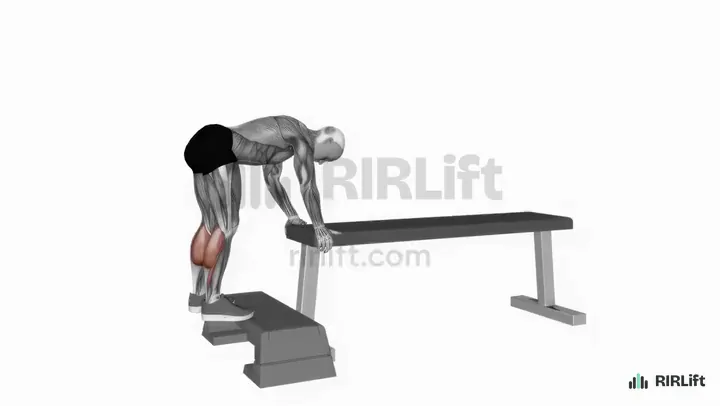
Straight-knee raises for the gastrocnemius

With the knees straight, the gastrocnemius, the large outer calf muscle, does most of the work. These are the raises to load heavy, for 6 to 12 reps, with a full stretch every rep.

Gastrocnemius, machine raise

Standing Calf Raise

Calves

The standing machine lets you load the calves heavy with the weight on your shoulders and your feet on a high block for a deep stretch. It is the main calf strength lift in most gyms.

How to do it

  1. Set the shoulder pads so you have to bend your knees slightly to get under them, then step the balls of your feet onto the edge of the block.
  2. Stand up tall to lift the weight off the stack, legs straight but not locked.
  3. Let your heels sink below the block until your calves are fully stretched, and hold that bottom for a second.
  4. Drive up onto your big toes as high as the ankle allows, pause, then lower slowly.

Cues

  • Pause in the stretch
  • Push through the big toe
  • Knees stay still

Common mistakes

  • Bouncing out of the bottom: the Achilles tendon springs you up and the calf does less. A one-second pause removes the bounce.
  • Bending the knees to finish the rep: that turns it into a partial squat. Lighten the stack until the legs stay straight.

Swap for: Smith Machine Calf Raise, Donkey Calf Raise, Barbell Standing Calf Raise

Gastrocnemius, barbell raise

Barbell Standing Calf Raise

Calves
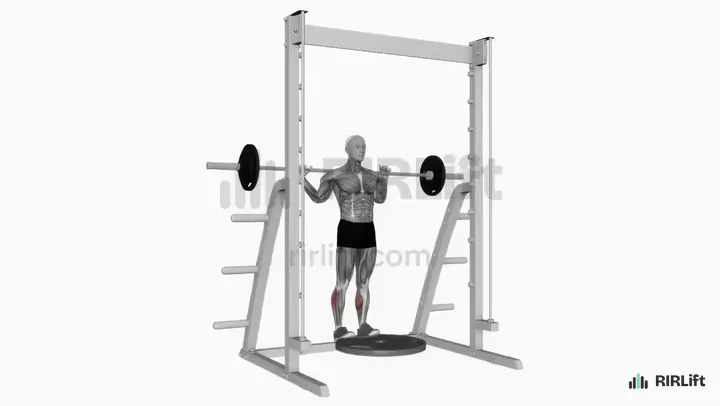
With the bar on your back and your forefeet on a plate, you can load the calves as heavy as a rack allows. Balance takes some practice, so use it once you are comfortable on the machine.

How to do it

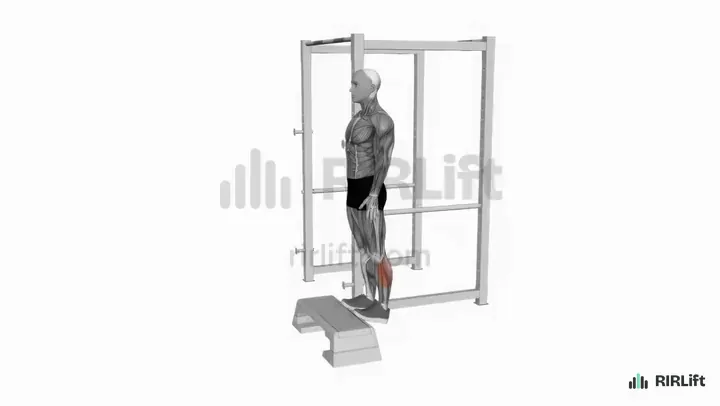
  1. Set the bar on your upper back from a rack and stand with the balls of your feet on a plate or low step, heels off the edge.
  2. Lower your heels slowly until your calves are fully stretched, and hold for a second.
  3. Rise onto your toes as high as you can.
  4. Pause at the top, then lower slowly and repeat.

Cues

  • Pause in the stretch
  • Straight legs
  • Full rise

Common mistakes

  • Bouncing out of the bottom: hold the stretch, then rise.
  • Using a step so high you lose balance: a single plate is enough height.

Swap for: Smith Machine Calf Raise, Standing Calf Raise, Barbell Seated Calf Raise

Gastrocnemius, Smith machine raise

Smith Machine Calf Raise

Calves

The Smith machine keeps the bar on a track, so you can push heavy calf sets without balancing a free barbell. Put a step under your feet for a full stretch.

How to do it

  1. Set a step or a pair of plates under the bar and set the bar at shoulder height.
  2. Get under it with the bar across your upper back, forefeet on the step, and unrack it by turning the hooks.
  3. Lower your heels as far as they go, keeping your legs straight.
  4. Rise onto the balls of your feet, hold the top briefly, and lower under control.

Cues

  • Heels below the step
  • Tall and straight
  • Slow on the way down

Common mistakes

  • Raising on flat ground: without a step you lose the stretched half of the rep, which is where the calves are trained hardest.
  • Leaning on the bar with your arms: hands only steady it.

Swap for: Standing Calf Raise, Barbell Standing Calf Raise, Hack Squat Calf Raise

Gastrocnemius, leg press raise

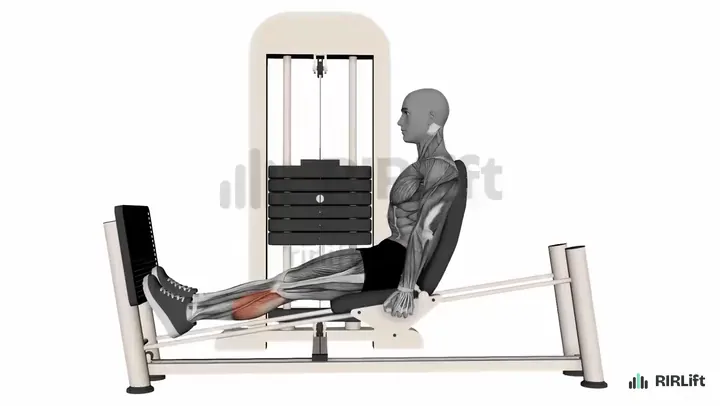
Leg Press Calf Raise

Calves

Pressing the platform with the balls of your feet lets you load the calves heavily with your back supported. It is a good option when the standing machine is busy or your shoulders dislike the pads.

How to do it

  1. Sit in the machine and place the balls of your feet on the bottom edge of the footplate, heels off.
  2. Straighten your legs to press the plate out, with a slight bend at the knee.
  3. Let the plate push your toes back toward you until the calves stretch.
  4. Press the plate away with your toes as far as the ankles go, then let it return slowly.

Cues

  • Only the ankles move
  • Balls of the feet on the edge
  • Long, slow return

Common mistakes

  • Feet slipping up the plate: if they creep, stop the set and reset.
  • Pushing with the knees: the legs should stay the same length all set.

Swap for: 45-Degree Leg Press Calf Raise, Seated Calf Raise, Standing Calf Raise

Gastrocnemius, bent-over raise

Donkey Calf Raise

Calves

Leaning forward at the hips puts the calves in a long stretch at the bottom, which makes each rep harder at a lighter weight. Use it as a second straight-knee raise for 10 to 15 reps.

How to do it

  1. Stand on a step or the donkey machine block with your forefeet on the edge.
  2. Hinge forward and rest your forearms on a bench or the machine pads, back flat, legs straight.
  3. Drop your heels to a deep stretch.
  4. Push up onto your toes, hold for a beat, and lower slowly.

Cues

  • Hips back, back flat
  • Deep stretch at the bottom
  • Toes stay on the edge

Common mistakes

  • Rounding the lower back to reach the support: raise the bench instead.
  • Short reps at the top only: the stretched bottom is the reason to do this version.

Swap for: Standing Calf Raise, Leg Press Calf Raise, Hack Squat Calf Raise

Bent-knee raises for the soleus

Bending the knee takes the gastrocnemius partly out of the lift, leaving the soleus underneath to do the work. The soleus carries a lot of the load when you walk and run, and it responds well to 10 to 20 reps.

Soleus, seated machine raise

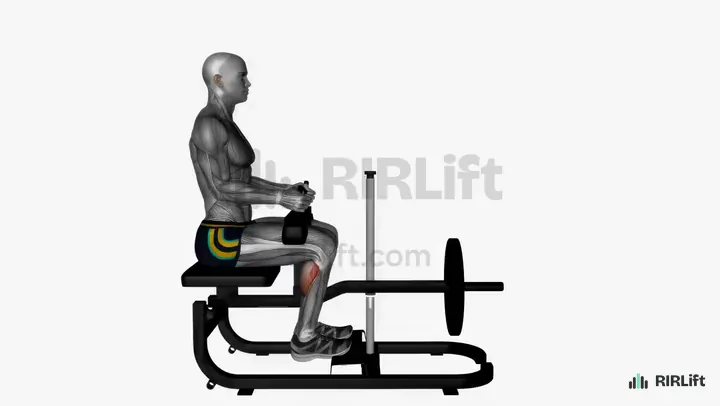
Seated Calf Raise

Calves

With the knees bent at 90 degrees, the seated raise loads the soleus directly. Use it in every calf plan, because straight-knee raises leave the soleus undertrained.

How to do it

  1. Sit at the machine with the balls of your feet on the platform and the pad snug on your lower thighs.
  2. Lift the pad slightly and release the safety lever.
  3. Lower your heels as far as they go and pause in the stretch.
  4. Push up onto the balls of your feet as high as possible, squeeze, and lower slowly.

Cues

  • Pad on the thighs, not the knees
  • Pause at the bottom
  • Big toe pressure

Common mistakes

  • Rocking the torso to move the weight: the upper body stays quiet.
  • Cutting the range once it burns: shorten the set, not the rep.

Swap for: Barbell Seated Calf Raise, Dumbbell Seated Calf Raise, Leg Press Calf Raise

Soleus, dumbbell seated raise

Dumbbell Seated Calf Raise

Calves

Sitting with dumbbells on your knees and your forefeet on a plate or step trains the soleus at home with just a bench and weights.

How to do it

  1. Sit on a chair or bench with your knees bent to about 90 degrees and the balls of your feet on a book or weight plate, heels free.
  2. Set a dumbbell upright on each thigh just above the knee and hold them steady with your hands.
  3. Let your heels drop to the floor for a stretch, then push up through the balls of your feet as high as you can.
  4. Hold the top for a second, lower slowly, and repeat.

Cues

  • Weight sits on the knees, not the hands
  • Full drop, full lift
  • Squeeze and hold at the top

Common mistakes

  • Pushing the dumbbells up with your arms: rest your hands on top only to stop them sliding.
  • Using a block too thin to drop the heels: if your heels touch the floor before the calf stretches, stack another book.

Swap for: Kettlebell Seated Calf Raise

Dumbbell and single-leg raises

No machine needed. Working one leg at a time doubles the load per calf and shows any difference between sides.

Calves, single-leg raise

Single-Leg Calf Raise

Calves

Doing one leg at a time on a step with a dumbbell in hand puts twice the load on each calf as a two-leg raise. It is the best home calf exercise for strength and a quick way to check that both sides match.

How to do it

  1. Stand on one foot with the other lifted just off the floor, arms by your sides; hold a dumbbell in each hand once body weight is easy.
  2. Rise onto the ball of your foot as high as you can and hold for a second.
  3. Lower your heel to the floor over two seconds.
  4. Finish all reps on one leg, then switch; sets are per leg.

Cues

  • Rise as high as you can
  • Pause at the top
  • Two seconds down

Common mistakes

  • Bouncing through the reps: pause for a beat at the top of each one.
  • Rolling onto the outside of the foot: keep your weight over the big toe.

Swap for: Dumbbell Standing Calf Raise, Kettlebell Calf Raise, Standing Calf Raise

Calves, dumbbell raise

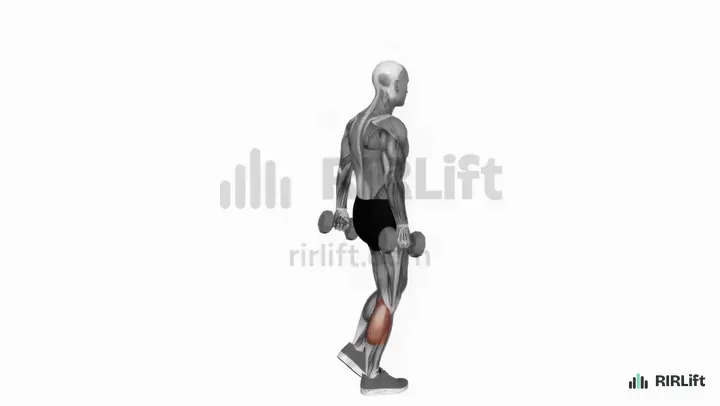
Dumbbell Standing Calf Raise

Calves

Two dumbbells and a step are enough for both calves at once. Use it for higher-rep sets once single-leg raises are done.

How to do it

  1. With a dumbbell hanging from each hand, put the balls of both feet on a step or two stacked books, hip-width apart.
  2. Let your heels sink below the step until the calves are fully stretched, and pause.
  3. Press up onto your toes as high as you can with straight knees, and hold the top briefly.
  4. Lower slowly back into the stretch and repeat.

Cues

  • Tall body, straight knees
  • Slow down, quick up
  • Weight over the big toes

Common mistakes

  • Cutting the bottom short because the step feels unstable: use a wider step or touch the wall with a fingertip.
  • Bending the knees to help at the end of a set: that turns it into a little jump and stops loading the calf.

Swap for: Single-Leg Calf Raise, Kettlebell Calf Raise

Jumping for calf stiffness

Short, quick hops train the calves and Achilles tendon to store and return energy, the quality runners and jumpers need on top of raw strength.

Calves and ankles, skipping

Jump Rope

Calves, Quads

Fast, low hops on the balls of your feet train the calves to absorb and return force quickly. A few rounds of 30 to 60 seconds add the springiness heavy raises do not build.

How to do it

  1. Hold the handles at hip height with the rope behind you.
  2. Turn the rope with your wrists and hop just high enough to clear it.
  3. Keep a steady, easy rhythm.

Cues

  • Small hops on the balls of your feet.
  • Elbows close to your sides.

Common mistakes

  • Jumping high and swinging from the shoulders.

Swap for: Skipping in Place, Jumping Jack

Put them together: example sessions

Each session below picks from the exercises above for one situation, with the sets, reps, rest and RIR filled in.

Session 1

Gym, two calf sessions a week

  • Workouts2× a week
  • Working sets14 a week
  • Per workout~15 min
  • EquipmentStanding Calf Raise, Seated Calf Raise, Leg Press

You train in a gym with a standing calf machine, a seated calf machine and a leg press.

Each session pairs one heavy straight-knee raise with one bent-knee raise, so both calf muscles get trained hard twice a week. Each day has 7 sets, 14 for the week.

Day 1
ExerciseSets × repsRIRRest
Standing Calf Raise1 warm-up set first 4 × 6–10 1 90 s
Seated Calf Raise 3 × 10–15 1 75 s
Day 2
ExerciseSets × repsRIRRest
Leg Press Calf Raise1 warm-up set first 4 × 8–12 1 90 s
Seated Calf Raise 3 × 15–20 1 1 min
How to run it
Do them at the end of your two leg days, or at the start if your calves are a priority. Keep two or three days between sessions.
How to progress
Use double progression with a strict tempo: 1 second up, 1 to 2 second pause at the top, 2 seconds down, 1 to 2 second pause in the stretch. Add weight only when every set reaches the top of the range at that tempo.

Session 2

Home with dumbbells and a step

  • Workouts3× a week
  • Working sets17 a week
  • Per workout~10 min
  • EquipmentDumbbells

You train at home with dumbbells, a bench and a sturdy step or stair.

Without machines, single-leg raises supply the heavy load and seated dumbbell raises cover the soleus. Three short sessions of 5 or 6 sets add up to 17 sets, which suits calves since they recover quickly.

Session 1
ExerciseSets × repsRIRRest
Single-Leg Calf RaisePer leg. 3 × 6–12 1 1 min
Dumbbell Seated Calf Raise 3 × 12–20 1 1 min
Session 2
ExerciseSets × repsRIRRest
Dumbbell Standing Calf Raise 3 × 10–15 1 1 min
Dumbbell Seated Calf Raise 3 × 15–20 1 1 min
Session 3
ExerciseSets × repsRIRRest
Single-Leg Calf RaisePer leg. 3 × 8–15 1 1 min
Dumbbell Standing Calf Raise 2 × 15–20 1 1 min
How to run it
Tag each session on to the end of a workout or do it on its own, for example Monday, Wednesday and Friday.
How to progress
Add reps until every set reaches the top of the range with a 2 second pause at the bottom, then hold a heavier dumbbell.

Session 3

Runners and jumpers

  • Workouts2× a week
  • Working sets16 a week
  • Per workout~15 min
  • EquipmentSeated Calf Raise, Jump Rope, Standing Calf Raise, Dumbbells

You run, play court sports or jump a lot, and your calves tire before the rest of you.

Running loads the soleus and Achilles hard, so this plan gives bent-knee raises more sets and adds jump rope for quick ankle work. Each day has 8 sets, 16 for the week, kept light enough that your runs do not suffer.

Day 1
ExerciseSets × repsRIRRest
Single-Leg Calf RaisePer leg. 3 × 8–12 2 75 s
Seated Calf Raise 3 × 12–20 2 1 min
Jump RopeSeconds per round. 2 × 30–60 3 1 min
Day 2
ExerciseSets × repsRIRRest
Standing Calf Raise 3 × 8–12 2 75 s
Dumbbell Seated Calf Raise 3 × 12–20 2 1 min
Jump RopeSeconds per round. 2 × 30–60 3 1 min
How to run it
Do these on easy-run days or after short runs, never the day before a hard session or race.
How to progress
On the raises, add reps then weight as usual. On jump rope, add 15 seconds a round until you reach 60, then switch to alternating feet.

Make it fit you

Questions

How do I make my calf muscles strong?

Train them two or three times a week with a heavy straight-knee raise for 6 to 12 reps and a bent-knee raise for 10 to 20. Use a full stretch with a pause at the bottom, and add weight when you reach the top of the rep range.

What are some variations of seated calf raises?

The seated calf machine, the dumbbell seated raise with weights on your knees, and a barbell resting across your knees. All three bend the knee and load the soleus.

What are the signs of weak calves?

Calves that tire early on hills, stairs or long runs, and one side doing fewer single-leg raises than the other. Counting single-leg raises to failure on each side gives you a number to track.

What are the muscles located in the calf?

Two main ones: the gastrocnemius, the larger muscle you see, which works hardest with straight knees, and the soleus underneath, which works hardest with bent knees. A full calf plan trains both.

Can I train calves every day?

You can do light work daily, but strength comes from hard sets, which need a day or two of recovery. Two or three hard sessions a week is the better use of time.