
Calves warm up: easy bounce, full range, then quick feet
Published October 24, 2026
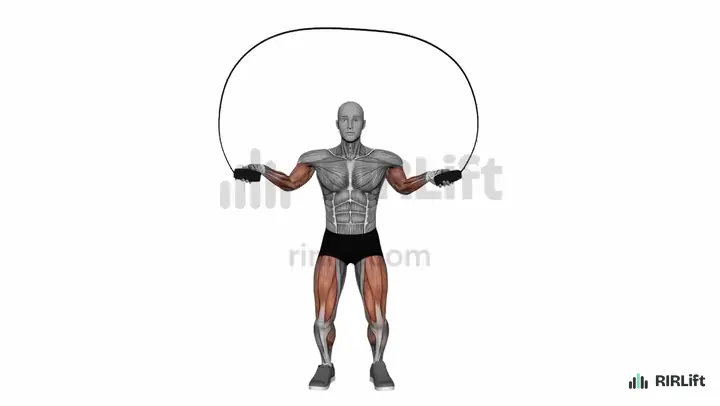
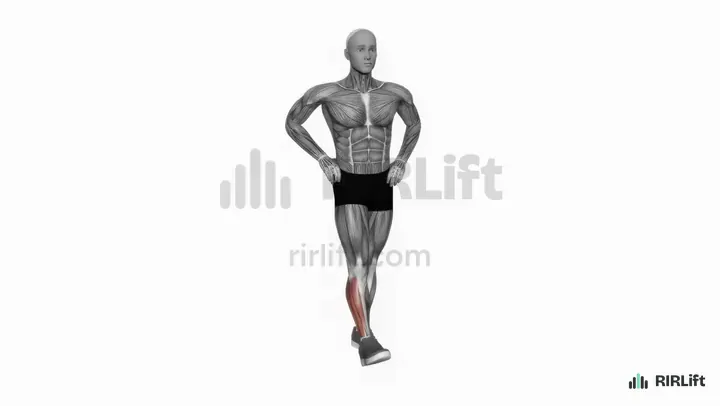
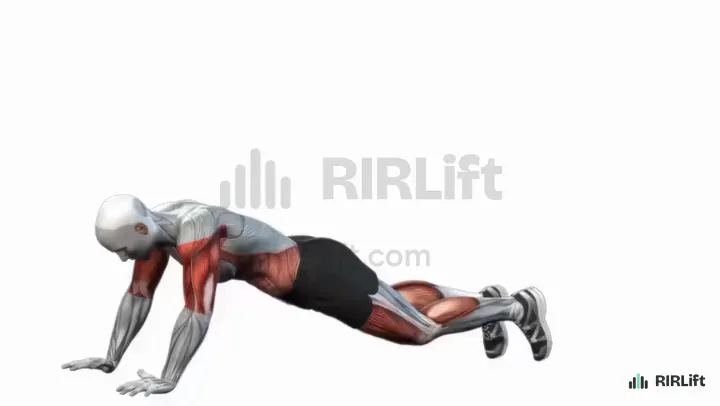
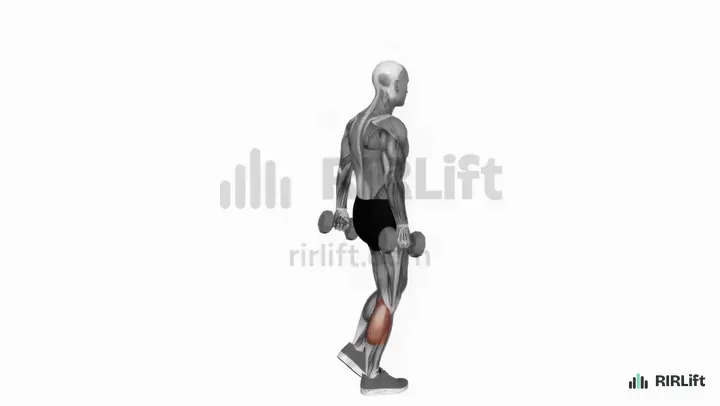
To warm up your calves, jump rope easily for 2 minutes, do 10 ankle circles each way per foot and 5 walkouts with a pause in the plank to press your heels back, then 10 slow single-leg calf raises per side with a full stretch at the bottom. Finish with 30 seconds of skipping in place and 20 seconds of fast feet. That takes about 6 minutes; before calf training, add 2 lighter sets of your first calf raise.
- Jump Rope Calves, Quads
- Ankle Circles Calves
- Walkout Abs, Shoulders, Chest
- Single-Leg Calf Raise Calves
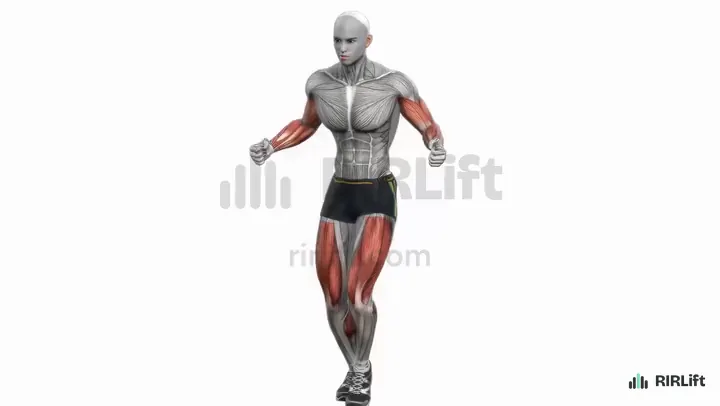
- Skipping in Place Calves, Quads, Hamstrings
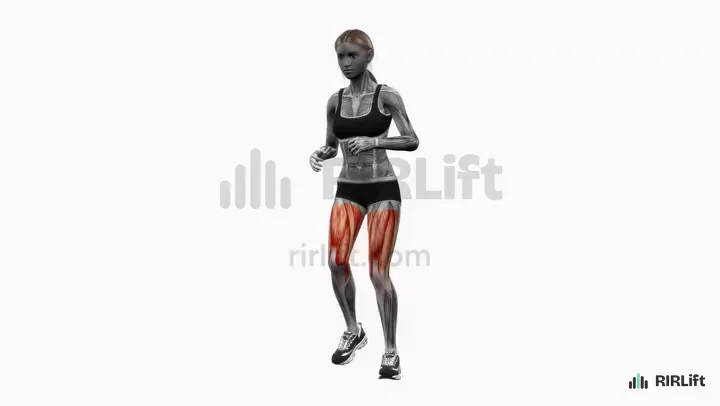
- Fast Feet Calves, Quads
Put them together: example sessions
Each session below picks from the exercises above for one situation, with the sets, reps, rest and RIR filled in. Open one in the session builder to change a pick, price it from a recent set, and add it to RIRLift.
-
Session 1
Calf training day
You train calves with standing and seated raises.
2× a week · 22 sets a week · ~20 min
-
Session 2
Before a run
You run regularly and your calves feel tight for the first mile.
4× a week · 24 sets a week · ~10 min
-
Session 3
Before plyometrics
You are about to do box jumps, jump squats or bounding.
2× a week · 16 sets a week · ~10 min
Session 1
Calf training day
- Workouts2× a week
- Working sets22 a week
- Per workout~20 min
- EquipmentJump Rope, Standing Calf Raise, Seated Calf Raise
You train calves with standing and seated raises.
The full warm-up moves the ankle and stretches the calves, then the standing raise gets two lighter sets. Calves recover quickly, so the work sets go to 1 rep in reserve.
| Exercise | Sets × reps | RIR | Rest |
|---|---|---|---|
| Jump RopeSeconds. | 2 × 60 | 4 | 0 s |
| Ankle CirclesEach way, per foot. | 1 × 10 | 4 | 0 s |
| Walkout | 1 × 5 | 4 | 0 s |
| Single-Leg Calf RaisePer side. Bodyweight. | 1 × 10 | 4 | 15 s |
| Standing Calf Raise2 warm-up sets firstPause at the bottom. | 3 × 10–15 | 1 | 1 min |
| Seated Calf Raise | 3 × 12–20 | 1 | 1 min |
- How to run it
- Rope, then the range block, then go straight to the calf machines.
- How to progress
- Add reps until you hit the top of the range on every set, then add weight.
Session 2
Before a run
- Workouts4× a week
- Working sets24 a week
- Per workout~10 min
- EquipmentJump Rope
You run regularly and your calves feel tight for the first mile.
Rope and skips warm the calves the way running uses them, and the slow single-leg raises add range. No weights; the run follows.
| Exercise | Sets × reps | RIR | Rest |
|---|---|---|---|
| Jump RopeSeconds. | 2 × 60 | 4 | 0 s |
| Ankle CirclesEach way, per foot. | 1 × 10 | 4 | 0 s |
| Single-Leg Calf RaisePer side. | 1 × 10 | 4 | 0 s |
| Skipping in PlaceSeconds. | 1 × 30 | 4 | 0 s |
| Fast FeetSeconds. | 1 × 20 | 3 | 0 s |
- How to run it
- Do one round, then start the run slowly for a few minutes.
- How to progress
- Make the skips and fast feet quicker as you get used to the routine.
Session 3
Before plyometrics
- Workouts2× a week
- Working sets16 a week
- Per workout~10 min
- EquipmentJump Rope, Plyo Box
You are about to do box jumps, jump squats or bounding.
The fast feet and low box jumps get extra sets because jumping asks the calves for full speed. Keep every jump easy; the hard ones come in the session.
| Exercise | Sets × reps | RIR | Rest |
|---|---|---|---|
| Jump RopeSeconds. | 2 × 60 | 4 | 0 s |
| Walkout | 1 × 5 | 4 | 0 s |
| Single-Leg Calf RaisePer side. | 1 × 10 | 4 | 0 s |
| Fast FeetSeconds. | 2 × 20 | 3 | 20 s |
| Box JumpLow box. | 2 × 3–5 | 3 | 1 min |
- How to run it
- Do the rope and range work, then the fast feet twice, then the box jumps, then start your plyometrics.
- How to progress
- Raise the warm-up box height only after a few weeks.
Make it fit you
-
No rope
Bounce in place with small hops for the same 2 minutes.
-
No step
Do the single-leg raises on flat ground and hold the top for two seconds.
-
Calves cramp easily
Spend more time on the slow raises and less on the fast feet.
-
Log RIR in RIRLift
On calf day, log your reps in reserve on each working set; RIRLift picks next session's weight from it.
-
Cold day
Do the rope block twice and keep socks and long pants on until you finish.
Questions
How do you warm up your calves?
Easy rope jumping, ankle circles, a walkout with a heel press, slow single-leg calf raises off a step, then skips and fast feet. About 6 minutes.
How do I keep my calves warm before running?
Do the rope and skip blocks right before you start, and keep the first few minutes of the run easy.
Should I stretch my calves before exercise?
Use the slow calf raises with a pause at the bottom, which stretch the calves while they work. Hold long stretches after training.
Do I need to warm up calves before leg day?
A short version helps before squats and lunges: ankle circles and a set of slow calf raises.
How do I warm up the soleus?
Bend your knees: seated calf raises, or single-leg raises off a step with the knee bent, work the deeper calf muscle.
Related templates
-
Calf raises: how to do them, what they work and what to swap in
Technique for every calf raise.
-
Calf exercises at the gym: standing, seated and leg press raises
What to do after the calf day warm-up.
-
Warm up for running: a 10-minute pre-run routine
A full pre-run routine.
-
Jump rope warm-up: get ready for the rope, or use it to warm up
More rope work before training.
-
Warm-up sets
How to build lighter sets on calf day.