
Chest exercises for women: upper chest, presses and push-ups
Published October 19, 2026
The best chest exercises for women are the incline dumbbell press for the upper chest, the machine chest press or flat dumbbell press for pushing strength, and a fly or pullover to train the stretch. If you cannot do a full push-up yet, add the incline push-up and lower the surface over time. Two chest sessions a week of 8 to 10 hard sets each, every set ending 1 to 2 reps short of failure, is enough to build both strength and a firmer, fuller upper chest.
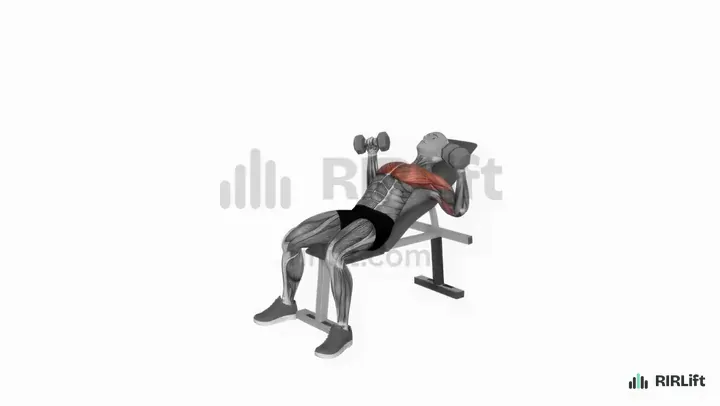
- Incline Dumbbell Press Chest
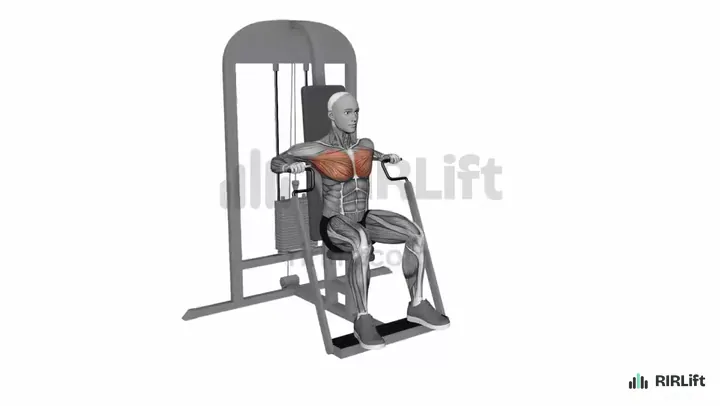
- Machine Chest Press Chest
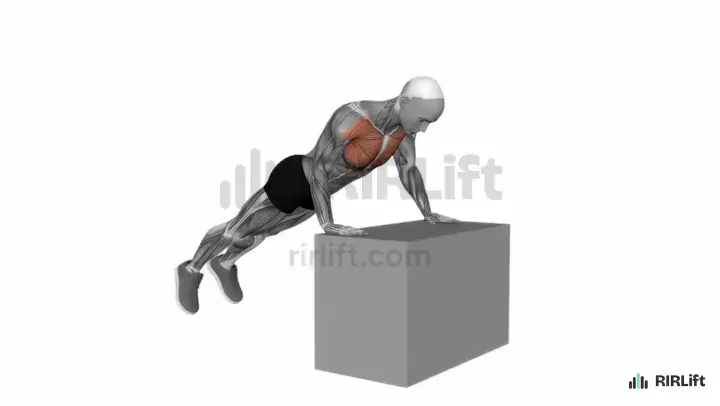
- Incline Push-Up Chest
- Flat Dumbbell Press Chest
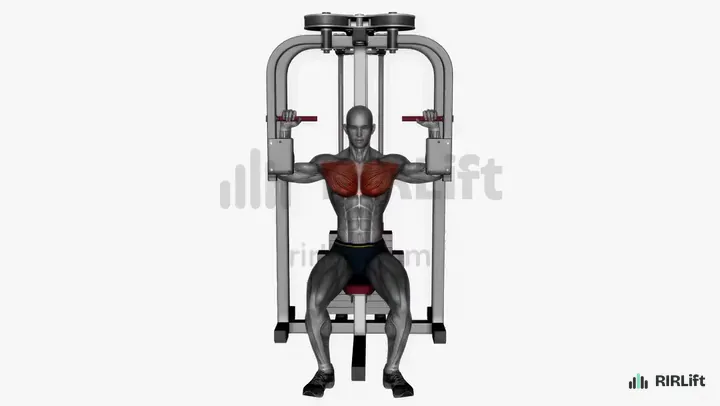
- Pec Deck Fly Chest
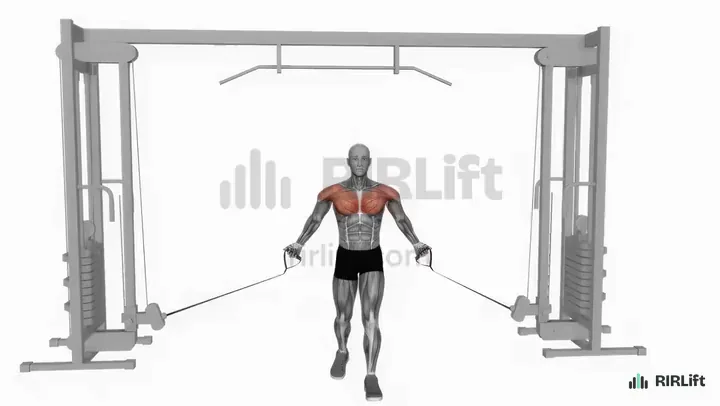
- Low-to-High Cable Fly Chest
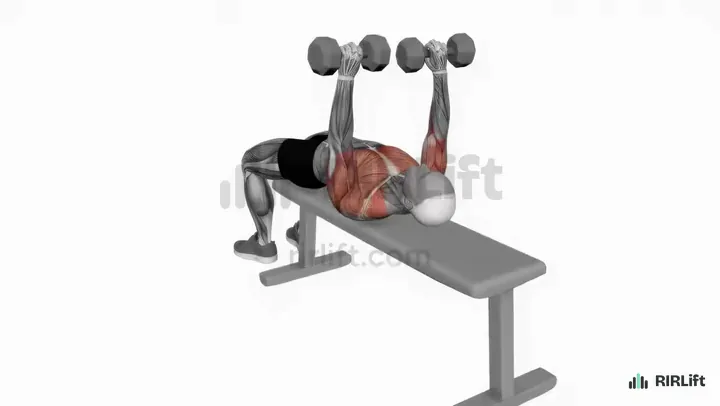
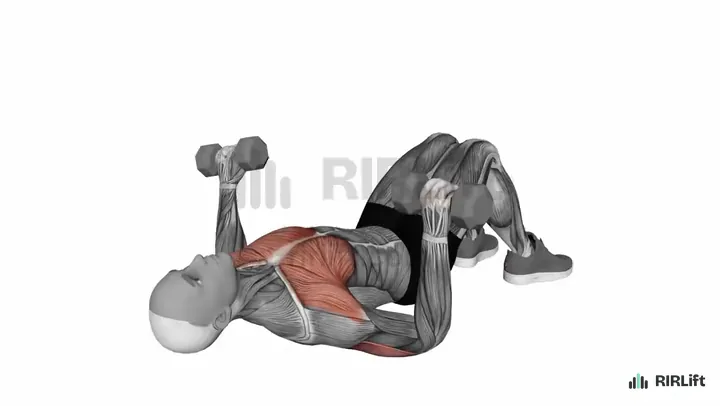
- Dumbbell Floor Press Chest, Triceps
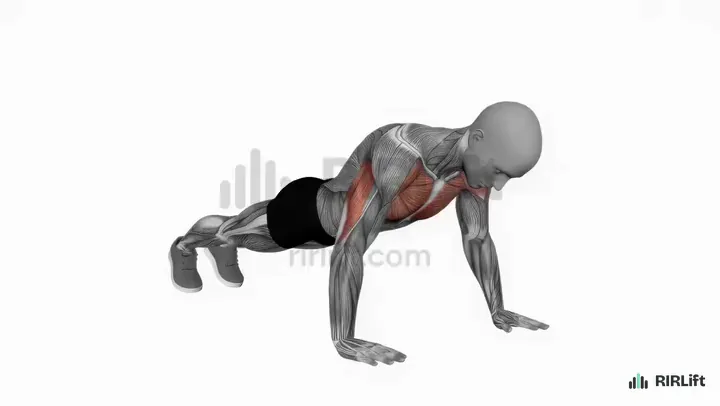
- Push-Up Chest
Put them together: example sessions
Each session below picks from the exercises above for one situation, with the sets, reps, rest and RIR filled in. Open one in the session builder to change a pick, price it from a recent set, and add it to RIRLift.
-
Session 1
At home, working toward your first full push-up
You train at home with a light pair of dumbbells and a sturdy counter or bench edge, and you cannot yet do a set of full push-ups from the floor.
2× a week · 17 sets a week · ~20 min
-
Session 2
In a gym, starting with machines
You have joined a gym or are coming back after a break, and you want a chest routine you can run with confidence without asking for a spotter or learning a barbell first.
2× a week · 16 sets a week · ~20 min
-
Session 3
Dumbbells and a bench, shaping the upper chest
You already lift, own or have access to dumbbells and an adjustable bench, and your goal is a more defined upper chest along with steady strength gains.
2× a week · 19 sets a week · ~25 min
Session 1
At home, working toward your first full push-up
- Workouts2× a week
- Working sets17 a week
- Per workout~20 min
- EquipmentDumbbells
You train at home with a light pair of dumbbells and a sturdy counter or bench edge, and you cannot yet do a set of full push-ups from the floor.
Push-up strength comes from practicing the push-up position and from pressing a little more than your bodyweight share, so each session pairs a push-up step with a dumbbell press. The incline push-up leads Session A because it trains the exact plank you need; the floor press and pullover add load you can increase. Push-up sets stop 2 reps short of failure so every rep keeps a straight body, and the dumbbell work goes to 1 rep in reserve. Each session has 9 working sets for chest, which with two sessions lands you near the low end of a productive week.
| Exercise | Sets × reps | RIR | Rest |
|---|---|---|---|
| Incline Push-UpHighest surface where 8 clean reps is hard. | 3 × 6–12 | 2 | 90 s |
| Dumbbell Floor PressPause the elbows on the floor. | 3 × 10–15 | 1 | 90 s |
| Dumbbell Chest PulloverOn the floor, knees bent. One dumbbell. | 3 × 10–15 | 1 | 1 min |
Open Session A in the session builder
| Exercise | Sets × reps | RIR | Rest |
|---|---|---|---|
| Kneeling Push-UpHips in line with knees. | 3 × 6–15 | 2 | 90 s |
| Dumbbell Floor PressThree seconds down. | 3 × 10–15 | 1 | 90 s |
| Incline Push-UpOne notch lower than Session A. | 2 × 8–15 | 1 | 1 min |
Open Session B in the session builder
- How to run it
- Do Session A and Session B on two non-consecutive days, alongside your usual lower-body or full-body training. Start the incline push-up on the highest surface where you can hit 8 clean reps.
- How to progress
- When you reach 3 sets of 12 on the incline push-up at 2 reps in reserve, move your hands to a lower surface. When the lowest step is easy, swap the kneeling push-up in Session B for full push-ups and count each set as long as it lasts.
Session 2
In a gym, starting with machines
- Workouts2× a week
- Working sets16 a week
- Per workout~20 min
- EquipmentIncline Bench, Smith Machine, Chest Press, Fly Machine +1
You have joined a gym or are coming back after a break, and you want a chest routine you can run with confidence without asking for a spotter or learning a barbell first.
Machines and the Smith bar take balance out of the lift, so you can push each set to 1 rep in reserve from the first week and still keep good form. The routine opens with an incline press for the upper chest, follows with the machine press for the middle, and finishes with a fly. Upper Body A uses the Smith incline and the pec deck; Upper Body B swaps in the cable fly so the upper chest gets a second angle. Each block is 8 working sets, short enough to sit at the front of an upper-body day.
| Exercise | Sets × reps | RIR | Rest |
|---|---|---|---|
| Smith Machine Incline Press1 warm-up set firstBar lands just below the collarbone. | 3 × 8–12 | 1 | 2 min |
| Machine Chest PressHandles at mid chest. | 3 × 10–15 | 1 | 90 s |
| Pec Deck FlyHold the squeeze for a beat. | 2 × 12–15 | 1 | 1 min |
Open Upper Body A in the session builder
| Exercise | Sets × reps | RIR | Rest |
|---|---|---|---|
| Machine Chest Press1 warm-up set firstSlow on the way back. | 3 × 8–12 | 1 | 2 min |
| Low-to-High Cable FlyHands meet at chin height. | 3 × 12–20 | 1 | 1 min |
| Smith Machine Incline PressLighter than Upper Body A. | 2 × 10–15 | 2 | 90 s |
Open Upper Body B in the session builder
- How to run it
- Run these blocks at the start of your two upper-body days each week, then add your back, shoulder and arm work after them. Write the seat and pin settings down the first time so set-up takes seconds next time.
- How to progress
- Double progression: when every set reaches the top of the rep range at 1 rep in reserve, move the pin one plate heavier and work back up. On the Smith machine add the smallest plates you can find.
Session 3
Dumbbells and a bench, shaping the upper chest
- Workouts2× a week
- Working sets19 a week
- Per workout~25 min
- EquipmentDumbbells, Incline Bench, Flat Bench
You already lift, own or have access to dumbbells and an adjustable bench, and your goal is a more defined upper chest along with steady strength gains.
Visible change in the chest comes from adding muscle to the upper fibers, so both sessions start with an incline exercise and give it the most sets. The flat press keeps your overall pressing strength climbing, and the fly and pullover cover the stretched position the presses do not reach. Presses stop at 1 to 2 reps in reserve so you can add weight week to week; the fly and pullover go to 0 or 1 because light, controlled sets can safely get that close. Session A is 10 sets and Session B is 9.
| Exercise | Sets × reps | RIR | Rest |
|---|---|---|---|
| Incline Dumbbell Press1 warm-up set firstBench at about 30 degrees. | 4 × 8–12 | 1 | 2 min |
| Flat Dumbbell PressElbows at 45 degrees. | 3 × 8–12 | 2 | 2 min |
| Dumbbell Chest FlyTwo seconds into the stretch. | 3 × 12–15 | 1 | 1 min |
Open Session A in the session builder
| Exercise | Sets × reps | RIR | Rest |
|---|---|---|---|
| Incline Dumbbell Press1 warm-up set firstOne notch steeper than Session A. | 3 × 10–15 | 1 | 90 s |
| Push-UpKneeling or incline if needed. | 3 × 6–20 | 1 | 90 s |
| Dumbbell Chest PulloverAcross the bench. Ribs down. | 3 × 10–15 | 0 | 1 min |
Open Session B in the session builder
- How to run it
- Do Session A and Session B on separate days with at least two days between them. They fit at the start of an upper-body or push day.
- How to progress
- When all sets of the incline press hit 12 reps at the target reps in reserve, move up to the next pair and start again at 8. Hold the fly and pullover at the same weight for a few weeks and add reps instead.
Make it fit you
-
Training around a sports bra
A supportive bra that does not shift when you lie on a bench makes presses and flies more comfortable. If a chest strap or underwire digs in on the flat press, the machine press and the incline push-up put less pressure across the front of the body.
-
Shoulders feel pinchy on presses
Lower the bench angle by a notch, tuck your elbows closer to 45 degrees, and use the floor press, which stops your elbows before the shoulder reaches its end range. Keep the fly shallow until the stretch feels good.
-
Only 20 or 30 minutes
Run just the first two blocks of any session and pair them with a row in a superset, resting after both. You keep most of the chest volume and finish in about 20 minutes.
-
Postpartum or returning after a long break
Start from the first-push-up plan with every set at 3 reps in reserve for two weeks, and keep the incline push-up high. Bring the target down to 2, then 1, once the movements feel steady.
-
Upper chest still looks flat
Move an incline exercise to the first slot of every chest session and give it four sets. Add the low-to-high cable fly at the end of one session for extra upper-chest work without more pressing.
-
Log the RIR, not just the reps
Write down how many reps you had left after each set. If you log in RIRLift, it suggests your next weight from the reps in reserve you recorded, so your presses keep moving up instead of staying on the same dumbbells for months.
Questions
What does working out the chest do for females?
It builds the pectoral muscles that sit under the breast tissue and makes you stronger at every pushing movement, from push-ups to closing a heavy door or lifting a child. A stronger chest also helps balance the work your back does in rows and pulldowns, which keeps your upper body training even.
Do chest exercises lift breasts?
Not directly. Breasts are made of fat and glandular tissue with no muscle inside them, so training cannot tighten or raise the breast itself. What chest training does is add muscle to the pecs underneath, which can make the upper chest look fuller and firmer, especially the area above the breast line.
Should women do pec exercises?
Yes. The chest is one of the largest muscle groups in the upper body, and skipping it leaves your pushing strength behind your pulling strength. Two sessions a week of 8 to 10 hard sets each is enough for most women to get stronger and see change.
Will chest exercises make my chest bigger or bulky?
They add muscle gradually, and for most women that shows up as a firmer, more defined upper chest rather than size. Building noticeable bulk takes years of high-volume training and eating in a surplus, so a few chest sessions a week will not change your shape quickly.
How do I flatten or tone a saggy chest?
You cannot burn fat from one spot by training the muscle under it; overall fat loss comes from your diet and total activity. What you can do is build the pec muscle, which firms the area above the breast. The incline press and incline push-up target that upper band most directly.
Is it OK to work out chest every day?
It is not needed and usually works against you. Muscle grows during recovery, and a chest that is still sore cannot do quality sets. Two or three sessions a week with a day or two of rest between them builds more than daily training at a lower effort.
What are good chest exercises to do at the gym?
Start with the Smith machine incline press for the upper chest, the machine chest press for the middle, and the pec deck or a low-to-high cable fly to finish. Machines let you train close to failure safely on your own. Once you are comfortable, move to the incline and flat dumbbell presses.
How many reps and sets should a woman do for chest?
The same as anyone: 8 to 15 reps on presses and 12 to 20 on flies, 3 to 4 sets per exercise, ending each set 1 to 2 reps short of failure. Two sessions with 8 to 10 sets each puts you in a range that builds muscle well.
Related templates
-
Chest exercises for beginners: where to start and what to add next
A machine-first starting plan if you have never trained chest before.
-
Chest exercises at home, with or without equipment
More chest options for training with dumbbells and bodyweight at home.
-
Upper body exercises for women: back, chest, shoulders and arms
The back, shoulder and arm work to pair with these chest sessions.
-
The best workout for women, for your week
Full weekly programs that already include a chest block like these.
-
Push-ups: how to do them, what they work, and how to make them harder
The full guide to the floor push-up and its harder variations.
-
How to use reps in reserve (RIR)
How to judge the 1 to 2 reps in reserve targets in these plans.