
Chest exercises for beginners: where to start and what to add next
Published October 19, 2026
Start with the machine chest press and the pec deck if you train in a gym: the machine guides the path, so you can learn to push hard without balancing anything. At home, start with push-ups at whatever height you can do 8 clean reps, from a counter down to the floor. After four to eight weeks, move to dumbbell presses and then the barbell bench press. Two or three chest exercises twice a week is enough, with every set stopping 2 to 3 reps before you would fail.
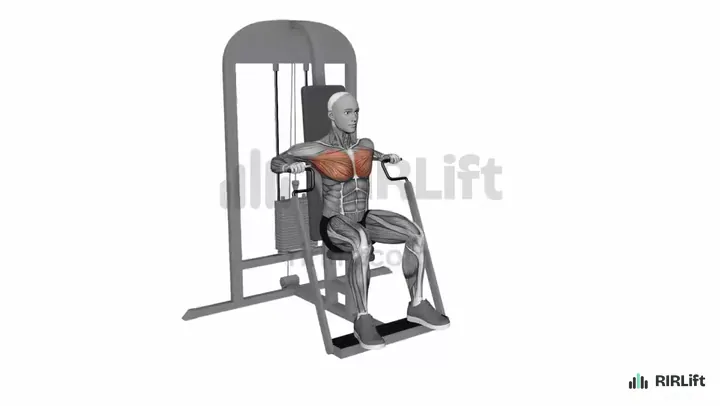
- Machine Chest Press Chest
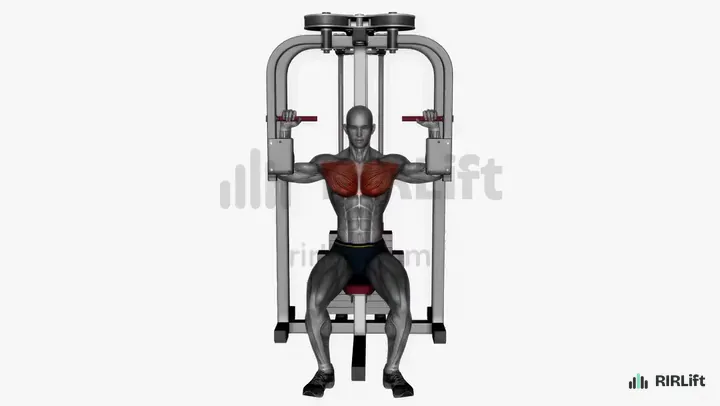
- Pec Deck Fly Chest
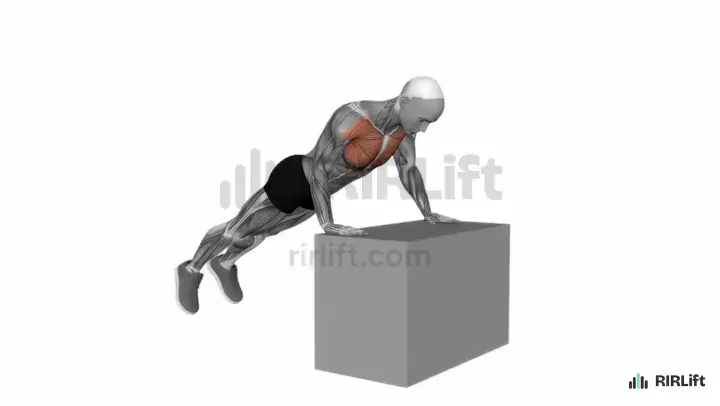
- Incline Push-Up Chest
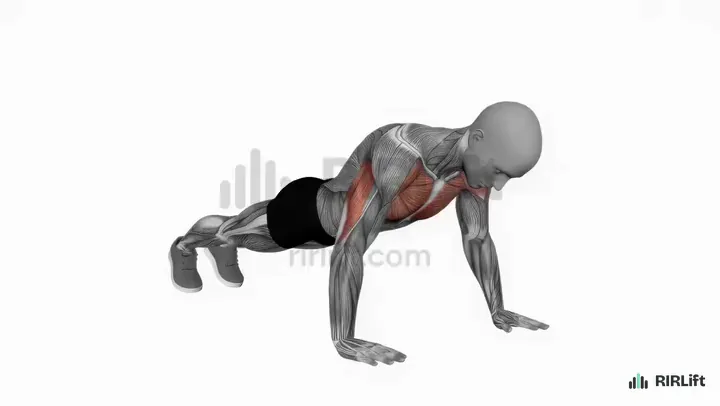
- Push-Up Chest
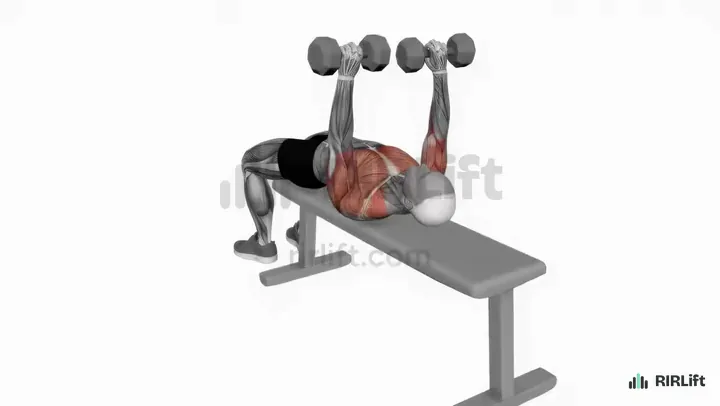
- Flat Dumbbell Press Chest
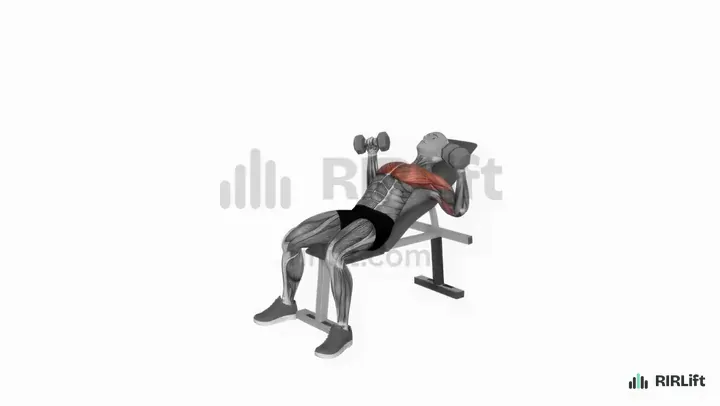
- Incline Dumbbell Press Chest
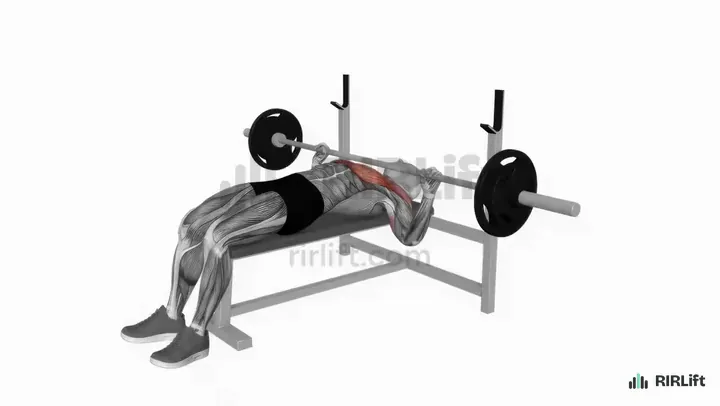
- Barbell Bench Press Chest
Put them together: example sessions
Each session below picks from the exercises above for one situation, with the sets, reps, rest and RIR filled in. Open one in the session builder to change a pick, price it from a recent set, and add it to RIRLift.
-
Session 1
First month at the gym, machines only
You are new to lifting, train in a gym, and want to start without free weights.
2× a week · 12 sets a week · ~15 min
-
Session 2
At home, no equipment
You are starting at home with nothing but a counter, a bench or a sturdy table, and the floor.
3× a week · 18 sets a week · ~10 min
-
Session 3
Ready for free weights
You have trained for a couple of months, the machines feel steady, and you want to learn dumbbells and the bench press.
2× a week · 15 sets a week · ~20 min
Session 1
First month at the gym, machines only
- Workouts2× a week
- Working sets12 a week
- Per workout~15 min
- EquipmentChest Press, Fly Machine, Incline Chest Press
You are new to lifting, train in a gym, and want to start without free weights.
Machines take balance out of the picture, so these two sessions use the chest press for the whole chest, the pec deck for the stretch, and the incline machine for the upper chest. Every set stops 2 to 3 reps short of failure, which is close enough to build muscle while you learn how hard a set should feel. Each session has 6 working sets.
| Exercise | Sets × reps | RIR | Rest |
|---|---|---|---|
| Machine Chest Press1 warm-up set firstHandles at mid chest. | 3 × 10–15 | 3 | 2 min |
| Pec Deck Fly | 3 × 12–15 | 2 | 90 s |
Open Session A in the session builder
| Exercise | Sets × reps | RIR | Rest |
|---|---|---|---|
| Machine Incline Press1 warm-up set first | 3 × 10–15 | 3 | 2 min |
| Machine Chest Press | 3 × 10–15 | 2 | 90 s |
Open Session B in the session builder
- How to run it
- Do Session A and Session B once each per week, two or three days apart. Warm up with one light set on the first exercise.
- How to progress
- When every set reaches the top of its rep range with 2 reps left, move the pin down one plate. After four to eight weeks, move on to the free-weight plan.
Session 2
At home, no equipment
- Workouts3× a week
- Working sets18 a week
- Per workout~10 min
- EquipmentBodyweight
You are starting at home with nothing but a counter, a bench or a sturdy table, and the floor.
Push-ups scale with how high your hands are, so you start on the version where you can do 8 to 15 clean reps and work down the ladder. Sets stop 2 reps short of failure because form breaks before muscles fail on push-ups for most beginners. Each session has 6 sets.
| Exercise | Sets × reps | RIR | Rest |
|---|---|---|---|
| Kneeling Push-UpOr floor push-ups once you reach 15. | 3 × 6–15 | 2 | 90 s |
| Incline Push-UpHands on a counter or bench. | 3 × 8–15 | 2 | 1 min |
- How to run it
- Do the session two or three times a week on non-consecutive days. Start each session with the harder push-up while you are fresh.
- How to progress
- When you can do 15 clean reps on a version, move to the next harder one: counter, lower surface, knees, floor.
Session 3
Ready for free weights
- Workouts2× a week
- Working sets15 a week
- Per workout~20 min
- EquipmentDumbbells, Flat Bench, Incline Bench, Barbells
You have trained for a couple of months, the machines feel steady, and you want to learn dumbbells and the bench press.
Dumbbells come first in each session because they teach control; the bench press is introduced at 3 reps in reserve with pins so you learn the lift before you push it. The dumbbell flat and incline presses stop at 2, the fly at 2. Session A has 8 sets and Session B has 7.
| Exercise | Sets × reps | RIR | Rest |
|---|---|---|---|
| Flat Dumbbell Press1 warm-up set first | 3 × 8–12 | 2 | 2 min |
| Incline Dumbbell Press | 3 × 10–12 | 2 | 90 s |
| Dumbbell Chest FlyLight weight. | 2 × 12–15 | 2 | 1 min |
Open Session A in the session builder
| Exercise | Sets × reps | RIR | Rest |
|---|---|---|---|
| Barbell Bench Press2 warm-up sets firstPins set just below your chest. | 3 × 8–10 | 3 | 2:30 min |
| Incline Dumbbell Press | 2 × 10–12 | 2 | 90 s |
| Push-Up | 2 × 8–15 | 2 | 1 min |
Open Session B in the session builder
- How to run it
- Do the two sessions once each per week. Set safety pins for the bench press and start with the empty bar or light plates.
- How to progress
- Add a rep to each set until you reach the top of the range, then move up a dumbbell size or add 5 pounds to the bar. Reduce reps in reserve to 1 to 2 once your form stays the same on the last rep.
Make it fit you
-
Not sure how hard a set should feel
Stop when you think you could do 2 or 3 more good reps. On the last set of a session, go until the next rep would be slow, and notice how many reps that was. That tells you how accurate your guess was.
-
Shoulder discomfort
Lower the bench or machine seat angle, keep your elbows closer to your sides, and stop your reps a bit short of the deepest stretch. If one exercise keeps hurting, swap it for the machine chest press.
-
Time for only one chest exercise
Do the machine chest press at the gym or push-ups at home. One exercise for three sets, twice a week, still builds a beginner's chest.
-
Gym is crowded
If the chest press machine is taken, do the flat dumbbell press with light dumbbells for the same sets and reps. If the pec deck is taken, do the dumbbell fly with a weight you can lift 15 times.
-
Training full body
Pick one chest exercise per session and rotate: machine press one day, incline press the next. Three sets each time is enough while the rest of your body is also training.
-
Log the RIR, not just the weight
Write down how many reps you had left after each set, not only the weight. If you log in RIRLift, it uses that number to suggest your next weight, which takes the guessing out of when to go heavier.
Questions
How should I start my chest workout?
Warm up with one or two light sets of your first exercise, then start with the press: the machine chest press at a gym or push-ups at home. Do the fly or the second press after it.
Are 3 exercises for chest enough?
Yes, and two is often enough for a beginner. One press and one fly, three sets each, twice a week gives your chest 12 hard sets a week, which is plenty to grow.
Is it OK to work out chest every day?
Not with hard sets. Your chest needs a day or two to recover. Train it two or three times a week with rest days between sessions.
What are some good core and chest exercises?
The push-up trains both: your chest presses while your abs hold your body straight. The kneeling and incline versions do the same at an easier level.
Should a beginner start with the bench press?
You can, but machines and dumbbells are easier to learn first. Start the bench press after a few weeks with light weight and safety pins set, as in the free-weight plan above.
How much weight should a beginner use for chest?
Whatever lets you do the reps in the plan with 2 to 3 reps left. Start lighter than you think and add weight once every set reaches the top of the range.
How long until I see chest results?
Strength goes up in the first few weeks as you learn the movements. Visible size takes longer, usually a few months of steady training.
Related templates
-
Machine chest press: how to set it up and use it
Seat setup and set targets for the first chest exercise to learn.
-
Push-ups: how to do them, what they work, and how to make them harder
More on push-up form and how to keep progressing at home.
-
Chest exercises at the gym: barbells, machines, cables and dips
The full list of gym chest exercises once you are past the beginner stage.
-
Machine chest exercises: presses, dips and the pec deck
Every chest machine, for when you want more variety.
-
The best workout for beginners
Full-body beginner programs that include chest.