Chest-supported row alternatives that keep your lower back out of it

The best chest-supported row alternative is the incline dumbbell row: chest down on an incline bench with two dumbbells, it is the same supported row without the machine. In the gym, a seated cable row keeps you upright and braced; with a barbell, the seal row keeps your chest on a bench. At home with no weights, strap rows, inverted rows and band rows train the same upper back.

What a chest-supported row alternative has to replace

Upper back and lats, chest on a pad

Chest-Supported Row

Upper Back, Lats

The machine's chest pad holds your torso still, so you can row heavy without your lower back or momentum helping. It is the lift every swap below is trying to replace.

How to do it

  1. Set the seat so the handles are at chest height and the pad sits against your upper chest.
  2. Grab the handles with arms straight and your shoulders stretched forward.
  3. Pull the handles back by driving your elbows behind you until your hands reach your torso.
  4. Return slowly to straight arms and repeat without lifting off the pad.

Cues

  • Chest stays on the pad
  • Wide elbows for upper back, tucked for lats
  • Full stretch each rep

Common mistakes

  • Pulling your chest off the pad to finish reps: the set is over when you cannot finish with the chest down.
  • Setting the seat too low so you pull toward your neck: handles should line up with your mid-chest.

The chest-supported row trains your upper back (rhomboids, middle traps, rear delts) and lats, with your biceps helping. The pad on your chest is the whole point: your lower back and legs cannot help or get tired, and you cannot swing the weight, so the set ends exactly when your upper back gives out.

The best replacement keeps that support, or at least keeps your torso still. When that is not possible, a braced row with one hand on a bench comes next.

Cables in the gym

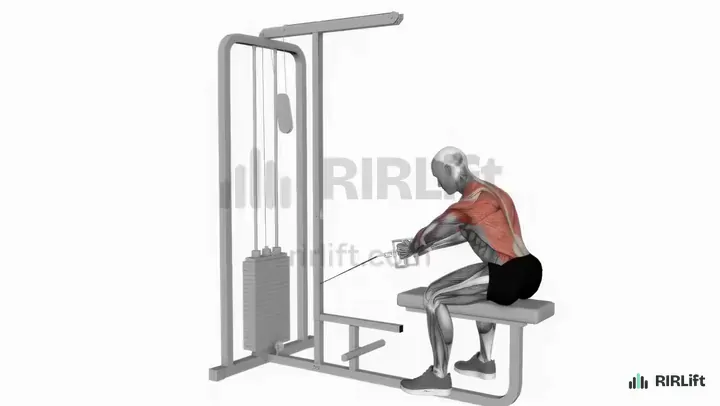
When the row machine is taken, a cable row keeps you upright and braced, which is the next best thing to a chest pad.

Closest swap in the gym

Seated Cable Row

Upper Back, Lats

Sitting upright with your feet braced keeps your lower back nearly as quiet as the chest pad does, and the cable keeps your back loaded at the stretch. Use the same reps you did on the machine.

How to do it

  1. Clip a close-grip V-handle onto the bottom cable, set a light pin and sit with your feet on the platform and your knees slightly bent.
  2. Lean forward just enough to take the handle, then sit tall with your arms straight and your torso close to vertical.
  3. Let the weight draw your shoulder blades forward so your upper back starts stretched, while your trunk stays tall.
  4. Drive your elbows back along your sides until the handle touches your stomach just below the ribs, and hold a beat with your shoulder blades pinched.
  5. Return the handle slowly until your arms are long and your shoulder blades slide forward again, then start the next pull.

Cues

  • Sit tall, then pull
  • Elbows past your ribs
  • Reach with the shoulders, not the spine

Common mistakes

  • Rocking back and forth to move the stack: if your torso swings more than a few degrees, take off a plate and let only your arms and shoulder blades move.
  • Stopping the handle short at the front: let your shoulders reach forward on every rep, or you skip the stretched part of the row.
  • Shrugging the handle toward your chest: pull to your stomach and keep your shoulders down away from your ears.
  • Folding forward at the waist at the front of the rep: your shoulders travel, your trunk stays tall.

One arm, longer range

Single-Arm Cable Row

Upper Back, Lats

Rowing one arm at a time at a pulley lets your shoulder reach further forward and your elbow go further back. A good second row, or a way to fix a weaker side.

How to do it

  1. Set the pulley around chest to waist height with a single D-handle, take it in one hand and step back until the weight lifts off the stack.
  2. Face the stack, feet about shoulder-width apart and knees soft, hips pushed back and chest leaning slightly forward with your back flat.
  3. Let the cable pull your arm long and your shoulder blade forward, without turning your chest toward the machine.
  4. Pull your elbow back close to your side toward your hip, bringing your shoulder blade back and down until your hand reaches your ribs.
  5. Pause briefly, then let the handle return slowly to a full stretch, and repeat all reps before switching sides.

Cues

  • Elbow to your back pocket
  • Chest stays square
  • Reach long, pull short

Common mistakes

  • Rotating your torso to finish the rep: if your chest turns away from the stack, lighten the weight and keep both shoulders facing forward.
  • Shrugging toward your ear: start each pull by setting the shoulder down, then lead with the elbow.
  • Cutting the stretch short: let the arm go fully forward each rep; the stretch is the main reason to row one arm at a time.

Barbell and landmine

A seal row keeps your chest supported with a barbell. The landmine rows load heavier but ask your lower back to hold a hinge.

Best barbell swap: still chest-supported

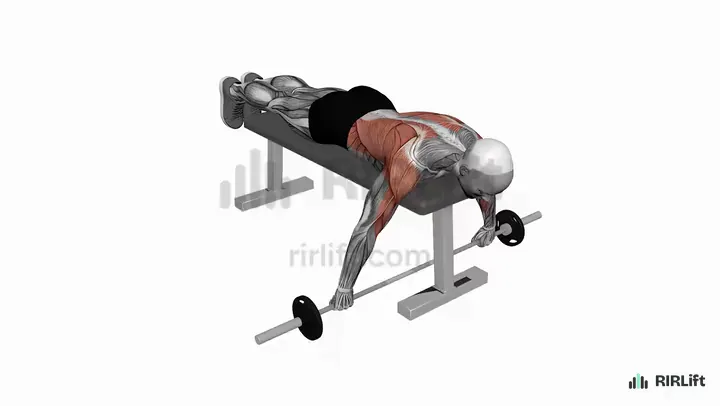
Seal Row

Upper Back, Lats

Lying face down on a raised bench is the free-weight version of the chest-supported machine. Nothing but your upper back moves the bar.

How to do it

  1. Set a flat bench on blocks or boxes high enough that your arms hang straight without the plates hitting the floor, and lie on it face down.
  2. Grab the barbell under the bench overhand, hands a little wider than shoulder-width.
  3. Row the bar up until it touches the underside of the bench, elbows out at about 45 degrees.
  4. Lower to a full hang and repeat.

Cues

  • Bar to the bench
  • Stay flat on the pad
  • Full hang at the bottom

Common mistakes

  • Lifting your head and chest off the bench to finish: stay down, the bench is the limit.
  • A bench too low, so the plates touch the floor: raise it until your arms hang free.
Build a session with Seal Row

Heavy row with plates

T-Bar Row

Upper Back, Lats

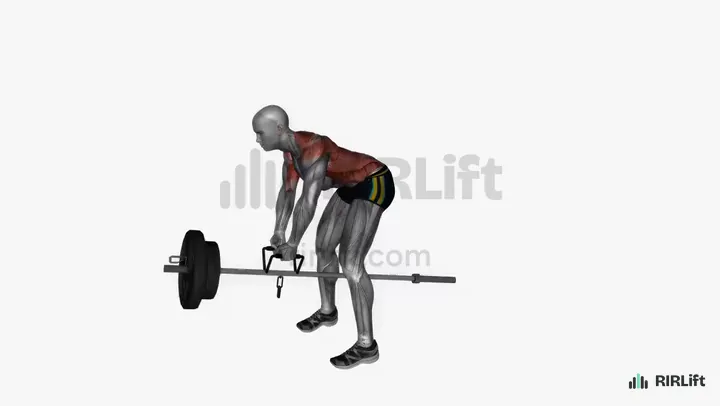
A barbell in a landmine rowed with a V-handle lets you row heavy plates. You hold a hinge, so your lower back works where the machine let it rest; start a little lighter.

How to do it

  1. Stand over the bar facing away from the anchor, plates in front of you.
  2. Put a V-handle under the sleeve or grip the bar with both hands.
  3. Hinge until your chest is at about 45 degrees and your back is flat.
  4. Pull the plates toward your lower chest, elbows close.
  5. Lower until your arms are straight and your shoulders stretch forward.

Cues

  • Chest stays over the plates
  • Elbows to your hips
  • Full stretch at the bottom

Common mistakes

  • Standing up as you pull: the angle you start at is the angle you finish at.
  • Shortening the bottom: let your shoulder blades spread before the next rep.
Build a session with T-Bar Row

One-arm landmine row

Meadows Row

Upper Back, Lats

Standing side-on to a landmine bar and rowing the thick end with one hand, your free arm braces on your knee. It gives a longer stretch than most two-hand rows.

How to do it

  1. Stand side-on to the end of the bar, inside foot back, outside foot forward.
  2. Hinge and rest your free forearm on your front knee.
  3. Grip the sleeve overhand with your working hand.
  4. Pull your elbow up and back past your torso.
  5. Lower until your arm is long and you feel the stretch under your armpit.

Cues

  • Elbow up and back
  • Hips stay square
  • Long stretch every rep

Common mistakes

  • Rotating your torso to finish the pull: stop where your elbow passes your ribs.
  • Using straps before your grip has had a chance to grow: save them for the last set.

Dumbbells

An incline bench turns two dumbbells into a chest-supported row. With one dumbbell or no incline, brace a hand on a flat bench.

Closest free-weight swap

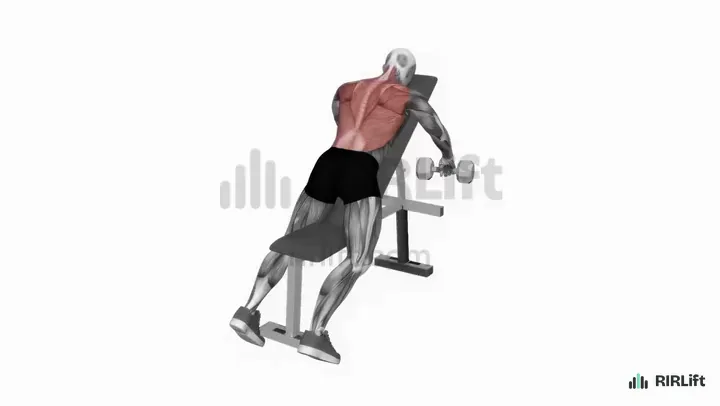
Incline Dumbbell Row

Upper Back, Lats

Chest down on an incline bench with two dumbbells is the chest-supported row without the machine. It works in any gym or home with an adjustable bench.

How to do it

  1. Set an adjustable bench to about 30–45 degrees and put a pair of dumbbells on the floor at its front end.
  2. Lie face down with your chest high on the pad, plant your feet or toes on the floor behind you, and pick up the dumbbells.
  3. Let your arms hang straight down with an overhand grip, palms facing behind you, and let your shoulder blades spread apart.
  4. Drive your elbows back past your torso until the dumbbells reach your lower ribs, pinching your shoulder blades without lifting your chest off the bench.
  5. Lower the weights slowly until your arms are straight and your shoulder blades are stretched apart, then pull again.

Cues

  • Chest stays on the pad
  • Lead with the elbows
  • Reach long at the bottom

Common mistakes

  • Lifting your chest off the bench to finish the rep: that brings back the momentum the bench is there to remove; use lighter dumbbells so you can finish with your chest down.
  • Shrugging the dumbbells up toward your ears: keep the shoulders down and pull your elbows back toward your hips.
  • Cutting the stretch short: let your shoulder blades slide apart at the bottom of every rep so the upper back works through its full range.

Heaviest dumbbell swap

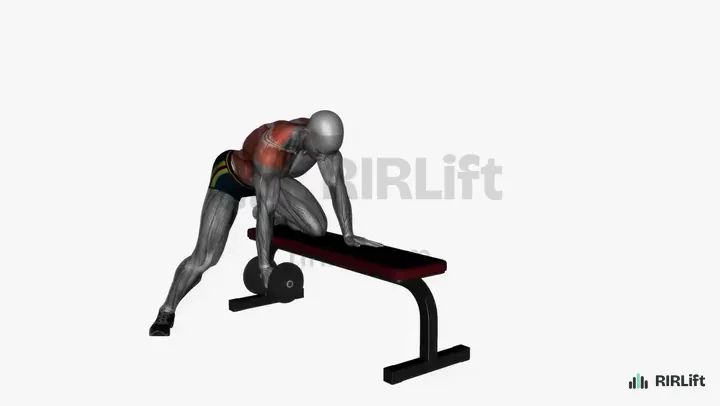
One-Arm Dumbbell Row

Lats, Upper Back

One hand and knee on a flat bench brace you, so your lower back stays out of it and you can row a heavy dumbbell. Use it when you have only one dumbbell or no incline bench.

How to do it

  1. Stand next to a flat bench, brace your left shin and left palm on it, and step your right foot back and out for balance.
  2. Pick up the dumbbell with your right hand and let it hang straight below your shoulder, back flat and roughly level with the floor.
  3. Pull your elbow back and up toward your hip, brushing it past your ribs, until the dumbbell reaches your lower ribs.
  4. Pause for a beat with your shoulder blade pulled back, without twisting your chest toward the ceiling.
  5. Lower the dumbbell slowly until your arm is straight and your shoulder blade drifts forward, then row again. Finish the set, then switch sides.

Cues

  • Elbow to your back pocket
  • Hand is just a hook
  • Chest stays square to the floor

Common mistakes

  • Twisting your torso open to heave the weight up: keep your shoulders level with the bench and lighten the dumbbell if you need to rotate to finish.
  • Pulling the dumbbell straight up to your chest with the elbow flared: aim the elbow toward your hip for more lat and less upper trap.
  • Stopping short at the bottom: let the arm straighten and the shoulder blade move forward each rep so your back works through its full range.

Two dumbbells, no bench

Dumbbell Bent-Over Row

Upper Back, Lats

Hinge over and row both dumbbells to your ribs. It needs no bench, but your lower back now holds the position, so pick it when your back feels fine.

How to do it

  1. Take one dumbbell per hand, feet about hip-width apart, and hinge forward from the hips with soft knees until your torso is nearly level with the floor.
  2. Let the dumbbells hang straight down under your shoulders, palms turned in.
  3. Pull both dumbbells up to your lower ribs, keeping the elbows close, and hold the top for a beat.
  4. Lower to straight arms without letting your torso rise and repeat.

Cues

  • Torso angle stays locked
  • Pull to the ribs
  • Squeeze, then lower

Common mistakes

  • Letting the hinge rise until you are rowing upright: keep a mirror or phone camera to the side and stop the set when your chest climbs.
  • Yanking the dumbbells with your hips: the legs stay still and the elbows do the work.

Bodyweight and bands

No weights: row your body under a bar or on straps, or row a band.

Bodyweight swap in a rack

Inverted Row

Upper Back, Lats

Under a bar set at hip height, you pull your chest to it with your body straight. Bend your knees to make it easier or raise your feet to make it harder.

How to do it

  1. Set a bar in a rack or Smith machine at about hip height and lock it in place.
  2. Sit under it, take an overhand grip a little wider than your shoulders, and hang with straight arms.
  3. Walk your feet out until your heels rest on the floor, then squeeze your glutes so your body forms one straight line.
  4. Pull your shoulder blades back, then drive your elbows past your ribs until your lower chest touches the bar.
  5. Lower under control until your arms are fully straight, keeping your hips level the whole way.

Cues

  • Body straight from heels to head
  • Chest to the bar
  • Shoulder blades squeeze at the top

Common mistakes

  • Letting your hips sag: squeeze your glutes and brace so your body stays straight.
  • Stopping short of the bar: raise the bar or bend your knees until you can touch it on every rep.
  • Reaching your chin toward the bar: keep your neck long and lead with your chest, or the last inches come from your head instead of your back.
  • Dropping out of the bottom: lower yourself slowly to straight arms, since a bounce takes the stretch out of your upper back.

Swap with suspension straps

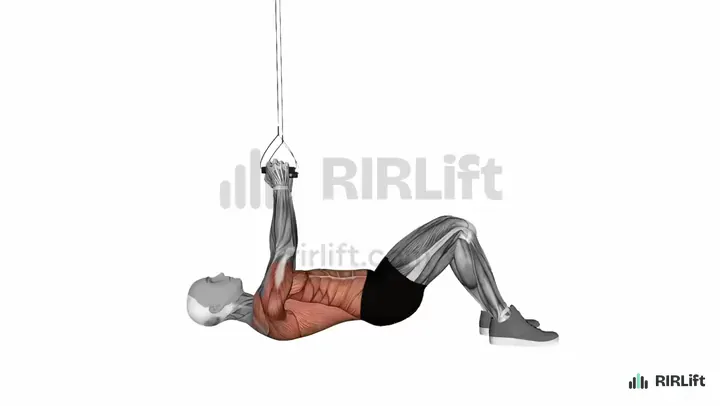
TRX Row

Upper Back, Lats

Straps over a door or beam let you row your bodyweight at home. Walk your feet in to make it harder.

How to do it

  1. Anchor the suspension straps above a closed door or a beam, take a handle in each hand, and sit back, knees bent, both soles planted.
  2. Lean back until your arms are straight and your body forms a line from knees to shoulders.
  3. Pull your chest up to the handles by driving your elbows back past your ribs.
  4. Lower back to straight arms under control and repeat.

Cues

  • Hips stay up in line
  • Elbows past the ribs
  • Walk the feet forward to make it harder

Common mistakes

  • Letting your hips sag as you tire: squeeze your glutes and end the set when the line breaks.
  • Pulling only with the arms and stopping short: the handles should finish beside your chest every rep.
Build a session with TRX Row

Swap with only a band

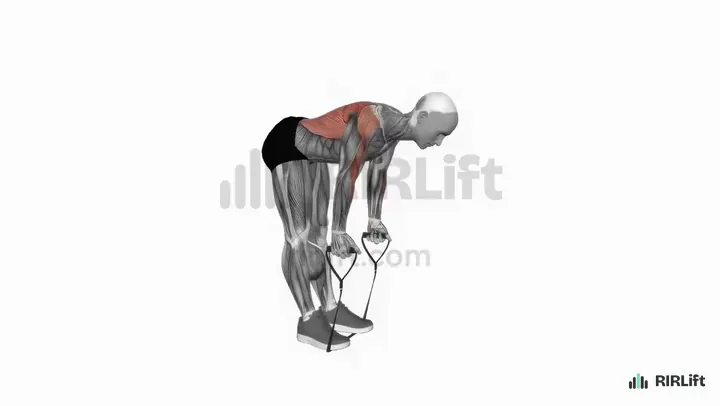
Band Bent-Over Row

Lats, Upper Back

Stand on a band and row from a hinge. The band is hardest at the squeeze, so hold the top of each rep for a second.

How to do it

  1. Stand on the middle of a long band with your feet hip-width apart and hold an end in each hand.
  2. Hinge forward from the hips with soft knees until your torso is at about 45 degrees, back flat.
  3. Row both handles toward your lower ribs, elbows close, and pause with your shoulder blades pulled together.
  4. Let the band pull your arms back to straight slowly and repeat.

Cues

  • Hold the squeeze for a second
  • Slow on the way back
  • Shorten your grip to add tension

Common mistakes

  • Letting the band snap your arms back down: resist it all the way, because the lowering counts.
  • Using a band so light the set never gets close to failure: choke up on the band or switch to a heavier one.

Example sessions without the chest-supported row

Session 1

Gym, row machine taken

Open in the session builder
  • Workouts2× a week
  • Working sets22 a week
  • Per workout~30 min
  • EquipmentLandmine, Cable Row

You train in a gym with cables and a landmine, and the chest-supported row machine is busy or missing.

The T-bar row gives you a heavy row with plates first, the seated cable row takes over the machine's upright, braced pull, and a one-arm cable row finishes with the longest stretch. 11 working sets.

Back
ExerciseSets × repsRIRRest
T-Bar Row1 warm-up set first 4 × 6–10 2 2:30 min
Seated Cable Row 4 × 10–12 2 90 s
Single-Arm Cable RowSets are per arm. 3 × 12–15 1 1 min
How to run it
Once or twice a week as your back session.
How to progress
When every set of a lift reaches the top of its rep range at the RIR shown, add the smallest weight jump next session and start again at the bottom of the range.

Session 2

Home, dumbbells and an incline bench

Open in the session builder
  • Workouts2× a week
  • Working sets22 a week
  • Per workout~25 min
  • EquipmentDumbbells, Incline Bench, Resistance Bands

You train at home with adjustable dumbbells, a bench that inclines and a long band.

The one-arm row lets you use your heaviest dumbbell first, the incline row is the chest-supported row itself with dumbbells, and a band row finishes at high reps. Dumbbells are lighter than a machine stack, so reps run higher and sets go closer to failure. 11 working sets.

Back
ExerciseSets × repsRIRRest
One-Arm Dumbbell Row1 warm-up set firstSets are per arm. 4 × 8–12 2 90 s
Incline Dumbbell Row 4 × 12–15 1 1 min
Band Bent-Over Row 3 × 15–25 1 45 s
How to run it
Twice a week on non-consecutive days.
How to progress
Add reps until every set reaches the top of its range, then go up a dumbbell. At your heaviest pair, pause two seconds at the top of each rep.

Session 3

Home gym, barbell, rack and bench

Open in the session builder
  • Workouts2× a week
  • Working sets22 a week
  • Per workout~30 min
  • EquipmentBarbells, Landmine

You train in a garage gym with a barbell, a rack, a flat bench you can raise on plates or boxes, and a corner for a landmine.

The seal row keeps your chest on a bench like the machine did, the Meadows row adds one-arm work in the corner, and inverted rows under the bar in the rack finish the session. 11 working sets.

Back
ExerciseSets × repsRIRRest
Seal Row1 warm-up set firstRaise the bench so plates hang free. 4 × 8–12 2 2 min
Meadows RowSets are per arm. 3 × 8–12 2 90 s
Inverted Row 4 × 10–15 1 75 s
How to run it
Twice a week, at least two days apart.
How to progress
On seal and Meadows rows, add the smallest plates when every set reaches the top of its range. On inverted rows, add reps, then raise your feet on a bench.

Make it fit you

Questions

What can replace a chest-supported row?

The incline dumbbell row is the closest, since it is the same row with dumbbells. A seal row, seated cable row or one-arm dumbbell row braced on a bench also keep your lower back out of it.

What is the same as a chest-supported row?

An incline dumbbell row and a seal row are both chest-supported rows: one with dumbbells on an incline bench, one with a barbell on a raised flat bench.

How do you do a chest-supported row at home?

Set an adjustable bench to about 30 to 45 degrees, lie face down on it and row two dumbbells. With no incline bench, brace one hand on a flat bench or chair and row one dumbbell.

Are chest-supported rows enough for rear delts?

They train the rear delts, especially with your elbows wide and pulling high. If your rear delts lag, add a dumbbell rear delt fly or a face pull too.

What exercises are similar to T-bar rows?

Meadows rows, Pendlay rows and seal rows: all heavy rows that drive your elbows past your torso. The chest-supported row gives the same back work without the hinge.

Is the chest-supported row better than the bent-over row?

For upper back growth, it is often easier to train hard because your lower back never limits the set. The bent-over row also trains your hinge, which the machine does not.