
Dumbbell row: how to do the one-arm row and get your back to do the work
Published October 19, 2026
Brace one shin and the same-side palm on a bench, plant the other foot on the floor, and let the dumbbell hang straight down from your shoulder. Keep your back flat and pull the dumbbell up toward your hip by driving your elbow back, then lower it until your arm is straight and your shoulder blade stretches forward. Do all your reps on one side, then switch.
- WorksLats, Upper Back
- AlsoBiceps
- EquipmentDumbbells
- Start with3 × 10–15, 2 in reserve, 2 min rest
How to do the one-arm dumbbell row
Bracing one hand on the bench takes your lower back out of the lift, so you can row heavy without your torso giving out first. Working one side at a time gives a longer stretch at the bottom than a two-arm row and stops the stronger side from doing the work. It needs one dumbbell and a bench, so it fits any gym or home setup.
Steps
- Stand next to a flat bench, brace your left shin and left palm on it, and step your right foot back and out for balance.
- Pick up the dumbbell with your right hand and let it hang straight below your shoulder, back flat and roughly level with the floor.
- Pull your elbow back and up toward your hip, brushing it past your ribs, until the dumbbell reaches your lower ribs.
- Pause for a beat with your shoulder blade pulled back, without twisting your chest toward the ceiling.
- Lower the dumbbell slowly until your arm is straight and your shoulder blade drifts forward, then row again. Finish the set, then switch sides.
Cues
- Elbow to your back pocket
- Hand is just a hook
- Chest stays square to the floor
Common mistakes
- Twisting your torso open to heave the weight up: keep your shoulders level with the bench and lighten the dumbbell if you need to rotate to finish.
- Pulling the dumbbell straight up to your chest with the elbow flared: aim the elbow toward your hip for more lat and less upper trap.
- Stopping short at the bottom: let the arm straighten and the shoulder blade move forward each rep so your back works through its full range.
Swap for: Dumbbell Bent-Over Row, Single-Arm Cable Row, Incline Dumbbell Row
Muscles the one-arm dumbbell row works
The one-arm dumbbell row works the lats, the mid-back muscles between your shoulder blades (rhomboids and middle traps) and the rear delts. Your biceps and forearms help pull, and your abs and obliques keep your torso from twisting. Pulling toward the hip biases the lats; pulling higher, toward the chest with the elbow out, shifts more to the upper back.
Sets, reps and reps in reserve for the one-arm dumbbell row
| Goal | Sets × reps | RIR | Rest |
|---|---|---|---|
| Build muscle | 3–4 × 8–12 per side | 1–2 | 90 s–2 min |
| No rest is needed between sides beyond the time it takes to switch. | |||
| Heavy rows | 3 × 6–8 per side | 1–2 | 2 min |
| Straps help once grip, not your back, ends the set. | |||
| High-rep back finisher | 2 × 12–20 per side | 0–1 | 60–90 s |
| Push close to failure here; the bench support makes it safe to. | |||
One-arm dumbbell row variations
-
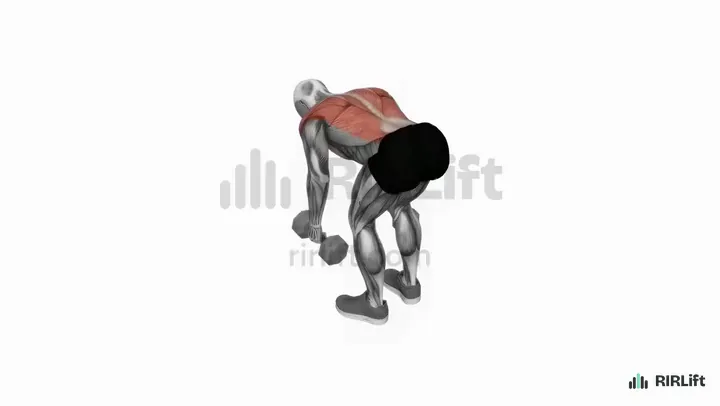
Dumbbell Bent-Over Row
Row both dumbbells at once, standing hinged over, when you want to save time and train your lower back to hold the position.
Build a session with it -
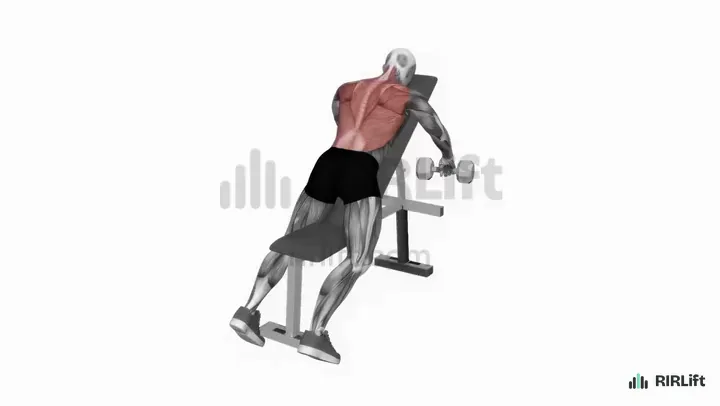
Incline Dumbbell Row
Lie chest-down on an incline bench when your lower back is tired or you want zero momentum.
Build a session with it -
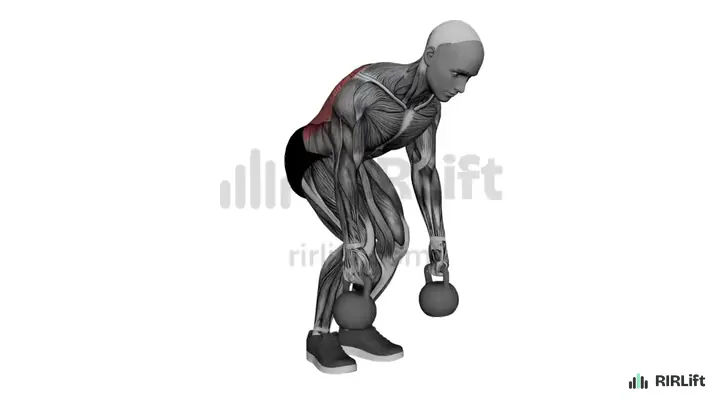
Kettlebell Row
Row a kettlebell when that is the weight you have; the handle sits a little higher, which shortens the bottom of the rep.
Build a session with it
One-arm dumbbell row alternatives
Cables and machines
-
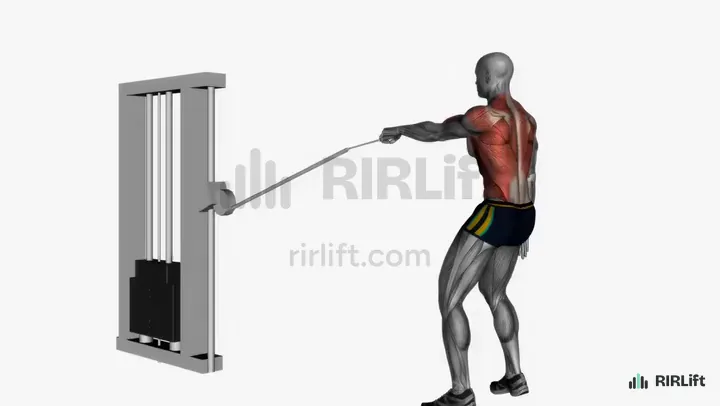
Single-Arm Cable Row
Row one handle on a cable when you want tension at the stretched end of the movement.
Build a session with it -
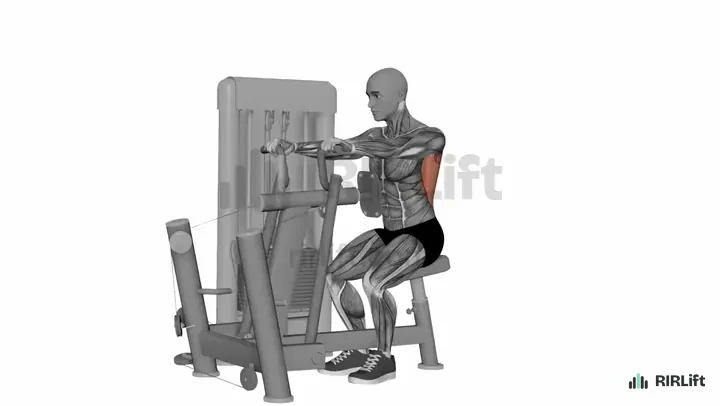
Machine Row
Use a chest-supported machine when you want to go near failure with almost no setup.
Build a session with it
Barbell rows
-
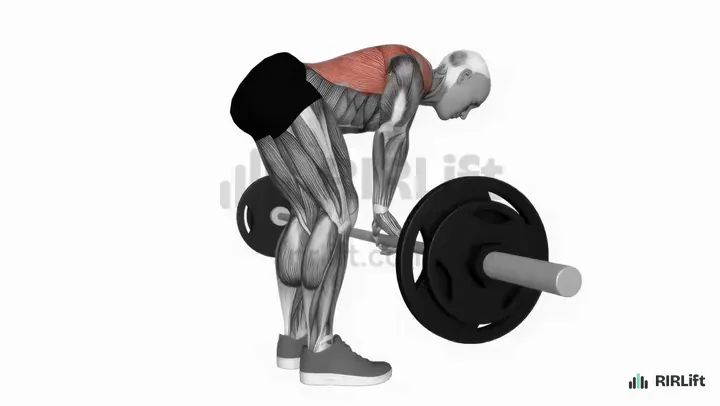
Barbell Row
Row a bar bent over when you want to load both sides heavier at once.
Build a session with it -
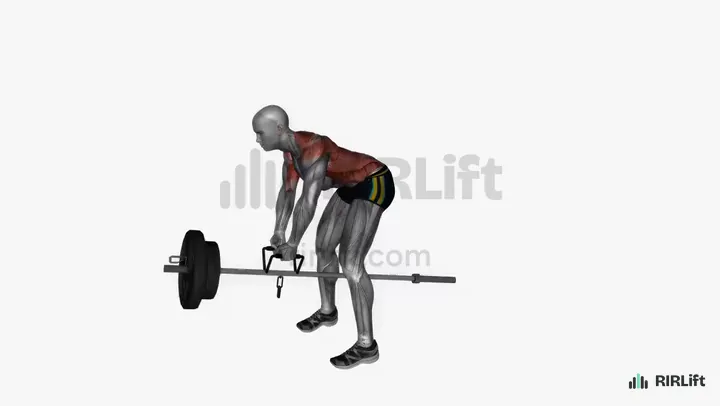
T-Bar Row
Use a T-bar or landmine row for a heavy two-handed row with a neutral grip.
Build a session with it
No dumbbell
-
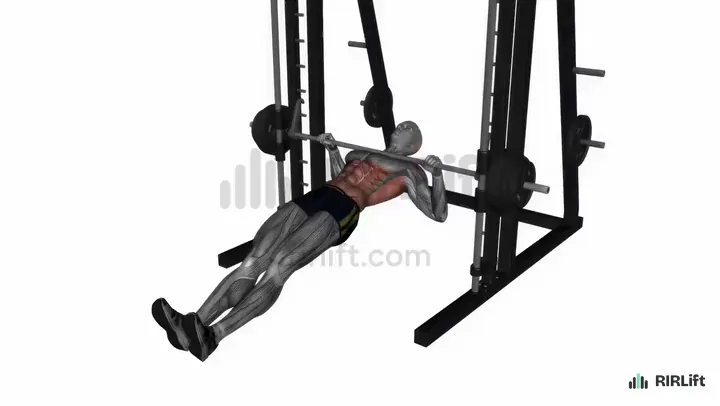
Inverted Row
Row your bodyweight under a bar or rings when you have no weights.
Build a session with it
Bench-supported vs standing one-arm row
The bench version, with a knee and hand on the bench, is the easiest to learn and the hardest to cheat. You can also do it standing in a split stance with one hand on a bench or a rack, which lets you load more weight and use a longer pull. Both work the same muscles; pick the bench version first and move to the staggered stance once the weight gets heavy enough that balancing on the bench is awkward.
Which dumbbell row is best?
For most people the one-arm row on a bench is the best default: stable, easy to load and gentle on the lower back. Use the two-arm bent-over row when you are short on time, and the chest-supported incline row when your lower back is tired from deadlifts or squats.
Questions
What muscles do dumbbell rows work?
Mainly the lats, mid back (rhomboids and middle traps) and rear delts, with the biceps and forearms helping and the core holding you steady.
How do you do dumbbell rows correctly?
Brace a knee and hand on a bench, keep your back flat, pull your elbow back toward your hip, and lower until your arm is straight each rep.
Is a 70 lb dumbbell row good?
For most lifters, rowing 70 lb for clean sets of 8-10 per side is strong. The useful test is whether your reps or weight go up over weeks at the same RIR.
Is a 35 lb dumbbell row good?
It is a fine starting weight for many people. If you can do more than 15 clean reps per side with it, move up.
Can you do dumbbell rows without a bench?
Yes. Hinge forward in a split stance with your free hand on your knee, a chair or a rack, and row the same way.
Should you pull to your chest or your hip?
Pull toward your hip to bias the lats. Pulling higher, with the elbow out, puts more work on the upper back and rear delts.
Related templates
-
Bent over row: how to do it, what it works, and what to do instead
The two-handed barbell row for heavier pulling.
-
Chest-supported row: how to do it on an incline bench with dumbbells
A row with your chest on a pad and no lower-back strain.
-
Back exercises with dumbbells: lats, upper back, traps and lower back
More dumbbell back lifts to build around this row.
-
Renegade row: how to row from a plank without twisting
A plank-position dumbbell row that adds core work.
-
The best workout for back: width, thickness and traps
A full back session with a one-arm row in it.