Compound chest exercises: every press worth doing

The best compound chest exercises are the barbell bench press, incline barbell and incline dumbbell press, flat dumbbell press, machine chest press, chest dips and push-ups. They all move the shoulder and elbow together, so the front delts and triceps work too. For size, do a flat and an incline press in each of two weekly sessions, 10 to 20 hard sets a week in total, 6 to 12 reps per set. For strength, bench heavy for 3 to 5 reps and add close-grip work. Stop 1 to 2 reps short of failure on most sets.

  1. Barbell Bench Press Chest
  2. Incline Dumbbell Press Chest
  3. Incline Barbell Bench Press Chest
  4. Flat Dumbbell Press Chest
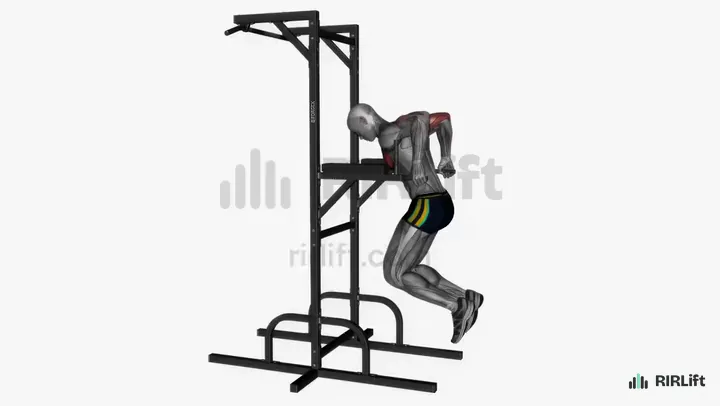
  5. Chest Dip Chest, Triceps
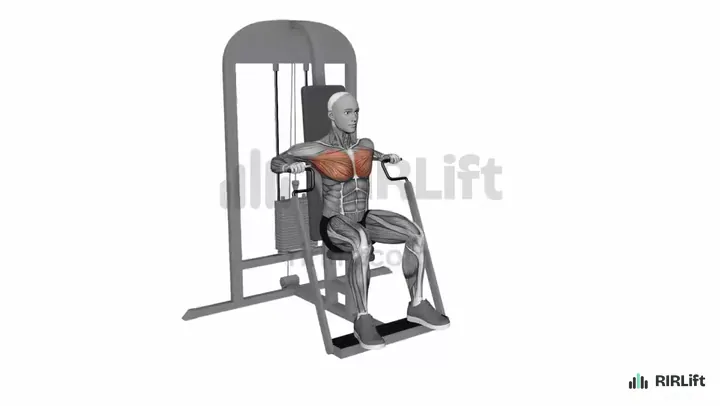
  6. Machine Chest Press Chest
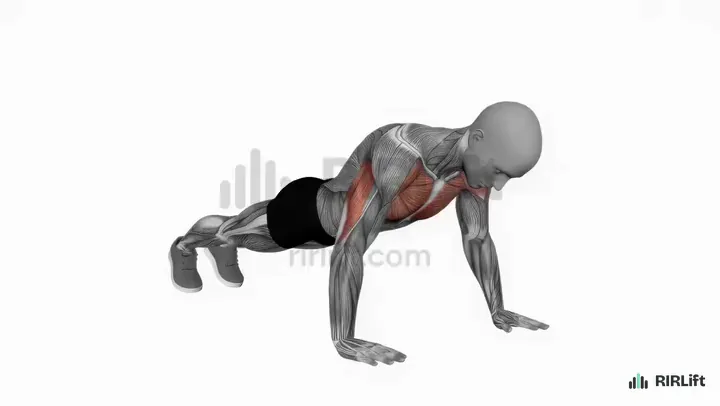
  7. Push-Up Chest

Barbell presses

A barbell lets you load the chest heaviest and add weight in the smallest steps. The flat bench is the main one; the incline shifts work toward the upper chest, the decline toward the lower chest, and the close grip toward the triceps.

Chest, flat barbell press

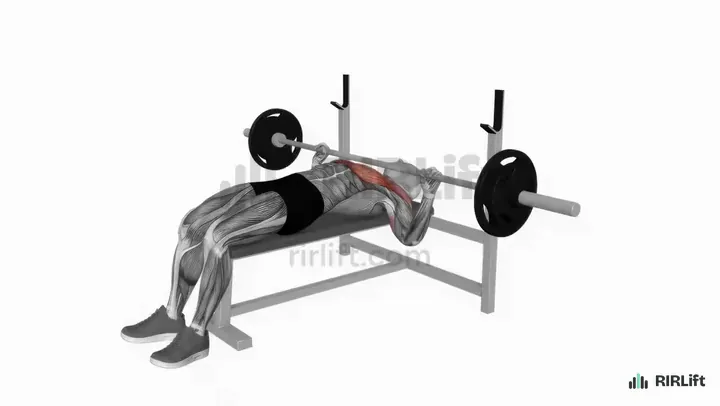
Barbell Bench Press

Chest

The flat bench is the chest press you can load the heaviest, and its progress is easy to track. Make it your first chest lift if strength is part of the goal.

How to do it

  1. Lie on the bench with your eyes under the bar, feet planted, and squeeze your shoulder blades back and down into the pad.
  2. Grip the bar a little wider than shoulder width, unrack it, and hold it over your shoulders with locked elbows.
  3. Lower the bar to your lower chest, around nipple height, with your elbows angled roughly 45 to 70 degrees from your sides.
  4. Touch your chest without bouncing, then press the bar up and slightly back until it is over your shoulders again.

Cues

  • Shoulder blades stay pinned
  • Bar to the nipple line
  • Drive your feet into the floor

Common mistakes

  • Flaring the elbows straight out to the sides: let them sit a bit closer to your ribs so your shoulders stay comfortable.
  • Lifting your hips off the bench to finish a rep: keep your glutes down and count that rep as your last.

Swap for: Flat Dumbbell Press, Smith Machine Bench Press, Machine Chest Press

Upper chest, incline barbell press

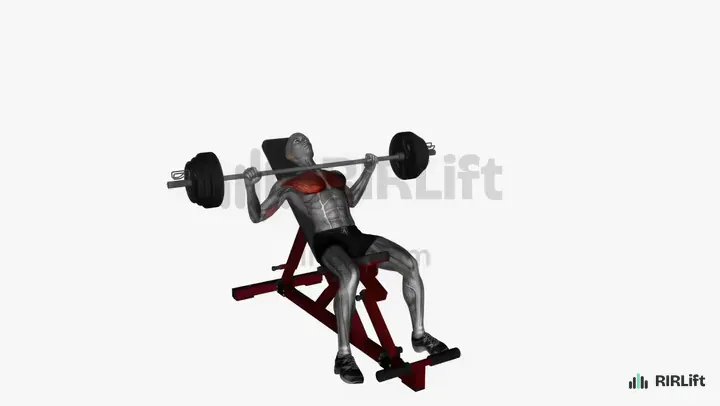
Incline Barbell Bench Press

Chest

A 30 to 45 degree bench moves the work toward the upper chest and front delts while still allowing heavy loads. Use it as the second press or the main press on a second chest day.

How to do it

  1. Set the bench to about 30 to 45 degrees and lie back with your eyes under the bar.
  2. Pinch your shoulder blades back, plant your feet and unrack the bar with a grip a bit outside shoulder width.
  3. Lower the bar to your upper chest, just below your collarbones.
  4. Press it straight up until your arms lock, keeping your chest high.

Cues

  • Bar to the collarbones
  • Chest up to meet the bar
  • Lower angle if your shoulders take over

Common mistakes

  • Setting the bench too steep, which turns it into a shoulder press: 30 degrees is plenty for most people.
  • Bringing the bar down to your mid chest as on a flat bench: on an incline it belongs higher.

Swap for: Incline Dumbbell Press, Smith Machine Incline Press, Machine Incline Press

Lower chest, decline barbell press

Decline Barbell Bench Press

Chest

The decline angle shortens the range and puts the lower chest in a strong line of pull. Many lifters press more weight here than flat with less shoulder strain.

How to do it

  1. Hook your legs under the pads of a decline bench and lie back with the bar over your eyes.
  2. Grip it a bit outside shoulder width and unrack it with locked arms.
  3. Bring the bar down to the base of your chest, just under the nipple line.
  4. Press it back up over your shoulders and lock out.

Cues

  • Bar to the bottom of your chest
  • Legs locked under the pads
  • Have a spotter hand you the bar

Common mistakes

  • Unracking alone on a decline: the bar sits behind you at an awkward angle, so get a hand-off.
  • Lowering to your upper chest: on a decline the bar path ends lower.

Swap for: Decline Dumbbell Press, Machine Decline Press, Chest Dip

Triceps and inner chest, narrow-grip press

Close-Grip Bench Press

Triceps, Chest

A narrower grip makes the triceps work harder, which helps a stalled bench lockout. It is a compound chest and triceps lift in one.

How to do it

  1. Lie on a bench and grip the bar about shoulder width.
  2. Lower it to your lower chest with the elbows close to your sides.
  3. Press back up to straight arms.

Cues

  • Shoulder-width grip
  • Elbows tucked

Common mistakes

  • Gripping so narrow the wrists bend: shoulder width is enough.

Swap for: Close-Grip Push-Up, EZ-Bar Skullcrusher, Cable Triceps Pressdown

Dumbbell and landmine presses

Dumbbells let each arm move freely and lower a little deeper than a bar. The landmine press arcs up and in, which many people find kinder to the shoulders.

Chest, flat dumbbell press

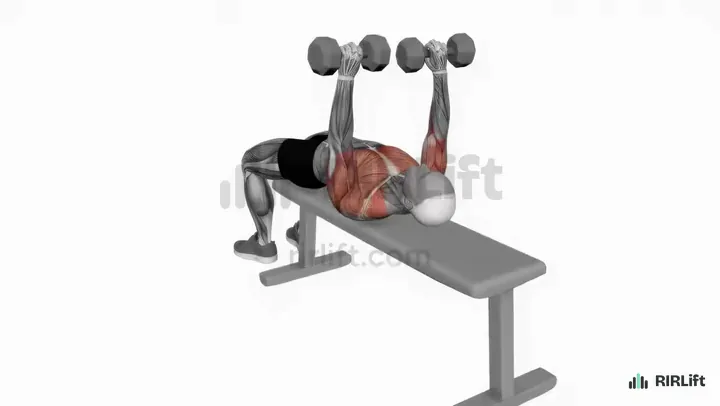
Flat Dumbbell Press

Chest

Dumbbells let each side press on its own and lower deeper than a bar, which suits chest size work at 8 to 12 reps.

How to do it

  1. Lying on a flat bench, hold two dumbbells above your chest.
  2. Lower the bells to the sides of your chest with elbows at about 45 degrees.
  3. Press them back up over your shoulders.

Cues

  • Shoulder blades pinched.
  • Control the lowering.

Common mistakes

  • Flaring the elbows straight out.

Swap for: Push-Up, Barbell Bench Press

Upper chest, incline dumbbell press

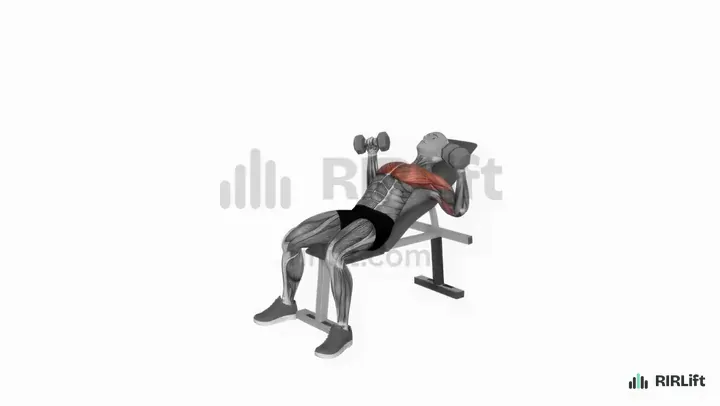
Incline Dumbbell Press

Chest

An incline puts the upper chest in line with the push, and dumbbells let the hands come together slightly at the top. Many programs use it as the go-to second press.

How to do it

  1. Set the backrest to about 30 to 45 degrees and sit with the dumbbells on your thighs.
  2. Lean back and bring the weights to the outside of your shoulders as your back meets the pad.
  3. Squeeze your shoulder blades back and keep your hips on the seat.
  4. Press up and slightly in until your arms are straight over your upper chest.
  5. Lower under control until your elbows are just below the bench line.

Cues

  • Low incline, not a shoulder press
  • Wrists stacked over elbows
  • Touch the stretch, then press

Common mistakes

  • Setting the bench steeper than about 45 degrees: the front delts take over. Drop it a notch if you mostly feel your shoulders.
  • Lifting your hips off the seat to finish a rep: that turns it back into a flat press.

Swap for: Single-Arm Incline Dumbbell Press, Incline Dumbbell Squeeze Press, Incline Barbell Bench Press

Chest, landmine press

Landmine Chest Press

Chest

The bar moves in an arc up and toward the middle, a path many people whose shoulders dislike the bench press find comfortable. It needs only a barbell in a corner.

How to do it

  1. Wedge one end of the bar into a landmine or a padded corner and load the other end.
  2. Stand in a staggered stance and hold the loaded end in one hand at your chest.
  3. Press it up and forward until your arm is straight, reaching your shoulder blade forward at the top.
  4. Lower it back to your chest under control. Finish the set, then switch hands.

Cues

  • Press up and out
  • Ribs stay down
  • Reach at the top

Common mistakes

  • Leaning back to press: stay tall or slightly forward so your chest, not your lower back, does the pushing.
  • Letting the bar crash into your chest: lower it slowly to the same start every rep.

Swap for: Incline Barbell Bench Press, Single-Arm Incline Dumbbell Press, Landmine Press

Machine presses

Machines fix the path, so you can push close to failure without a spotter. They make an ideal second or third press after a free-weight lift.

Chest, machine press

Machine Chest Press

Chest

The machine guides the press, so you can go close to failure without a spotter. It builds the chest well for beginners and as a high-rep finisher for everyone.

How to do it

  1. Raise or lower the seat until the handles line up with the middle of your chest, then sit with your back on the pad.
  2. Take the handles with straight wrists and your shoulder blades pressed back.
  3. Push forward until your arms are nearly straight.
  4. Return slowly until your hands are level with your chest, then press again.

Cues

  • Handles at mid-chest
  • Back stays on the pad
  • Slow on the way back

Common mistakes

  • Seat too high, so your shoulders take over: lower it until the handles meet your mid-chest.
  • Stopping the handles short of your chest: let them come all the way back each rep.

Swap for: Barbell Bench Press, Flat Dumbbell Press, Push-Up

Chest, guided barbell press

Smith Machine Bench Press

Chest

The Smith machine keeps the bar on rails, so you can bench heavy without a spotter. Set the bench so the bar touches your lower chest.

How to do it

  1. Roll a flat bench into the Smith machine so the bar lines up over your lower chest when you lie down.
  2. Set the safety stops a couple of inches below where the bar touches your chest.
  3. Lie back, grip a bit wider than your shoulders, pull your shoulder blades together and plant your feet.
  4. Twist the bar off the hooks and lower it under control to your lower chest.
  5. Press it straight up the rails until your elbows are just short of lockout.

Cues

  • Bar over your lower chest
  • Shoulder blades pinned
  • Elbows about 45 degrees out

Common mistakes

  • Bench placed so the bar lands near your neck: slide it until the bar touches just below your nipples.
  • Bouncing off the safeties: the stops are for a failed rep, so touch your chest lightly and press.

Swap for: Barbell Bench Press, Machine Chest Press, Flat Dumbbell Press

Bodyweight presses

Dips and push-ups are compound chest exercises you can do anywhere. Dips load the lower chest through a deep stretch; push-ups work as a finisher or a home main lift.

Lower chest and triceps, bodyweight dip

Chest Dip

Chest, Triceps

Leaning forward on the dip bars puts the lower chest through a deep stretch under your full bodyweight. Add a belt once 12 reps feel easy.

How to do it

  1. Grip parallel bars and step or jump up until your arms are straight and you are holding yourself above the bars.
  2. Lean your chest slightly forward with your legs under you or a little behind.
  3. Bend your elbows to sink down until your upper arms are about level with the bars.
  4. Press back up to straight arms and lock out.

Cues

  • Shoulders down, chest proud
  • Slight forward lean
  • Lock out every rep

Common mistakes

  • Sinking so deep your shoulders ache: stop when your upper arms reach the level of the bars.
  • Swinging your legs to get up: keep them still and end the set when you need momentum.

Swap for: Machine Chest Dip, Close-Grip Bench Press, Push-Up

Chest and triceps, push-up

Push-Up

Chest

The push-up is a compound chest press with the shoulder blades free to move. Use it to finish a session, or as the main press at home with harder variations.

How to do it

  1. Set your hands slightly wider than your shoulders with your body straight from head to heels.
  2. Lower until your chest nearly touches the floor, elbows at about 45 degrees.
  3. Press back up to straight arms.

Cues

  • One straight line
  • Elbows angled back

Common mistakes

  • Flaring the elbows straight out: tuck them toward your ribs.

Swap for: Kneeling Push-Up, Incline Push-Up, Push-Up Plus

Put them together: example sessions

Each session below picks from the exercises above for one situation, with the sets, reps, rest and RIR filled in.

Session 1

Chest size: two upper-body days a week

  • Workouts2× a week
  • Working sets19 a week
  • Per workout~30 min
  • EquipmentBarbells, Flat Bench, Dumbbells, Incline Bench +2

You train upper body twice a week and want a bigger chest, especially the upper part.

Two days of 9 to 10 chest sets each give about 19 sets a week, near the top of what most people grow from. Each day has a flat and an incline press so both regions get two hits.

Day 1: Flat focus
ExerciseSets × repsRIRRest
Barbell Bench Press2 warm-up sets first 4 × 6–8 2 3 min
Incline Dumbbell Press 3 × 8–12 1 2 min
Chest Dip 3 × 8–12 1 2 min
Day 2: Incline focus
ExerciseSets × repsRIRRest
Incline Barbell Bench Press2 warm-up sets first 4 × 6–10 2 2:30 min
Machine Chest Press 3 × 10–15 1 90 s
Push-Up 2 × 10–20 1 90 s
How to run it
Day 1 early in the week, Day 2 three or four days later. Add your back and shoulder work after the chest presses.
How to progress
Double progression: when every set of a press reaches the top of its rep range at the target reps in reserve, add the smallest jump. Dumbbell presses move up one pair at a time.

Session 2

Bench press strength

  • Workouts2× a week
  • Working sets17 a week
  • Per workout~35 min
  • EquipmentBarbells, Flat Bench, Dip Bar, Dumbbells +1

You want a bigger bench press, for a meet, a standard, or just a number, and you are already training two or more days a week.

The heavy day keeps 5 sets of 3 to 5 near your max, and the second day builds triceps and chest with close-grip and dumbbell pressing. That is 17 chest-and-triceps sets a week, enough to push strength without wearing out the shoulders.

Heavy bench
ExerciseSets × repsRIRRest
Barbell Bench Press3 warm-up sets first 5 × 3–5 2 3:30 min
Chest Dip 3 × 5–8 2 2:30 min
Close-grip and dumbbells
ExerciseSets × repsRIRRest
Close-Grip Bench Press2 warm-up sets first 4 × 6–8 2 3 min
Flat Dumbbell Press 3 × 8–10 1 2 min
Decline Barbell Bench Press 2 × 6–10 2 2:30 min
How to run it
Heavy day early in the week, second day three days later. Leave the hardest shoulder work for after the bench, not before.
How to progress
On the heavy day, add 5 lb when all five sets reach 5 reps at 2 reps in reserve. When it stalls for three sessions, take 10% off and rebuild. Log every set's reps in reserve in RIRLift and it sets the next weight.

Session 3

Home chest workout with dumbbells and a bench

  • Workouts2× a week
  • Working sets20 a week
  • Per workout~25 min
  • EquipmentDumbbells, Flat Bench, Incline Bench

You train at home with a pair of adjustable dumbbells and an adjustable bench.

Ten sets per session, twice a week, gives 20 weekly chest sets. Flat and incline dumbbell presses cover both regions, and push-ups to near failure add volume once the dumbbells feel light.

Home chest
ExerciseSets × repsRIRRest
Flat Dumbbell Press1 warm-up set first 4 × 8–12 2 2 min
Incline Dumbbell Press 3 × 8–12 1 2 min
Push-Up 3 × 10–25 1 90 s
How to run it
Twice a week on non-consecutive days, at the start of the session.
How to progress
Fill the rep range on every set before you move up one dumbbell. When the heaviest pair is too light, slow the lowering to 3 seconds and pause at the bottom.

Make it fit you

Questions

What are the main compound chest exercises?

The bench press (flat, incline and decline), dumbbell presses, machine chest press, chest dips and push-ups. They all move the shoulder and elbow together.

Are 3 exercises for chest enough?

Yes. A flat press, an incline press and a dip or push-up, for 3 or 4 hard sets each, is a complete chest workout. Twice a week is better than once.

What exercises work the top of the chest?

Incline presses with a barbell or dumbbells at 30 to 45 degrees, plus feet-elevated push-ups at home. They put the upper chest in line with the push.

Is a chest fly a compound exercise?

No. Only the shoulder moves in a fly, so it is an isolation exercise. It is a useful extra after the presses, not a replacement for them.

How can I build my chest and arms fast?

Press heavy twice a week, include close-grip bench or dips for the triceps, and add weight steadily. A bigger chest and triceps come from the same presses.

How many sets of compound chest exercises per week?

Ten to twenty hard sets a week across two sessions suits most people. Start near 10 and add sets if the chest stops growing.