
Side plank: how to do it, how long to hold, and how to make it harder
Published October 19, 2026
A side plank is a hold where you prop yourself on one forearm and the edge of one foot and keep your body long and level from head to heels. It trains your obliques and the muscles along the side of your trunk and hips to stop your body from bending sideways. Stack your elbow under your shoulder, push the floor away and keep your hips high for the whole hold.
- WorksAbs
- EquipmentBodyweight
- Start with3 × 45 s, 1 min rest
How to do the side plank
It needs nothing but floor space and trains the side of your trunk in the way it works in daily life and lifting: holding still while something tries to bend you over. It also works the outer hip of the bottom leg, so it pairs well with leg days.
Steps
- Lie on one side with your legs straight and your feet stacked, or with the top foot just in front of the bottom one.
- Put your forearm on the floor with the elbow right under your shoulder and your hand pointing forward.
- Brace your stomach and squeeze your glutes, then press through your forearm and foot to lift your hips.
- Keep your head, hips and feet lined up, chest facing forward, and breathe steadily.
- Lower your hips with control when the time is up, then switch sides.
Cues
- Push the floor away
- Hips high, not back
- Head in line with spine
Common mistakes
- Letting the hips sag toward the floor: end the set the moment you can no longer hold the line, and use the knee version until you can.
- Rolling the chest toward the floor or the ceiling: keep your shoulders and hips stacked so you face straight ahead.
- Shrugging into the bottom shoulder: press your forearm into the floor so your shoulder stays away from your ear.
Swap for: Dumbbell Side Plank, Copenhagen Plank, Pallof Press
Muscles the side plank works
The side plank works your obliques and the deep muscles along the side of your lower back, which together stop your trunk from bending sideways. The glutes and outer hip of the bottom leg hold your pelvis up, and the bottom shoulder keeps you propped. Your abs work too, but less than in a front plank.
Sets, reps and reps in reserve for the side plank
| Goal | Sets × reps | RIR | Rest |
|---|---|---|---|
| Build core strength | 3 per side × 20–45 s hold | 1–2 | 45–60 s |
| Count seconds as reps: stop each hold with a few good seconds still in reserve. | |||
| Beginner | 2–3 per side × 15–30 s hold (knees down) | 2–3 | 45 s |
| Start with the bottom knee bent on the floor and switch to straight legs once 30 seconds feels easy. | |||
| Harder | 3 per side × 10–20 s hold | 1 | 60 s |
| Hold a dumbbell with your top arm or lift the top leg instead of holding longer. | |||
Side plank variations
-
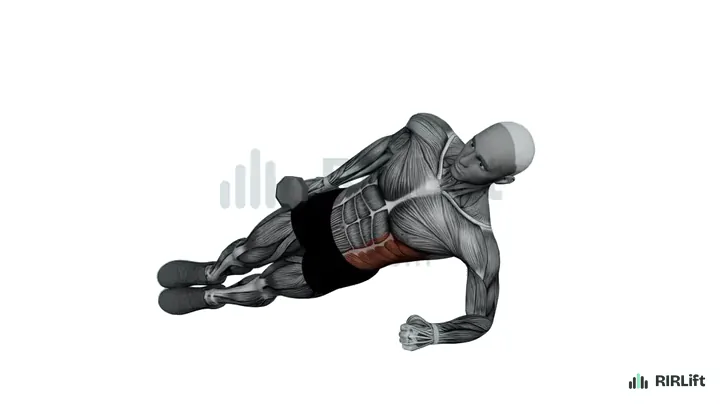
Dumbbell Side Plank
Hold a dumbbell with your top arm when 45 seconds of the bodyweight version feels easy.
Build a session with it -
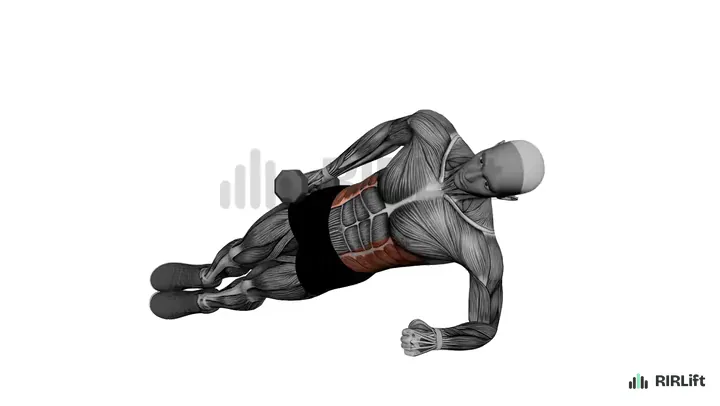
Dumbbell Side Plank Hip Dip
Lower and raise your hips with control when you want reps instead of a static hold.
Build a session with it -
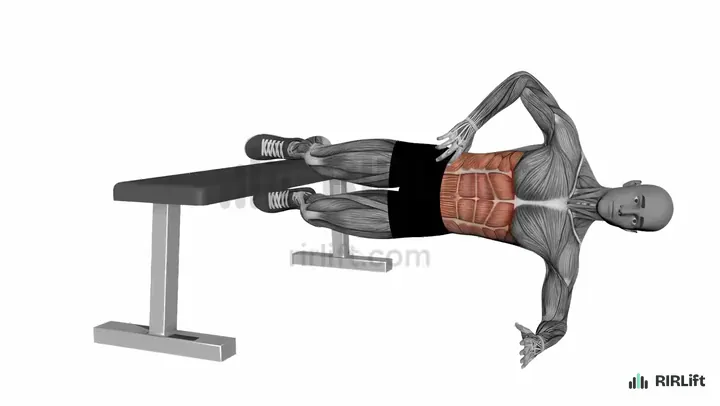
Copenhagen Plank
Put your top leg on a bench and lift the bottom one when you want the inner thighs working too.
Build a session with it
Side plank alternatives
Other side-core exercises
-
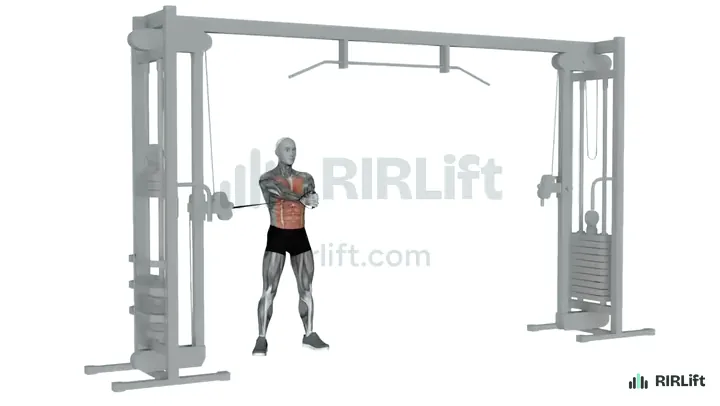
Pallof Press
Press a cable away from your chest when you want to train the same anti-bend control standing and add load easily.
Build a session with it -
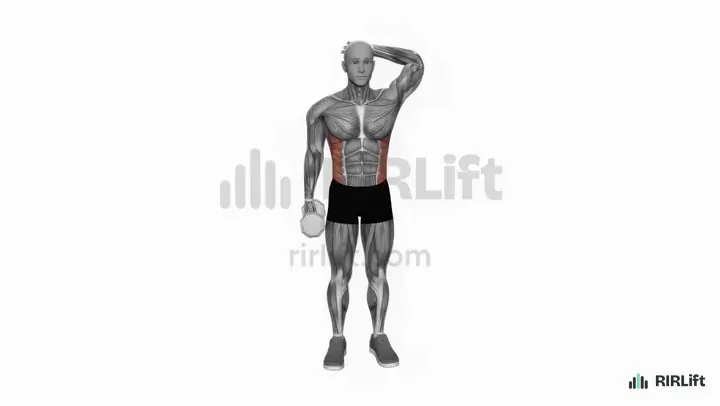
Dumbbell Side Bend
Bend side to side with a dumbbell when you want the obliques working through a range of motion.
Build a session with it
Front core
-
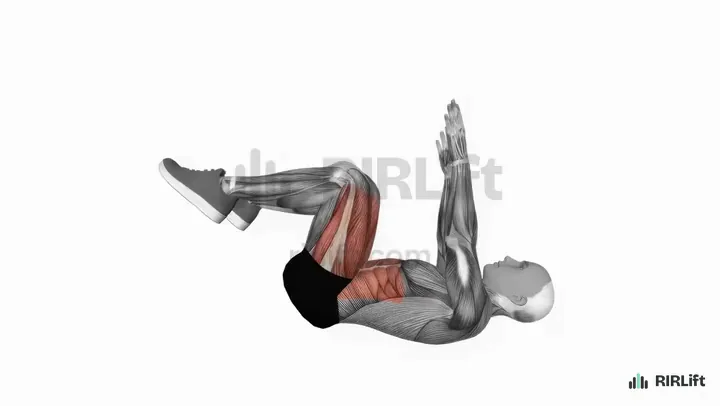
Dead Bug
Use the dead bug when you want the front of your core working with your back flat on the floor.
Build a session with it -
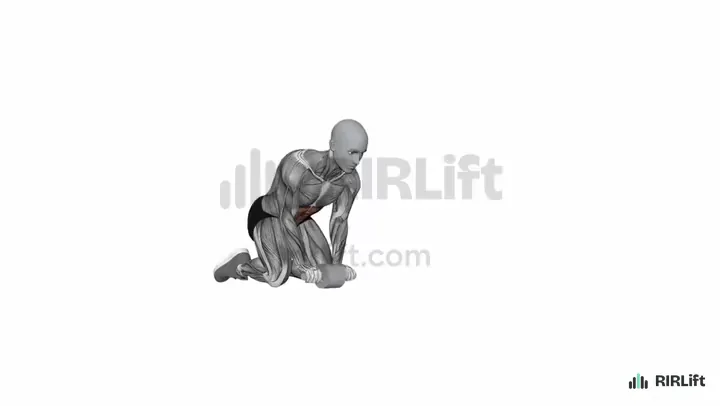
Ab Wheel Rollout
Roll out on a wheel when you want a much harder anti-extension exercise.
Build a session with it
How long should you hold a side plank?
Most people do best with holds of 20 to 45 seconds per side, done for two to four sets. Past about a minute, a longer hold mostly tests patience, so make the exercise harder instead: add a weight, lift the top leg or move to a harder version. Hold for the same time on both sides, starting with your weaker side.
Make it easier or harder
Easiest: bend both knees and prop on the bottom knee and forearm. Next: straight legs with the top foot in front of the bottom one. Standard: feet stacked. Harder: lift the top leg, hold a dumbbell with your top arm, do hip dips, or move to the Copenhagen plank with your top leg on a bench.
Questions
What muscles does a side plank work?
Mainly the obliques and the deep muscles on the side of your lower back, with help from the glutes and outer hip of the bottom leg and the bottom shoulder.
How long should a beginner hold a side plank?
Start with 15 to 30 seconds per side on your knees, and move to straight legs once that feels steady. Stop before your hips start to drop.
Is the side plank better than a regular plank?
It is not better, it trains a different direction. The regular plank resists arching your back; the side plank resists bending sideways. A good core routine has both.
Should you do side planks every day?
You can, since they are low effort and recover quickly, but two or three focused sessions a week with harder versions builds more strength than a daily easy hold.
Will side planks get rid of love handles?
No exercise burns fat from one spot. Side planks build the obliques underneath; losing fat around the waist comes from your overall diet and activity.
Why do my side planks shake?
Shaking means the muscles are close to their limit. End the set when your hips start to drop rather than when the shaking starts.
Related templates
-
Pallof press: how to do it, what it trains, and what to do instead
A standing, loadable way to train the same anti-bend core.
-
Core exercises at home for the front, sides and back
More core work that needs only floor space.
-
Bodyweight core exercises: front, sides, back and bar work
A wider pick of no-equipment core exercises.
-
The best workout for abs, for your situation
A full ab session that includes a side-core slot.
-
How to use RIR
How to stop a set with reps, or seconds, left in reserve.