
Turkish get-up: the steps, what it trains, and how to learn it
Published October 19, 2026
The Turkish get-up takes you from lying on your back to standing, and back down, while you hold a kettlebell straight above you in one hand. It trains shoulder stability, core strength and the hips through rolling, bridging, kneeling and lunging. Learn it with no weight or a very light kettlebell, keep your eyes on the bell and your arm locked, and move slowly through each step.
- WorksShoulders, Abs
- AlsoGlutes, Quads
- EquipmentKettlebells
- Start with3 × 5–8, 2 in reserve, 2 min rest
How to do the kettlebell Turkish get-up
Holding a weight overhead while you change position teaches your shoulder to stay stable in many angles, and every step asks your abs and hips to control the shift. It needs one kettlebell and a little floor space, and it doubles as a warm-up for heavy pressing days.
Steps
- Lie on your back with the kettlebell pressed straight up in your right hand, right knee bent and foot flat, and your left arm and leg out to the side at about 45 degrees.
- Push through your right foot and roll up onto your left forearm, then onto your left hand, keeping the bell stacked above your shoulder.
- Lift your hips into a bridge, then sweep your left leg back under you and set the left knee down behind your left hand.
- Lift your torso to a tall kneel, turn your back leg so you are in a lunge, and stand up with the bell still overhead.
- Reverse every step slowly to lie back down, then repeat on the other side.
Cues
- Eyes on the bell
- Arm locked, shoulder packed
- One step at a time
Common mistakes
- Sitting straight up instead of rolling to the elbow: rolling onto the forearm is easier and keeps the bell over your shoulder.
- Letting the arm bend or drift: the bell should stay straight above your shoulder in every position. Go lighter until it does.
- Rushing between steps: pause briefly in each position so you can feel the bell balanced before you move on.
Swap for: Kettlebell Overhead Press, Dumbbell Single-Arm Overhead Carry, Pallof Press
Muscles the kettlebell Turkish get-up works
The Turkish get-up works the shoulder that holds the bell, especially the muscles that keep it stable, along with the abs and obliques that control each position. The glutes and quads drive the bridge and the stand from the lunge, and the free arm's shoulder and triceps push you off the floor.
Sets, reps and reps in reserve for the kettlebell Turkish get-up
| Goal | Sets × reps | RIR | Rest |
|---|---|---|---|
| Learning the movement | 3–5 × 1 per side | 4–5 | 60 s |
| Use no weight or a shoe balanced on your fist until each step feels smooth. | |||
| Strength | 3–5 × 1–2 per side | 2–3 | 90 s |
| Add weight only when every rep looks the same. | |||
| Warm-up before pressing | 2 × 1 per side | 4 | 30 s |
| A light bell gets the shoulders ready for overhead work. | |||
Kettlebell Turkish get-up variations
-
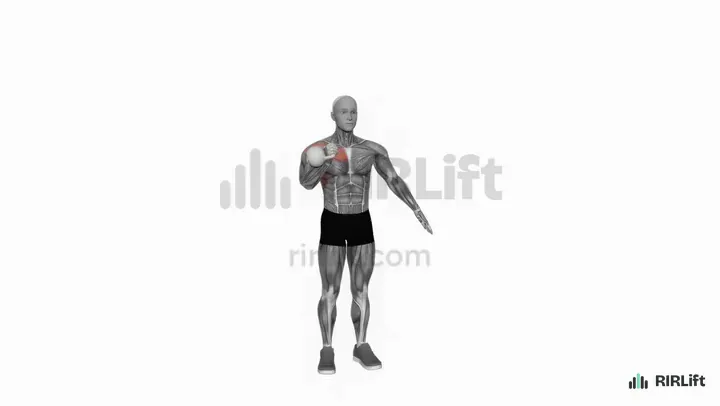
Kettlebell Overhead Press
Press the kettlebell overhead standing when you want shoulder strength for heavier get-ups.
Build a session with it -
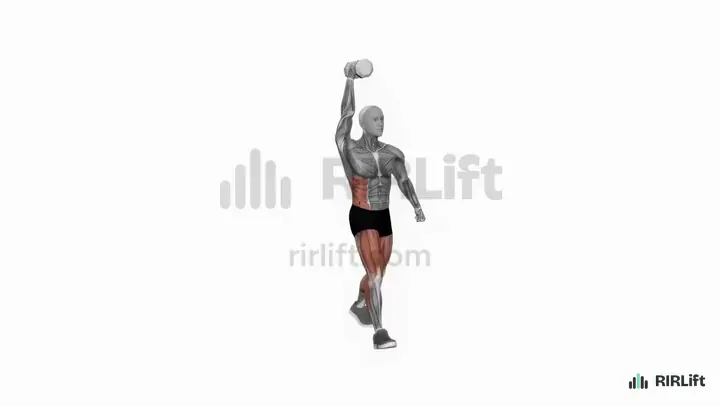
Dumbbell Single-Arm Overhead Carry
Walk with a dumbbell locked out overhead when you want the get-up's arm position without the floor work.
Build a session with it -
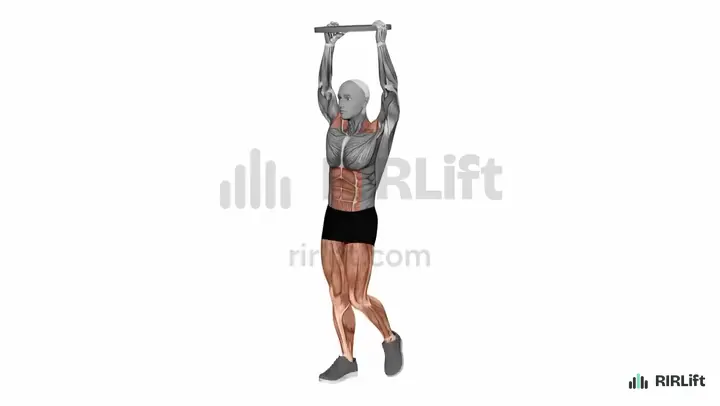
Plate Overhead Carry
Carry a plate overhead with both hands when you want a simpler overhead hold.
Build a session with it
Kettlebell Turkish get-up alternatives
Core under load
-
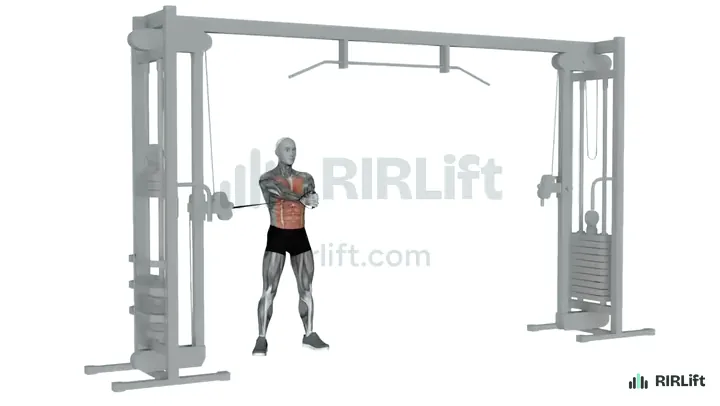
Pallof Press
Press a cable or band out from your chest when you want anti-rotation work for the abs.
Build a session with it -
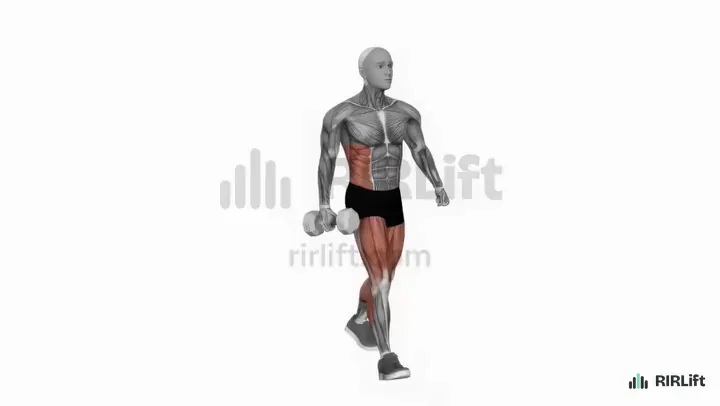
Dumbbell Suitcase Carry
Walk with one heavy dumbbell at your side when you want the core to resist leaning.
Build a session with it
Ground-based
-
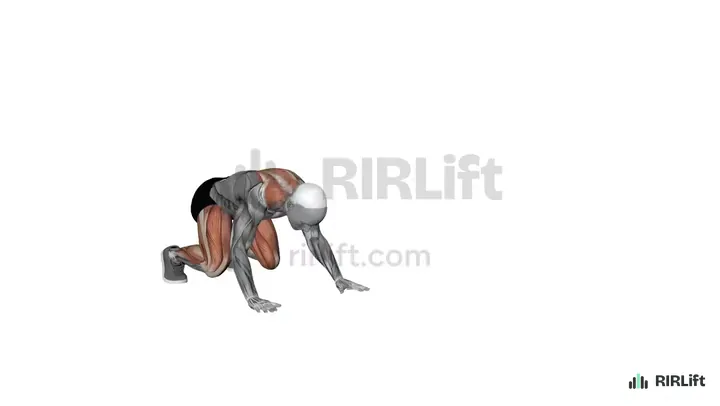
Bear Crawl
Crawl on hands and feet when you want shoulder and core work with no equipment.
Build a session with it
More kettlebell work
-
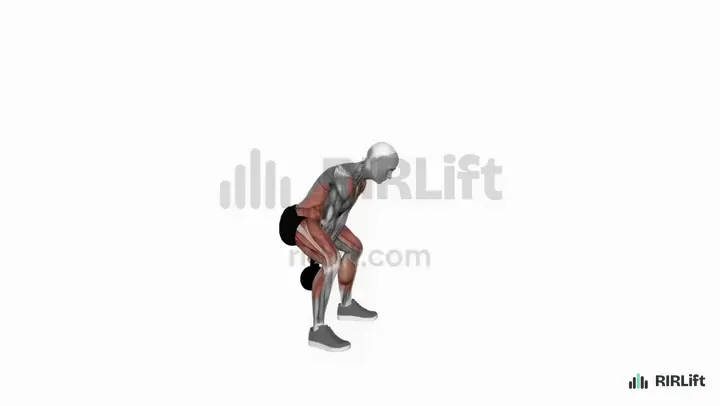
Kettlebell Swing
Swing a kettlebell when you want hip power and conditioning to go with your get-ups.
Build a session with it
How to learn the Turkish get-up as a beginner
Learn it in pieces. Practice the roll to elbow and back down until it is easy, then add the move to the hand, then the bridge and leg sweep, and so on. Use no weight at first, or balance a shoe on your fist so you notice when your arm tips.
Once the whole sequence feels smooth on both sides, pick a light kettlebell. Most people start between 8 and 12 kg (18 to 26 lb) and stay there for a few weeks.
What the Turkish get-up trains
It trains your shoulder to stay stable overhead, your core to control rotation and shifting weight, and your hips through a bridge and a lunge. It is not a muscle builder for any single area, and it fits best as a skill and stability exercise next to your main lifts, a few sets at the start of a session.
Questions
What does the Turkish get-up train?
Shoulder stability overhead, core strength, and hip strength and mobility through the bridge and lunge. It also teaches you to move smoothly from the floor to standing.
Is the Turkish get-up worth learning?
Yes, if you want stronger, more stable shoulders and core. It takes a few sessions to learn, and a few sets a week are enough to keep the benefits.
What is the hardest kettlebell exercise?
It depends on the person, but the get-up is one of the most technical, along with the snatch. Its difficulty is coordination and control rather than raw weight.
What weight kettlebell should I use for Turkish get-ups?
Start with no weight to learn it, then a light bell around 8 to 12 kg (18 to 26 lb). Go up only when every rep on both sides looks the same.
How many Turkish get-ups should I do?
Three to five single reps per side, resting between them, is a good session. They are slow and technical, so quality matters more than volume.
Can you do a Turkish get-up with a dumbbell?
Yes. A dumbbell works the same way; the kettlebell is more common because it rests on the back of your forearm and is easier to balance.
Related templates
-
Kettlebell swing: how to do it, what it works, and what to swap it for
The other foundational kettlebell exercise to pair with get-ups.
-
Kettlebell exercises, grouped by what they train, with sessions for the bells you own
More kettlebell moves to build a full session around the get-up.
-
Pallof press: how to do it, what it trains, and what to do instead
Another core exercise that trains your abs to resist movement.
-
Core exercises with weights, grouped by how they train your trunk
Loaded core work to go with your get-ups.
-
How to use RIR
How to judge the reps you leave in reserve on every set.