
Curtsy lunge: how to do it, what it works, and how it differs from a lunge
Published October 19, 2026
A curtsy lunge is a lunge where your back leg steps behind you and across your body, like a curtsy, instead of straight back. Crossing behind puts more of the work on the glutes of your front leg, including the side glute that keeps your hip level, while the quads still do plenty. Hold dumbbells for load, keep your hips facing forward, and drive up through your front foot.
- WorksQuads, Glutes
- AlsoAbductors, Adductors
- EquipmentDumbbells
- Start with3 × 8–12, 2 in reserve, 2:30 min rest
How to do the dumbbell curtsy lunge
Stepping back and across makes the front hip work to stay level and stretches the side glute at the bottom, so it trains the glutes from an angle that straight lunges and squats don't. Two dumbbells and a few feet of floor are all you need, which makes it an easy fit for home or gym leg days.
Steps
- Stand tall with your feet under your hips and a pair of dumbbells at your shoulders or by your sides.
- Step your right foot back and across, landing it behind and outside your left heel on the ball of the foot.
- Bend both knees and sink straight down until your front thigh is close to parallel and your back knee hovers just off the ground.
- Keep your hips and chest facing forward, with your front knee pointing over your front toes.
- Push through the whole front foot to stand, bring the back foot home, and repeat on the same side or switch.
Cues
- Hips square to the front
- Sink down, not forward
- Front knee over front toes
Common mistakes
- Twisting your hips toward the back leg: step only as far across as you can while your belt buckle still faces forward.
- Letting the front knee cave inward: push it out over your middle toes, and use lighter dumbbells until it stays there.
- Shifting your weight onto the back foot: keep most of your weight on the front heel and midfoot, and let the back leg only balance you.
Swap for: Reverse Lunge, Dumbbell Lateral Lunge, Bulgarian Split Squat
Muscles the dumbbell curtsy lunge works
The curtsy lunge works the quads and glutes of your front leg. Because the back leg crosses behind you, the front hip has to resist being pulled inward, so the gluteus medius on the side of your hip works harder than in a straight lunge. Your inner thigh, hamstrings and calves help with balance.
Sets, reps and reps in reserve for the dumbbell curtsy lunge
| Goal | Sets × reps | RIR | Rest |
|---|---|---|---|
| Build glutes and legs | 3 × 8–12 per leg | 2 | 90 s |
| Finish all reps on one leg, then the other, so you can match the counts side to side. | |||
| Bodyweight or light dumbbells | 2–3 × 12–20 per leg | 1–2 | 60–90 s |
| When the weights are light, take each set closer to failure and slow the way down. | |||
| Second leg exercise | 2 × 10–12 per leg | 1–2 | 90 s |
| After squats or deadlifts, two hard sets per leg add side-glute work without much extra fatigue. | |||
Dumbbell curtsy lunge variations
-
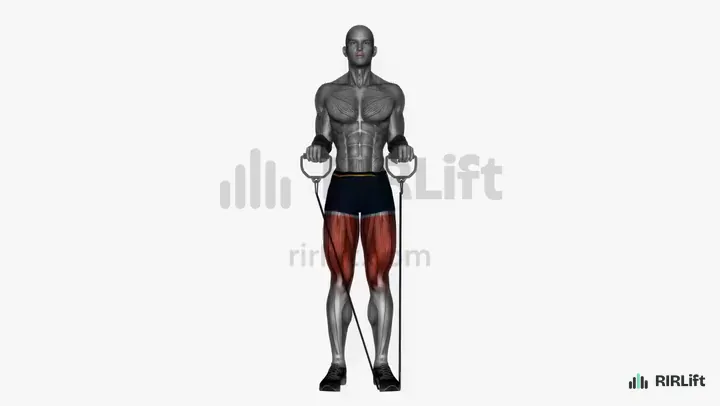
Band Curtsy Lunge
Stand on a band when you have no dumbbells; it gets hardest as you stand up.
Build a session with it -
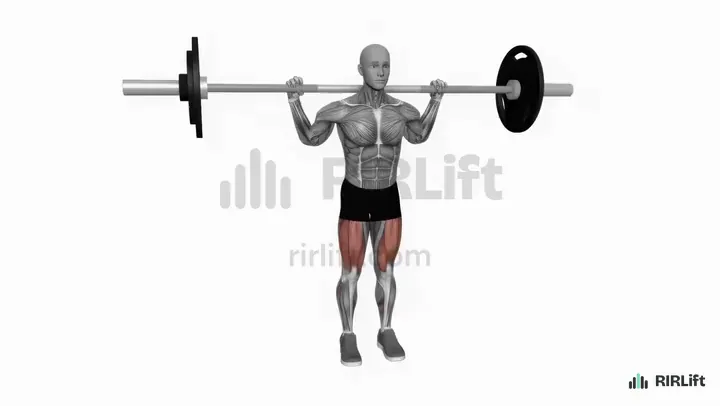
Barbell Curtsy Lunge
Put a barbell on your back when holding dumbbells limits you before your legs do.
Build a session with it -
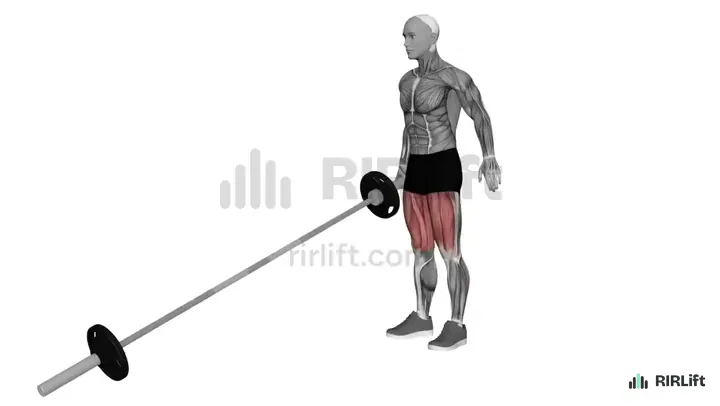
Landmine Curtsy Lunge
Hold the end of a landmine bar at your chest when you want a heavier curtsy lunge that is easier to balance.
Build a session with it
Dumbbell curtsy lunge alternatives
Straight-line lunges
-
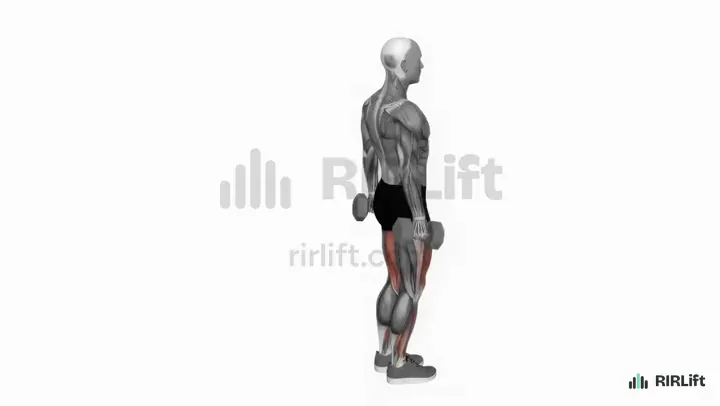
Dumbbell Reverse Lunge
Step straight back when you want a heavier, more stable lunge that hits the quads and glutes evenly.
Build a session with it -
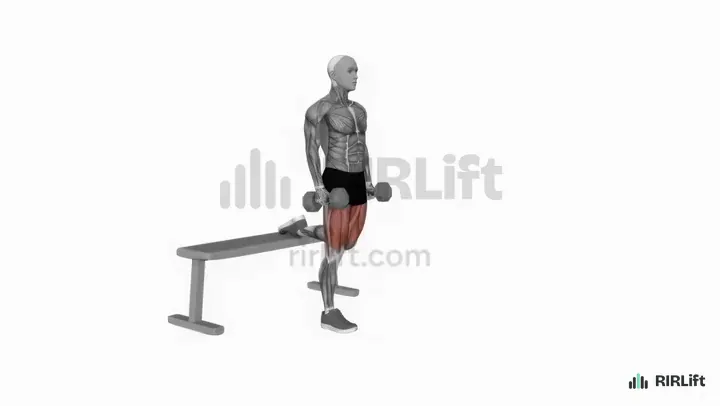
Bulgarian Split Squat
Put your back foot on a bench when you want the hardest single-leg squat you can do with dumbbells.
Build a session with it
Side-to-side work
-
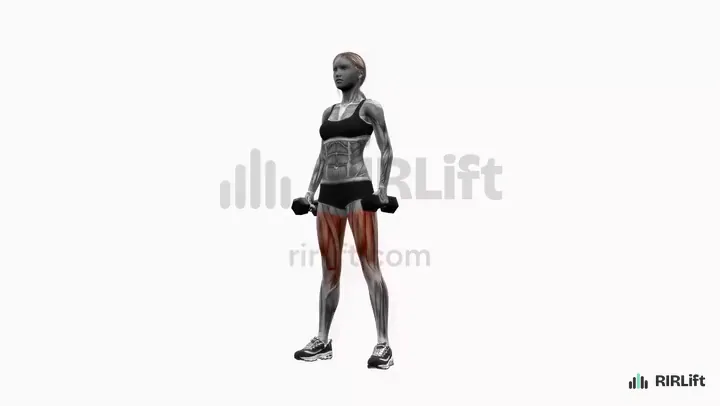
Dumbbell Lateral Lunge
Step out to the side when you want your inner thighs and glutes trained through a wide sideways range.
Build a session with it -
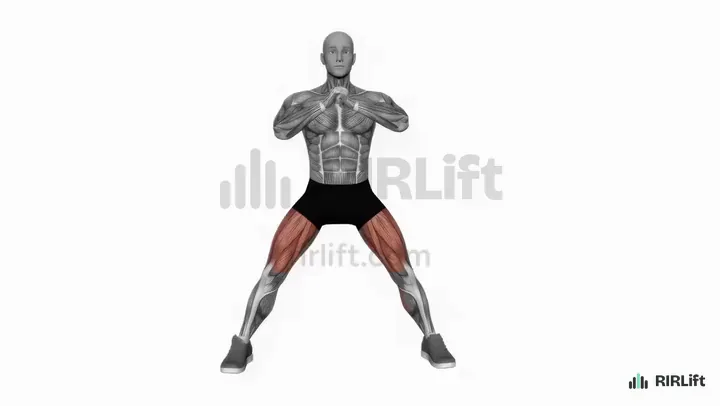
Cossack Squat
Shift deep into one hip with the other leg straight when you want side-to-side work and a big inner-thigh stretch with no weights.
Build a session with it
Easier on balance
-
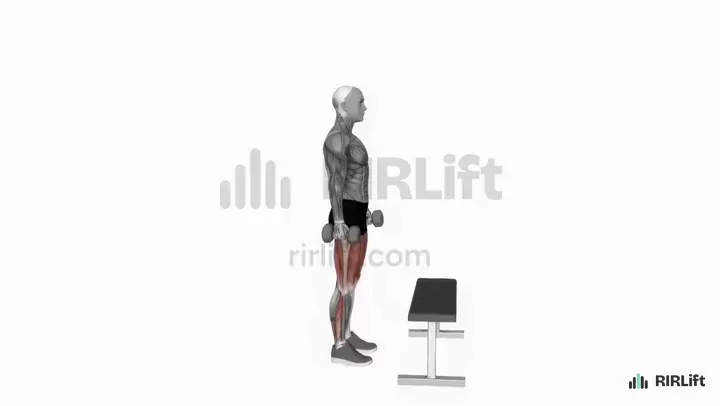
Step-Up
Step onto a bench or box when crossing behind you makes you wobble; the box sets your foot for you.
Build a session with it
Curtsy lunge vs reverse lunge
Neither is better; they bias the front leg differently. A reverse lunge steps straight back, so it is more stable, lets you hold heavier dumbbells, and trains the quads and glutes evenly. A curtsy lunge crosses behind, which costs some load but makes the side of your front hip work harder to keep your knee and pelvis in line.
If you train legs twice a week, use the reverse lunge where you want to lift heavy and the curtsy lunge where you want variety for the glutes.
How far across should you step?
Land your back foot just behind and slightly outside your front heel. Step too little and it's an ordinary reverse lunge; step too far and your hips twist and your front knee caves. If your hips start to rotate, bring the back foot in a few inches.
Questions
What muscles do curtsy lunges work?
They work the glutes and quads of your front leg, with extra work for the gluteus medius on the side of your hip. Your inner thighs, hamstrings and calves help keep you balanced.
Are curtsy lunges better than regular lunges?
Not better, just different. Regular lunges let you lift heavier; curtsy lunges trade some load for more side-glute work. Using both in a week covers more of the hip.
How many curtsy lunges should I do?
Do 3 sets of 8–12 per leg and stop each set with about two reps left. When you can do 12 on every set with your hips square, use heavier dumbbells.
Are curtsy lunges bad for your knees?
Not when the front knee stays over the front toes. Knee trouble usually comes from letting it cave inward; step less far across and go lighter until it tracks straight.
How do lunges compare to squats?
Squats load both legs together and let you lift more weight. Lunges train one leg at a time, which builds balance and evens out a weaker side. Most leg plans use both.
Can I do curtsy lunges without weights?
Yes. Start with bodyweight to learn the step, then add dumbbells or a band once you can do 15–20 controlled reps per leg.
Related templates
-
Reverse lunge: how to do it, what it works, and how to load it
The straight-back version for when you want to go heavier.
-
Lateral lunge: how to do a side lunge with dumbbells or bodyweight
Another side-to-side lunge for the inner thighs and glutes.
-
Glute exercises at home, with or without equipment
More glute moves you can do with the same dumbbells.
-
The best workout for your glutes and butt
A glute session where the curtsy lunge works as the single-leg exercise.
-
How to use RIR
How to judge the reps you leave in reserve on every set.