Decline bench press alternatives: lower chest swaps without the decline bench

The best decline bench press alternative is the dip: you press along the same downward line, and leaning forward keeps your lower chest working. In a gym, the decline press machine is the closest copy with no spotter needed. With only a flat bench, the regular bench press trains the same chest; at home, incline push-ups with your hands on a bench press down toward your hips the same way.

What a decline barbell bench press alternative has to replace

Heavy press for the lower chest

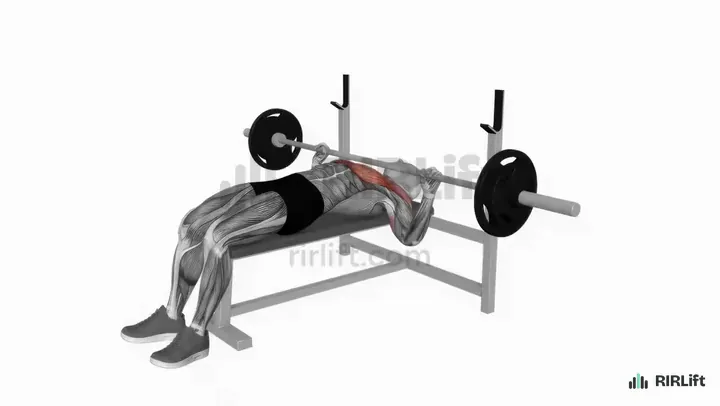
Decline Barbell Bench Press

Chest

The decline tilts your body head-down, so the bar presses toward your hips and the lower part of your chest does more of the work. It is the movement every swap below is trying to replace.

How to do it

  1. Hook your legs under the pads of a decline bench and lie back with the bar over your eyes.
  2. Grip it a bit outside shoulder width and have a spotter help you lift it out to straight arms.
  3. Lower the bar to the base of your chest, just under the nipple line.
  4. Press it back up over your shoulders and lock out.

Cues

  • Bar to the bottom of your chest
  • Legs locked under the pads
  • Get a hand-off

Common mistakes

  • Unracking alone on a decline: the bar sits behind you at an awkward angle, so get a spotter.
  • Lowering to your upper chest: on a decline the bar path ends lower.

Swap for: Machine Decline Press, Chest Dip, Barbell Bench Press

The decline bench press trains your chest, triceps and the front of your shoulders, with your arms pressing toward your hips. That line puts a little more of the work on the lower part of your chest and a little less on your shoulders than a flat press.

Machines and dips

These press down and away along the decline's line, without the awkward unrack.

Closest machine swap

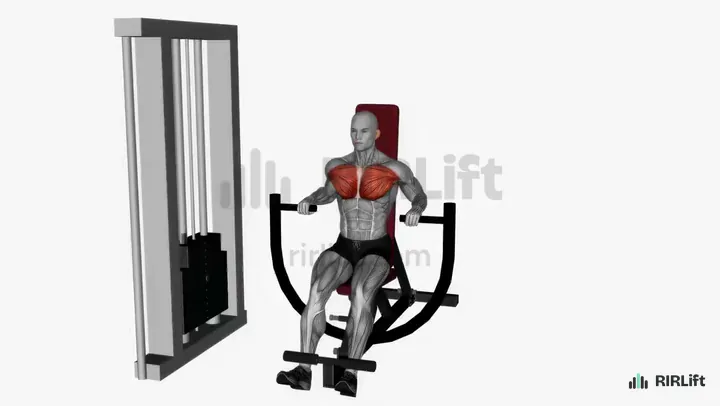
Machine Decline Press

Chest

The decline press machine runs the same downward press on a fixed path, with no spotter and no awkward unrack. Use the same sets and reps you ran on the barbell.

How to do it

  1. Set the seat so the handles start just below the middle of your chest.
  2. Sit with your feet planted and take the handles palms down, elbows a little below shoulder height.
  3. Drive the handles out and slightly down until your arms are almost straight.
  4. Bring them back under control until your hands reach the bottom of your chest, then repeat.

Cues

  • Press down and away
  • Elbows tucked about 45 degrees
  • Full stretch at the chest

Common mistakes

  • Locking the elbows hard at the end of each rep: stop just short and keep the chest working.
  • Rushing the return: take two seconds to bring the handles back.

Best bodyweight swap

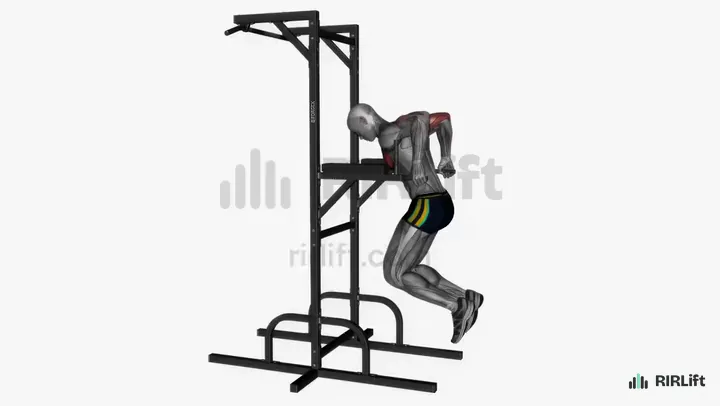
Chest Dip

Chest, Triceps

Dips press your body up along the same line as a decline press, and leaning forward keeps your lower chest doing the work. Add weight with a belt once 12 reps are easy.

How to do it

  1. Grip parallel bars and step or jump up until your arms are straight and you are holding yourself above the bars.
  2. Lean your chest slightly forward with your legs under you or a little behind.
  3. Bend your elbows to sink down until your upper arms are about level with the bars.
  4. Press back up to straight arms and lock out.

Cues

  • Shoulders down, chest proud
  • Slight forward lean
  • Lock out every rep

Common mistakes

  • Sinking so deep your shoulders ache: stop when your upper arms reach the level of the bars.
  • Swinging your legs to get up: keep them still and end the set when you need momentum.
Build a session with Chest Dip

Dip on a machine you can load

Machine Chest Dip

Chest, Triceps

The seated dip machine gives you the dip's lower-chest line with a weight stack, so you can start lighter than your bodyweight or go well past it.

How to do it

  1. Set the seat so the handles sit around the bottom of your ribs when you grip them, and sit down.
  2. Take the handles, sit tall with your chest up and shoulders back, and let your elbows bend and drift back.
  3. Push the handles down until your arms are nearly straight beside your hips.
  4. Let them rise slowly until your elbows are bent past 90 degrees and your chest stretches, then push again.

Cues

  • Chest leans over the handles
  • Push down and slightly in
  • Slow on the way up

Common mistakes

  • Shrugging as the handles rise: keep your shoulders down and your chest up the whole set.
  • Bouncing out of the bottom: pause for a moment where your chest is stretched.

Barbell on a flat bench or the floor

No decline bench at all: the flat bench press trains the same muscles, and the floor press spares sore shoulders.

Flat barbell swap

Barbell Bench Press

Chest

The flat bench press trains the same chest, lower fibers included, with more load and an easier setup. If your gym has no decline bench, it is the simplest swap.

How to do it

  1. Lie on the bench with your eyes under the bar, feet planted, and squeeze your shoulder blades back and down.
  2. Grip the bar a little wider than shoulder width, unrack it and hold it over your shoulders.
  3. Lower it to your lower chest, around nipple height, with your elbows angled 45 to 70 degrees from your sides.
  4. Touch your chest without bouncing, then press up and slightly back until the bar is over your shoulders.

Cues

  • Shoulder blades stay pinned
  • Bar to the nipple line
  • Drive your feet down

Common mistakes

  • Elbows flared straight out: let them sit a bit closer to your ribs.
  • Hips lifting off the bench to finish a rep: keep your glutes down and count that rep as your last.

Barbell swap for sore shoulders

Floor Press

Chest, Triceps

Lying on the floor stops your elbows before the bottom of the press, and you can still load it heavy. It needs a rack set low.

How to do it

  1. Lie on the floor under a bar set low in a rack, knees bent or legs straight.
  2. Take a grip a little outside your shoulders and unrack it over your chest.
  3. Lower it until the backs of your upper arms rest on the floor, and pause for a moment.
  4. Press it back up until your arms lock out.

Cues

  • Pause on the floor
  • Triceps drive the lockout
  • Shoulder blades pinned back

Common mistakes

  • Bouncing the elbows off the floor: a short pause keeps the press honest.
  • Setting up with no safety: use a rack or pins so you can roll out of a stuck rep.

Dumbbells

With a decline bench, keep the angle and swap the bar for dumbbells. With a flat bench, the alternating press is the pick.

Dumbbell swap on a decline bench

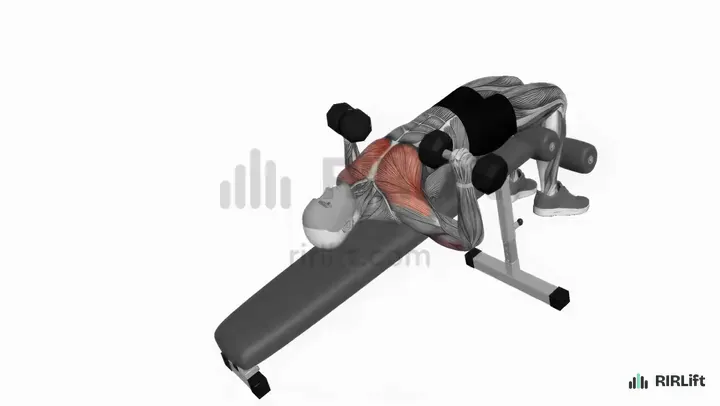
Decline Dumbbell Press

Chest

The same decline with a dumbbell in each hand, so each side presses its own weight and your hands can travel a little deeper.

How to do it

  1. Hook your feet under the pads of a decline bench and bring the dumbbells to your shoulders as you lie back.
  2. Set your shoulder blades back and hold the dumbbells over your lower chest.
  3. Lower until your elbows are bent about 90 degrees, upper arms about 45 degrees from your torso.
  4. Press up and slightly together until your arms are straight.

Cues

  • Feet locked in
  • Press straight up over your lower chest
  • Elbows at 45 degrees

Common mistakes

  • Trying to lie back with straight arms from the start: bring the dumbbells to your chest first, or have them handed to you.
  • Going heavy because the range feels short: keep the same effort target as your flat press.

Decline dumbbell press, palms in

Decline Dumbbell Neutral-Grip Press

Chest

Palms facing each other keeps your elbows tucked, which brings in more triceps and suits lifters whose shoulders dislike a wide press.

How to do it

  1. Hook your feet under the pad of a decline bench and lie back with the dumbbells at your lower chest, palms facing each other.
  2. Keep your elbows tucked by your sides and your shoulder blades pulled down.
  3. Drive both dumbbells up over your lower chest until your arms are straight.
  4. Lower them under control to the sides of your lower ribs and repeat.

Cues

  • Palms face each other
  • Elbows close
  • Press slightly toward your hips

Common mistakes

  • Letting the dumbbells drop on the way down: lower for two seconds.
  • Flaring into a wide press: keep the neutral grip and tucked elbows.

Flat dumbbell press that keeps your chest working

Alternating Dumbbell Bench Press

Chest

One arm stays locked out while the other presses on a flat bench, so moderate dumbbells keep your chest working all set.

How to do it

  1. Lie on a flat bench and press both dumbbells to straight arms over your chest.
  2. Lower one dumbbell to the side of your chest while the other stays locked out.
  3. Press it back up, then lower the other side.
  4. Keep alternating until both arms have done the set's reps.

Cues

  • Holding arm stays straight
  • Lower slower than you press
  • Hips stay on the bench

Common mistakes

  • Letting the holding arm drift sideways: keep it over your shoulder so it keeps working.
  • Rolling toward the pressing side: brace your stomach and keep both shoulder blades on the bench.

Lower chest flys

Flys along the same line make a good finisher after a press, not a replacement for one.

Cable swap for the lower chest

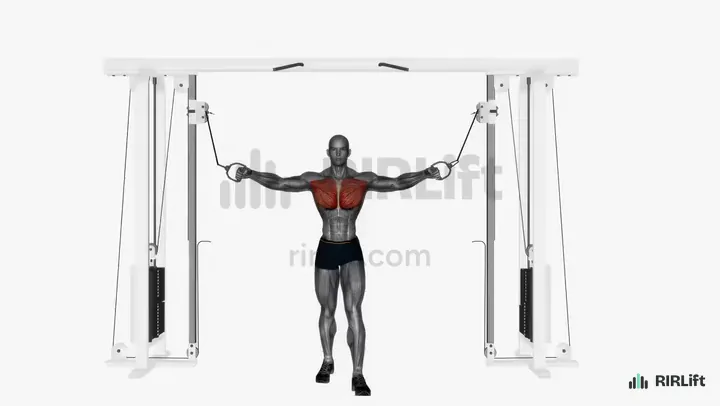
High-to-Low Cable Fly

Chest

From high pulleys your arms sweep down and together, the same downward line as a decline press but as a fly. Put it after a press.

How to do it

  1. Set both pulleys at the top, take a handle in each hand and step forward to the middle with one foot ahead.
  2. Lean your torso slightly forward and let your arms open out and up, elbows soft, until your chest is stretched.
  3. Sweep the handles down and together in a big arc until they meet in front of your hips.
  4. Pause for a second, then let the cables pull your arms back open along the same path.

Cues

  • Hug a wide tree
  • Hands finish at belt height
  • Same elbow bend all set

Common mistakes

  • Bending the elbows more as you pull, which makes it a press: fix the elbow angle and lighten the stack.
  • Letting the stack slam between reps: stop the return when your hands are in line with your shoulders.

Lower chest dumbbell fly

Decline Dumbbell Fly

Chest

On a decline bench your arms sweep up over your lower chest. It works as a finisher after any of the presses above.

How to do it

  1. Hook your feet in on a decline bench and lie back, arms spread wide with the dumbbells and a slight bend in your elbows.
  2. Sweep both arms up and in until the dumbbells meet over your lower chest.
  3. Hold the squeeze for a second at the top.
  4. Let them travel back out slowly, keeping the elbow bend, until your upper arms line up with your torso.

Cues

  • Arc up over the lower chest
  • Slight elbow bend, fixed
  • Slow on the way out

Common mistakes

  • Letting the dumbbells drop fast at the bottom: control the stretch.
  • Going so heavy the arms bend into a press: keep it light and in higher reps.

Bodyweight

With nothing but a bench or counter, hands-up push-ups press along the decline's line.

Lower chest swap with no equipment

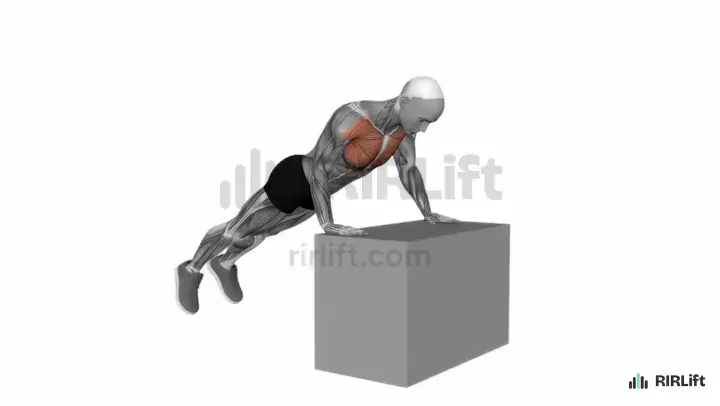
Incline Push-Up

Chest

With your hands up on a bench or counter, your arms press down toward your hips, the same line as a decline press. Lower the surface to make it harder.

How to do it

  1. Put your hands on a bench, box or counter, a little wider than shoulder width.
  2. Walk your feet back until your body is straight from head to heels.
  3. Lower your chest to the edge with your elbows angled about 45 degrees from your sides.
  4. Press back up until your arms are straight.

Cues

  • Body like a plank
  • Elbows at about 45 degrees
  • Lower surface, harder rep

Common mistakes

  • Hips sagging toward the floor: squeeze your glutes and brace before each rep.
  • Elbows flared straight out: tuck them back to about 45 degrees.

Hardest push-up with no equipment

Archer Push-Up

Chest

Shifting most of your weight onto one arm keeps the push-up hard with no gear at all.

How to do it

  1. Set your hands about twice shoulder width apart in a plank, fingers turned slightly out.
  2. Lower toward your right hand, bending the right elbow while the left arm stays straight.
  3. Bring your chest close to your right hand, then press back to the middle.
  4. Repeat to the left and keep alternating, or finish one side first.

Cues

  • Bent arm does the work
  • Straight arm only balances
  • Hips stay square

Common mistakes

  • Bending both arms equally, which makes it a wide push-up: keep the helping arm straight.
  • Twisting your hips toward the floor: hold the plank level as you shift.

Example sessions without the decline barbell bench press

Session 1

Gym, no decline bench

Open in the session builder
  • Workouts2× a week
  • Working sets20 a week
  • Per workout~25 min
  • EquipmentDecline Chest Press, Dip Bar, Cable Crossover

You train in a gym with machines, dip bars and cables, but no decline bench.

The decline press machine takes the barbell's place at the same reps, dips add bodyweight pressing along the same line, and the high-to-low cable fly finishes the lower chest. 10 working sets.

Chest
ExerciseSets × repsRIRRest
Machine Decline Press1 warm-up set first 4 × 8–12 2 2 min
Chest DipLean forward slightly. 3 × 6–12 2 2 min
High-to-Low Cable Fly 3 × 12–15 1 1 min
How to run it
Once or twice a week on your chest or push day.
How to progress
When every set reaches the top of its range at the RIR shown, add the smallest weight jump on the stack and start again at the bottom of the range. Add a dip belt once you hit 12 dips.

Session 2

Barbell gym, training for strength

Open in the session builder
  • Workouts2× a week
  • Working sets20 a week
  • Per workout~35 min
  • EquipmentBarbells, Flat Bench, Dip Machine

You lift in a gym with a barbell, a flat bench, a rack and a dip machine, and want the decline's heavy pressing without the decline.

The flat bench press is the main lift, the floor press adds heavy lockout work that is easy on the shoulders, and the dip machine covers the lower chest. Reps stay low and rest stays long because the loads are heavy. 10 working sets.

Chest
ExerciseSets × repsRIRRest
Barbell Bench Press2 warm-up sets first 4 × 5–8 2 3 min
Floor Press 3 × 5–8 2 2:30 min
Machine Chest Dip 3 × 8–12 1 90 s
How to run it
Twice a week, at least two days apart.
How to progress
Add 5 pounds to the bench and floor press when every set reaches the top of its range. On the dip machine, add the smallest plate at 12 reps.

Session 3

Home, dumbbells and a flat bench

Open in the session builder
  • Workouts2× a week
  • Working sets20 a week
  • Per workout~25 min
  • EquipmentDumbbells, Flat Bench

You train at home with adjustable dumbbells and a flat bench.

The alternating dumbbell press is the main lift, incline push-ups with your hands on the bench press along the decline's line, and archer push-ups finish one side at a time. Reps run higher and rest shorter than in the gym sessions. 10 working sets.

Chest
ExerciseSets × repsRIRRest
Alternating Dumbbell Bench Press1 warm-up set firstReps are per arm. 4 × 8–12 2 90 s
Incline Push-Up 3 × 12–20 1 1 min
Archer Push-UpSets are per side. 3 × 5–8 1 75 s
How to run it
Twice a week on non-consecutive days. Take push-up sets to about one rep short of failure.
How to progress
Move up a dumbbell when every set of the press reaches 12 reps per arm. On incline push-ups, move your hands to a lower surface at 20 reps.

Make it fit you

Questions

What is the best decline bench press alternative?

The dip, leaning slightly forward, presses along the same line and trains the same lower chest. In a gym, the decline press machine is the closest copy.

Why not do decline bench press?

Nothing is wrong with it, but the head-down unrack is awkward without a spotter, and many gyms have no decline bench. Dips and the flat bench press train the same muscles with an easier setup.

Can I do a decline press without a decline bench?

Yes. Do dips, the decline press machine, or push-ups with your hands up on a bench, which press toward your hips the same way.

What is a decline bench press alternative at home?

Incline push-ups with your hands on a bench or counter, dips between two sturdy chairs, or a dumbbell press on a flat bench.

Do you need the decline bench press for lower chest?

No. Flat pressing and dips train your lower chest well. The decline only shifts a little more of the work there.

What equipment do I need for a decline bench press?

A decline bench with leg pads, a barbell and plates, and a spotter to hand you the bar. Without them, the swaps above need only dip bars, a machine or dumbbells.